
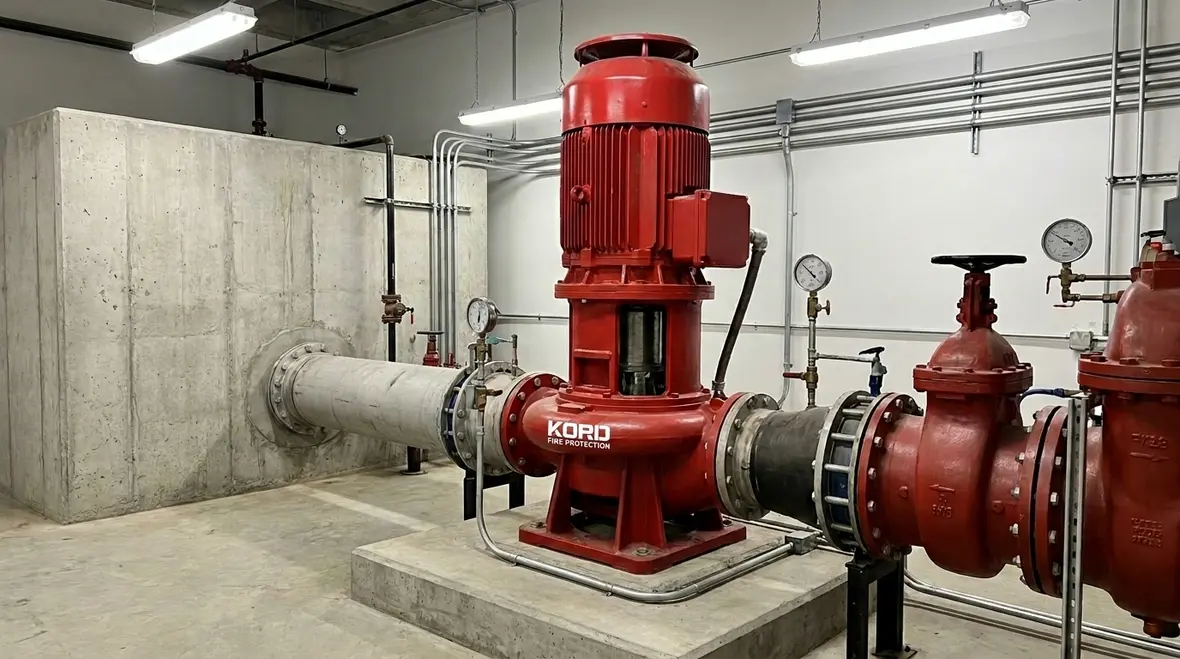
NFPA 20 Vertical Turbine Fire Pump Water Supply 7.1 to 7.4
Quick Answer: NFPA 20 Sections 7.1 to 7.4 guide how a site should plan, connect, and verify a vertical turbine pump water supply. These rules cover installation basics, suction conditions, and system readiness. With the right partner, the work runs smoother, inspections go easier, and downtime stays low. Kord Fire Protection can help coordinate and validate the details that inspectors love.
When facilities need dependable fire flow, the vertical turbine fire pump water supply requirements set the foundation. NFPA 20, Sections 7.1 through 7.4, explain how the water supply connects to the pump system and how the installation supports consistent performance. In other words, these sections help ensure the pump does not just exist on paper, but actually delivers when the alarm sounds. And yes, the “just in case” mindset costs money. So the goal stays simple: build a reliable water supply, install correctly, and verify it with the discipline of someone who reads the fine print for a living.
For teams already coordinating broader life safety work, Kord Fire Protection’s full fire protection services fit naturally into pump planning, inspections, and readiness support. And if you want the wider code picture, this overview of how NFPA 20 regulates fire pump systems provides useful context before crews get deep into field execution.
NFPA 20 Sections 7.1 to 7.4 set the baseline for vertical pump performance
NFPA 20 focuses on one thing: reliability under stress. Therefore, Sections 7.1 to 7.4 establish practical limits and expectations for water supply arrangement, suction conditions, and installation considerations for vertical turbine pumps. Unlike a lot of equipment that works fine until it does not, a fire pump system cannot afford surprises. It must perform with steady water delivery and predictable hydraulic behavior.
Why this baseline matters in the field
- They define how the water source feeds the pump suction in real operating conditions.
- They guide installation choices that prevent air problems, flow instability, and cavitation risk.
- They support acceptance and inspection by aligning design intent with field execution.
In commercial and industrial facilities, where water demand can change and system layouts get complex, this baseline becomes even more valuable. Kord Fire Protection can become a vital partner by helping teams translate those requirements into install-ready scope, practical testing plans, and documentation that stands up to scrutiny.
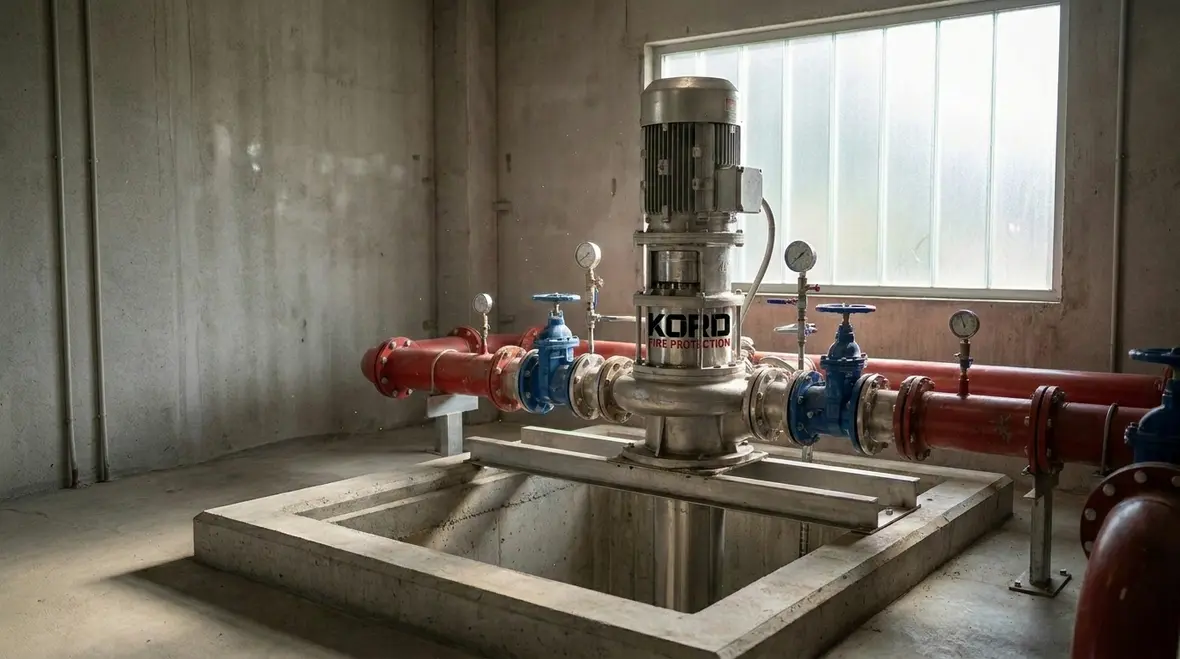
How vertical turbine pump water supply conditions drive the design
Vertical turbine systems rely on how water moves from the source to the pump. As a result, the vertical turbine fire pump water supply requirements must match the site reality, not the wish list. The water supply setup influences suction pressure stability, flow rate consistency, and the pump’s ability to avoid damage during demand.
Design factors that shape dependable suction
- Water level behavior in the supply tank or sump during operation.
- Approach piping layout and where air can enter or collect.
- Screening, strainer selection, and debris control that prevent performance loss.
- Distance and fittings that affect friction losses and pressure at the pump inlet.
Moreover, the system needs to handle real events. A facility might experience maintenance, partial downtime, or seasonal changes in water behavior. Therefore, the design and installation must keep the pump fed with predictable hydraulics. If someone treats suction conditions like an afterthought, the pump will remind them later, in the way a pop quiz reminds the class who skipped review.
That is where coordination matters. Kord Fire Protection helps align the fire pump water supply plan with the rest of the fire protection system, including interfaces, testing points, and acceptance criteria. Teams that also care about the electrical side may find a helpful companion read in Kord Fire Protection’s article on fire pump power supply reliability, because a solid water source and steady power belong in the same conversation.
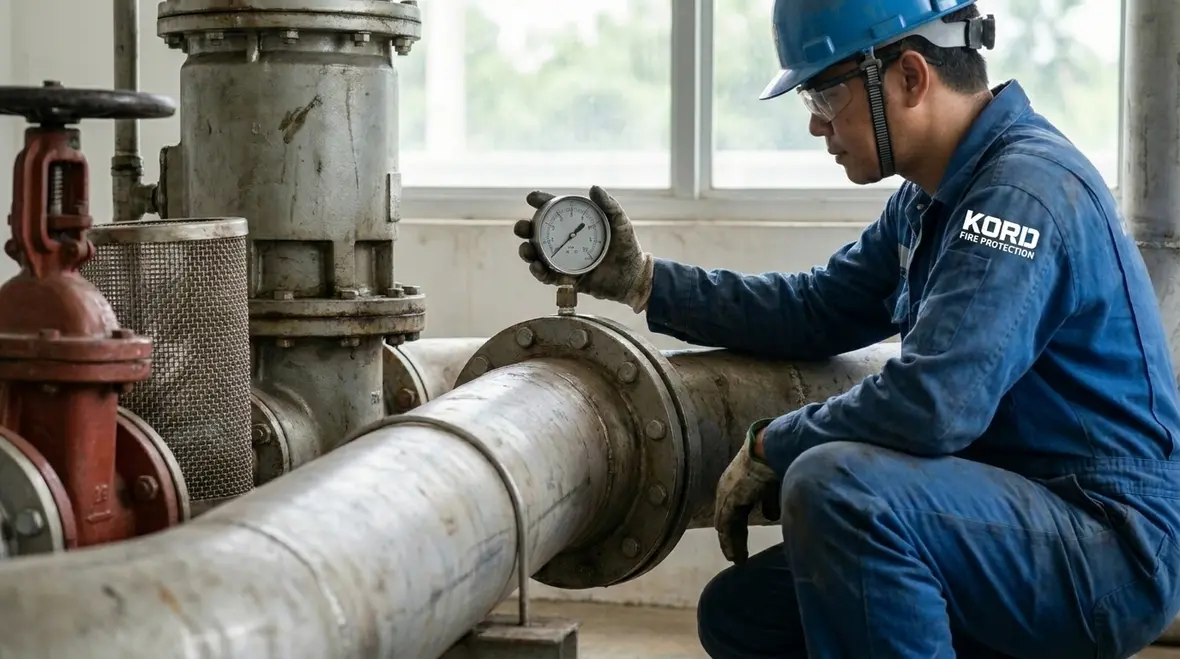
Installation basics in NFPA 20: what crews must get right
Sections 7.1 through 7.4 push for correct installation because fire pump performance depends on more than the pump itself. The vertical turbine pump water supply must connect with clean, controlled flow paths and stable support. Even small field variations can create big outcomes when the system runs under flow.
Installation basics worth watching closely
- Proper arrangement of suction and discharge connections to maintain the intended hydraulic path.
- Correct alignment and secure mounting so vibration does not loosen connections over time.
- Verified sealing and airtightness where applicable, because air can ruin suction behavior.
- Protection from debris and sediment that can alter water quality and restrict flow.
In facilities, crews often work within tight plant spaces. Consequently, shortcuts show up as “temporary” fixes that remain long after commissioning. Kord Fire Protection can reduce that risk by supporting the job with field-ready guidance, precheck lists, and documentation discipline. Inspectors do not just look at what was installed. They also look at how the site proves it was installed to spec.
Common field mistakes that cause suction problems
In the real world, crews manage equipment, trades, and timelines all at once. Therefore, mistakes can creep in, especially when multiple contractors touch the same area. The system cannot tolerate suction problems, though. If the vertical turbine pump water supply does not behave as intended, the pump may lose prime, run inefficiently, or suffer performance drops at the worst time.
Where projects usually get tripped up
- Air ingestion caused by poor inlet conditions, loose joints, or flawed venting arrangements.
- Underestimated friction losses due to unexpected fittings or extended routing.
- Debris accumulation because strainer selections do not match site debris realities.
- Water level control assumptions that ignore how pumps and valves behave during operation.
- Missing or incomplete checks during acceptance, leading to “passed on paper” problems.
Here is the playful truth: fire pumps do not care how busy the project schedule was. They care about hydraulics. So the crew must verify suction conditions during commissioning, not just at the start of the install. Kord Fire Protection can help by coordinating verification steps with the site team, so the system proves readiness instead of hoping for it.
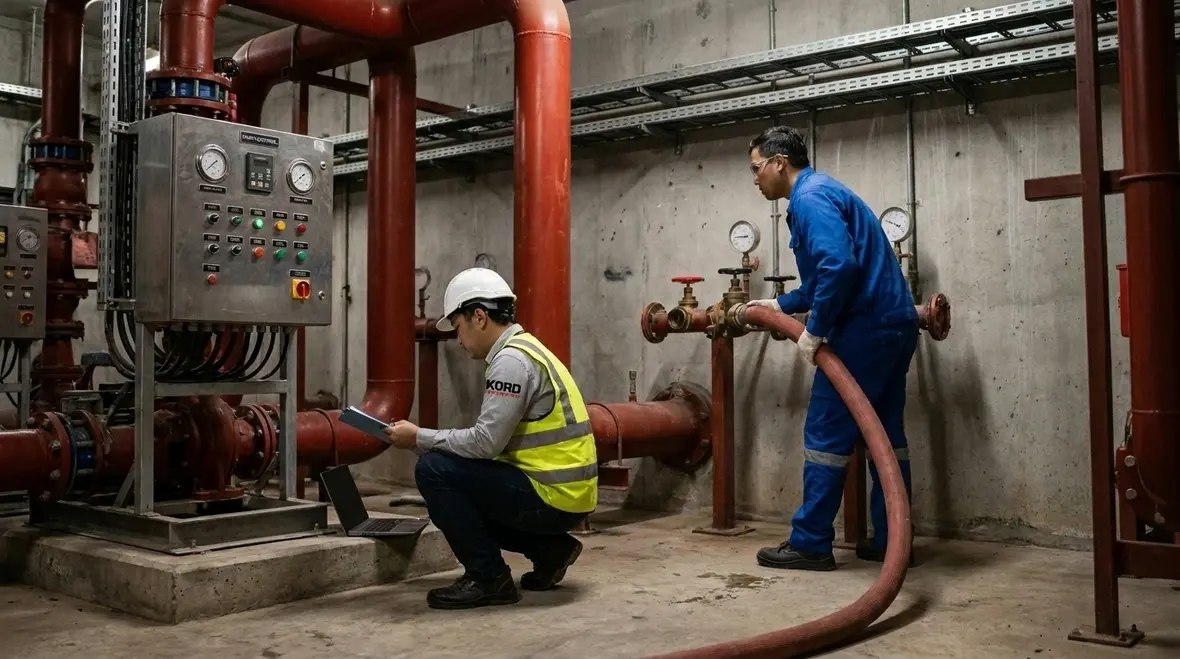
Testing, inspection, and documentation for smoother acceptance
After installation, the project enters the phase that separates “installed” from “accepted.” NFPA 20 expects verification that the fire pump water supply arrangements work as intended. Testing supports operational confidence and helps facilities meet compliance expectations across industrial, retail, and commercial sites.
What a cleaner acceptance path usually includes
- Precheck reviews that confirm the water supply path matches the approved drawings.
- Commissioning verification that evaluates flow behavior and system stability.
- Clear records that show what was tested, what results occurred, and what corrective actions happened.
- Ongoing maintenance expectations that keep the water supply reliable year after year.
Because facilities often operate under active schedules, downtime gets expensive fast. Thus, the planning and documentation phase matters just as much as the mechanical install. Kord Fire Protection can act as the vital partner by providing a coordinated approach that aligns field work, testing needs, and compliance documentation. That coordination reduces rework, avoids last-minute confusion, and keeps the job moving like it has a mission instead of a maybe.
Why Kord Fire Protection fits vertical turbine pump water supply projects
Vertical turbine pump installations involve multiple interfaces: water sources, piping routes, equipment rooms, controls, and supporting systems. Therefore, the risk sits not only in one component but in how everything connects and proves itself. Kord Fire Protection can support the job by helping teams manage the details that inspectors and asset owners care about most.
How the support shows up in practical terms
- Requirement translation from NFPA 20 into practical install scope and field checklists.
- Coordination between design intent and site execution, so drawings do not become fiction.
- Structured testing and documentation so acceptance feels predictable, not chaotic.
- Maintenance planning that preserves performance over time.
In business terms, this partnership reduces delays and helps protect the asset. In human terms, it helps the team sleep at night. Because nobody wants to discover the suction issue after the commissioning meeting, like finding your keys in the fridge.
FAQ: Vertical turbine pump water supply and NFPA 20 Sections 7.1 to 7.4
Next steps for a compliant, reliable system
Facilities that want dependable fire flow should treat NFPA 20 Sections 7.1 to 7.4 as a build guide, not a checklist at the end. Plan the water supply conditions, verify suction stability, install with precision, and document everything clearly. Kord Fire Protection can help coordinate the details that protect the asset and speed acceptance.
If a vertical turbine pump water supply project is underway, reach out early to align scope, testing, and compliance before field decisions lock in. That move usually saves time, reduces rework, and keeps the project from turning into a very expensive lesson in why hydraulics always get the last word.

Join Our Newsletter!
Get the latest fire safety tips delivered straight to your inbox From our Newsletter.



