NFPA 20 Chapter 7 Vertical Turbine Fire Pump Installations
Quick Answer: NFPA 20 Chapter 7 covers vertical shaft turbine fire pumps for tanks, wells, and reservoirs. This article explains the intent of the code, the core design and installation steps that keep systems dependable, and how Kord Fire Protection can support the full job scope, from planning to service-ready documentation.
For teams that need broader full fire protection services, this conversation fits naturally into the bigger picture. A vertical turbine fire pump is never just a lonely piece of equipment sitting around hoping for the best. It has to work with the building, the water supply, the controls, the inspection plan, and the service reality that follows after the install crew packs up.
Why NFPA 20 Chapter 7 matters for vertical turbine fire pump projects
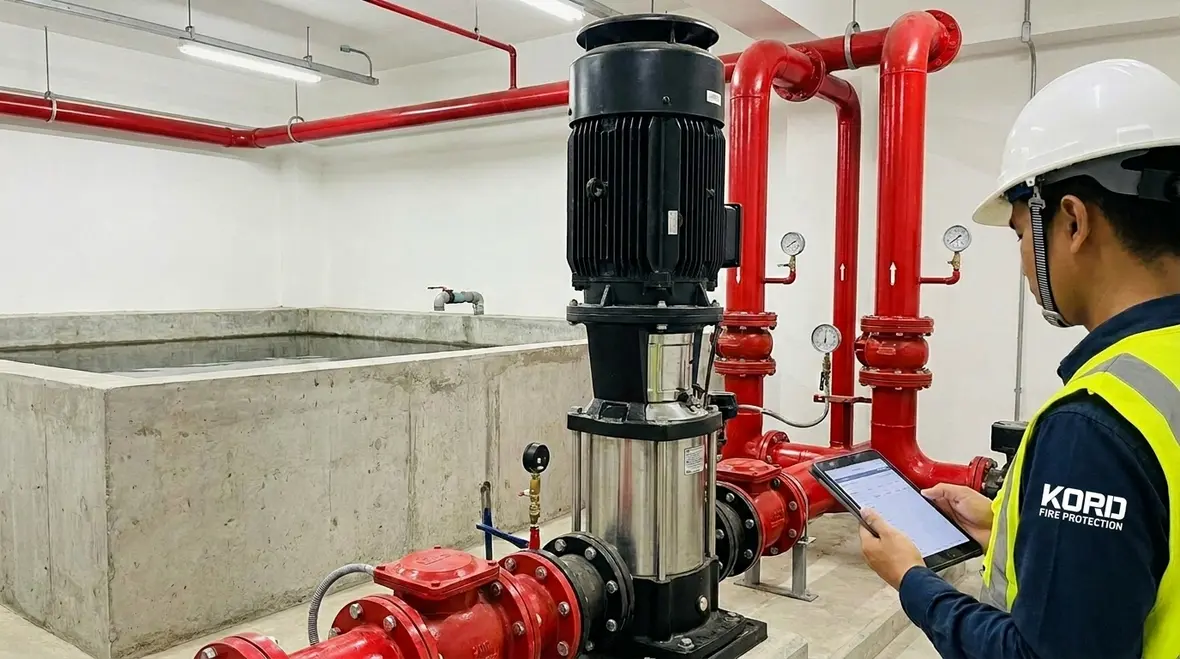
For facilities across Australia, the vertical turbine fire pump installation requirements start with one goal: deliver reliable fire flow when it counts. NFPA 20 Chapter 7 focuses on vertical shaft turbine pumps that draw water from below grade sources like tanks, wells, and reservoirs. Before anyone argues about paint color or placement, the team must meet the code intent through correct pump selection, suction supply conditions, and installation practice.
And yes, if the system fails, it does not care that the project looked great in the morning. Fire protection behaves more like a strict referee than a friendly coach. It either performs or it doesn’t. So, Kord Fire Protection helps teams plan and execute these installs with the discipline the standard expects.
Code intent matters more than appearances
That is the real theme of Chapter 7. The pump arrangement has to support dependable operation under actual fire demand, not just on a submittal sheet. If the source conditions are wrong, or the install ignores how the pump behaves in the field, the system can become expensive and disappointing in a hurry. Kord Fire Protection’s broader NFPA 20 fire pump overview is a helpful companion if your team wants the bigger compliance picture before drilling into Chapter 7 details.
What NFPA 20 Chapter 7 requires for pump and water supply setup
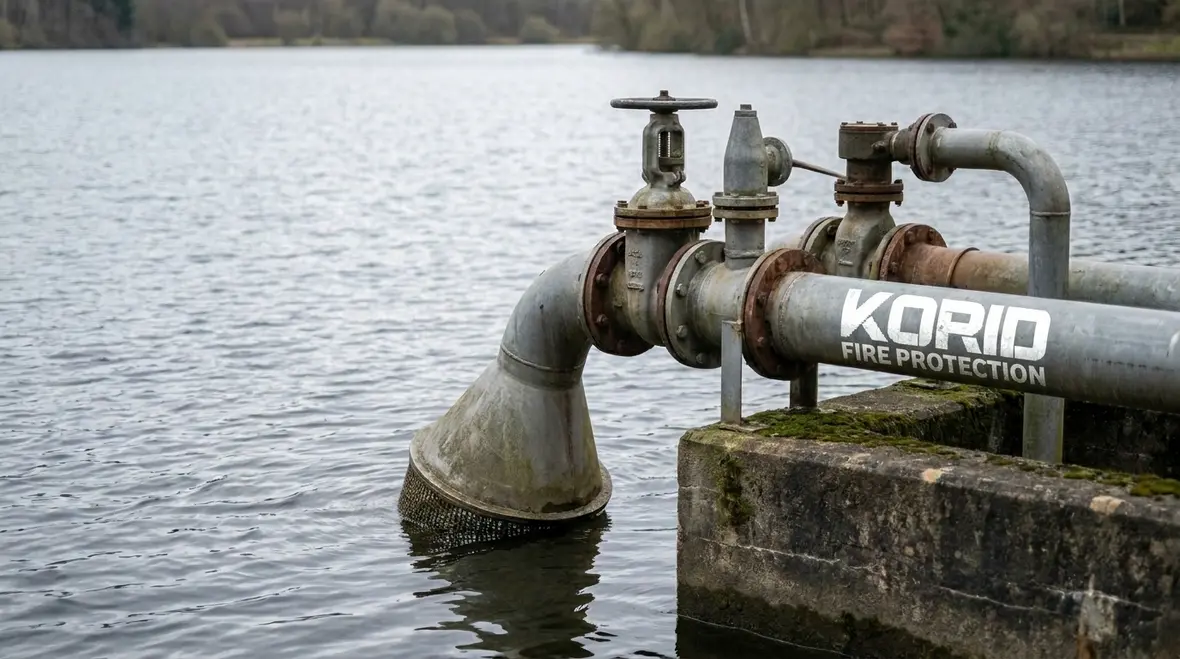
NFPA 20 Chapter 7 treats the water source as part of the engine. Therefore, the water supply must support the pump across expected demand and operating conditions. That means suction conditions matter, including the source’s ability to provide flow without creating loss-of-pressure problems. Moreover, the pump and its controls must work together so the system starts correctly and sustains flow.
In practical terms, project teams must verify the tank or reservoir configuration, confirm the pump’s vertical shaft design suits the depth and hydraulic conditions, and ensure the installation supports stable suction. Additionally, the layout must avoid conditions that lead to air entrainment, excessive turbulence, or water starvation under fire demand.
Because facilities often operate with tight timelines, this is where teams can get sloppy. Yet sloppy work shows up later, usually during the test. So, careful planning now protects budgets later.
What teams should verify before installation starts
- Water source type and expected operating range
- Depth, drawdown, or level variation that could affect stability
- Pump configuration that matches the source and duty point
- Controls that coordinate correctly with the driver and system response
- Intake conditions that reduce turbulence, debris issues, and air pull
How teams meet vertical turbine fire pump installation requirements during installation
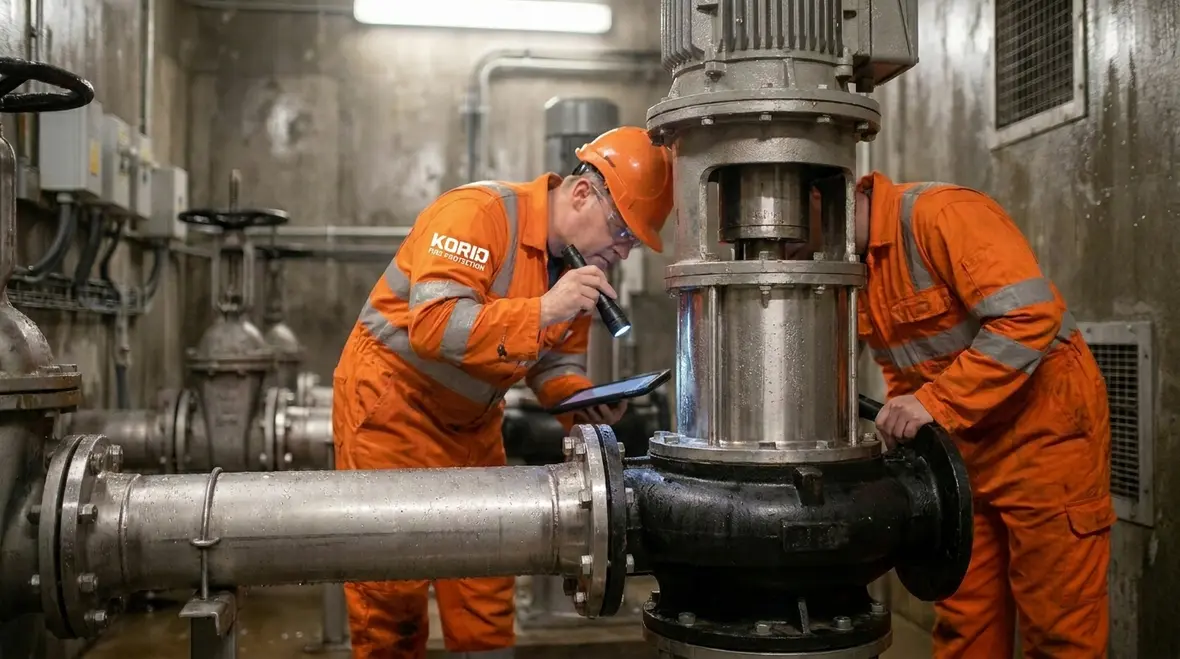
When a vertical turbine pump sits in a wet well or tank, it lives in a world of wet, vibration, and space constraints. As a result, the vertical turbine fire pump installation requirements are not just checkboxes. They guide how installers align equipment, manage shaft and coupling details, and create a stable system that stays reliable.
First, teams must handle pipework and fittings correctly so the pump discharge achieves the required pressure and flow targets. Next, they must address electrical and control connections with proper protection and correct routing. Then, the pump foundation or mounting arrangement must suit the actual well or tank structure, not a generic drawing assumption.
Also, installers need to confirm that the system’s components allow safe inspection and service access. That detail affects long-term uptime. If the team cannot access the pump for maintenance, the system becomes a museum piece, and museums do not spray water.
Finally, teams must ensure correct pre-start checks and alignment verification. Small misalignments can create wear faster than expected, and fire pumps do not reward improvisation.
Installation discipline that saves pain later
The smartest crews treat alignment, support conditions, and control terminations like serious business from day one. That approach pays off during commissioning, because a well-installed system gives fewer surprises, cleaner test results, and fewer awkward conversations that begin with, “Well, that’s not ideal.”
Tank, well, and reservoir suction: the part that quietly breaks systems
NFPA 20 Chapter 7 places heavy emphasis on suction conditions because many failures trace back to water supply behaviour, not the motor. So, for tank, well, and reservoir systems, teams must consider water level variation, supply stability, and how the pump behaves under sustained demand.
In a well, for example, the depth and the drawdown profile can affect suction stability. In a reservoir, stratification and intake design can impact water quality and performance. Meanwhile, in a tank, the inlet arrangement and how the system responds to changing water levels during long discharge can influence pump stability.
To prevent surprise issues, teams should verify intake design, confirm that flow approaches remain stable, and make sure the pump does not pull air under any credible operating scenario. Additionally, it helps to plan for debris and sediment conditions that can reduce effective flow.
When a facility treats suction like an afterthought, the system eventually “pays interest” during the worst possible moment. Kord Fire Protection supports clients by aligning the installation approach with ongoing service realities, so inspections and testing match the actual design intent.
Testing, commissioning, and documentation for code-ready performance
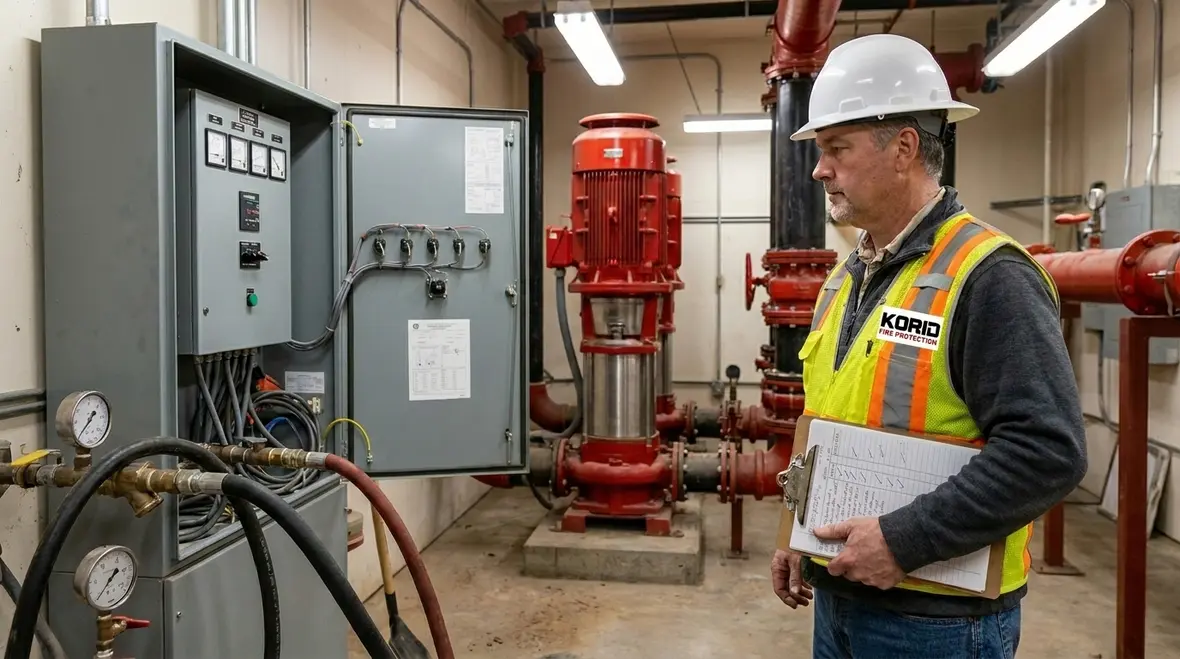
After installation, the job only becomes real when the system proves it can perform. Therefore, the commissioning process should verify that controls, starting sequence, pump operation, and discharge performance match the project expectations. Tests should also validate that the pump delivers the required flow and pressure, and that the system responds as it should under operating conditions.
However, a pass on test day does not fix weak documentation. Fire systems live in the paperwork world as much as the water world. Owners and operators need clear records that show what was installed, how it was tested, and how it meets the applicable requirements.
This is where a partner matters. Kord Fire Protection can become vital by coordinating commissioning support, helping teams close out documentation, and preparing the system for the next inspection cycle. In other words, they help ensure the paperwork does not read like a mystery novel.
Moreover, strong commissioning reduces downtime for future service. It also helps the facility avoid repeated callouts caused by unclear test evidence or missing operational details.
What good closeout should include
- Verified start and control sequence records
- Flow and pressure test evidence
- Installed equipment details matched to design intent
- Inspection and service access notes
- Documentation that future technicians can actually use without detective work
Common pitfalls on vertical shaft turbine fire pump projects in Australia
Teams across industrial, retail, and commercial facilities often run into similar traps. First, they underestimate suction-related conditions, then they blame the pump when performance drops. Second, they rush alignment and coupling checks, then experience faster wear and vibration issues. Third, they treat control wiring as “good enough,” only to find start-up behaviour inconsistent during tests.
Another frequent issue is planning for access. If installers do not build access into the design, later service becomes slower, more expensive, and sometimes unsafe. And yes, teams still do it, because people still believe that “we’ll figure it out later.” Later always arrives, and it usually arrives with more cost.
To avoid these outcomes, the project should follow a disciplined workflow: confirm design assumptions early, install with attention to alignment and piping, verify electrical and control requirements, and then test and document thoroughly.
Kord Fire Protection supports that workflow by bringing field practicality to the code intent. They help teams connect design to install reality, so the system stands up during inspections, testing, and actual emergencies.
Why Kord Fire Protection can support the full scope
NFPA 20 Chapter 7 covers core technical expectations, but the real-world job includes coordination, verification, and service readiness. Kord Fire Protection can become a vital partner by supporting vertical shaft turbine fire pump installations with a focus on code alignment, commissioning discipline, and ongoing service support.
So, instead of treating the pump as a standalone purchase, facilities gain a structured approach. They can manage risk, reduce rework, and improve the chance that the system performs the first time and the next time, too.
And if anyone jokes that fire pumps run on “hope,” Kord Fire Protection answers calmly with evidence, documentation, and dependable process.
FAQ
Ready to keep your system code-ready and serviceable?
NFPA 20 Chapter 7 demands more than a pump delivery. It asks for a dependable system tied to suction behaviour, correct installation practice, and real commissioning outcomes. Kord Fire Protection helps industrial, retail, and commercial teams across Australia move from design intent to field performance with documentation and service readiness that holds up over time.
Reach out to plan your next vertical turbine fire pump installation and keep risk where it belongs: in the past, not on test day. That is the difference between a project that merely gets installed and one that stays dependable when the pressure is real.

Join Our Newsletter!
Get the latest fire safety tips delivered straight to your inbox From our Newsletter.