NFPA 20 Fire Pump Flow Test Requirements 14.3 to 14.6
Quick Answer: NFPA 20 Sections 14.3 to 14.6 cover fire pump flow testing, the test equipment used, and how results must be recorded and evaluated. Facilities need accurate measurements, safe set up, and clear documentation so pumps perform when seconds count. Kord Fire Protection can manage the whole process like a calm pro, not a chaos artist.
In the field, the fire pump flow test requirements NFPA 20 are not just paperwork. They drive the real-world checks that confirm the pump delivers the right flow and pressure under realistic conditions. This article walks through NFPA 20 Sections 14.3 to 14.6, including fire pump flow testing, test equipment, and how results should be handled. It also explains why a steady, experienced partner matters for industrial, retail, and commercial sites. Near the practical side of that work, Kord Fire Protection’s full fire protection services support coordinated inspection, testing, and follow-through across the broader life safety picture. And for teams reviewing system design context as well as testing, Kord also covers how NFPA 20 regulates fire pump systems.
And yes, the test can feel a bit like a gym workout for pumps. But unlike a missed leg day, poor testing can catch up quickly during an emergency.
Fire pump flow testing under NFPA 20: what the standard expects
NFPA 20 Sections 14.3 to 14.6 focus on verifying that the fire pump performs as designed. Therefore, the test does not aim for “good enough.” It aims for measured performance that matches the documented requirements for flow, discharge pressure, and related system conditions.
First, the tester establishes a controlled test setup and runs the pump in a way that supports safe, repeatable readings. Next, the equipment collects key data points during the flow test. Then, the team records the results and checks them against the acceptance criteria tied to the pump’s performance and the system design.
In practice, facilities often have mixed environments: industrial plants with vibration concerns, retail centres with schedule pressure, and commercial buildings with multiple life safety systems that must stay coordinated. Consequently, the testing must be planned carefully so it fits real operations while still meeting the fire pump flow test requirements NFPA 20 scope.
Why stable operating points matter during the test
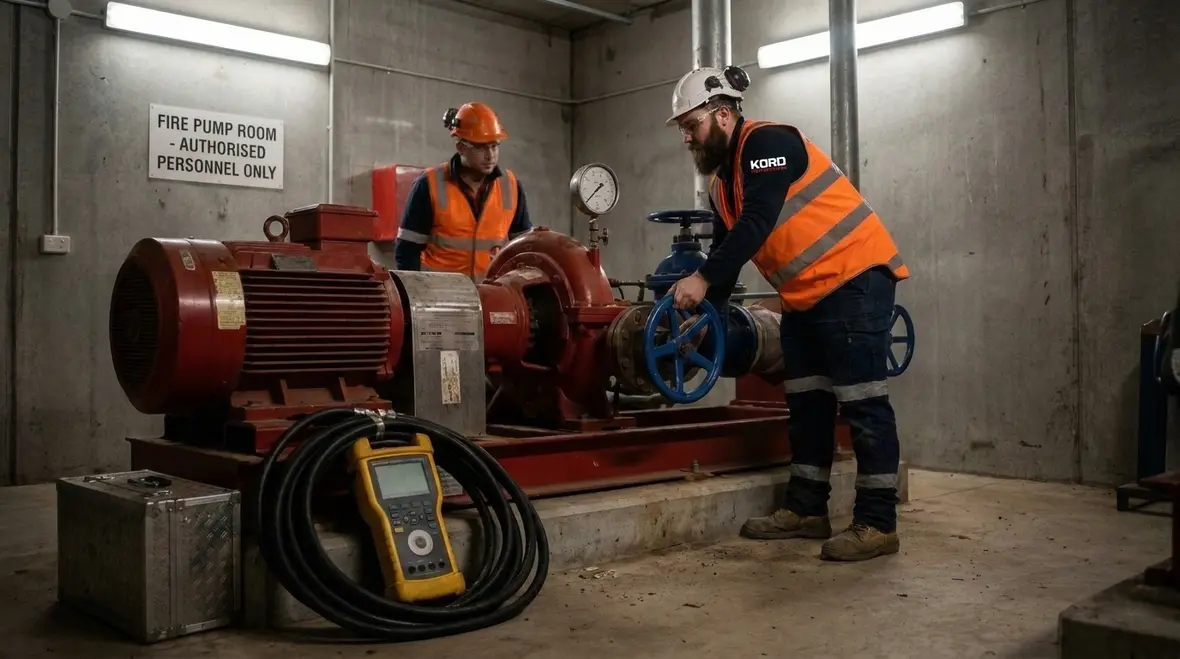
A rushed flow test can create numbers that look official but tell a messy story. Stable readings matter because pump pressure and flow can move during startup, valve adjustment, and transition between test points. When technicians allow the system to settle, the final results become more useful for trending, troubleshooting, and proving whether the pump is actually delivering what the design expects.
That steady approach also helps avoid the classic maintenance problem where everyone leaves with a report but nobody leaves with confidence. A proper flow test is supposed to reduce guesswork, not dress it up in neat handwriting.
How fire pump flow testing gets planned and executed
A good test starts before the pump starts. Technicians review the pump’s information, the system arrangement, and the target operating points. After that, they confirm the test configuration needed to obtain stable readings at the chosen flow rates.
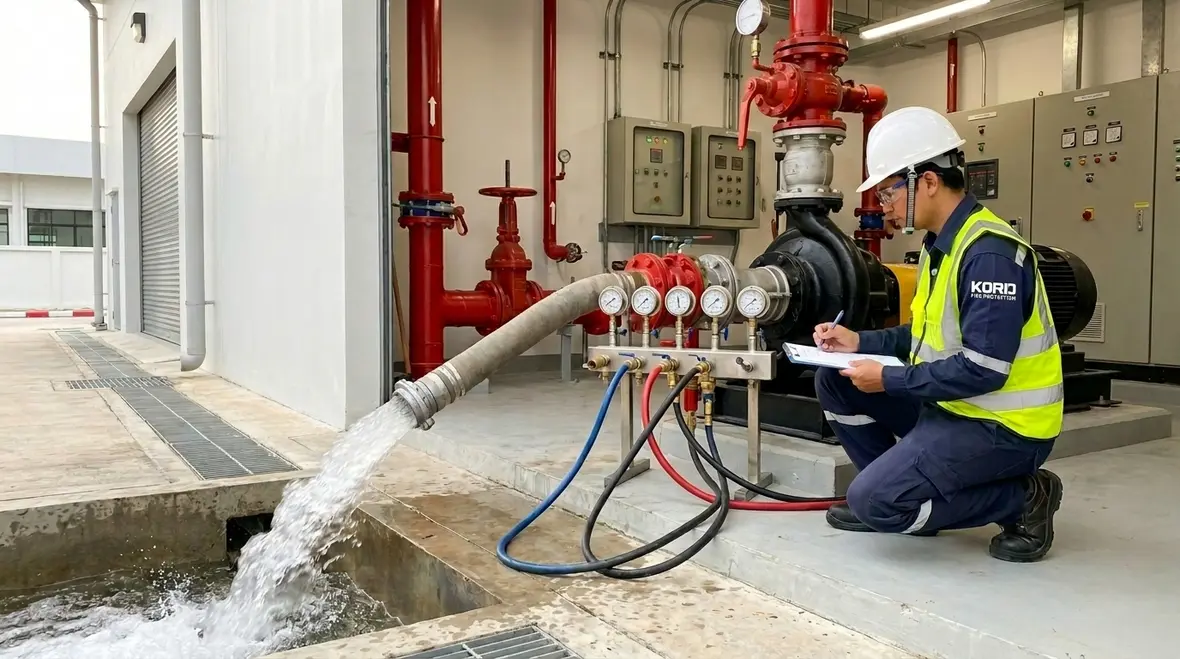
Then they run the pump and hold conditions long enough for measurements to settle. Because pressure and flow can fluctuate during transitions, the team watches for stable operation rather than grabbing numbers too early. After the readings are complete, they restore normal system conditions and ensure the test does not leave anything in an unsafe or altered state.
Also, job timing matters. Retail and commercial sites may prefer testing during off peak hours. Industrial sites may need coordination with operations teams, permits, or shutdown planning. As a result, a partner like Kord Fire Protection can schedule testing, coordinate access, and manage documentation, so the fire pump testing stays predictable even when the rest of the site feels like a sitcom.
Site coordination is part of test quality
People sometimes treat coordination like an admin side quest. It is not. Access control, water discharge planning, communication with facility staff, and restoring the site after testing all affect whether the test is smooth, safe, and reviewable later. Even a technically sound procedure can become a headache if nobody planned for where the water goes, who approves the work window, or how system status is communicated during the test.
Test equipment and instrumentation for accurate results
NFPA 20 Sections 14.4 and 14.5 place emphasis on reliable test equipment and proper installation of instrumentation. Accurate results depend on using instruments that can measure with the needed precision and applying them correctly.
Common equipment needs include gauges and measurement devices for pressure and flow, plus the proper fittings and methods to place sensors where they actually reflect pump discharge conditions and system response. In addition, the team must account for how installation affects readings. A sensor placed in the wrong location can turn a compliant test into a confusing mystery, and nobody wants that.
Calibration and condition checks also matter. If an instrument drifts or reads incorrectly, the report may look “clean” but fail the intent of the fire pump flow test requirements NFPA 20. Therefore, technicians verify equipment status, use correct ranges, and ensure readings stay consistent across the test duration.
That is where Kord Fire Protection strengthens the job. They treat test equipment like it matters, because it does. By pairing qualified technicians with a disciplined equipment approach, Kord reduces the chance of rework, minimizes downtime, and keeps the results defensible.
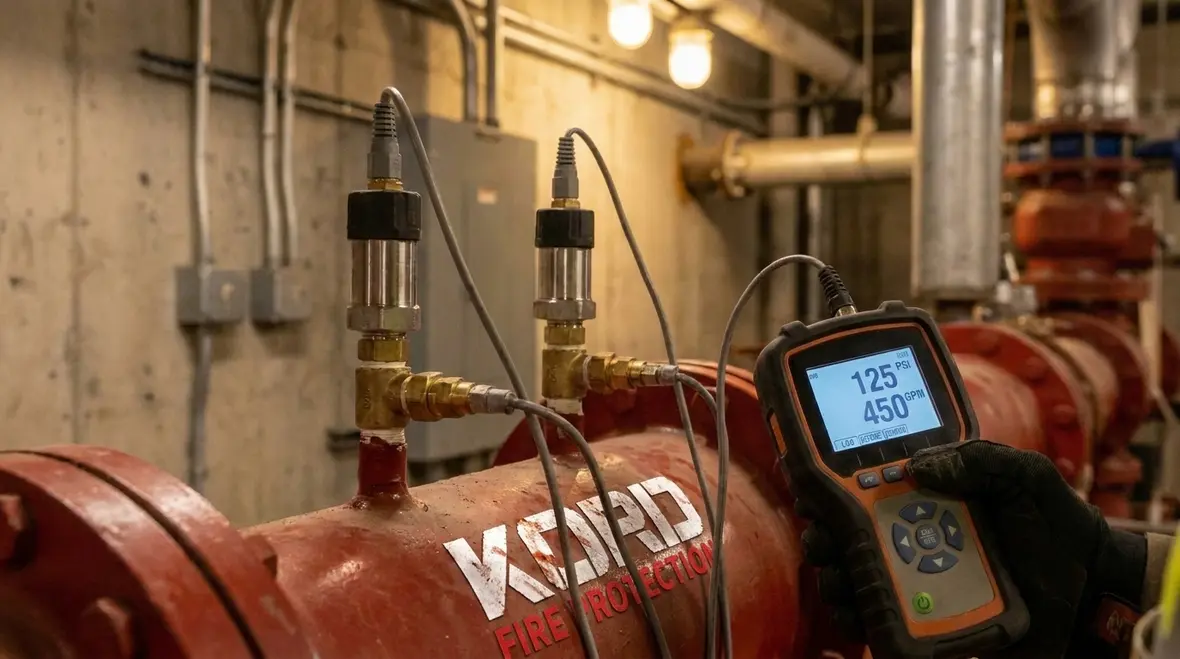
What accurate instrumentation really protects
Good instrumentation protects more than a line on a report. It protects decisions. Facility owners may use the data to plan repairs, justify budgets, respond to insurer questions, or compare this year’s performance to prior tests. If the original numbers were weak, every later decision starts wobbling too. That is why disciplined measurement is not a small detail. It is the foundation that keeps the whole compliance conversation from wandering off into the weeds.
Interpreting test results: documentation that holds up
Section 14.6 focuses on results handling. The goal is not simply to record numbers. The goal is to document outcomes in a way that shows the test was conducted correctly, with traceable measurements and clear reference points.
Typically, results should reflect the measured flow and the associated discharge pressure at the tested conditions. Technicians also document the test configuration, any relevant operating details, and the acceptance or evaluation approach tied to the system design and pump setup.
Then comes the real value: interpreting what the results mean. If readings show the pump underperforming, the report should guide what comes next, such as troubleshooting steps, impeller or valve checks, suction conditions review, or other corrective actions. Conversely, if the results meet expectations, the documentation supports confidence that the system will perform when needed.
For facility owners, this means less guessing and fewer emergency surprises. It also means easier coordination with insurers, auditors, and internal compliance teams that care about evidence, not vibes.
Records should be useful, not just official looking
The best fire pump test records answer practical questions quickly. What was tested, under what conditions, using which instruments, and with what outcome? If someone reviewing the file six months later cannot follow that chain, the paperwork may exist, but the value is thin. Strong documentation gives owners a clean baseline for future comparison and gives technicians a better starting point if performance changes later.
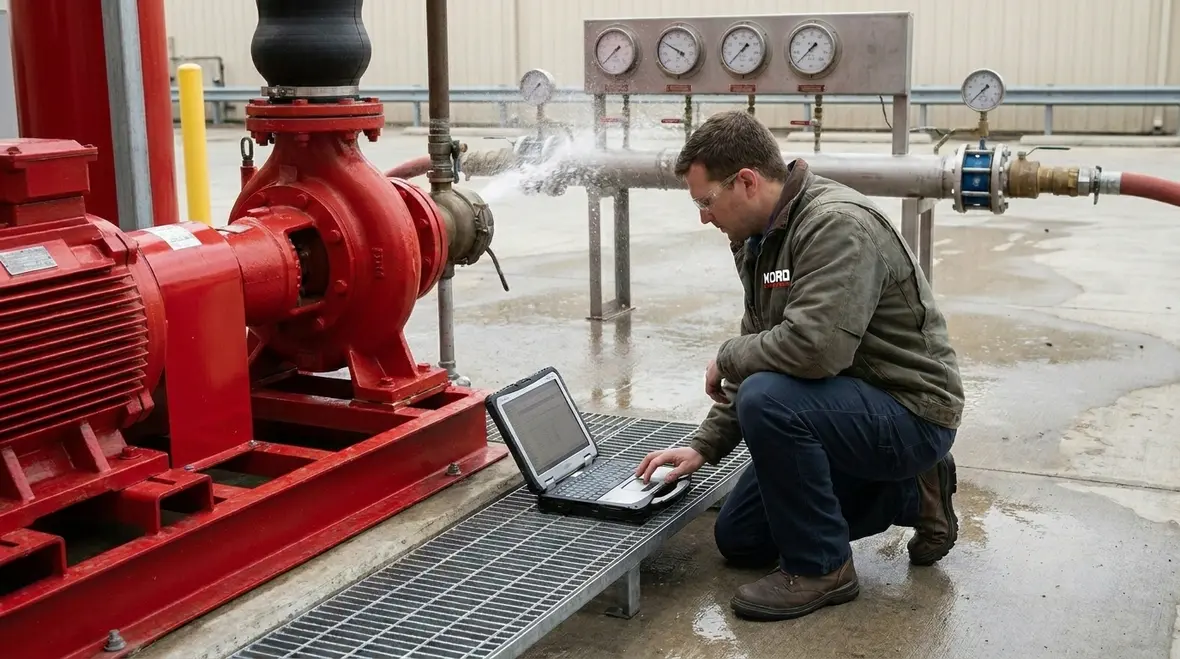
Common challenges during fire pump flow testing
Even with strong procedures, facilities face predictable hurdles. First, some sites have limited space for safe setup, so technicians must plan access and routing for test apparatus. Second, water supply conditions can vary, and that can influence how stable the readings become. Third, some systems include configurations that require extra coordination to avoid unintended impacts on other services.
Additionally, schedules and staffing can squeeze testing windows. When a team arrives for testing but has to wait on permits, site access, or shutdown approvals, the test becomes slower and more stressful. And stress makes mistakes more likely. Yes, pumps cannot roll their eyes, but people can.
Kord Fire Protection helps manage these realities with practical site coordination. They plan for the “how” and the “when,” not just the “what.” As a result, the job stays controlled, safer, and easier to review later.
One process, two views: how crews and owners use the same test
| Field Crew View | Facility Owner View |
| They confirm stable pump operation, verify measurement placement, and ensure results are repeatable and defensible. | They receive clear records that support compliance, risk management, and future planning. |
| They focus on instrumentation, test configuration, and safe transitions before and after testing. | They see what passed, what needs attention, and what actions come next without guesswork. |
When both sides align, the test becomes more than a task. It becomes a decision tool. And that is how compliance turns into real operational confidence.
Partnering with Kord Fire Protection for reliable compliance
NFPA 20 Sections 14.3 to 14.6 demand a disciplined approach to fire pump flow testing, test equipment, and results. Therefore, facilities benefit from a partner who treats these requirements like a serious job, not a tick box.
Kord Fire Protection can become that vital partner by delivering coordinated testing, careful instrumentation handling, and results documentation that stands up to review. In other words, they help reduce uncertainty and keep your fire pump system aligned with the expectations behind the fire pump flow test requirements NFPA 20.
Plus, when the unexpected happens, like an access delay or a measurement issue, Kord can address it with professionalism and clear communication. Nobody wants a fire pump test that turns into an unscheduled adventure. Kord aims to keep it boring in the best possible way, because boring means controlled.
FAQ
Conclusion
Fire pump flow testing done right protects people and property, and it keeps compliance clear and defensible. NFPA 20 Sections 14.3 to 14.6 require careful execution, proper test equipment, and solid results documentation.
If your facility wants calm, controlled testing with trustworthy records, Kord Fire Protection is ready to help. Reach out to schedule an assessment and plan your next test with fewer surprises and more certainty.

Join Our Newsletter!
Get the latest fire safety tips delivered straight to your inbox From our Newsletter.