Electric Fire Pump Commissioning Checklist NFPA 20 Steps
Quick Answer: An electric fire pump commissioning checklist aligns NFPA 20 Chapters 9, 10, and 14 steps with real-world field testing. It verifies the pump, driver, controls, alarms, and acceptance documentation before operations trust the system. Kord Fire Protection can guide compliance, testing readiness, and handoff so the job stays audit proof.
If you are lining up commissioning support alongside broader system care, Kord Fire Protection’s full fire protection services can help connect pump readiness with inspections, testing, and coordinated life safety planning across the facility.
NFPA 20 commissioning starts with a checklist that works in the real world
In industrial, retail, and commercial sites, fire pumps are not nice to have. They must perform when everything else is chaos. That is why an electric fire pump commissioning checklist matters early and often, especially when NFPA 20 Chapters 9, 10, and 14 shape the plan. In the first 100 to 150 words, the checklist sets the rhythm: verify the electrical and control components, prove the operational sequences, and document acceptance so nobody is guessing during an inspection.
And yes, this is the part where people think commissioning is like fitting a TV remote. It is not. A fire pump system needs proof, not vibes. However, with the right structure, the process becomes calmer, clearer, and easier to defend. For deeper code context, it helps to review how NFPA 20 regulates fire pump systems before field acceptance begins, because that bigger picture makes the checklist more than a stack of boxes to tick.
NFPA 20 Chapter 9: prepare the system for electrical acceptance
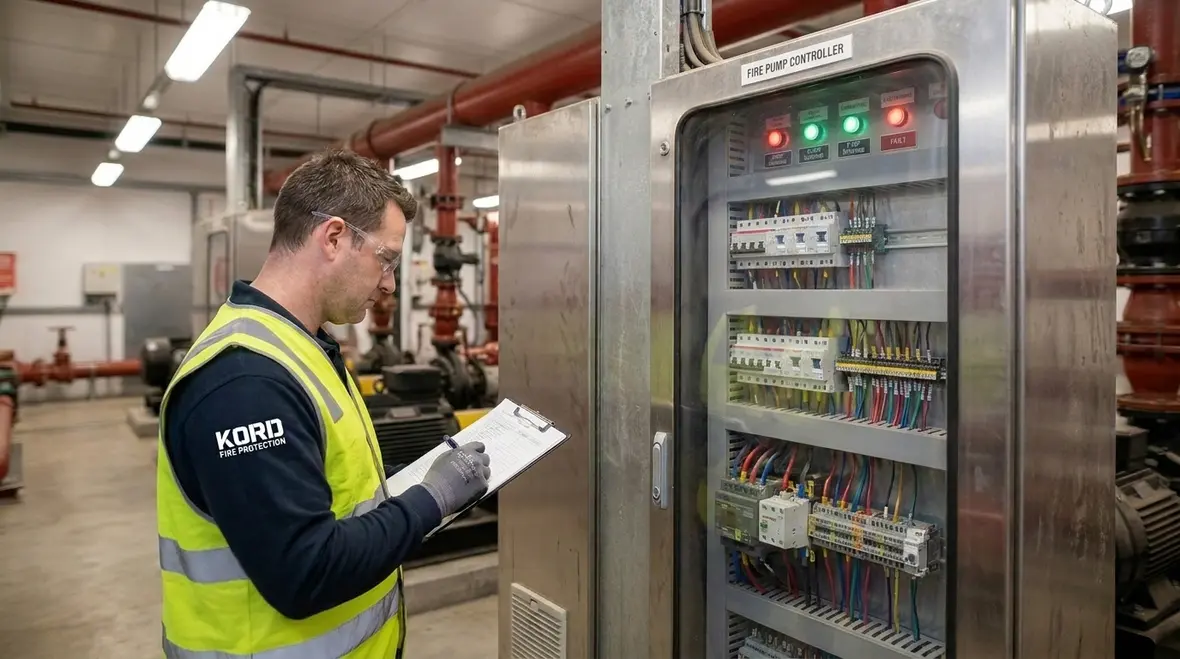
NFPA 20 Chapter 9 focuses on the system’s electric fire pump setup, and it guides how the team should confirm readiness before functional tests begin. Therefore, an effective electric fire pump commissioning checklist starts with verifying the pump room conditions, power supply arrangement, and control circuit integrity. Next, the team confirms that the electrical components match the approved design, and that all interlocks and protective devices are in place.
To keep this step practical, the checklist should capture details that inspectors and site managers actually care about. For example, it should include what was inspected, what was measured, and what was found compliant. In addition, it should note any field adjustments and how those changes remained consistent with the engineered intent. This is where a lot of projects either look polished or suddenly start looking like a group assignment nobody fully owned.
Kord Fire Protection often becomes the vital partner here. Their fire pump content emphasizes power reliability, controller behavior, and the need for supply and protective coordination to agree before anyone calls a system reliable. Consequently, the contractor is not building a maybe it works system, but a system that can pass testing and support safe operation. Early electrical acceptance is not glamorous, but it is the part that keeps late-stage surprises from kicking the door in.
What teams should verify before live functional testing
- Power supply characteristics are confirmed and documented.
- Controller wiring matches approved drawings and site labeling.
- Protective devices are installed with settings recorded.
- Pump room conditions support safe operation and access.
- Interlocks and supervisory inputs are checked before sequence testing.
NFPA 20 Chapter 10: prove the pump operates the right way, every time
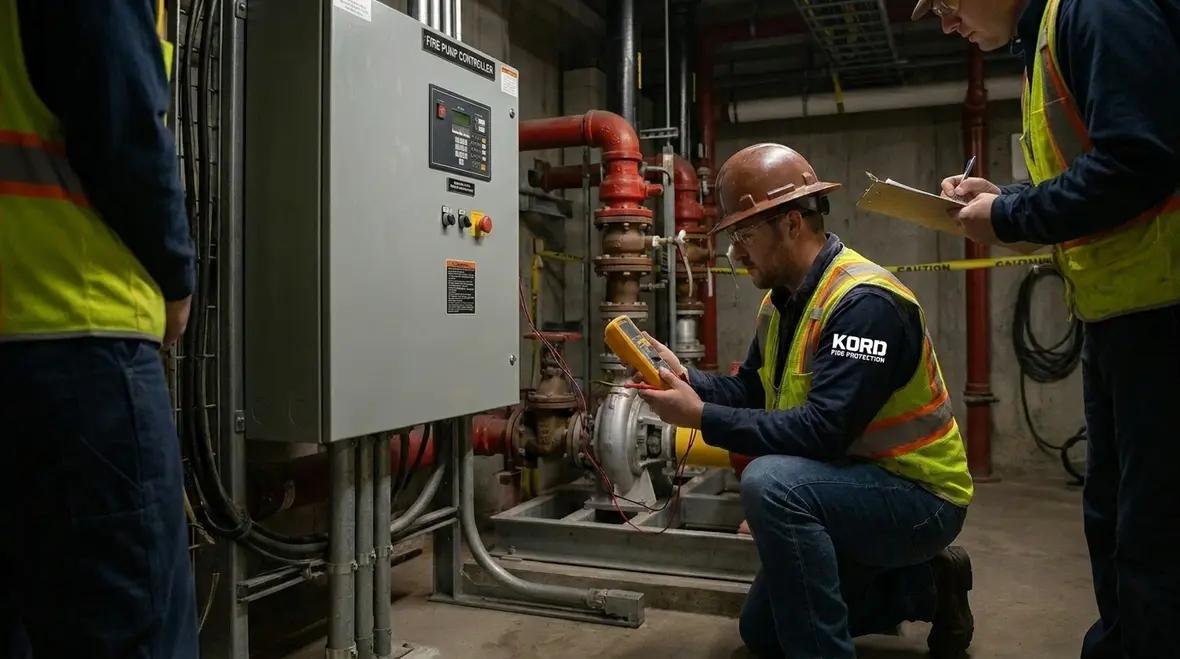
When Chapter 10 comes into play, the focus shifts to performance verification. Even if all wiring looks perfect, commissioning must show that the pump delivers the expected behavior across the control sequences. Thus, the electric fire pump commissioning checklist should guide the team through start, stop, transfer logic, alarm signals, and protective shutdowns.
In the field, the biggest failure pattern is not usually a broken pump. Instead, it is a control sequence that does not behave under the conditions the site will create. Therefore, the commissioning plan must simulate realistic signals and confirm the pump responds exactly as intended. This includes confirming that the control panel reads input devices correctly and that the pump starts without delay beyond acceptable limits. In other words, the test should resemble reality, not a best-case fantasy where every signal arrives politely and on time.
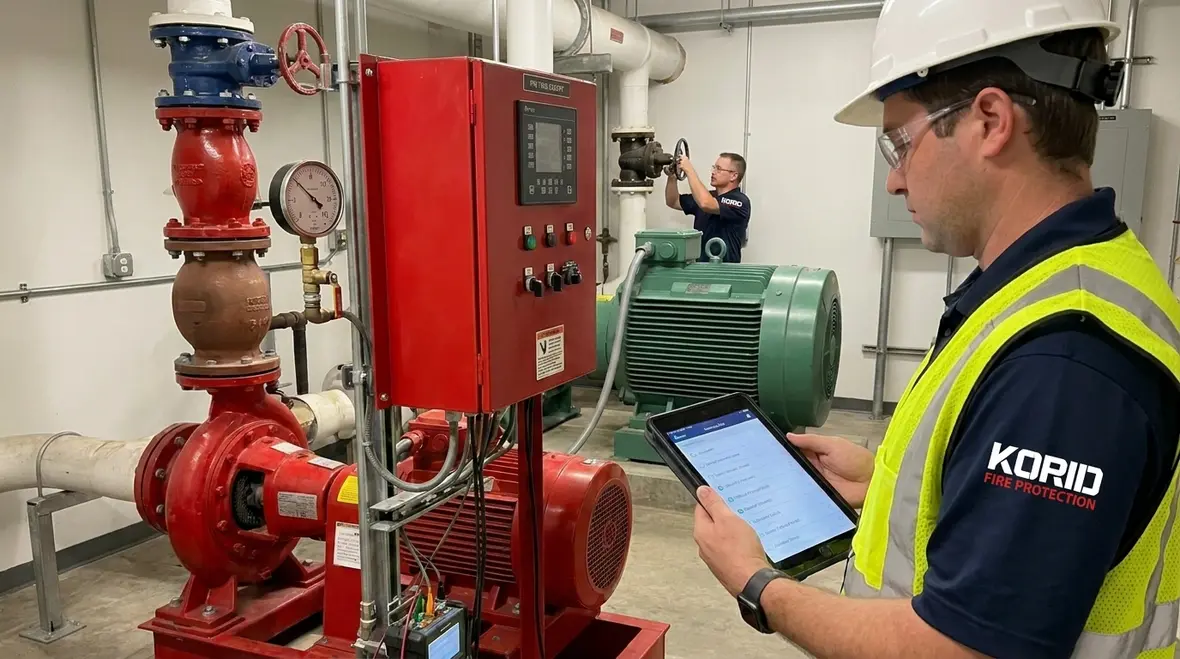
To keep the work moving, Kord Fire Protection can streamline the process by coordinating testing expectations between installers, electrical contractors, and facilities teams. Meanwhile, they also help ensure that witness points are scheduled and that documentation collects as the team goes, not after the fact like a forgotten receipt at tax time. That alone can save a project from the classic end-of-job scramble where everyone swears the notes exist somewhere.
Sequence testing should answer these questions
- Does the pump start under each required initiating condition?
- Do alarms report correctly and on time to the intended destination?
- Does the controller display the right status at each step?
- Are stop and reset actions consistent with the design intent?
- Were all adjustments followed by a documented retest?
NFPA 20 Chapter 14: document the tests and acceptance steps that stand up to audits
Chapter 14 is where the job becomes defendable. Commissioning without documentation is like installing a fire extinguisher and never checking the gauge. It might be there, but it cannot prove anything when the questions arrive. So, the electric fire pump commissioning checklist should include a clear audit trail: test procedures, results, measured values, settings, and acceptance criteria.
In addition, the team should document how the system performed during each required test. If a value falls outside expected limits, the checklist must capture corrective actions and retesting outcomes. This matters because sites often face insurance requirements, regulator expectations, and internal governance standards. When the paper trail is clean, everyone sleeps better. When it is messy, everyone pretends they are fine, while quietly panicking in emails.
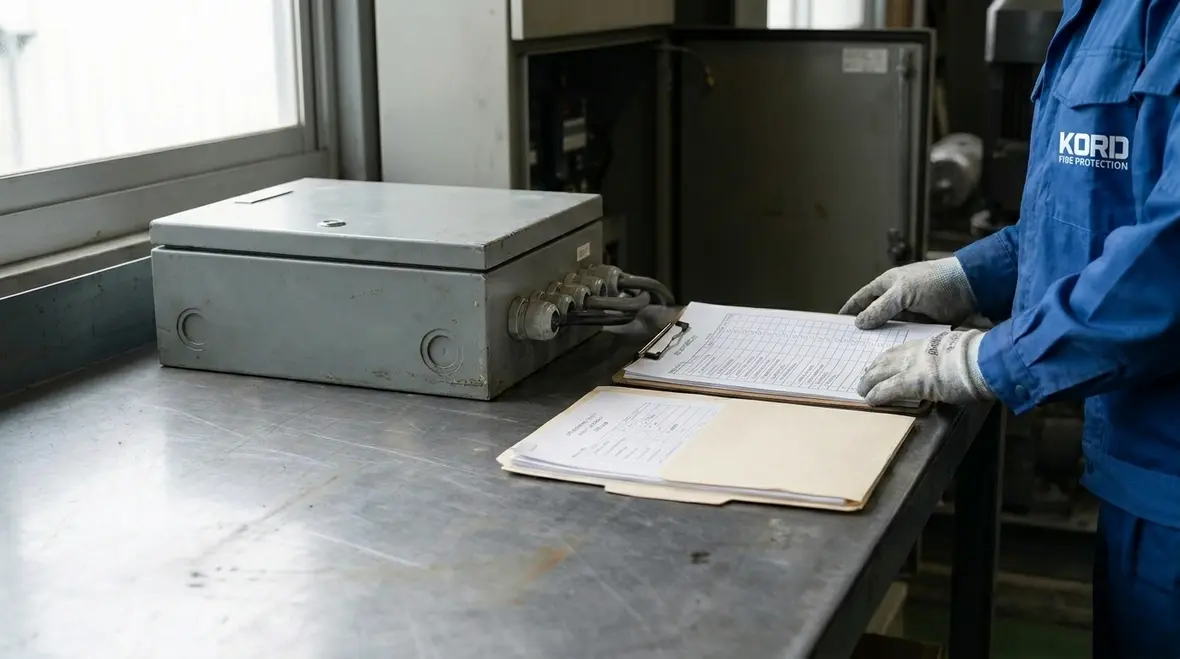
Good documentation also speeds handover. Operations teams do not want a pile of half-labeled test sheets and mystery settings with no context. They want a package that explains what was tested, who witnessed it, what passed, what was corrected, and what the final accepted condition looks like. A solid checklist makes that possible without turning the closeout phase into detective work.
Electrical commissioning tasks for electric pumps: what to verify in the checklist
The best results come when the electric fire pump commissioning checklist breaks work into repeatable tasks. Below are high value items that teams commonly include. However, the exact scope still depends on the engineered design, pump type, and control configuration. The point is not to create paperwork for sport. The point is to make sure every critical function is verified in a sequence people can actually follow under site conditions.
Control, wiring, and protection checks
- Confirm power supply, phase rotation where applicable, and correct voltage levels.
- Verify overload protection settings and protective device coordination.
- Check control wiring integrity for start, stop, alarm, and status signals.
- Confirm panel indications match the required sequence logic.
- Inspect interlocks for doors, cabinet access, and safe operation conditions.
Functional and performance evidence
- Verify pump start sequence under normal and alarm initiated conditions.
- Confirm stop logic and reset requirements after each simulated event.
- Test alarm outputs and confirm correct signal timing and routing.
- Record readings that confirm acceptable operating behavior.
- Retest after any adjustment, then document the change.
Next, the team should ensure the checklist links each task to NFPA 20 Chapter activities. That way, commissioning becomes systematic instead of random. Moreover, Kord Fire Protection can help facilities teams align their internal sign off process with the commissioning documentation, so handover does not stall at the finish line. A checklist tied to code intent also makes witness reviews smoother because everyone can see why each step exists, not just that it exists.
Common commissioning mistakes in commercial and industrial facilities
Commissioning fails in predictable ways. Therefore, teams that plan ahead can avoid the same headaches that show up on too many project retrospectives.
Mistake one: testing only what the contractor expects. Instead, the checklist should follow the sequence logic required by the design, not the quickest path through the panel.
Mistake two: treating alarms as a bonus. However, Chapter 10 and Chapter 14 rely on correct alarm behavior and recorded outcomes. If the alarm output is wrong, the whole system loses credibility.
Mistake three: collecting documentation at the end. Then the team scrambles through photos, handwritten notes, and missing test sheets. In contrast, a strong electric fire pump commissioning checklist captures evidence while each test runs.
Mistake four: delaying coordination with facilities. Because pump rooms often include asset responsibilities, access constraints, and operating schedules, early alignment prevents interruptions and keeps the test window realistic. Kord Fire Protection can serve as the vital partner to coordinate the testing rhythm across stakeholders. Nobody enjoys rescheduling a witness test because one missing approval turned the whole day into expensive small talk.
How Kord Fire Protection supports an electric fire pump commissioning workflow
Kord Fire Protection helps teams turn the commissioning checklist into a reliable service process rather than a one time event. Specifically, they support planning, sequencing, and documentation so compliance aligns with the engineered system intent. Consequently, facilities can reduce downtime and avoid repeat work.
Further, Kord Fire Protection can assist with witness planning, provide practical guidance for field checks, and help ensure the job produces a complete acceptance package under NFPA 20 aligned expectations. Their broader fire pump and lifecycle content consistently points back to the same idea: readiness is built through coordinated testing, reliable power, and records that make sense long after the commissioning team leaves the site.
And when the checklist gets used as a working tool, it stops being paper that exists and becomes evidence that proves. That difference matters when a facility is trying to hand over cleanly, pass review, and avoid reopening issues that should have been solved the first time around.
FAQ
CTA: Get a commissioning plan that stays audit ready
If your site is preparing to commission an electric fire pump, Kord Fire Protection can help you build a clear, NFPA 20 aligned workflow and finish with complete acceptance documentation. Contact Kord Fire Protection to schedule a review of your electric fire pump commissioning checklist, tighten test sequencing, and reduce the risk of rework.
When the next inspection arrives, the system will be ready, and so will the paperwork. That is the kind of boring confidence every facility team deserves: no mystery alarms, no missing records, no last-minute panic, just a pump system that does what it is supposed to do when it matters most.

Join Our Newsletter!
Get the latest fire safety tips delivered straight to your inbox From our Newsletter.