NFPA 20 Chapter 4 Fire Pump Installation Requirements
Quick Answer
NFPA 20 Chapter 4 lays out the general requirements for fire pump installation, including site layout, supports, piping basics, electrical considerations, testing access, and how the system must stay dependable. Kord Fire Protection can help facilities in Australia meet these requirements with planning, compliant installation coordination, and ongoing support.
NFPA 20 Chapter 4 sets the stage for safe, reliable fire pump performance by covering the general requirements for fire pump installation. In the first place, it focuses on the conditions around the pump, the physical setup, and the supporting elements that keep the system ready when the worst day shows up. Then it addresses practical details like clearances, accessibility, and system integrity, which many teams learn the hard way during commissioning. After all, a fire pump that cannot be maintained or inspected is like a fire extinguisher stored behind a locked cabinet. Nobody wants that kind of “surprise”.
Near the start of any project, it also helps to connect the pump discussion to broader full fire protection services, especially when sprinkler, alarm, and pump coordination all need to land cleanly on the same schedule. And for readers who want the bigger-picture standard context, Kord Fire Protection also covers that in How NFPA 20 Regulates Fire Pump Systems.
Why NFPA 20 Chapter 4 matters for Australian facilities
Australian industrial, retail, and commercial sites often run on tight schedules, shared utilities, and real-world constraints like plant shutdown windows. Therefore, NFPA 20 fire pump installation requirements help teams avoid vague decisions that later turn into costly rework. Chapter 4 also supports a central goal: dependable operation. Moreover, it pushes designers and installers to treat the pump room and its surroundings as part of the fire protection system, not as an afterthought.
In practice, general requirements cover the “boring” basics that keep everything working. And yes, boring is good here. Boring means predictable, measurable, and maintainable. When a facility follows these NFPA 20 fire pump installation requirements, it reduces failure points tied to improper mounting, unsuitable access, or installation choices that block inspections and testing.
Site, room, and physical setup for the pump
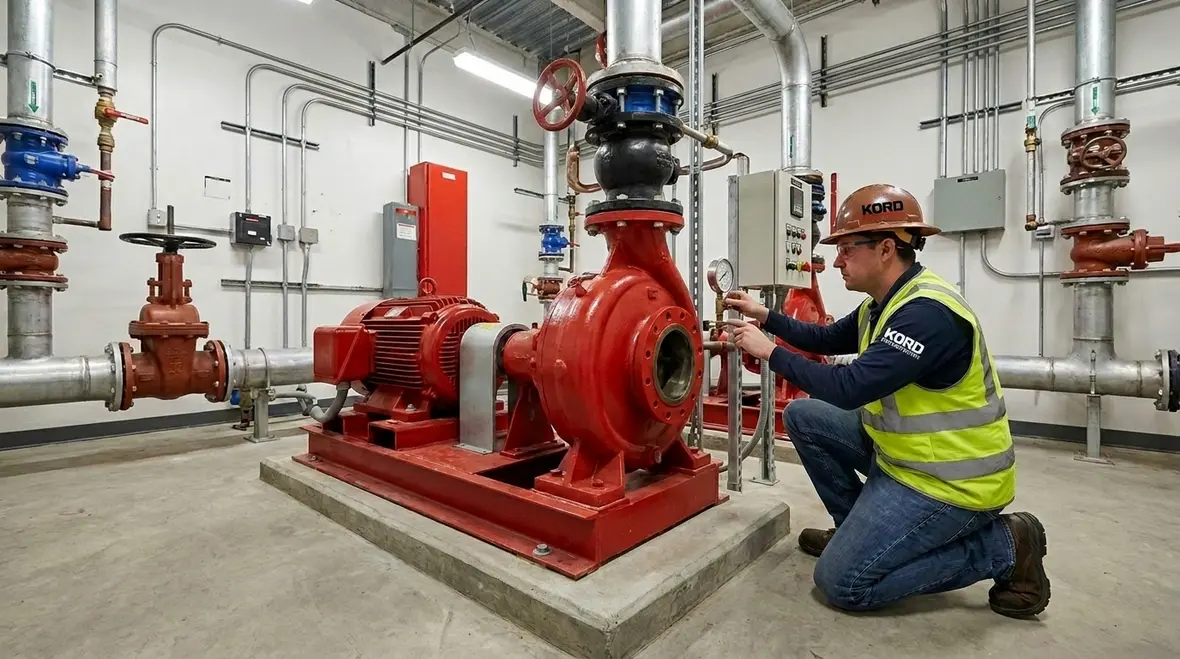
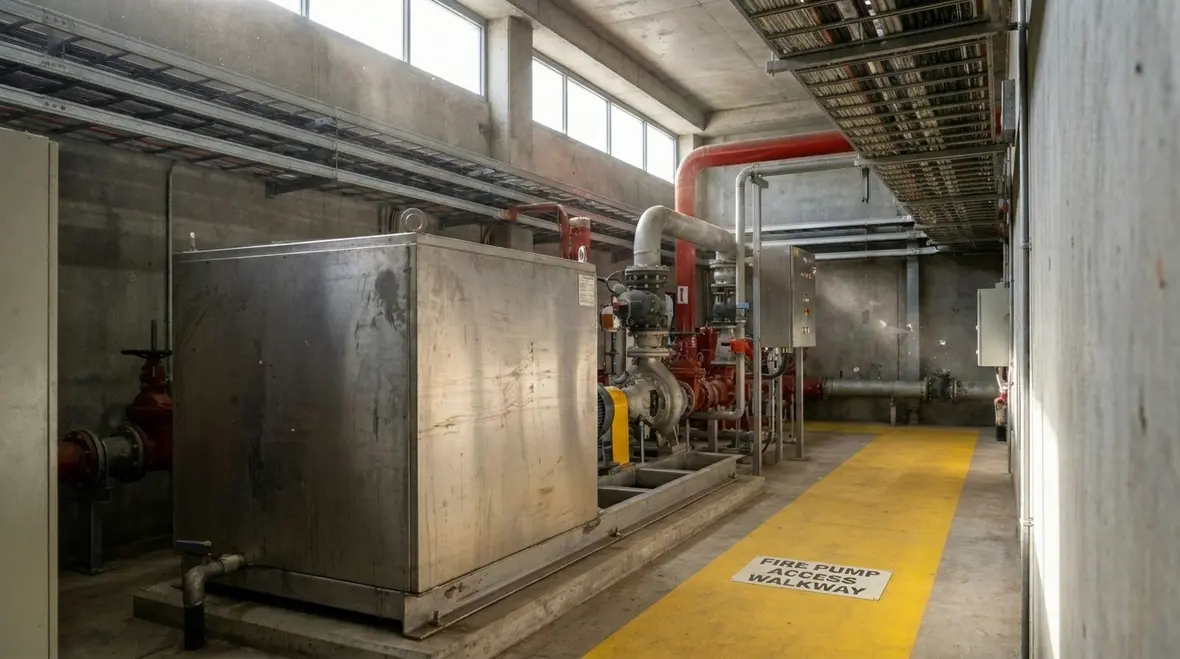
NFPA 20 Chapter 4 expects facilities to provide a pump installation environment that supports operation and maintenance. To start, teams must consider how the pump room is laid out, including access paths, working clearance, and safe entry for technicians. Then they should ensure the room conditions do not create hazards that interfere with performance, such as flooding risks or exposure to contaminants that can damage equipment.
Additionally, installers must handle supports and foundations correctly. If the mounting and alignment are wrong, the pump may run, but it will not run like it should. Over time, vibration and stress can affect bearings, couplings, and piping stress levels. As a result, reliability drops and maintenance costs climb.
Kord Fire Protection helps facility owners and contractors treat the pump room as a system. So, rather than just “placing equipment,” they plan around access, maintenance workflows, and testing needs. That means when commissioning arrives, teams spend less time improvising and more time verifying performance.
What teams should think through before equipment lands
This is where little layout decisions stop being little. Door swing, floor drainage, lifting access, and even how a technician stands in front of a controller can become a problem later if nobody thinks about them early. A good installation is not just code-friendly on paper. It is practical when real people need to inspect, test, repair, and document the system under time pressure.
Electrical and controls that keep the pump ready
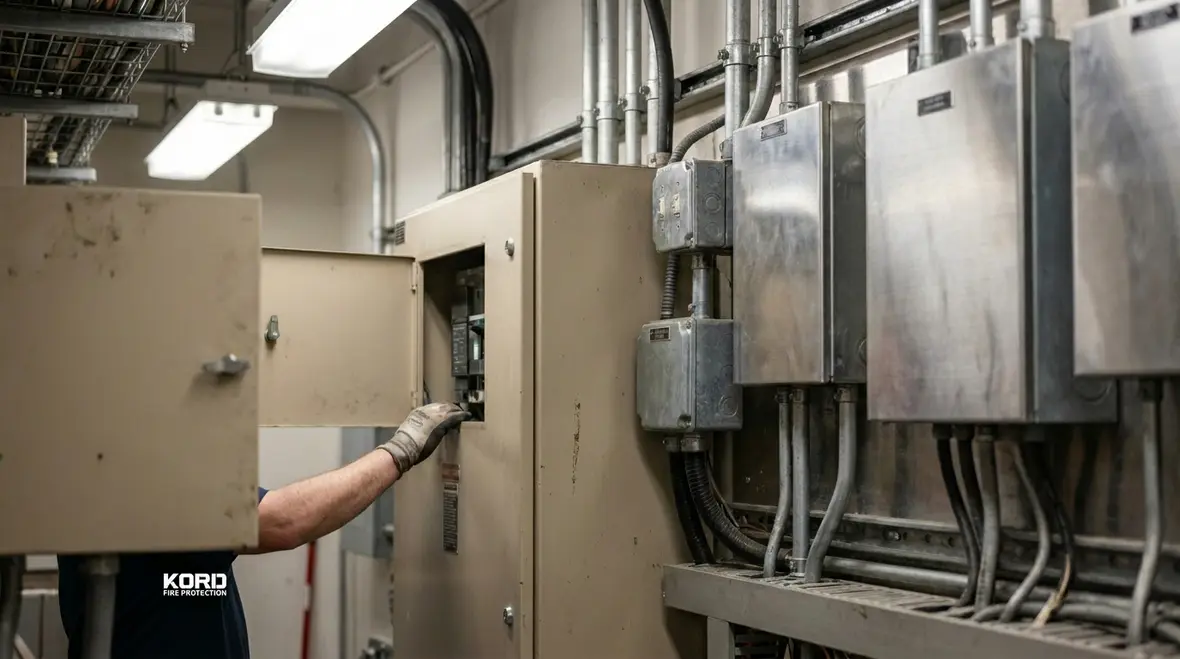
Even when the hydraulics are perfect, the pump still depends on correct electrical and control connections. Chapter 4’s general requirements support this by emphasizing safe installation practices and the need for reliable operation. Therefore, installers must verify wiring methods, protective measures, and control arrangements that support automatic starting and dependable shutdown.
Also, the installation must support testing and inspection. For example, teams should design control access so operators can observe status, reset controls when needed, and perform routine checks. If technicians have to remove equipment just to reach a panel, then the facility will eventually stop testing as often as it should. And that is how you get “tested once, then forgotten” systems.
Since Australian sites often include mixed switchboards and shared power infrastructure, coordination matters. Kord Fire Protection can act as a vital partner by aligning fire pump electrical and control installation steps with the overall fire protection program. That alignment reduces the risk of handoff gaps between trades, which is where delays and compliance headaches usually breed. Readers digging deeper into power strategy may also want to explore reliable commercial fire pump power for Australia and fire pump electrical distribution needs for reliable power.
Why controls deserve more respect than they usually get
People love to talk about pumps, curves, and pressure, but controls quietly decide whether the whole thing behaves properly when it counts. If the control arrangement is confusing, hard to reach, or poorly coordinated with the rest of the installation, the system may technically exist while still being miserable to operate. That is not the kind of compliance anyone wants to explain during an emergency review.
Piping basics and integration with water supply
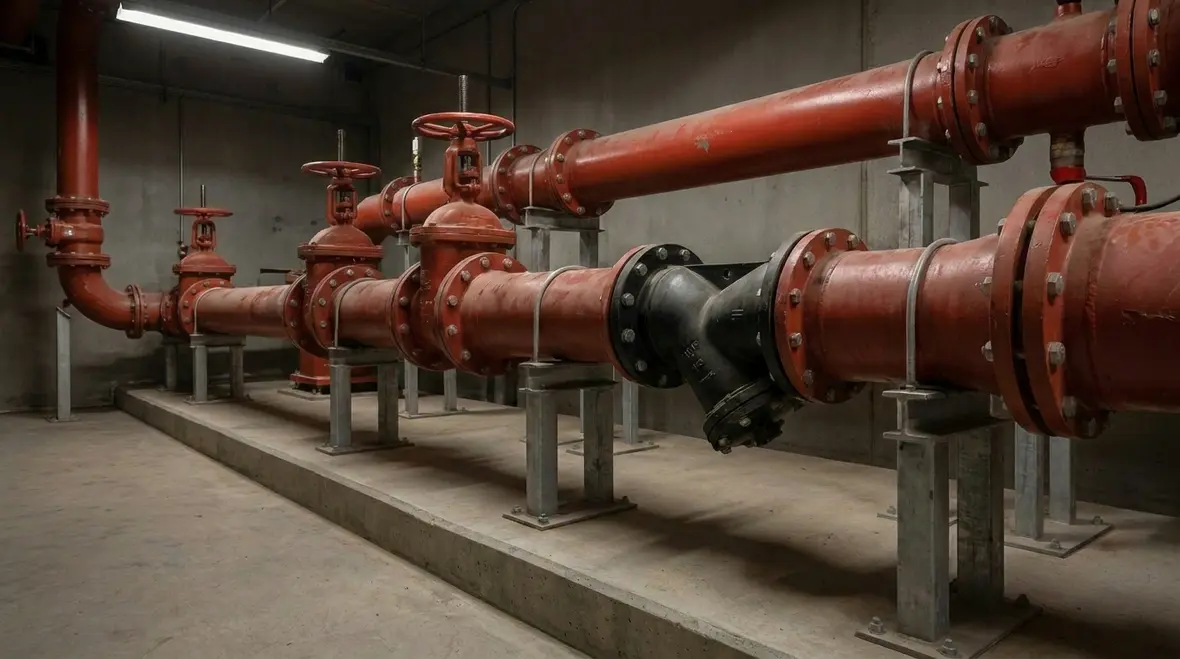
NFPA 20 fire pump installation requirements do not treat piping as a secondary task. Instead, they require piping arrangements that protect system performance and allow inspection and maintenance. Consequently, installers must manage routing, support methods, and connections in a way that avoids stress transfer onto the pump.
In addition, the pump suction and discharge piping must integrate correctly with the water supply and the standpipe or sprinkler system it serves. If valves, fittings, and line sizing do not match the design intent, the pump might meet pressure targets at test conditions, but it may struggle during real demand.
Transitioning from design to install, crews should also manage cleanliness and debris control. Any grit in piping can damage components and reduce flow efficiency. Therefore, flushing and verification steps should happen in line with project requirements and commissioning plans.
Kord Fire Protection can help facilities manage integration across multiple contractors. They help ensure piping work supports the system’s test plan and that the installation aligns with inspection expectations. In short, they help the pump behave like the drawings promised, not like a mystery novel with missing pages.
Testing access and maintenance planning
Chapter 4’s general requirements also focus on usability. Fire pumps are not “install and forget” equipment. They must be maintained, tested, and verified. Therefore, the installation should provide appropriate access to key components and safe working conditions for technicians.
Maintenance planning includes considering how personnel will reach pumps, strainers, controllers, and associated valves. It also includes how they will perform routine flow or functional checks. When access is cramped, maintenance slows down. When maintenance slows down, small issues become big issues. And when big issues show up, budgets start to suffer in a way that makes everyone suddenly learn the meaning of the word “urgency.”
Furthermore, installation should support documentation and audit readiness. Facilities across Australia often need clear evidence of compliance, and that requires a system that technicians can inspect without wrestling the equipment.
Kord Fire Protection strengthens that outcome by partnering early. They help align installation details with ongoing service so the site can meet operational needs and compliance expectations with less disruption.

Common installation mistakes that break compliance
Teams sometimes treat NFPA 20 Chapter 4 as a checklist, but real compliance depends on execution. For instance, a pump room might look acceptable at handover, yet still fail because of insufficient clearance, poor access to controls, or support details that allow misalignment. Similarly, electrical and control wiring may be “done,” but not in a way that supports safe maintenance and functional verification.
Other common mistakes include poor coordination between disciplines, where piping support plans do not match equipment placement, or commissioning steps do not align with how the system can actually be tested on site. As a result, the facility faces delays during acceptance and higher costs to fix issues discovered late.
Finally, some teams neglect environmental conditions. If ventilation, moisture control, or contamination protection is weak, corrosion and component wear can accelerate. That harms long term reliability and makes service visits more frequent.
Kord Fire Protection helps avoid these failure paths by providing an experienced, coordinated approach. They review installation intent against general requirements and support the job with a practical service mindset, so compliance stays aligned after installation day.
How Kord Fire Protection supports fire pump jobs end to end
When a facility needs NFPA 20 fire pump installation requirements met, it helps to bring in a partner that understands both installation and ongoing service. Kord Fire Protection can become a vital partner by contributing expertise from the planning phase through commissioning support and lifecycle maintenance. That means fewer handoff gaps, clearer responsibilities, and smoother verification.
In addition, they help facilities plan for the realities of multi building sites in Australia, where access, shut downs, and scheduling constraints are never theoretical. So they coordinate work in a way that reduces disruption and keeps the system ready for audits and emergencies.
General requirement focus
Clearances, safe access, pump room suitability, stable mounting, and install details that support maintenance
Electrical and control reliability for dependable operation and safe testing
Piping integration that prevents stress and supports correct flow performance
How Kord adds value
Coordinates install intent with test plans and service workflows, so commissioning runs cleaner
Supports practical verification steps and ongoing inspection readiness
Helps reduce rework by aligning trades and documentation from the start
Because “we will fix it during testing” is not a plan, it is a threat.
FAQ
Final CTA: plan your next fire pump job with confidence
Facilities across Australia can meet NFPA 20 Chapter 4 general requirements without chaos, if they plan for access, testing, and integration from the start. Kord Fire Protection partners with owners and contractors to support compliant fire pump installation requirements, smoother commissioning, and dependable ongoing service.
Reach out to Kord Fire Protection today to review your scope, reduce rework risk, and keep your system ready for action.

Join Our Newsletter!
Get the latest fire safety tips delivered straight to your inbox From our Newsletter.