NFPA 20 Chapter 3 Fire Pump Definitions Explained
Quick answer
NFPA 20 Chapter 3 lays out the fire pump definitions that guide how systems are designed, installed, tested, and maintained. For building owners across Australia, understanding these terms helps prevent costly misunderstandings and improves compliance. And when you pair that knowledge with Kord Fire Protection, you gain a steady, practical partner for the full lifecycle of your pump systems.
In the first pages of NFPA 20 Chapter 3, fire pump definitions do more than sound official. They set the language used for the real world: controller, driver, fire pump, fire pump unit, relief valve, and the stationary fire pump arrangements that facilities rely on when seconds matter. In other words, this chapter gives building owners a map, so they can ask the right questions before the smoke shows up. Because nothing says “surprise meeting” like a test day where the paperwork and the hardware disagree.
Near the start of that conversation, it also helps to connect terminology to actual support. Kord Fire Protection’s full fire protection services give owners a practical path for inspections, testing, maintenance, and documentation, which makes these definitions far more useful than a stack of code language sitting alone on a desk.

What NFPA 20 Chapter 3 definitions change for owners
Third person, but no one disputes the impact: definitions shape decisions. When a building owner understands the terms in NFPA 20 Chapter 3, they reduce ambiguity across design, procurement, commissioning, and ongoing service. That means fewer gaps between the engineer’s intent and the contractor’s interpretation. Meanwhile, facilities in industrial, retail, and commercial sectors across Australia face unique pressure points, such as varied water supply conditions, pump room constraints, and different demand profiles across tenancies.
So, even if the pump room feels like a “backstage pass” no one wants to see, the definitions help owners stay in control. They also help service teams plan the right checks, since the system’s components and acceptance criteria connect back to those standard terms. And yes, it is calmer when everyone speaks the same language.
Why consistent language reduces expensive mistakes
Owners do not need to become code scholars overnight. They just need enough fluency to spot when one report says “pump assembly,” another says “unit,” and a third casually refers to “the motor stuff near the controller.” That kind of loose wording can turn maintenance planning into a game of charades. A shared vocabulary keeps bids clearer, service reports sharper, and acceptance discussions far less theatrical.
Controller and driver terms that affect real maintenance
NFPA 20 uses specific meanings for the fire pump controller and the fire pump driver. The controller often includes the logic, protective functions, and power control needed to start the pump under demand. The driver, typically an electric motor or diesel engine, determines performance characteristics, testing expectations, and service intervals.
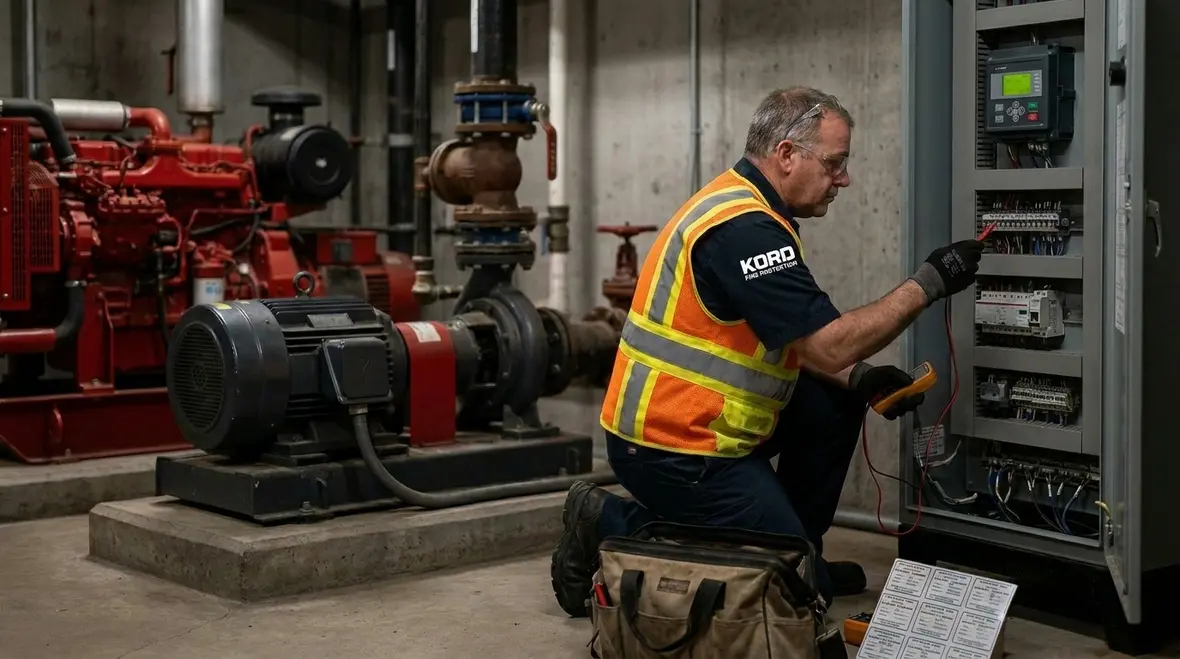
Because owners must coordinate with technicians year after year, clarity matters. A controller that meets the definition supports testing functions like manual start, automatic start signals, and protective trip behavior. Likewise, the driver type influences how crews inspect components, manage starting reliability, and verify that the unit performs under defined conditions.
Therefore, owners who learn the definitions do not just “know terminology”. They can evaluate whether service documentation matches what is actually installed, and they can ask smarter questions like whether controller outputs, start sequence timing, and alarm functions align with the designed configuration.
How this shows up during testing and service calls
This is where terminology earns its keep. If a technician notes abnormal controller behavior, the owner should know whether that relates to start logic, signaling, supervision, or protection. If the driver is diesel, the maintenance conversation naturally shifts toward fuel supply, batteries, cooling, and crank reliability. If it is electric, power quality and control integrity jump to the front of the line. That is not paperwork trivia. That is the difference between a useful report and a polite mystery.
Fire pump unit, arrangement, and why space matters in Australia
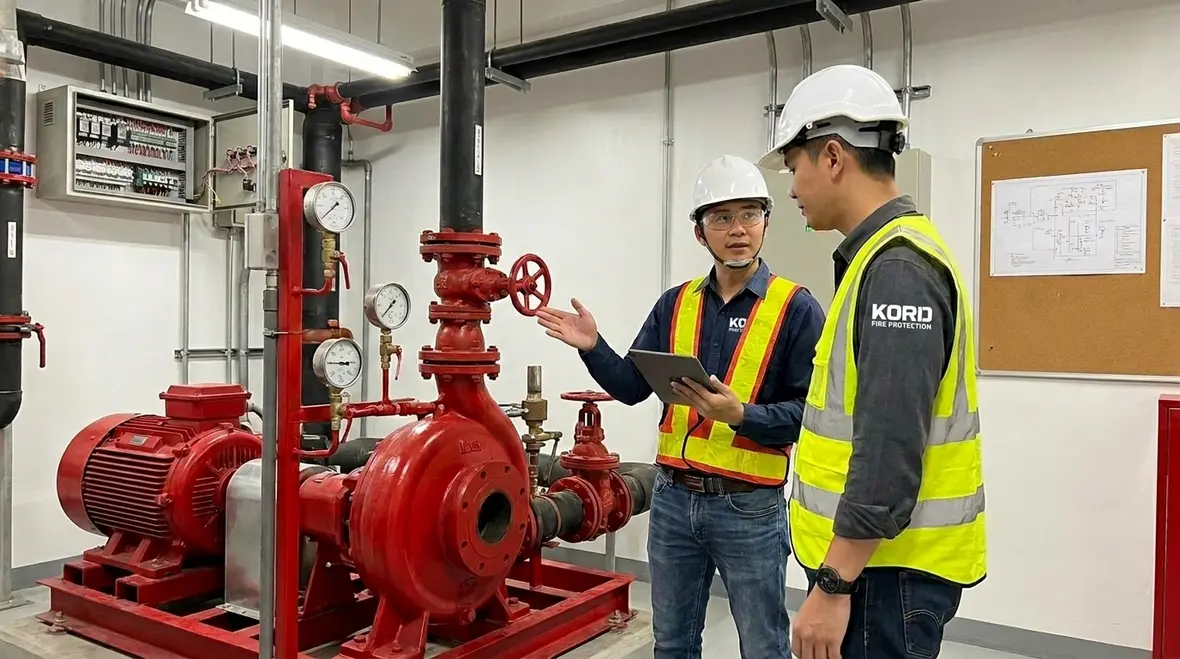
NFPA 20 Chapter 3 also defines what people mean by a fire pump unit and describes the system setup for a stationary fire pump. In Australian facilities, the pump room may be compact, shared, or constrained by drainage, ventilation, and access requirements. Even when the system is built correctly on paper, poor planning for arrangement can create maintenance friction.
And maintenance friction becomes reliability risk, because crews delay tasks that require shutdown coordination, proper access, or safe lockout procedures. With correct definitions, an owner can ensure that the pump unit includes the correct interconnections and that the arrangement supports required service operations, such as valve access, sensor checks, and inspection of related components.
At this point, a good service partner becomes more than a vendor. Kord Fire Protection can function as a vital partner with this job by aligning documentation, site constraints, and service planning. They can help owners confirm that the pump unit arrangement supports safe ongoing maintenance, not just initial compliance.
Owners who want more context on system expectations can also review Kord Fire Protection’s related guide on how NFPA 20 regulates fire pump systems. It fits naturally here because definitions are the front door to the rest of the standard, and that article helps connect the terms to the broader operational picture.
Arrangement problems owners notice too late
The usual troublemakers are not glamorous. Tight access around valves, awkward controller placement, poor drainage, limited clearance for safe servicing, and confusing pipe labeling all turn simple maintenance into a production. Nobody wants a critical inspection to feel like a furniture moving exercise. If the arrangement is understood early and documented accurately, future service becomes smoother, safer, and much less dependent on tribal knowledge.
Relief valve and other components owners should understand
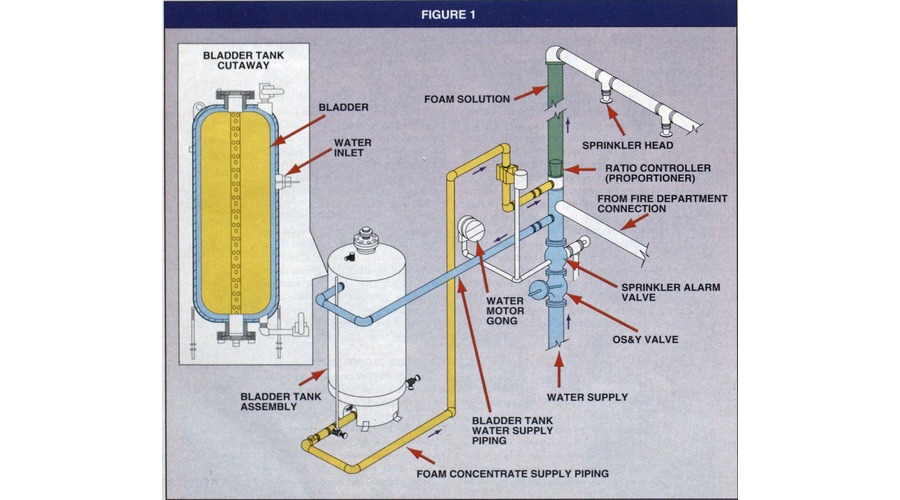
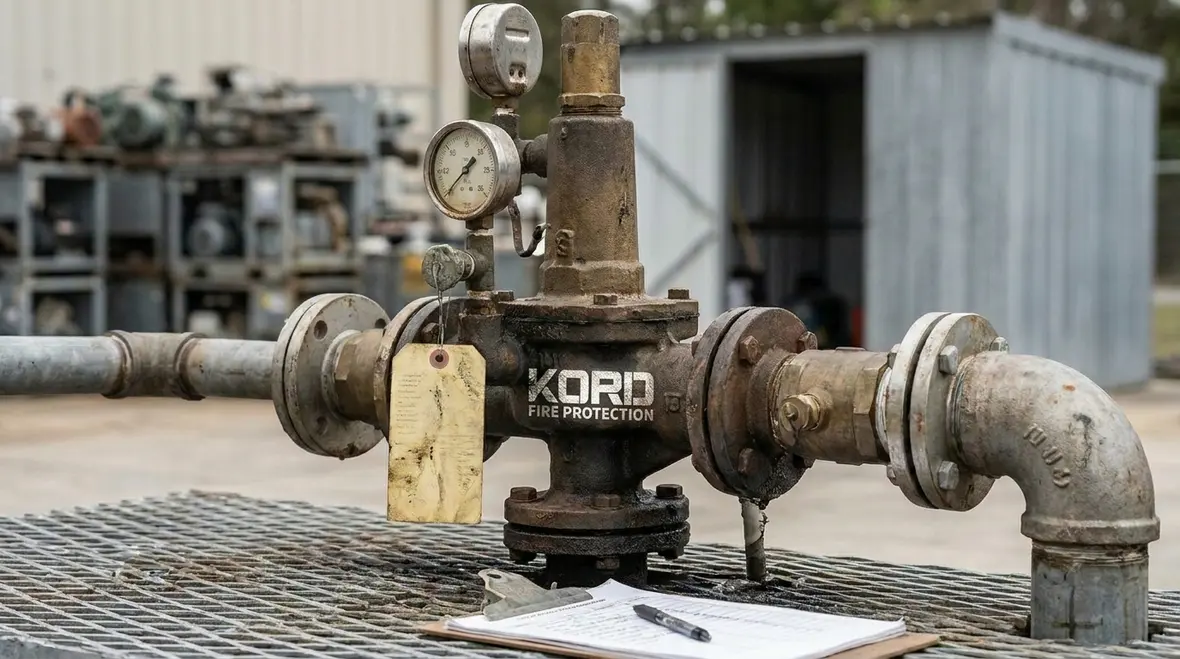
A facility owner does not need to memorize every part, but they should grasp the role of components tied to NFPA 20 definitions. For example, the relief valve supports safe operation by managing discharge conditions as the pump system works through its control logic and flow changes. When owners understand what that term means, they can better interpret maintenance reports and test outcomes.
Also, many fire pump systems connect to a network of valves and piping that interact with the pump’s behavior. Therefore, owners benefit when service teams explain results in the language of NFPA 20, instead of vague phrases like “all good” or “we checked it.” Those phrases are the corporate equivalent of saying “trust me” during a safety critical job.
With Kord Fire Protection as a steady partner, owners can expect clear explanations tied to system behavior. That helps teams make decisions quickly, whether they plan corrective work, schedule future testing, or review performance after any change on site.
Reading maintenance reports without guessing
When reports mention discharge behavior, valve response, or observed control actions, owners who know the basic definitions can tell whether the findings are routine, urgent, or suspiciously vague. That makes follow-up faster. It also reduces the odds of approving repair work blindly or delaying action because the report sounded technical enough to avoid questions.
Testing, commissioning, and acceptance start with definitions
Definitions matter most when something must be proven. During commissioning and ongoing testing, the meaning of terms in NFPA 20 Chapter 3 guides how the system should respond under defined conditions. A controller’s functions, a driver’s start and run behavior, and a pump unit’s operational response all connect back to the standard terms.
For example, test procedures rely on defined components and their expected behavior. If documentation or drawings use one set of assumptions while the installed equipment follows another, the test can produce confusing outcomes. That is why owners should ask service providers how they map test results back to NFPA 20 definitions, including controller operation, protective behavior, and performance outcomes.
In practical terms, Kord Fire Protection can help owners protect their investment by keeping test and service processes consistent. They can support the job with a lifecycle approach that tracks what was tested, what was observed, what was corrected, and what should be monitored next, so the fire pump system does not become a “mystery machine”.
The documentation check owners should always make
A simple habit pays off here: compare the labels in test reports, drawings, and maintenance logs. If the terminology shifts from one record set to another, ask why. Sometimes that reflects harmless shorthand. Sometimes it points to deeper confusion about what equipment is installed, how it is controlled, or what was actually tested. Either way, the question is worth asking before an emergency asks it for you.
Where owners get tripped up and how to stay ahead
Owners across Australia often encounter predictable issues. First, they inherit older documentation that uses informal labels that do not match NFPA terminology. Second, they mix vendors, and each team writes reports in its own style. Third, they treat service as a single event instead of an ongoing control system with defined checks.
Meanwhile, operational realities add pressure. Industrial sites may run equipment that changes vibration conditions. Retail facilities may undergo tenancy fit outs that shift water demand profiles or alter access. Commercial buildings may refurbish electrical rooms, affecting power supply stability and the controller environment.
To stay ahead, owners can use NFPA 20 Chapter 3 definitions as a baseline for recordkeeping. Then they should confirm that maintenance reports reference the same terms and that technicians verify critical operational behavior, not just physical inspection. With Kord Fire Protection, owners can align service planning with the actual system installed on site, which keeps the story consistent from test to test.
FAQ
Conclusion
NFPA 20 Chapter 3 fire pump definitions give building owners a practical foundation, not a pile of jargon. When they understand terms like controller, driver, fire pump unit, relief valve, and stationary fire pump arrangements, they can verify documentation, interpret test results, and reduce operational surprises.
Then, with Kord Fire Protection as a dependable partner, owners across Australia can keep systems reliable through smart service planning and clear communication. If you want confidence, start with the definitions and let the service follow.

Join Our Newsletter!
Get the latest fire safety tips delivered straight to your inbox From our Newsletter.