
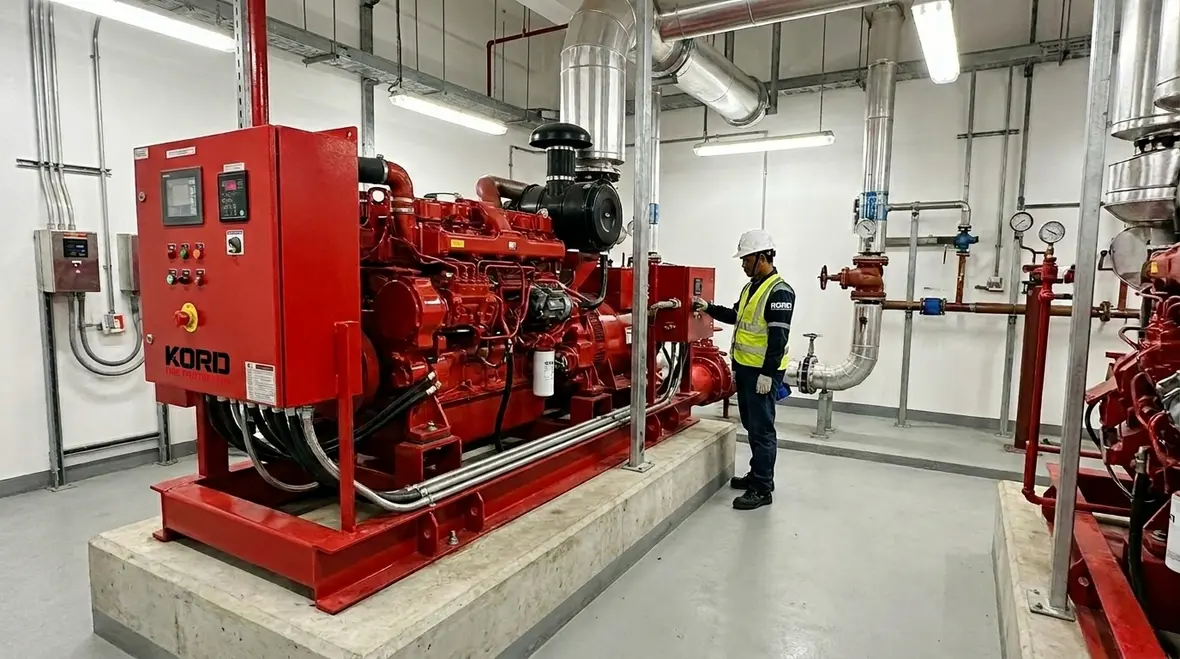
NFPA 20 Chapter 11 Diesel Engine Fire Pump Installation
Quick Answer: NFPA 20 Chapter 11 sets clear rules for installing diesel engine driven fire pumps, including fuel systems, starting reliability, and alignment with the pump controller and test requirements. For Australian facilities, Kord Fire Protection helps teams meet these diesel fire pump installation requirements while keeping commissioning smooth and audit ready.
Industrial sites do not fail gently. They fail loudly. And when the fire protection system needs to start, it must start with discipline. That is why NFPA 20 Chapter 11 matters, especially for diesel engine fire pump installation requirements that cover the full chain of reliability. Within the first 100 to 150 words, the core idea is simple: diesel engine pump systems must be installed so the engine starts when it should, runs within expected limits, and remains available after weeks of normal operations that look a lot like complacency. The rest of this article breaks down what Chapter 11 expects, how teams in Australia can apply it on real projects, and how Kord Fire Protection becomes a vital partner from design through testing.
Before the details get greasy, it helps to see the bigger picture. Diesel pump installations do not live in isolation. They connect with controller behavior, electrical planning, testing routines, and the wider service strategy that keeps life safety systems ready. That is why many teams also work with full fire protection services early in the project, especially when the goal is not just passing handover, but staying prepared long after the paperwork stops moving.
Understanding NFPA 20 Chapter 11 for diesel engine fire pump systems
NFPA 20 Chapter 11 focuses on the diesel engine and its installation so the pump can deliver rated performance during a fire event. In practice, this chapter does not treat the engine as a nice to have backup. It treats the engine like a critical component that must work even when the facility is busy, hot, dusty, or in the middle of a shift change. Therefore, installers must follow the fuel, exhaust, starting, and maintenance planning requirements with care.
Additionally, Australian facilities often operate in environments that add stress: salt air near coastal sites, high dust loads in manufacturing, and variable ambient temperatures in warehouses. Consequently, the installation process needs to address real operating conditions, not just paper compliance. And yes, failing to do it right can be as painful as realizing the test results are late after the auditor already arrived. Nobody enjoys that experience.
Kord also provides a broader code context in How NFPA 20 Regulates Fire Pump Systems, which helps connect Chapter 11 requirements to the rest of the standard. That wider view is useful because diesel compliance is rarely one isolated clause. It is usually a chain of related decisions that all have to cooperate at once.
Why Chapter 11 gets so much attention on real projects
On site, diesel engines tend to expose shortcuts quickly. A room that looked fine on a drawing may be too tight for proper servicing. A tank location that seemed practical may complicate piping runs or inspections. A controller setup that looked neat in theory may become messy once trades start layering cables, alarms, and access constraints into the same room. Chapter 11 matters because it pushes teams to make the engine installation dependable in the real world, not just acceptable in a meeting.
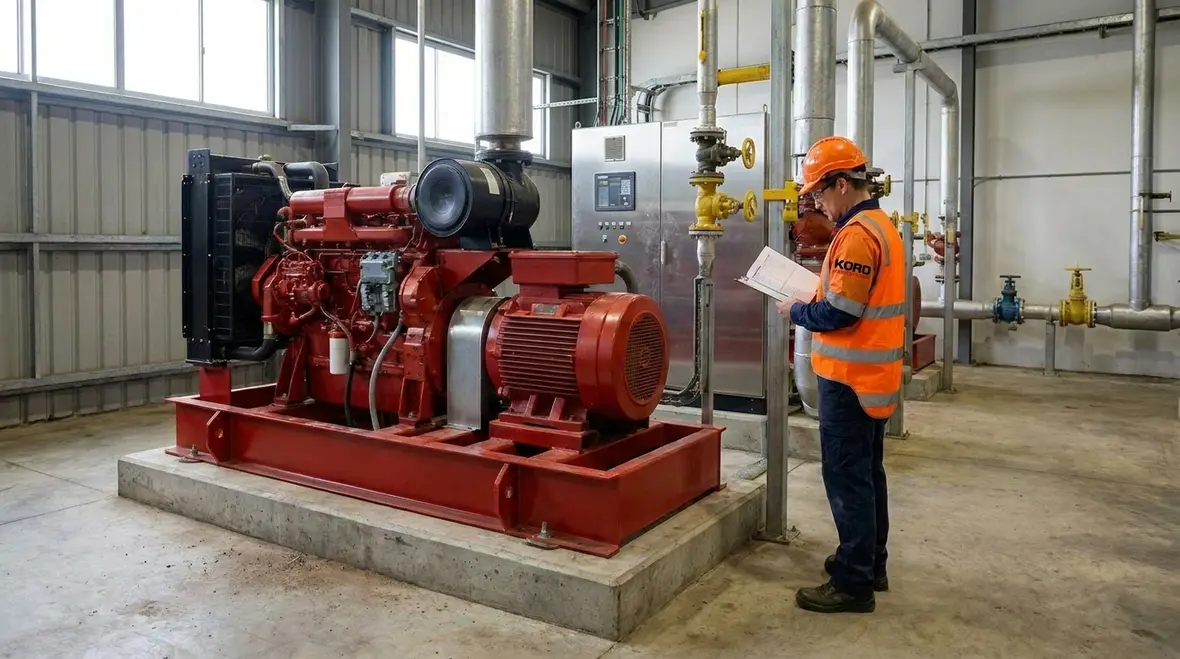
Engine room location, ventilation, and environmental control
First, the engine installation location must support reliable operation. NFPA 20 expectations typically guide enclosure, ventilation, and access for inspection and service. Diesel engines produce heat and exhaust, so ventilation cannot be a guess. If airflow is insufficient, the engine may struggle. If ventilation is wrong, it may create comfort issues for technicians. And if access is poor, routine checks become a chore, which leads to skipped maintenance, which leads to surprises. That story has ended badly in more than one facility.
Next, the installation should consider temperature conditions that could affect starting performance. Even though the engine is designed for fire duty, extreme ambient conditions still matter. Therefore, design teams should confirm ventilation capacity and airflow paths, and verify the layout around the pump set allows safe operation and servicing.
Finally, the room must support the full inspection workflow. Technicians need clear access to components, safe working space around belts or couplings where applicable, and the ability to check fluids and connections. When the jobsite plan makes future service easy, the system stays healthier. When the plan makes service difficult, the system eventually pays the price.
Ventilation is not the place for wishful thinking
The fire pump room has to support more than startup. It has to support repeatable testing, maintenance access, and safe operation over time. Designers should think about where heat accumulates, how intake and discharge air will move, whether external conditions can compromise louvres or openings, and how noise and exhaust heat affect nearby spaces. A diesel set can be wonderfully reliable when installed well, and gloriously stubborn when a room works against it.
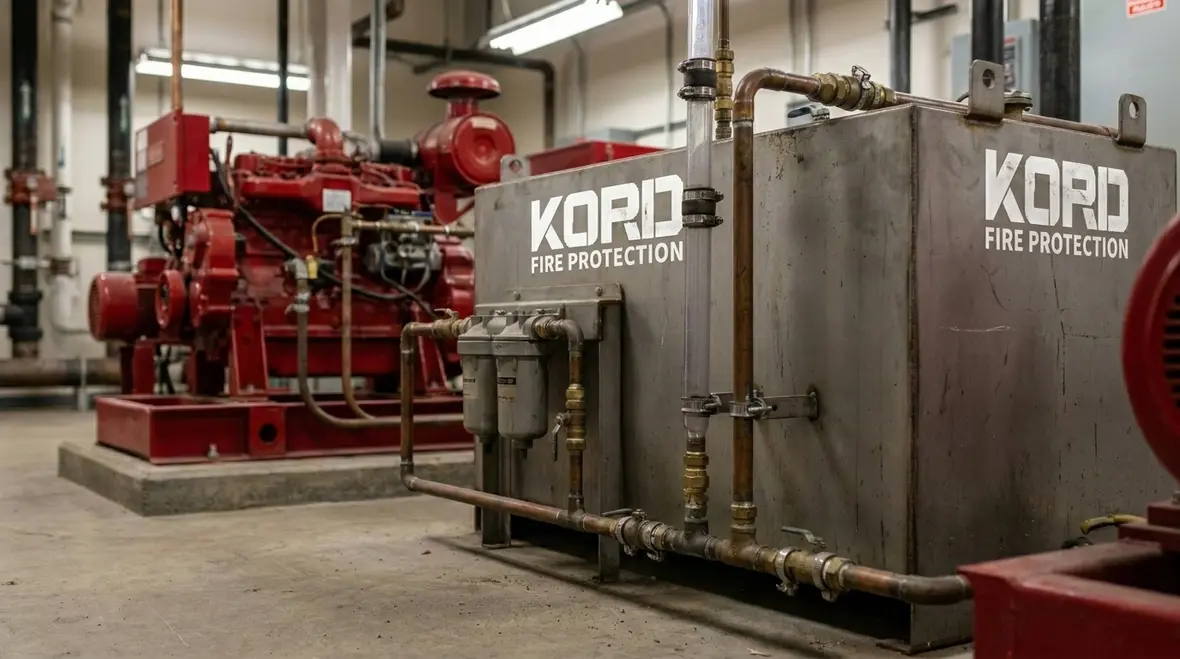
Fuel system reliability and the diesel engine installation details
The fuel system often decides whether an engine starts with confidence. Accordingly, the diesel fuel piping, tank arrangement, filters, and supply logic must be installed correctly to maintain dependable delivery. Diesel fire pump installation requirements typically include controls to prevent air entrapment and ensure the engine receives the correct fuel quality and flow.
In addition, the fuel storage setup must support stable operation between required inspections and tests. Fuel contamination, water ingress, and poor filtration can cause slow starts or failure to start scenarios during the exact moment the system must perform. So, the installation must include correct filter elements, proper piping materials, and thoughtful layout to reduce the chance of air bubbles and leaks.
Also, installers should verify that the fuel system design supports the engine’s runtime and start demands. A facility might think it only runs during emergencies, but the test routine proves otherwise. Monthly or periodic testing stresses the system repeatedly, so fuel system reliability must survive routine cycles.
And for those who like practical analogies, think of the fuel system like a lifeline. If it is tangled, frayed, or blocked, it does not matter how strong the engine is. The lifeline still fails to do its job.
Small fuel issues become large reliability problems
Teams often spend plenty of time selecting the engine and not enough time checking the details around the tank, piping slope, isolation points, and filter access. Yet those details control whether routine testing feels boring in the best possible way or turns into a detective story. Good fuel practice keeps contaminants out, keeps supply steady, and makes inspection straightforward. That is exactly the kind of boring every life safety system deserves.
Starting system logic, controller integration, and battery support
NFPA 20 Chapter 11 emphasizes starting reliability through proper configuration of starting components and the pump controller interface. This matters because the engine must start when required, without hesitation. Therefore, teams must install the starting system and ensure the wiring, connections, and monitoring functions support the control logic in a consistent way.
In many Australian installations, facilities run complex electrical environments. Consequently, the diesel starting system must integrate cleanly with the pump controller and alarms. If the controller reads incorrectly because of loose terminations or misconfigured signals, the engine may not receive the correct start commands. So, installers should verify the control scheme step by step and document it clearly.
Additionally, battery support, wiring runs, and load expectations must align with manufacturer guidance and code intent. Batteries do not age politely. They age quietly and then, one day, they do the thing you least want: they underperform during a test. That is why commissioning and ongoing inspection matter.
For extra context on the controller and electrical side, Kord’s article on essential fire pump electrical requirements and design fits naturally here. It helps explain why controller behavior, supervision, and stable electrical design are not side notes. They are part of the same reliability story.
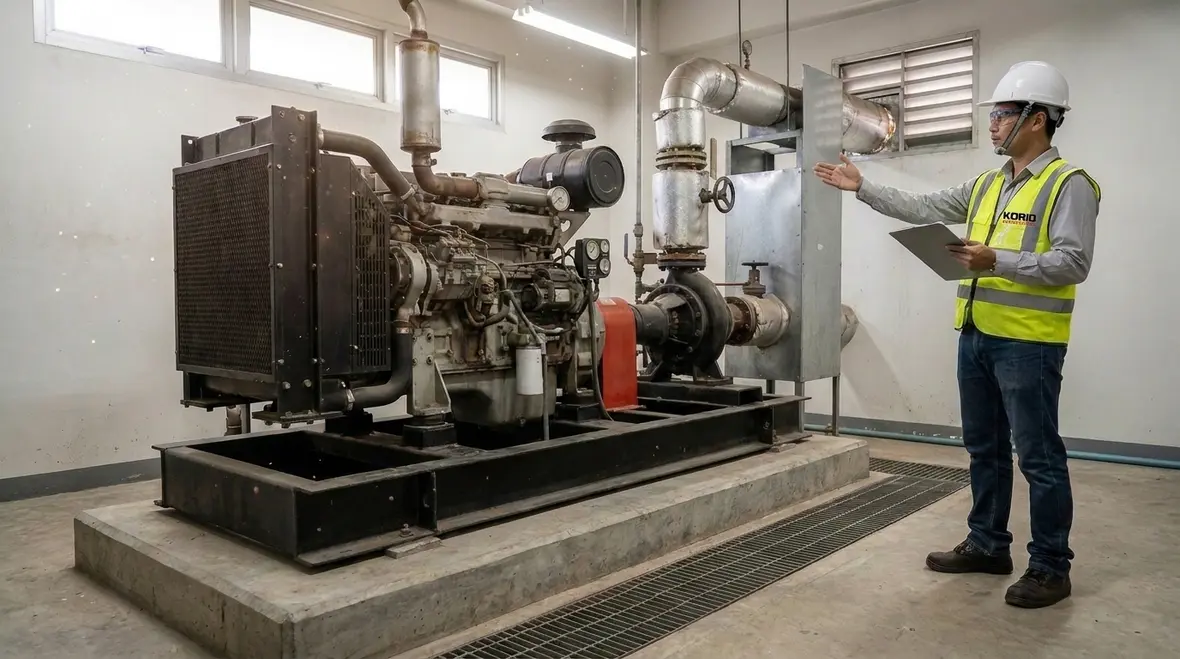
Exhaust, drainage, and vibration control for long service life
After fuel and starting, the installation must handle exhaust routing and safe engine support. Exhaust systems require careful routing to protect people and equipment, and to prevent exhaust back pressure issues. Also, the installation should address heat and discharge points so the engine room remains safe and compliant.
Next, drainage and protection details matter because diesel engines and systems include components that can collect condensate or expose equipment to moisture. If drainage is wrong, corrosion can take hold. And corrosion is like an unwanted tenant. It shows up late, pays no rent, and still ruins your property.
Moreover, vibration control impacts both reliability and alignment stability. Proper mounting and installation practices help the system avoid loosening connections over time. Therefore, teams should confirm foundation conditions, verify alignment where applicable, and ensure the system supports the engine’s operational characteristics.
Long life depends on details nobody notices until they fail
Exhaust support, drainage paths, anti vibration measures, and the simple question of whether a technician can reach what needs to be checked all shape the service life of the installation. These are not glamorous details. They are the kind of details that quietly decide whether the system remains stable after years of testing. In other words, this is where disciplined installation saves future teams from saying, “Well, that escalated quickly.”
Commissioning, testing, and documenting diesel fire pump readiness
Once the system installs in place, commissioning does not end with it starts. Proper commissioning checks performance, verifies controller behavior, confirms fuel delivery, and ensures the system operates safely within required parameters. Also, testing verifies that the diesel engine maintains the expected behavior during start and run sequences.
Additionally, documentation helps facilities stay audit ready. Maintenance logs, test records, and configuration details should reflect what the system actually is, not what the drawing said it would be. When these records exist and remain current, facility managers gain confidence and technicians save time.
In Australia, industrial and commercial sites often need clear reporting for insurers and safety managers. Thus, a strong commissioning process reduces friction later. It also supports safer troubleshooting because the team understands the system’s baseline.
At this stage, Kord Fire Protection often becomes the vital partner that keeps the work from becoming a high tension repeat of who did what and when. They coordinate installation verification, help manage commissioning steps, and support ongoing readiness so diesel fire pump installation requirements remain met long after handover.
How Kord Fire Protection supports compliant diesel fire pump installation across Australia
Kord Fire Protection strengthens the project outcomes for industrial, retail, and commercial facilities across multiple Australian regions. Instead of treating fire pump installation as a one time event, Kord approaches it as a lifecycle responsibility that includes correct setup, clear handover, and dependable support for future service.
First, Kord helps teams align site conditions with Chapter 11 expectations. That includes practical review of engine room constraints, integration considerations, and the details that installers sometimes miss when they chase timelines. Next, Kord supports commissioning planning so testing addresses performance and reliability, not just basic start confirmation.
Then, Kord helps document the system in a way that facility teams can actually use. Because when a test result lands in someone’s inbox without context, it creates more work than it solves. Meanwhile, when documentation is clear, technicians spend less time guessing and more time ensuring readiness.
And yes, fire pump projects involve a lot of moving parts, like a sitcom cast. Kord helps keep the plot coherent so nobody gets left out of the scene when it matters most.
FAQ
Conclusion
Diesel engine fire pumps demand more than a correct drawing. They require disciplined installation that supports dependable starting, safe exhaust and ventilation, reliable fuel delivery, and documented commissioning results. When teams treat diesel fire pump installation requirements as a lifecycle commitment, they reduce risk and protect the facility.
Kord Fire Protection can guide the process from setup to testing and beyond. Contact Kord Fire Protection to plan a compliant installation pathway for your site in Australia, and use the process to build something far more useful than a passable handover: a system that stays ready when the day gets loud.

Join Our Newsletter!
Get the latest fire safety tips delivered straight to your inbox From our Newsletter.



