
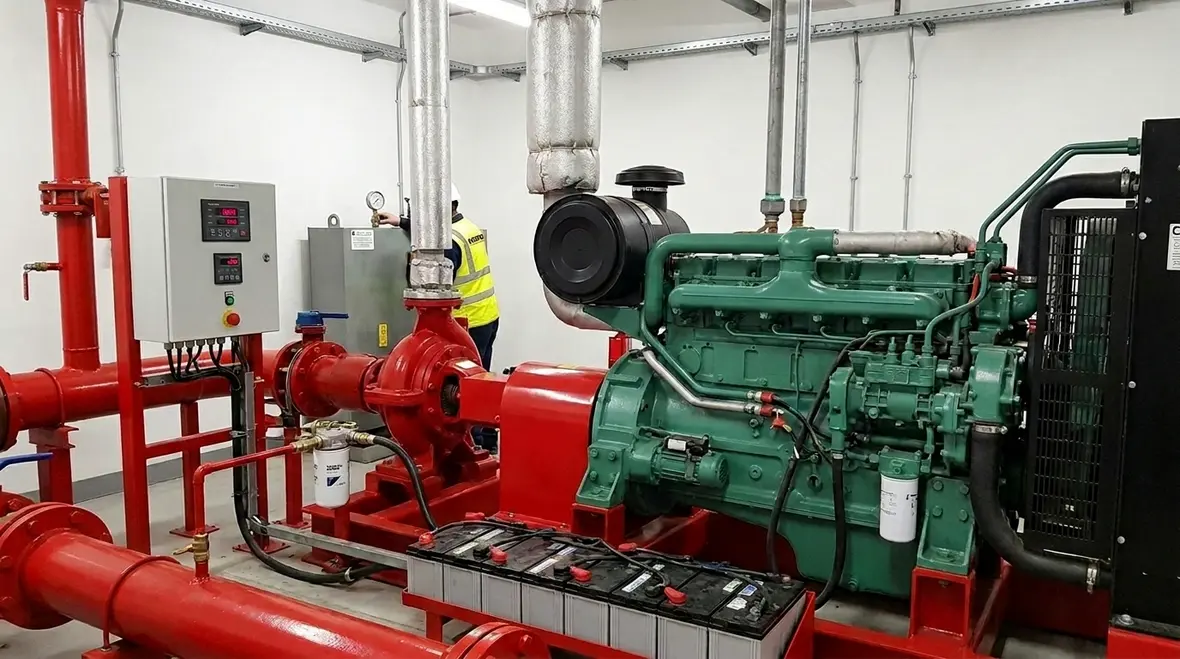
NFPA 20 Diesel Fire Pump Fuel Cooling Exhaust Battery Requirements
Quick Answer: NFPA 20 Sections 11.4 through 11.7 require careful control of a diesel fire pump’s fuel, cooling, exhaust, and battery systems. Proper design, installation, and maintenance help the pump start fast and run when it matters. Kord Fire Protection can support these life safety details with experienced service and documentation.
In Australia’s industrial, retail, and commercial facilities, a diesel fire pump has one job: deliver water reliably during an emergency. That means the diesel fire pump fuel cooling exhaust battery requirements in NFPA 20 are not “nice to have” items, they are the backbone of system readiness. In Section 11.4 to 11.7, the standard pushes facilities to control fuel supply, manage engine cooling, handle exhaust safely, and maintain battery starting performance. And while paperwork can feel like it was invented to test patience, these details protect people, property, and uptime. Think of it like doing the unglamorous admin before the big show. You do it once, then you get to sleep at night.
For facilities that want stronger support around inspection, testing, and ongoing fire pump readiness, Kord Fire Protection’s full fire protection services provide a natural next step for keeping systems organized and compliant. That broader support matters because diesel fire pump reliability is not just about a single tank, charger, or exhaust run. It is about whether the whole package performs without hesitation when the building needs it most.
NFPA 20 Sections 11.4 to 11.7 set the expectations
NFPA 20 treats the diesel fire pump engine as a system, not a standalone machine. Therefore, Sections 11.4 through 11.7 focus on four areas that directly affect starting, run time, and safety. First, fuel must stay clean and available. Next, cooling must prevent overheating and maintain stable operation. Then, exhaust routing must protect the pump room and nearby equipment. Finally, battery systems must support reliable engine crank and control power.
As a result, compliance is not only about meeting drawings or passing a test. Facilities also need a practical plan for inspections, records, and ongoing service. Otherwise, the pump can look fine in normal conditions while quietly losing performance in the background. And yes, that is how surprises happen. Usually right when the fire is already loud.
Teams that want the wider code context can also review Kord Fire Protection’s NFPA 20 overview for fire pump systems. It helps connect these engine support topics to the broader design, installation, and compliance picture, which is useful when facility managers are trying to explain to internal stakeholders why these “small” details are actually mission critical.
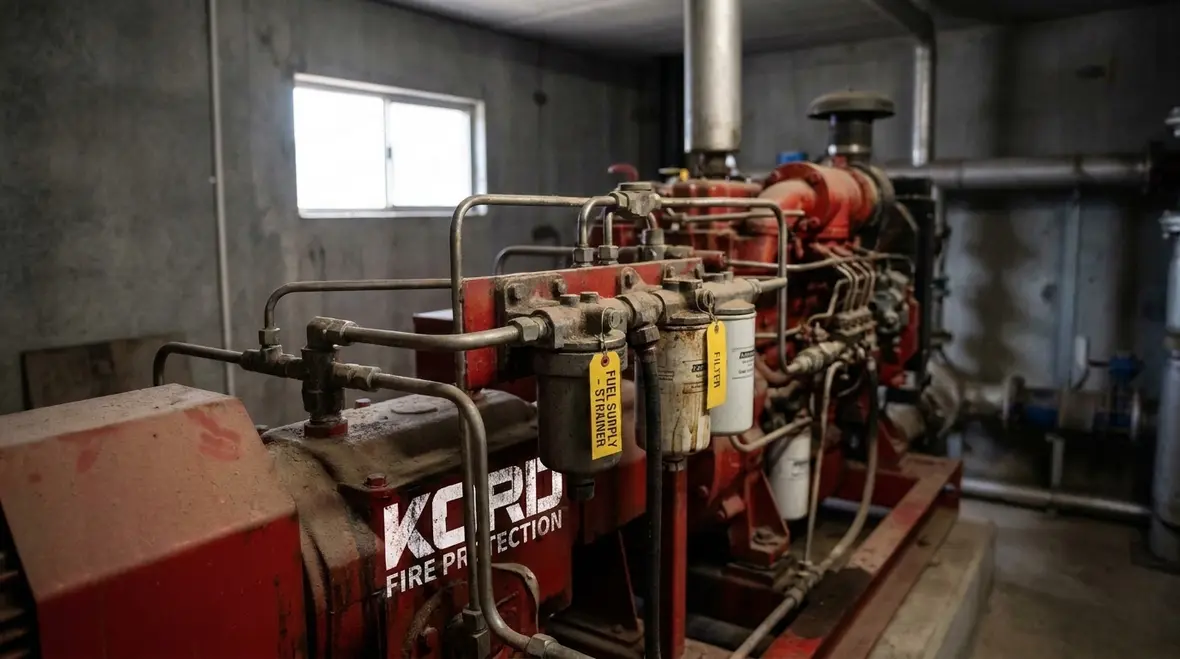
Diesel fuel supply and delivery for dependable starts
Section 11.4 addresses the diesel fire pump fuel cooling exhaust battery requirements by focusing on fuel quality, tank arrangements, and delivery reliability. A fire pump is expected to start under stress, so the fuel system needs to avoid common failure points such as air in the lines, contaminated fuel, blocked strainers, and inadequate supply during long runtimes.
Practical fuel controls that actually matter
- Fuel storage that supports stable supply, including correct tank sizing and transfer arrangements.
- Proper filtration and strainer maintenance to reduce contamination risk.
- Clean suction conditions to limit air entrainment during starting.
- Documented testing that verifies fuel system readiness on a schedule.
Moreover, a good service approach looks beyond the visible components. For example, technicians should verify that valves, fittings, and pipe runs support consistent fuel flow. Then, they should match findings to the maintenance log so the facility can spot trends early. This is where Kord Fire Protection can become a vital partner. They help teams manage fuel system readiness with structured inspections, service accountability, and clear reporting that aligns with ongoing compliance expectations across Australia.
Fuel issues also have a sneaky personality. A tank can look presentable, a line can seem fine from the outside, and a strainer can sit there acting innocent while the system loses confidence one restriction at a time. That is why facilities should not rely on visual comfort alone. Reliable starts come from repeatable checks, not optimism in a hard hat.
Cooling systems that keep the engine steady under load
Next, NFPA 20 Section 11.5 deals with engine cooling, because heat can turn a “ready” pump into an overheated problem. During an emergency, water flow and engine demand rise together. Therefore, the cooling system must remove heat effectively while maintaining safe operating temperatures.
Cooling checkpoints worth taking seriously
- Cooling water supply arrangements that provide stable performance.
- Correct sizing for radiators, heat exchangers, or other cooling devices as designed.
- Maintenance of coolant quality and system cleanliness to avoid reduced heat transfer.
- Verification of alarms or indicators that help operators respond quickly.
Additionally, crews should treat cooling as an operational reliability topic, not a one off installation task. Over time, scale, sludge, and flow restrictions can reduce heat transfer. Consequently, even a pump that starts normally can fail later when it needs to keep running. Kord Fire Protection supports facilities by coordinating service practices and maintenance checks that reduce the chance of this “starts fine, then struggles” scenario.
This is also where disciplined documentation earns its keep. If operators record temperature behavior, maintenance actions, and recurring abnormalities, they create a useful story instead of a pile of disconnected notes. Without that story, overheating problems often get rediscovered the hard way, which is a terrible time to become a detective.
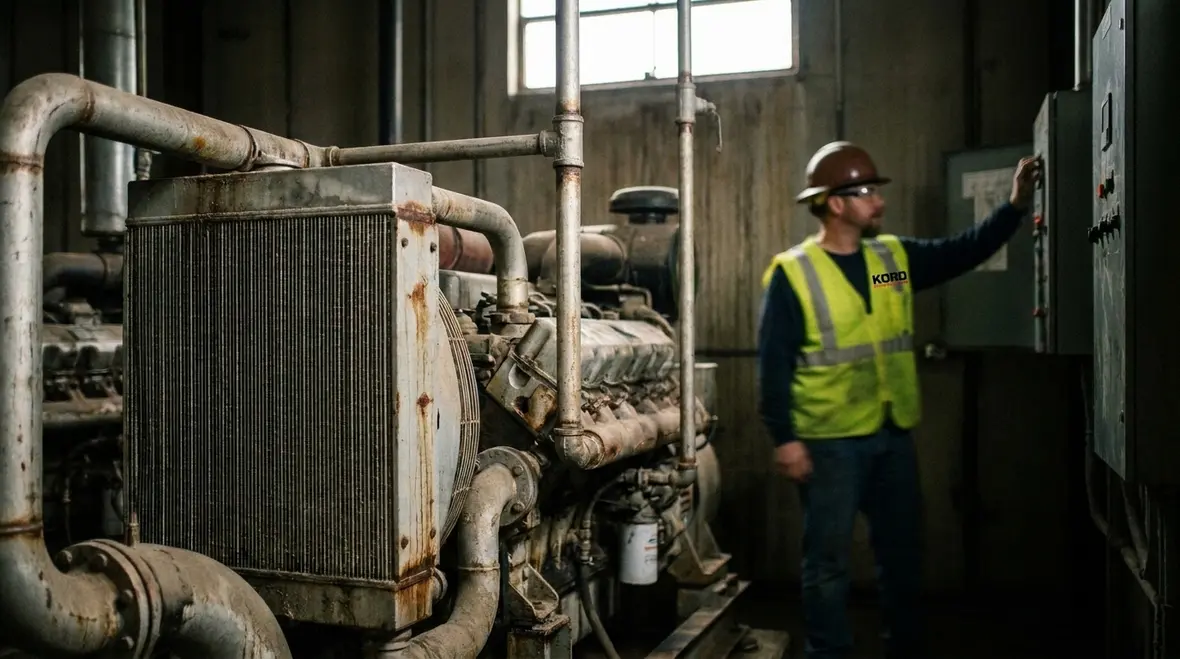
Exhaust routing and fire room safety controls
Section 11.6 covers exhaust systems and safety requirements. Exhaust hazards matter because diesel engines operate with high heat and combustion byproducts. If exhaust routing is incorrect, it can create risks to people, damage nearby equipment, or interfere with proper operation during an emergency. In other words, the exhaust does not just “go somewhere.” It must go safely, and it must stay compliant.
What facilities should watch in the exhaust setup
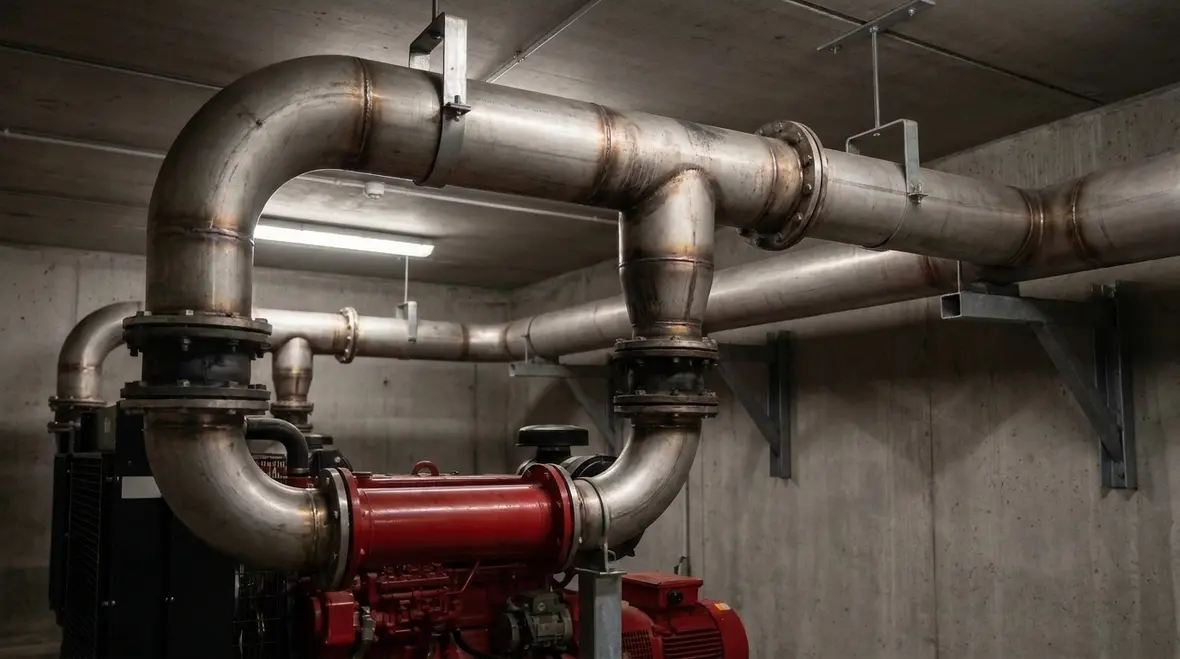
- Correct exhaust piping layout and installation workmanship.
- Heat management to protect walls, ceilings, and other materials.
- Clearances and supports that prevent stress on joints over time.
- Inspection readiness so maintenance teams can access key points.
Also, exhaust issues can hide behind routine looks. For example, corrosion or loose joints can develop slowly, and then the system becomes less safe than expected. Therefore, an ongoing inspection program matters. And if you have ever seen an exhaust line treated like it is invisible, you know why this is important. It is not invisible. It is just waiting for attention.
Safe exhaust performance is partly about installation quality and partly about refusing to ignore the boring stuff. Supports loosen, thermal stress accumulates, insulation ages, and little details become larger liabilities over time. A compliant exhaust arrangement should stay accessible, stable, and predictable, not become a guessing game hidden above the pump room ceiling.
Battery systems that support starting and control power
Finally, Section 11.7 addresses battery requirements for engine starting and control circuits. The pump must crank quickly and consistently, even when the facility environment is harsh. Batteries can also degrade over time, so the facility must manage them like critical life safety equipment, not like a spare device in a drawer.
Battery checks that prevent ugly surprises
- Proper battery capacity for the pump’s starting needs.
- Correct charging system behavior so batteries stay within safe performance ranges.
- Clean connections to avoid voltage drop and unreliable crank.
- Maintenance records that show when testing and replacements occur.
Then, Kord Fire Protection can help facilities keep these diesel fire pump fuel cooling exhaust battery requirements from becoming “we’ll check it later” items. Later is how batteries get older, and older batteries get dramatic at the worst possible time. Think of it like leaving your phone at 2% and then asking it to work during an emergency. The battery does what batteries do. It fails you.
Battery reliability is especially important because starting confidence affects everything else downstream. If crank performance is weak, the rest of the system never even gets the chance to prove itself. Chargers, terminations, enclosure conditions, and routine replacement intervals all deserve attention because a diesel fire pump is not the place for crossed fingers and good vibes.
How to manage compliance across Australian facilities
Industrial and commercial sites across Australia often include multiple assets and different operational teams. Therefore, compliance works best when it runs on a consistent service rhythm, with shared documentation and clear responsibility. A strong approach ties NFPA 20 expectations to site checklists, test records, and maintenance scheduling.
Simple habits that keep compliance from drifting
- Assign one owner for the fire pump records and maintenance schedule.
- Use trend checks to spot cooling, fuel, exhaust, or battery changes early.
- Coordinate with shutdown planning so service does not interrupt operations.
- Track findings and ensure corrective actions get closed, not “logged and forgotten.”
When a partner like Kord Fire Protection becomes involved, it adds business clarity. Instead of relying on scattered notes or memory, facilities receive service accountability and reporting that supports ongoing audits and internal reviews. That means less scrambling, fewer surprises, and a clearer path to readiness across multiple sites.
This kind of consistency is what separates a pump room that merely exists from one that is genuinely ready. The standard may describe technical expectations, but readiness comes from people following through on those expectations week after week. The goal is not to become obsessed with forms. The goal is to make sure the equipment behaves exactly as intended when nobody has time for improvisation.
FAQ
Conclusion and call to action
NFPA 20 Sections 11.4 to 11.7 treat the diesel fire pump like a mission critical system, with fuel, cooling, exhaust, and battery performance tied directly to real emergency outcomes. Facilities across Australia can protect reliability by managing these diesel fire pump fuel cooling exhaust battery requirements through scheduled service, clear records, and timely corrective actions.
If you want a partner that brings order and confidence to compliance, contact Kord Fire Protection to review your service plan and next maintenance steps. With the right support, these details stop feeling like loose ends and start functioning as what they should be: dependable protection that is ready before anyone needs it.

Join Our Newsletter!
Get the latest fire safety tips delivered straight to your inbox From our Newsletter.



