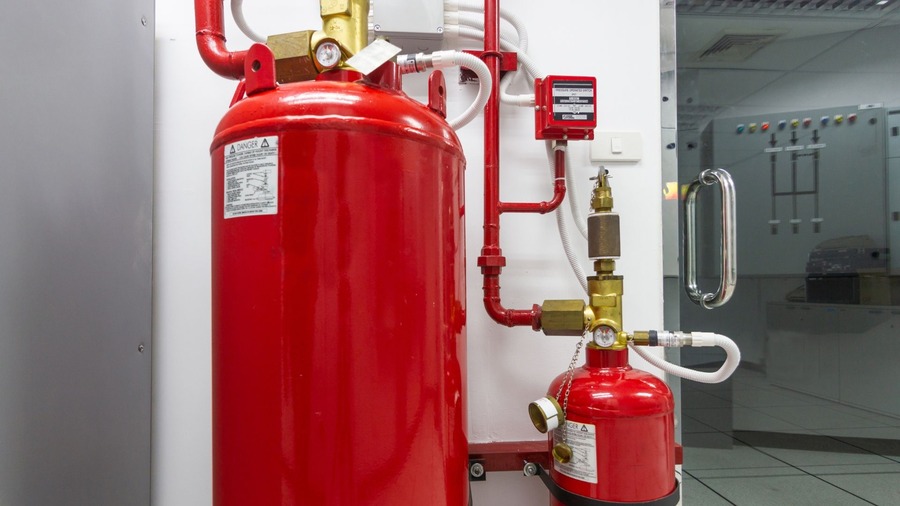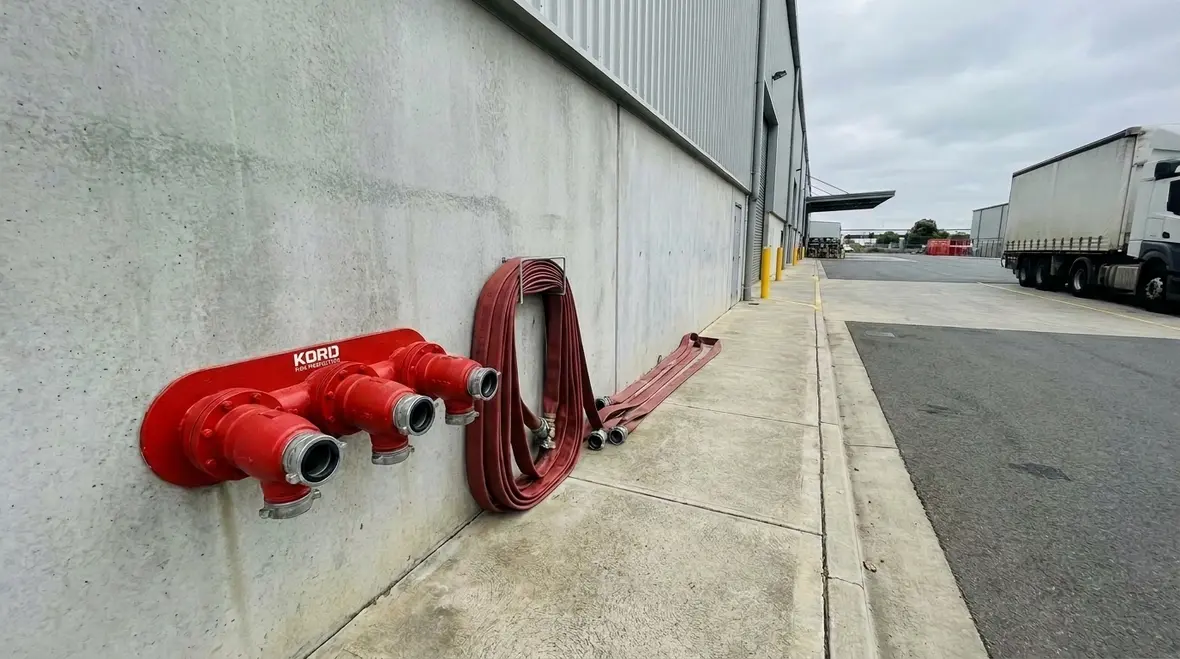
NFPA 16 Section 7.9 Foam Water System Fire Department Connection
Quick Answer
NFPA 16 Section 7.9 sets clear expectations for the fire department connection on foam water systems. In plain terms, the connection must let fire crews supply water or foam solution fast, safely, and without confusion. That matters for industrial, retail, and commercial sites, where every minute can change the outcome.
NFPA 16 Section 7.9 gives a practical rule for how the fire department connection should work on a foam water system. For facilities that use foam to protect fuel stores, loading areas, process plants, and other high risk spaces, the foam water system fire department connection must support fast emergency response. It must also fit the overall fire suppression FDC design so crews can act without delay. In short, the system must speak the same language as the fire brigade. If it does not, the whole setup starts to look like a stage prop, and nobody wants that when smoke is in the air.
For facilities planning upgrades or reviewing existing protection, it also helps to pair code knowledge with practical service support. Kord Fire Protection’s foam fire suppression inspection requirements and service resource fits naturally into that conversation because inspection, layout review, and real world readiness usually belong in the same sentence. When the fire department connection is treated as an afterthought, the rest of the system can end up doing all the hard work while the access point quietly becomes the weak link.
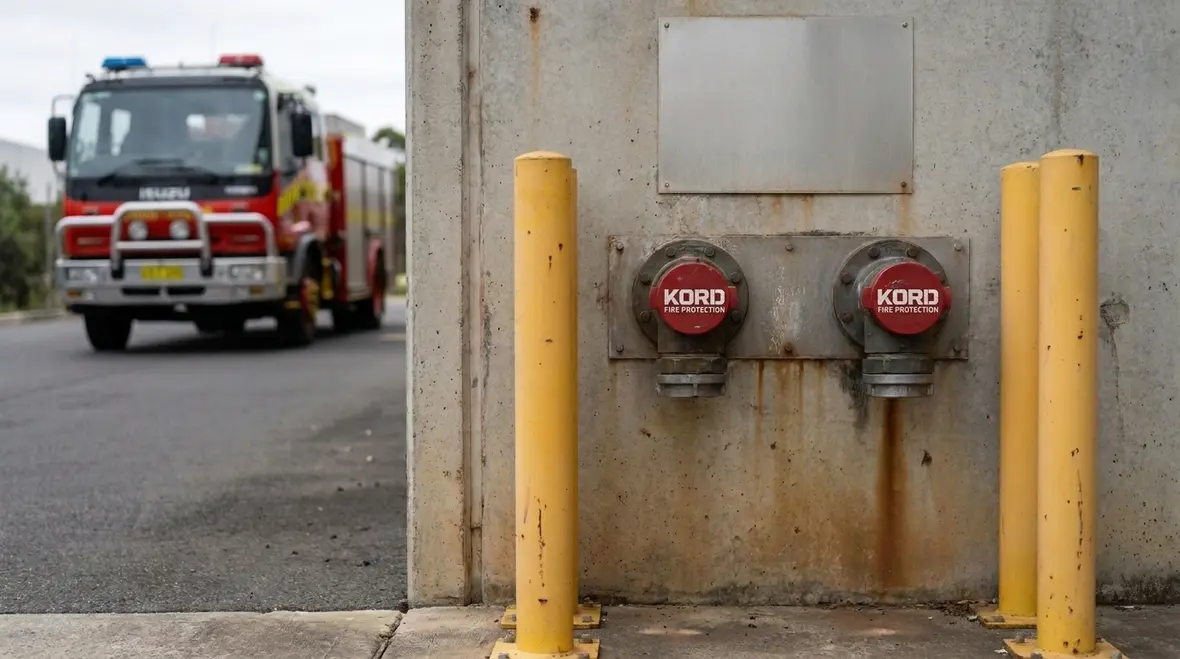
What NFPA 16 Section 7.9 expects
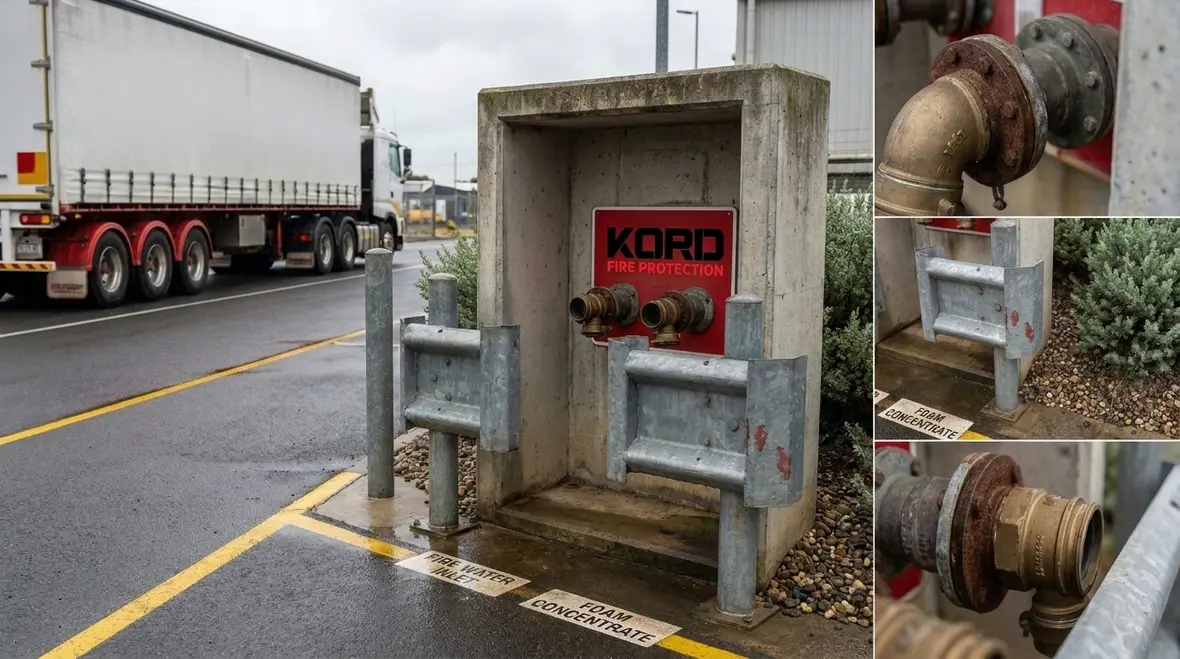
Section 7.9 focuses on access, clarity, and reliability. The fire department connection must be easy to find and easy to use. It should allow emergency crews to supply the system in the way the design requires. Therefore, the location, size, fittings, and labels all matter. A good connection does not hide behind landscaping, locked gates, or a maze of site traffic. It stands ready, visible, and built for action.
For industrial and commercial facilities, this part of the system must suit real site conditions. Heavy vehicle movement, weather, dust, corrosion, and long operating hours can all affect performance. So, the connection should not only meet the standard. It should also survive the site. That is where proper planning saves both time and budget. Because, let us be honest, fixing a bad layout after installation costs more than doing it right the first time.
Why clarity and access do the heavy lifting
On paper, an FDC can seem like one more component in a larger suppression network. In the field, it is the handshake between the site and responding crews. If that handshake is awkward, hidden, damaged, or poorly marked, precious time disappears. Firefighters should not have to solve a scavenger hunt while an incident grows behind them. The better the visibility and access, the less room there is for delay, misconnection, or confusion under pressure.
That is also why the connection should be considered early in project planning rather than stuffed into whatever space is left over at the end. A site may look open during design, then become crowded once bollards, fencing, pallets, bins, parked vehicles, or equipment arrive. Suddenly, the perfect access point from the drawings becomes a real world obstacle course. Fire protection tends to dislike obstacle courses.
Why the fire department connection matters on foam water systems
A foam water system does not behave like a basic sprinkler setup. It may need special supply arrangements and clear operating steps. As a result, the fire department connection becomes a critical link between the site system and outside emergency support. If responders cannot connect quickly, the system loses part of its strength. And in a fire, strength is not optional.
This connection helps firefighters boost system supply, support foam application, and improve control over flammable liquid hazards. It also helps protect people, stock, equipment, and operations. For sites with high value assets, that can mean fewer losses and less downtime. That is the business case, wrapped in a safety coat.
Kord Fire Protection’s foam fire suppression system guide reinforces that foam systems are designed for hazards where ordinary water based protection alone may not be enough. That makes the connection point even more important. When the protected hazard involves flammable liquids, transfer areas, or process equipment, response speed and compatibility become practical concerns, not just compliance language tucked into a document nobody wants to read twice.
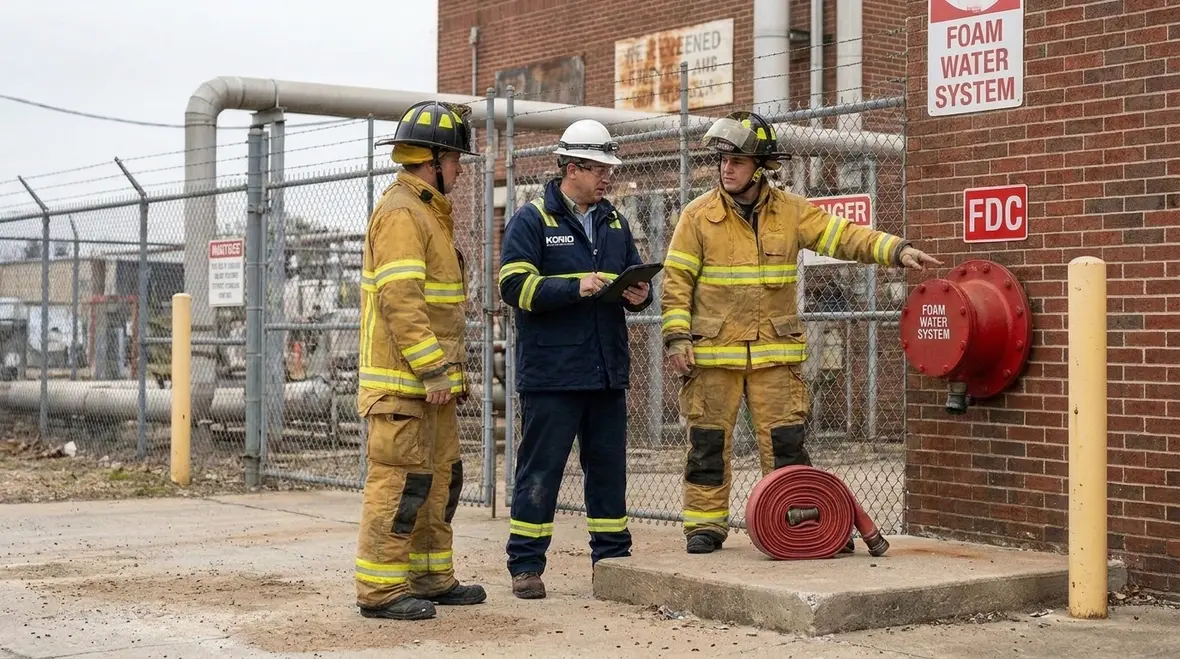
NFPA 16 FDC requirements in practice
To meet NFPA 16 FDC requirements, the connection must suit the approved system design and local fire service needs. The exact setup depends on the hazard, the foam system type, and the site risk profile. Still, some expectations stay constant:
- Clear access for fire crews at all times
- Correct placement near the protected area or approved entry point
- Proper signage and labeling so crews know what the connection serves
- Suitable fittings and caps that match response equipment
- Strong physical protection from damage, impact, and weather
These points may sound simple. However, simple is often where compliance gets tricky. A connection can look fine on a drawing and still fail in the field if site access changes or plant equipment gets added later. That is why regular review matters.
Common ways a compliant design drifts off course
One of the biggest problems is site creep. Over time, facilities add fencing, storage, barriers, landscaping, or traffic controls that slowly choke off access. Another issue is wear and tear. Caps go missing, threads get damaged, signs fade, and protective posts take a hit from a forklift that definitely “was not going that fast.” Then there is compatibility. A connection that made sense for the original plan may need review if local response expectations, operating conditions, or hazard layouts change.
That is why facilities benefit from linking design decisions with ongoing maintenance and inspection. Kord Fire Protection’s foam fire suppression system maintenance and testing page fits neatly here because testing is often where hidden access or condition problems finally stop being theoretical. Better to spot them during a planned review than during a fire scene with a large audience and very bad timing.
| Design area | What it should achieve |
| Location | Easy access for emergency crews |
| Marking | Fast identification in low visibility |
| Protection | Reduce damage from vehicles and site activity |
| Compatibility | Match brigade equipment and system demands |
As a result, the connection becomes part of the emergency plan, not just a pipe with a cap. That shift in thinking matters. It helps reduce confusion during an event, when nobody has time for guesswork.
How to design a foam water system fire department connection
Good fire suppression FDC design starts with the end user in mind. The design team should consider how the local brigade will approach the site, where hose lines will run, and what space they will need to work safely. Then, the team should map the connection into a clear and direct response path.
That design process also needs to respect the bigger foam system picture. Kord Fire Protection’s article on foam system fire protection for flammable liquids explains how foam water arrangements are used where liquid fuel hazards need more focused suppression. When a facility depends on that kind of performance, the FDC should be placed and protected like a working control point, not decorative plumbing with optimistic intentions.
Design priorities that actually help in an emergency
Start with approach. Crews need room to arrive, stage, connect, and operate without fighting blind corners or traffic bottlenecks. Next comes identification. A well marked connection saves time in smoke, darkness, rain, or the general chaos that emergencies so generously provide. Protection matters too. If a connection sits in a high traffic area, physical barriers may be the difference between readiness and replacement. Finally, review compatibility and operating expectations so the connection supports the system the way responders will actually use it.
This is also the right point to reference the broader standard discussion at NFPA 16 Standard. When teams understand the wider framework behind foam-water sprinkler and spray systems, Section 7.9 makes more sense as part of a coordinated design approach instead of one isolated detail surrounded by paperwork.
How Kord Fire Protection can help
Kord Fire Protection can become a vital partner for this service and job because this kind of work needs more than installation. It needs planning, coordination, compliance knowledge, and a practical grasp of site reality. Kord Fire Protection can support the design, review, upgrade, and maintenance of foam water system fire department connections so the final setup works for both the standard and the site.
For industrial, retail, and commercial facilities, that partnership matters. Kord Fire Protection can help align the system with operational needs, improve site access for emergency crews, and reduce the risk of compliance gaps. In addition, a skilled partner can spot issues early, before they turn into expensive callouts or awkward conversations with auditors. Nobody enjoys those. They tend to last longer than a bad sequel.
That practical support also lines up with Kord Fire Protection’s broader fire suppression services, which cover inspection, testing, installation, and maintenance across commercial and industrial environments. When the FDC is treated as part of a complete suppression strategy, the result is usually cleaner coordination, fewer surprises, and a much better chance that the system performs like it was promised to perform.
When facilities should review the connection
Facilities should review the connection during new builds, tenant changes, plant upgrades, and routine fire system inspections. They should also reassess it after changes to access roads, security fencing, loading docks, or adjacent equipment. Even a good system can drift out of shape when a site grows.
Regular checks should confirm that the connection stays visible, reachable, and undamaged. They should also verify that labels remain clear and that the fittings still match emergency service expectations. This keeps the foam water system fire department connection ready for the moment it is needed most.
Practical review triggers teams should not ignore
Some review triggers are obvious, such as a new construction phase or a major plant modification. Others are sneakier. A relocated gate, a new shipping lane, replacement bollards, a resurfaced yard, or a reworked storage layout can all change how quickly crews reach the connection. Even simple repainting or re-signage projects can create visibility issues if nobody checks the final result from an emergency response point of view.
A sensible review asks straightforward questions. Can crews see it quickly. Can they reach it without delay. Is it protected from damage. Are the labels clear. Does the connection still match the site’s operating conditions and response expectations. If any answer feels uncertain, that is usually the moment to stop guessing and start inspecting.
FAQ
Conclusion
For facilities that rely on foam suppression, the fire department connection is not a small detail. It is a front line asset. When access, compatibility, visibility, and protection come together, Section 7.9 becomes more than a rule on paper. It becomes a practical part of emergency response that helps crews act fast and with less confusion.
Kord Fire Protection can help turn NFPA 16 Section 7.9 into a reliable solution that supports safety, compliance, and response speed. For sites that protect flammable liquid hazards, that is a smart move. And in fire protection, smart is usually the best kind of calm.

Join Our Newsletter!
Get the latest fire safety tips delivered straight to your inbox From our Newsletter.