NFPA 15 Section 4.5 Flammable Liquids Water Spray Protection
Quick Answer
NFPA 15 Section 4.5 sets the stage for protecting flammable and combustible liquids with water spray systems that cool surfaces, control heat, and limit fire spread. For industrial, retail, and commercial facilities across Australia, the right design and upkeep matter. Kord Fire Protection can help turn code intent into practical, reliable protection.
NFPA 15 flammable liquids water spray protection plays a critical role in facilities where liquid fuel, solvents, oils, and similar products can turn a small incident into a major loss. One point stands out right away: this standard gives owners and facility managers a clear path to protect equipment, structures, and people before fire gets a vote. In Australia, where industrial, retail, and commercial sites often store or use hazardous liquids, a well planned water spray system can make the difference between control and chaos. And yes, fire does not care about convenience, budget meetings, or anyone saying “we will sort that out next quarter.”
For sites that need broader system coordination, full fire protection services can help connect design, inspections, servicing, and ongoing readiness under one roof. That matters when flammable liquid protection is only one part of a larger life safety picture and no one wants separate vendors creating separate headaches.
What NFPA 15 Section 4.5 Means for Flammable Liquids
Section 4.5 focuses on water spray protection for flammable and combustible liquids and the equipment tied to them. The goal is not to smother a liquid fire like a blanket on a couch. Instead, the system cools surfaces, lowers radiant heat, and helps keep a fire from spreading to nearby assets. That matters in tanks, process areas, loading bays, storage yards, and plant rooms.
For many facilities, NFPA 15 flammable liquids water spray protection supports risk control where heat exposure can quickly damage pipework, vessels, pumps, and structural steel. Therefore, system design must match the actual hazard, not just a box on a compliance form. If the fuel load, layout, or exposure pattern changes, the protection strategy should change with it. Otherwise, the system may look compliant on paper while underperforming where it counts.
This is also why the standard matters beyond technical language. It gives facilities a framework for translating fire behavior into practical protective action. Instead of reacting only after flames spread, site teams can invest in water spray arrangements that defend critical assets early and reduce escalation pressure on emergency response.
Why the cooling function matters so much
With flammable liquids, the danger is rarely limited to the first ignition point. Heat can radiate outward, weaken exposed surfaces, raise internal temperatures, and threaten neighboring equipment in a hurry. Water spray protection helps interrupt that chain. It can cool tanks and process components, reduce structural heat loading, and create a more manageable environment while responders work. In plain English, it buys time, and in fire protection, time is worth quite a lot.
Why Australian Facilities Need a Practical Approach
Australian industrial and commercial sites often face tight layouts, mixed use spaces, and active operations that keep moving all day. As a result, protection needs to work around real life, not a perfect drawing pinned to a wall. Retail fuel stores, manufacturing plants, logistics hubs, warehouses, food production sites, and service yards can all hold flammable or combustible liquids in some form.
Because each site differs, the design team must review liquid type, storage volume, exposure risk, drainage, pump capacity, and local site conditions. Then the system can do its job without becoming the fire protection version of a parking ticket nobody wanted but everybody earned. A practical approach also means planning around operations. Shutdown windows may be tight, traffic routes may be busy, and access around process equipment may be awkward. Protection still has to be dependable anyway.
For businesses that operate across varied risk environments, related planning can also overlap with broader suppression strategies. Kord Fire Protection discusses that larger picture in its article on special hazard fire suppression in Australia, where the focus shifts to matching protection methods to high consequence environments.
Real facilities are messy, and that changes design decisions
In the real world, pipe racks block access, equipment gets added over time, stored materials move, and operations teams need systems that support uptime as much as safety. That is why a practical hazard review matters so much. The design has to account for how the site actually functions on a Tuesday afternoon, not just how it looked on the original set of drawings five years ago.
How Water Spray Protection Works on the Ground
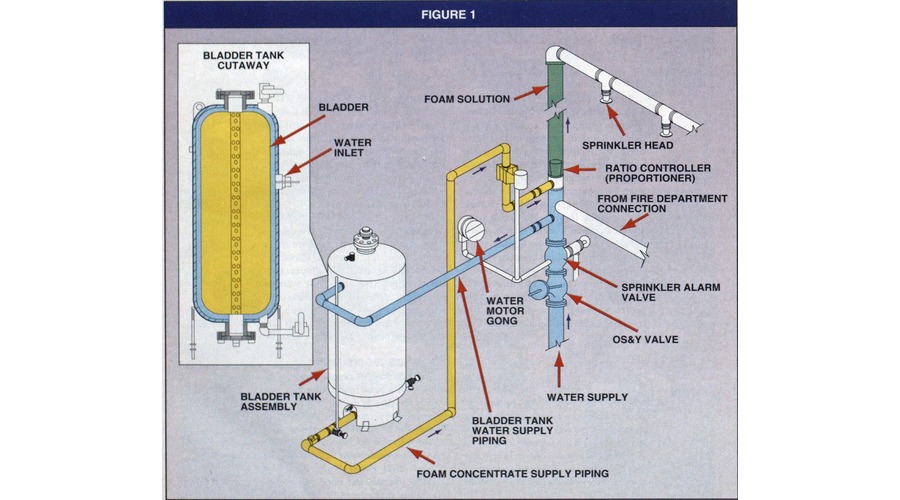
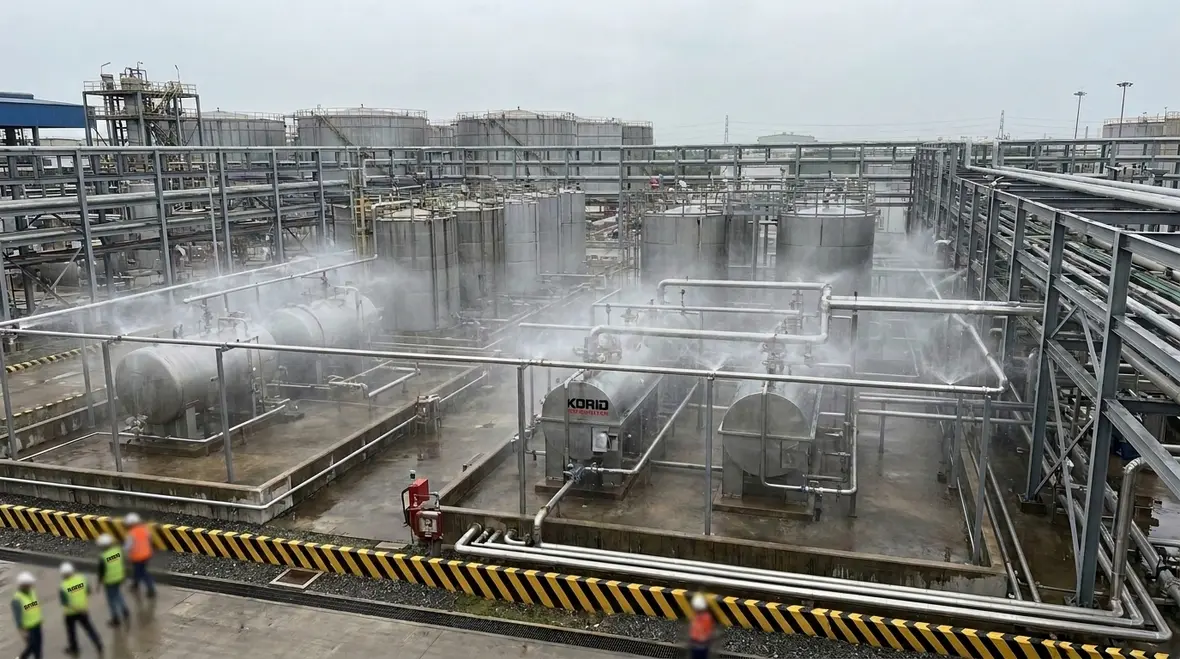
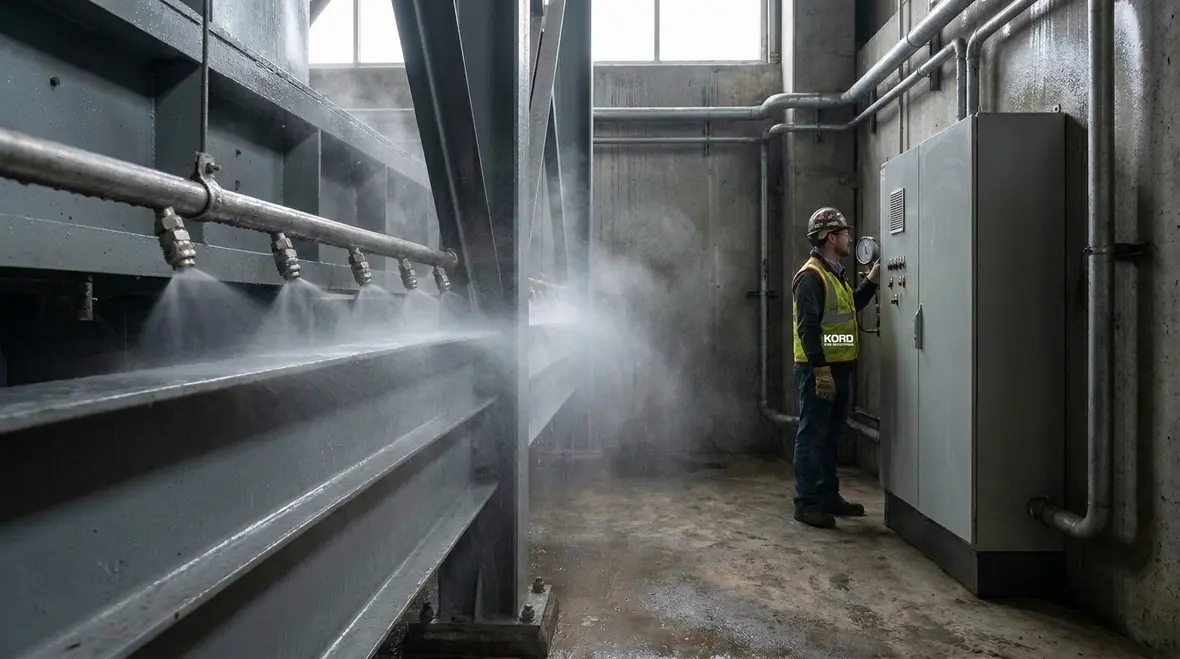
Water spray systems under NFPA 15 use open nozzles or special discharge arrangements to apply water where heat or fire exposure creates the biggest threat. They do not wait around for trouble to become a headline. Instead, they act fast to reduce temperature rise and protect key assets.
In practice, this can help with:
Cooling tanks and vessels before shell failure
Protecting structural steel from heat damage
Reducing fire spread to adjacent equipment
Supporting safe emergency response access
Because water spray protection works as a system, engineers must consider water supply, pump performance, nozzle placement, piping layout, detection input, and control logic. One weak link can turn a strong system into an expensive decoration. That is especially true where equipment geometry, obstructions, or unusual exposure angles can distort coverage. Good performance comes from the entire arrangement working together, not from one product brochure doing all the heavy lifting.
For readers wanting broader technical context, Kord Fire Protection also covers related ideas in NFPA 15: Enhancing Fire Safety with Water Spray Fixed Systems, which fits naturally alongside this topic and helps connect the standard’s intent to field performance.
Where Kord Fire Protection Adds Real Value
Kord Fire Protection can become a vital partner because this job needs more than product supply. It needs proper design, installation, testing, and long term care. For many sites, that means working with a team that understands NFPA 15 flammable liquids water spray protection and can turn technical rules into practical protection on an active facility.
Kord Fire Protection can support projects by:
Reviewing site hazards and exposure risks
Designing systems to suit the liquid and the layout
Coordinating installation with live operations
Testing system performance and water delivery
Planning maintenance to keep readiness high
So, instead of juggling consultants, contractors, and compliance notes like a stressed stage manager at a sold out tour, facilities can lean on one capable partner. That continuity matters because flammable liquid risks rarely stay neatly confined to one discipline. The same project may touch hydraulic performance, controls, mechanical coordination, maintenance planning, documentation, and ongoing inspections. A coordinated provider helps those moving pieces stop behaving like strangers at the same meeting.
Design Points That Matter Most
Hazard review and asset mapping
The team must first identify what needs protection, what can ignite, and what sits close enough to suffer from heat exposure. This step shapes the whole design. If the hazard review is weak, the rest of the project ends up guessing with better drawings.
Water supply and pump capacity
Without enough water at the right pressure, the system cannot perform. Therefore, supply testing and pump checks sit at the heart of a sound design. A layout can look brilliant until real demand shows up and the water supply decides to become philosophical about commitment.
Nozzle placement and coverage
Water must reach the target surfaces evenly. Poor spacing can leave hot spots, and fire loves hot spots almost as much as movie villains love dramatic monologues. Coverage should reflect geometry, shielding, elevation changes, and the way heat will actually strike exposed assets.
Control and detection integration
Systems must activate when needed and only where needed. Good logic improves response speed and limits unnecessary discharge. In active facilities, that balance matters because delayed activation is dangerous, but careless activation can also interrupt operations and complicate response.
Inspection, testing, and maintenance
Even the best system fails if nobody looks after it. Therefore, regular inspection and maintenance should sit in the site safety plan, not in some forgotten folder next to old warranty cards and a mystery key.
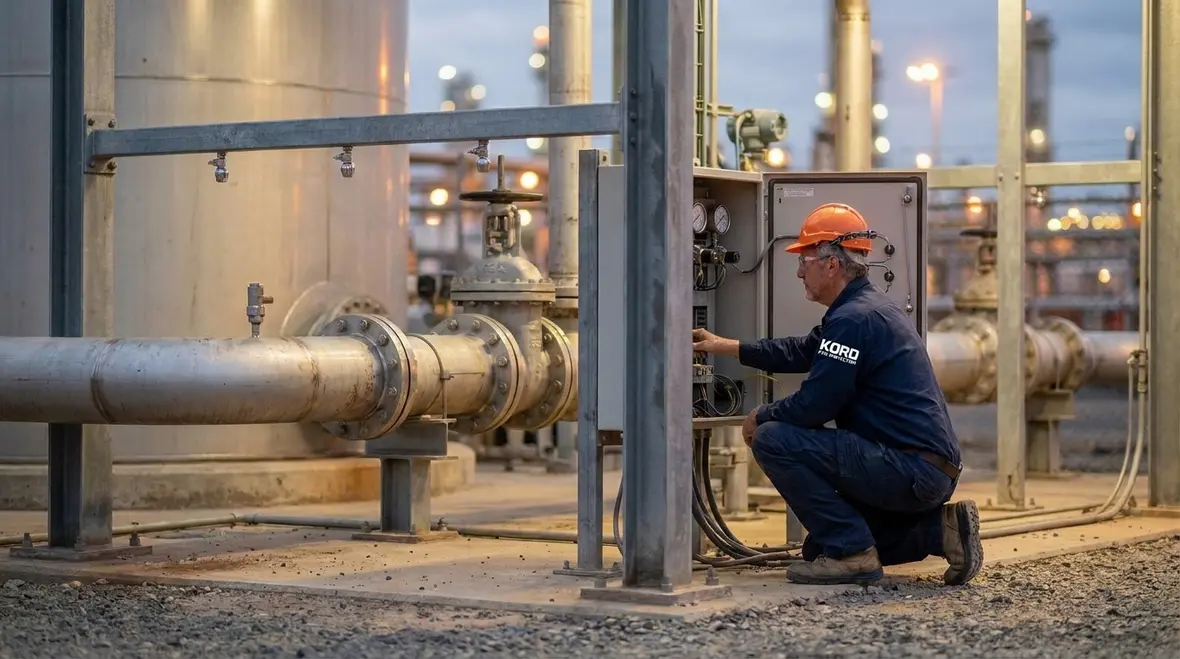
Teams should check nozzles, valves, alarms, pumps, water flow, corrosion, and any obstruction that could block spray patterns. In addition, records should stay current so audit and compliance work can move without drama. A system that has not been tested is only hope in a metal jacket.
Why This Standard Matters Beyond Compliance
NFPA 15 Section 4.5 is not only about meeting a rule. It helps protect production, reduce downtime, support insurance goals, and most of all, improve life safety. When a facility protects flammable and combustible liquids properly, it lowers the odds of a fast moving incident that can shut down work for days or longer.
For Australian businesses, that means less operational chaos, better asset protection, and stronger peace of mind. And in business, peace of mind is not fluff. It is a very useful thing. It also means leadership teams can make capital and maintenance decisions with more confidence because the protection strategy supports continuity instead of merely reacting to worst case scenarios after the fact.
FAQ
Conclusion
NFPA 15 flammable liquids water spray protection gives facilities a proven way to manage serious fire exposure risks. For Australian sites that need practical, reliable protection, Kord Fire Protection can help deliver the right system from concept to maintenance. When the hazard is real, the protection should be too.
Reach out to Kord Fire Protection to discuss a tailored solution for the site. With the right design, installation, testing, and upkeep, facilities can reduce exposure, protect critical assets, and keep safety planning grounded in something far more useful than optimism alone.

Join Our Newsletter!
Get the latest fire safety tips delivered straight to your inbox From our Newsletter.