NFPA 15 Section 4.4 Runoff Control Water Spray Drainage
Quick Answer: NFPA 15 runoff control water spray drainage focuses on where spray water goes after discharge, so it does not flood equipment, slip areas, or sensitive spaces. Good runoff control protects people, assets, and uptime. Kord Fire Protection can help design, install, and maintain systems that manage water safely and smartly.
When a water spray system activates, the job is not finished just because the fire risk drops. The water still has to go somewhere. That is where NFPA 15 runoff control water spray drainage becomes a serious part of the plan. In plain terms, Section 4.4 asks designers and owners to think about drainage, containment, and safe disposal of discharge water before the system ever fires. Otherwise, the site may swap one problem for another. Fire controlled, floor flooded. Not exactly the victory lap anyone wants.
For facilities reviewing water based protection, it helps to align runoff planning with broader fire sprinkler system service needs early, especially when discharge could affect occupied areas, stock, or critical plant equipment. On complex sites, drainage planning works best when it is treated as part of the protection strategy rather than the cleanup crew’s future problem.
Runoff control is not just a code detail. It protects operations, limits damage, and supports safe access during and after system discharge. It also keeps fire protection from turning into an expensive indoor waterfall scene, which is great for movies, not so great for business.
What NFPA 15 Section 4.4 Requires
NFPA 15 Section 4.4 centers on control of runoff from water spray systems. The standard expects the design team to manage discharge water so it does not create new hazards. That means looking at drainage paths, floor slopes, containment curbs, drain capacity, and the impact on nearby equipment and exits.
In practice, this section supports three goals. First, it limits water spread to protect critical assets. Second, it helps keep walkways and work areas safe. Third, it reduces the chance that runoff will overwhelm drains or flow into areas that should stay dry. So, the system does more than suppress heat. It also respects the site layout, which is a refreshing change from systems that act like they own the place.

What “control of runoff” really means on site
This is where the conversation gets practical. Runoff control is not simply, “There is a drain somewhere, so we are probably fine.” It means the discharge path has been considered from activation point to final collection or disposal point. If water sheets across a floor, finds a low door threshold, slips under equipment skids, or turns a busy access route into a skating rink, the design has more work to do.
That is why teams often review nozzle discharge areas, likely pooling zones, floor penetrations, and any room edges where water could escape into neighboring spaces. A system can perform exactly as intended for fire control and still leave behind a cleanup bill that inspires several long meetings and at least one person quietly staring at the ceiling.
Why Runoff Control Matters on Active Commercial and Industrial Sites
Across industrial and commercial sites, water spray systems may protect fuel areas, process equipment, electrical rooms, conveyors, loading bays, and plant rooms. These places can hold expensive machinery, stored goods, or live operations. Therefore, uncontrolled runoff can trigger follow on damage long after the fire event ends.
Water can ruin inventory, short out equipment, spread contamination, and create slip risks. In retail settings, it can also shut down trading floors and create a mess that sends facilities teams into crisis mode. Meanwhile, in industrial spaces, poor runoff control can affect production lines and bring downtime that hurts both schedule and cash flow. Nobody likes surprise maintenance, especially the kind that arrives with a mop and a panic meeting.
It also matters because recovery time shapes the real cost of an incident. Putting out or controlling the hazard is only one part of the picture. Reopening a room, restarting plant, drying sensitive areas, and verifying systems can take far longer if runoff moves into the wrong place. That is why drainage strategy protects continuity just as much as it protects concrete and cable trays.

Common trouble spots teams tend to underestimate
- Doorways that let discharge escape into occupied spaces
- Low points near switchboards, cabinets, or process controls
- Blocked trench drains in storage or loading areas
- Bunds that look good on drawings but interfere with movement or access
- Floor layouts that changed after commissioning and now redirect flow
How Designers Control Water Spray Drainage
Good runoff control begins during design, not during cleanup. Engineers and fire protection specialists look at how much water the system will discharge, where that water will travel, and what it may touch on the way out. Then they choose methods that suit the site.
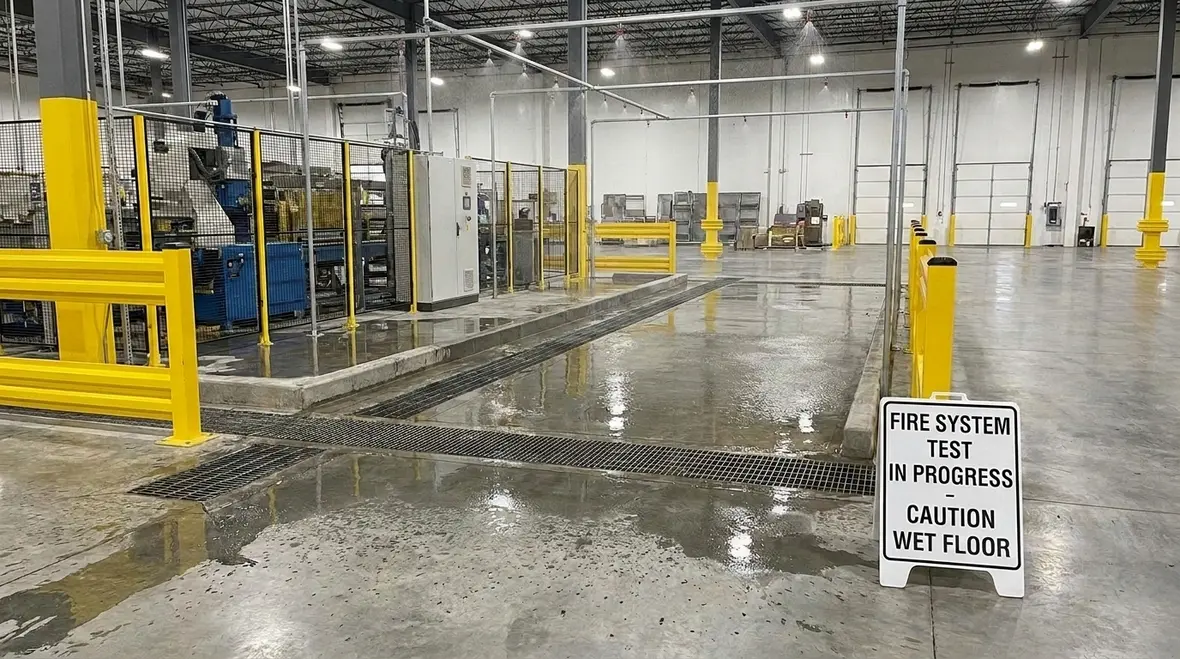
Common solutions include graded floors, trench drains, bunding, sump systems, and sealed containment zones. In some cases, drainage must connect with site stormwater systems or safe collection points. In other cases, the design may need local containment so runoff stays in a controlled area until it can be handled properly.
Just as important, the team must coordinate with building layout, mechanical systems, electrical gear, and business use. A drain that works on paper may fail in the real world if it sits under a pallet zone or clashes with a forklift route. As always, the floor plan has feelings too.
Where the hazard calls for a broader fixed water spray approach, it is also worth reviewing Kord Fire Protection’s NFPA 15 water spray fixed systems guide for context on how these systems are arranged and why discharge behavior matters beyond the nozzle itself.

Three design checks that save a lot of grief later
Flow volume:
Confirm the expected discharge rate and duration so drains and containment are sized for reality, not optimism.
Travel path:
Check where water naturally runs, where it can pool, and whether nearby rooms, stock, or live systems sit in the line of fire’s watery cousin.
Maintenance access:
Make sure drains, sumps, and containment features remain reachable and visible so they do not become forgotten infrastructure with excellent intentions.
What Kord Fire Protection Brings to the Job
Kord Fire Protection can become a vital partner when a project needs NFPA 15 runoff control water spray drainage done right. Their role is not limited to pipes and nozzles. They help connect fire protection goals with practical site conditions, which is where many projects win or lose.
They can support site reviews, drainage coordination, system design input, installation planning, and ongoing maintenance. More importantly, they can help teams balance fire safety with operational reality. That matters in facilities where uptime, cleanliness, product protection, and worker safety all sit at the same table.
For businesses, this kind of support reduces risk during design and lowers surprises after commissioning. It also helps owners speak the same language as builders, engineers, and facility teams. That shared understanding saves time, and time, as the business world keeps proving, is money with better shoes.
How to Answer Common Site Questions
Many project teams ask the same practical things when runoff control comes up. Will the drains take the flow rate? Will water escape into occupied areas? Can the system protect equipment without flooding the whole room? These questions deserve direct answers, because the details decide whether the system performs cleanly or creates avoidable damage.
Design check
Confirm spray volume, floor slope, drain size, and containment needs before installation.
Site impact
Review how discharge water affects people, product, power, and access routes.
Maintenance need
Inspect drains, bunds, and flow paths so buildup does not block runoff when the system activates.
Best Practices for Long Term Performance
Runoff control should stay part of the maintenance plan. Over time, debris, dust, pallet wrap, leaves, grease, and storage changes can block drains or alter water flow. Therefore, facilities teams should inspect drainage paths regularly and keep containment areas clear.
It also helps to test the system as part of wider fire protection checks. If the building use changes, the runoff plan may need a fresh review. A warehouse expansion, a new production line, or a layout shift near a protected area can all change drainage performance. In other words, the system should grow with the site, not become a relic from the last office rebrand.
FAQ
Move the Project Forward with the Right Fire Partner
NFPA 15 runoff control water spray drainage is about more than compliance. It protects assets, keeps people safe, and helps operations recover faster after activation. When the runoff path is planned with the same care as the spray pattern, facilities avoid turning one emergency into a second, soggier emergency.
Kord Fire Protection can bring the practical know how needed to make the system work as intended. If the project needs a partner who understands the fire risk and the water that follows, now is the time to talk and get the drainage strategy sorted before the floor decides to improvise.

Join Our Newsletter!
Get the latest fire safety tips delivered straight to your inbox From our Newsletter.