NFPA 15 Section 7.1: System Design for Water Spray Fire Protection
Quick Answer: NFPA 15 Section 7.1 sets the design foundation for water spray fire protection systems. It guides how systems protect high risk equipment, improve fire control, and support safer operations. For industrial, retail, commercial, and facility sites, careful design, testing, and installation matter. Kord Fire Protection can help turn code needs into practical protection that works when heat rises and seconds count.
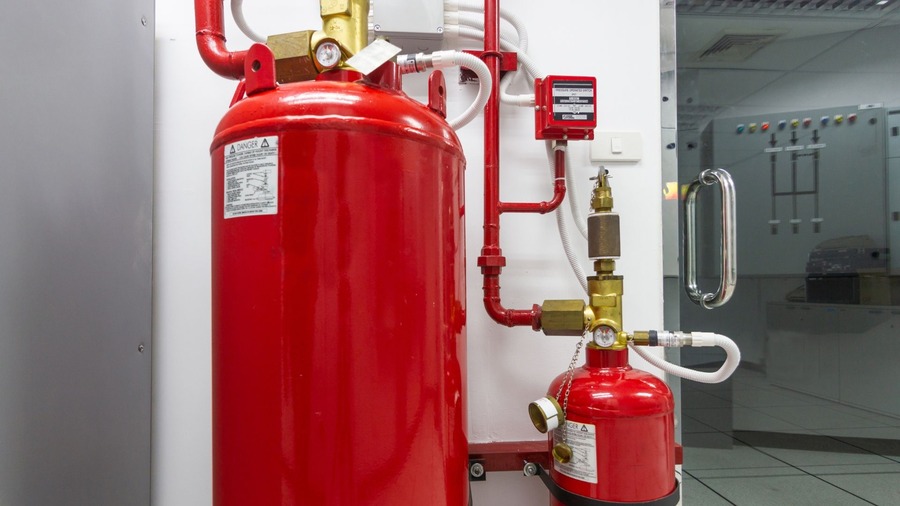
NFPA 15 system design water spray fire protection plays a major role in protecting assets that cannot afford delays, weak coverage, or poor water delivery. In busy industrial plants, retail complexes, and commercial facilities, this standard helps shape systems that respond fast and act with purpose. It covers the planning needed to keep fire exposure under control, and it gives teams a clear path toward safer operations. That matters, because a fire system should not behave like a confused extra in a badly written sequel. It should do its job cleanly, quickly, and without drama.
Near the start of any serious project, it also helps to connect code guidance with practical field support. Kord Fire Protection’s fire sprinkler system service page shows how design, installation, inspection, maintenance, and repairs work together when a site needs dependable water based protection. For teams dealing with special hazards, that broader service view makes it easier to move from standard language to a system that is actually buildable, testable, and ready for the real world.
What Section 7.1 Means for System Design
Section 7.1 focuses on how the water spray system gets designed before anyone installs pipe, nozzles, or pumps. It pushes the designer to match the hazard, the equipment layout, and the needed spray pattern. As a result, the system does not simply dump water everywhere. Instead, it delivers water where it will cool surfaces, reduce heat spread, and control exposure.
That sounds simple until you picture the variables. Equipment may sit close together, surfaces may be partly shielded, and some hazards may need direct impingement while nearby assets need exposure protection. A strong design does not guess. It works backward from the hazard, the geometry, and the expected fire conditions, then selects the right arrangement to meet the objective. That is why Section 7.1 matters so much. It asks teams to think before they build, which is always preferable to discovering a problem while everyone is staring at a puddle and asking harder questions later.
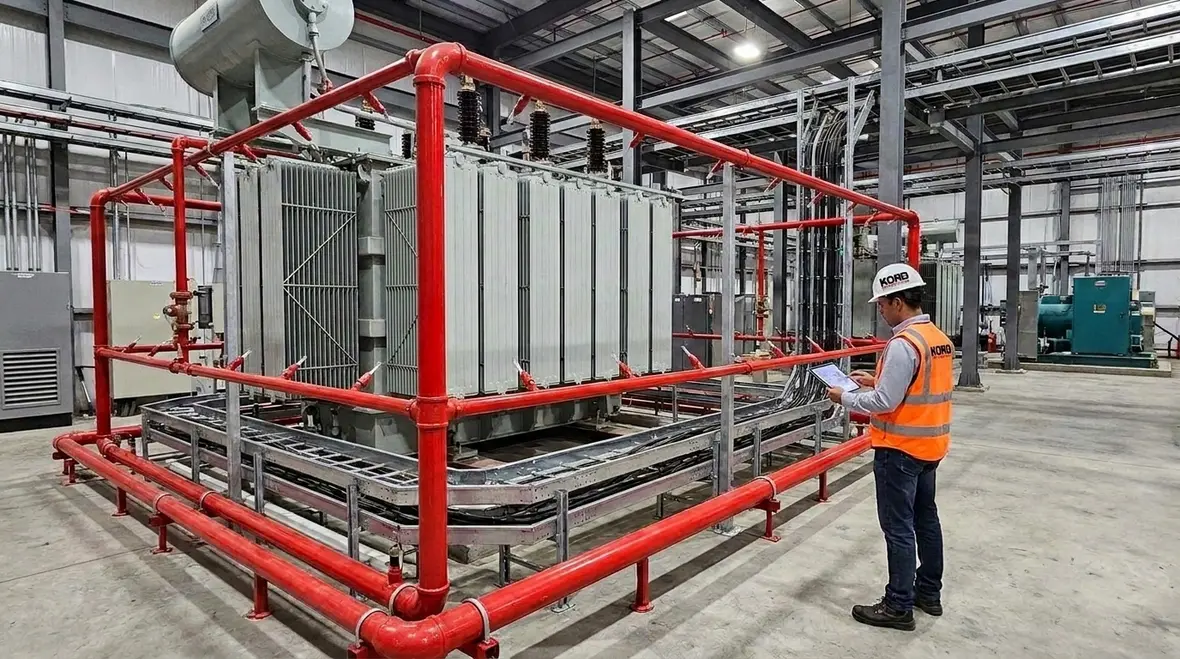
For facilities with transformers, flammable liquid areas, conveyors, cable trays, and process equipment, that approach is especially useful. It supports a design that suits the actual site rather than a one size fits all setup. Strong planning is what turns a standard into protection with purpose.

How a Proper Water Spray Layout Works
A strong layout begins with the hazard itself. Then the designer studies what needs protection, where heat will travel, and how the spray should reach the target. After that, the system can be shaped around nozzle position, discharge rate, pressure, and spacing.
Questions the Design Needs to Answer
- What equipment needs direct spray coverage
- How much water flow is required
- Which nozzles can reach the full hazard zone
- How will the system avoid dry spots and over spray
- Can the water supply support the demand over time
Because of this, the design stage becomes the backbone of the whole project. If the layout is weak, the rest of the system has to work harder than it should. And like a coffee machine on a Monday morning, that can get messy fast.
Good layouts also consider obstruction. Steel members, access platforms, cable runs, and oddly shaped machinery can all interrupt spray reach. A nozzle that looks perfect on a drawing may leave a surprising dry zone when the real world gets involved. That is why designers need to coordinate closely with actual site conditions rather than relying on optimistic assumptions and a ruler.
If you want more context on how water based fixed systems fit into a broader protection strategy, Kord Fire Protection’s related article on NFPA 15 water spray fixed systems is a natural next read. It helps connect the design language in Section 7.1 with the bigger picture of asset protection and system performance.
Why Water Supply and Pressure Matter
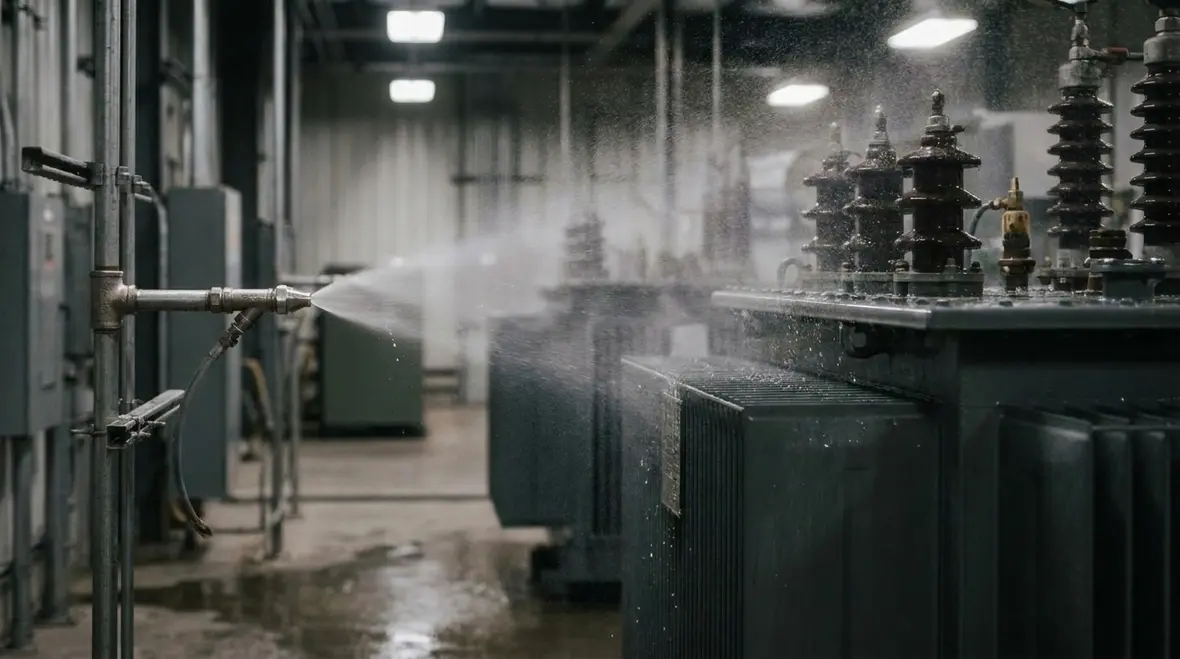
Section 7.1 places real weight on the ability of the system to perform under fire conditions. That means the water supply, pressure, and flow rate must all line up with the design need. If the supply falls short, the spray pattern may not reach the full hazard, which weakens protection.
Therefore, engineers must confirm the available water source early in the process. They should also review pumps, tanks, pipe sizes, and valve settings. In addition, they need to allow for losses in the system so the discharge still performs as planned at the nozzle. This step is not glamorous, but it is the sort of detail that keeps a fire system from becoming expensive wall art.
Why Hydraulic Reality Matters
A design can look excellent on paper and still fail in practice if the water source cannot sustain the required demand. Pressure loss through pipe runs, fittings, elevation changes, and valves all add up. When designers account for those losses from the beginning, they give the system a better chance to deliver what the hazard actually needs instead of what the drawing politely hoped for.
This is also where coordination with pumps and other fire protection systems becomes important. If a facility has multiple demands or shared infrastructure, every decision needs to support reliability under emergency conditions. When pressure and flow are treated as core design criteria rather than afterthoughts, the finished system is far more likely to perform with confidence.
Where Kord Fire Protection Adds Real Value
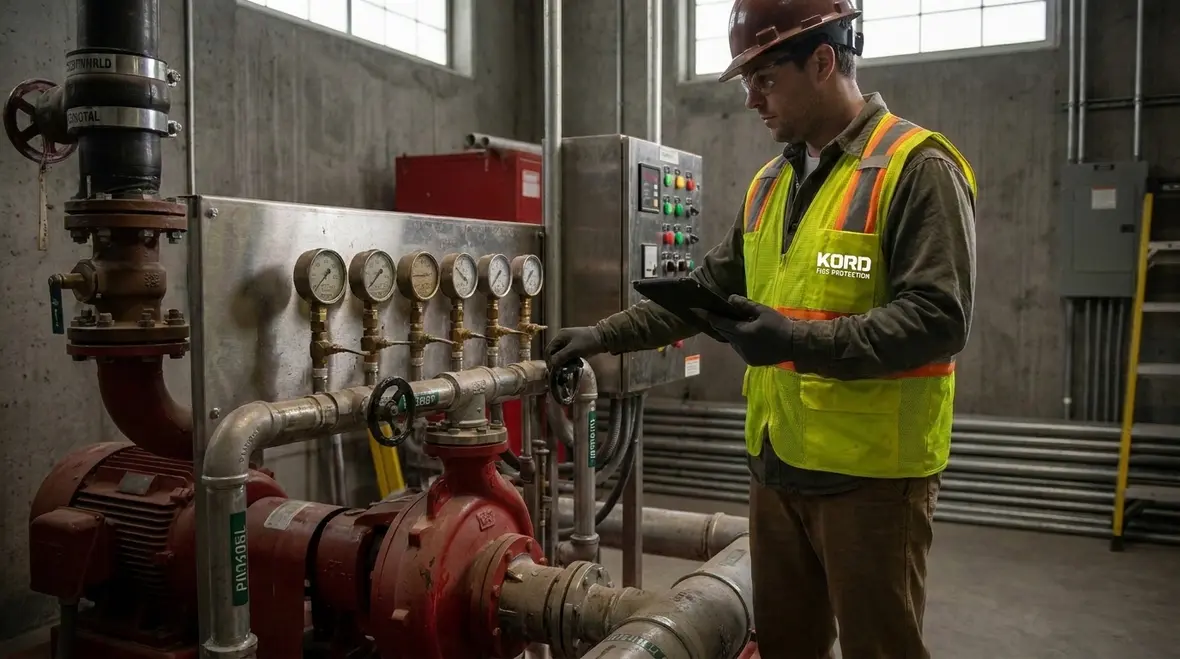
Kord Fire Protection can become a vital partner in this work because system design is only one part of the story. A good partner helps translate code rules into a system that fits the site, the hazard, and the budget. That matters for facilities that need practical protection without wasted time or guesswork.
- site review and hazard assessment
- system planning and design input
- spray coverage and layout checks
- equipment selection and compliance support
- installation coordination and project delivery
- testing, commissioning, and ongoing service
As a result, clients get more than a box tick. They get a partner that understands how to build protection that works in the real world, not just on paper. That is the kind of support that keeps projects moving and compliance teams breathing a little easier.
Kord Fire Protection also offers a broader compliance focused service model through its full fire protection services, which can be helpful for facilities that need sprinklers, alarms, extinguishers, suppression systems, testing, and maintenance coordinated under one roof. That kind of continuity matters when a water spray system is only one piece of a larger life safety picture.
NFPA 15 System Design Water Spray Fire Protection in Practice
In practice, NFPA 15 system design water spray fire protection asks teams to think about performance first. The system must control exposure, cool surfaces, and help stop fire from spreading to nearby assets. Therefore, design teams must look at nozzle type, spray angle, discharge density, and equipment arrangement together.
| Design Focus | What It Helps With |
| Hazard review | Identifies what needs protection and why |
| Nozzle layout | Improves coverage and reduces missed areas |
| Water supply check | Confirms the system can perform under demand |
| Testing and commissioning | Verifies that the system works as intended |
Because every site has different risks, the best system design stays flexible but disciplined. It should protect the asset, support operations, and meet the standard without creating extra headaches for the facility team.
That practical mindset is often what separates an adequate design from a great one. Teams that focus only on minimum compliance may technically finish the task, but teams that focus on real performance usually produce systems that are easier to test, maintain, and trust. And trust matters a lot when the equipment in question is expected to work flawlessly on one of the worst days a site can have.
Common Mistakes That Hurt System Performance
Some projects stumble because they treat design as a quick paperwork task. However, that shortcut often causes weak spray coverage, poor water delivery, or awkward nozzle placement. Another common issue is failing to account for the full hazard shape, especially when equipment has angles, height changes, or blocked surfaces.
Also, teams sometimes forget future site changes. When a plant adds new equipment or a commercial facility reworks utility or storage areas, the original protection may no longer suit the space. Therefore, regular review matters just as much as the first design. Safety is not a one and done dinner special.
Mistakes That Show Up Again and Again
- placing nozzles without fully checking line of sight to the hazard
- underestimating water demand during sustained operation
- ignoring obstructions created by later equipment changes
- selecting components that do not match the hazard objective
- treating testing and commissioning as a formality instead of proof
Avoiding these problems usually comes down to discipline. Review the hazard carefully, verify hydraulic performance, coordinate with the actual site layout, and test the finished system like you genuinely plan to depend on it. Because you do.
FAQ
Build a Safer System With the Right Partner
NFPA 15 system design water spray fire protection works best when the design is thoughtful, the water supply is sound, and the installation matches the hazard. For industrial, commercial, and facility sites, that means choosing a partner who understands both code and site reality. Kord Fire Protection can help deliver that confidence.
For facilities that want protection built to perform, the next step is a proper site review and a design plan that stands up under pressure. The standard provides the framework, but a well executed project turns that framework into something reliable, practical, and ready when seconds count most.

Join Our Newsletter!
Get the latest fire safety tips delivered straight to your inbox From our Newsletter.