
NFPA 13D Section 5.2: Aboveground Pipe Materials Allowed for Residential Sprinkler Systems
Quick Answer
NFPA 13D Section 5.2 specifies which aboveground pipe materials are permitted for residential sprinkler systems. It focuses on material type, joining method, corrosion performance, and installation practices that maintain system reliability. Proper selection and workmanship reduce leakage risk and support inspection and maintenance readiness.
Why NFPA 13D Section 5.2 matters for real-world compliance
Residential sprinkler designers and installers often treat pipe material as a cost or availability decision. NFPA 13D Section 5.2 aboveground pipe materials residential sprinkler system allowed requirements change that mindset because pipe selection drives long term performance, inspection outcomes, and serviceability. In commercial and industrial occupancies that contain residential style sprinkler risks or adjacent residential coverage, facilities teams frequently inherit NFPA 13D installed piping when tenant buildouts occur, maintenance staff perform alterations, or contractors substitute materials during repairs.
To support safe operation, compliance depends on more than “approved material.” The system also needs the correct fittings, proper joining procedures, and documented workmanship that matches the original installation intent.
If your team is also reviewing corrosion risk and long term piping durability, a helpful related read is sprinkler pipe corrosion prevention for fire protection systems, which fits naturally with Section 5.2 material decisions.
For an installation baseline that complements Section 5.2 considerations, review: NFPA 13 overview for automatic fire sprinkler system installation practices.
What Section 5.2 typically regulates: material, joining, and durability
NFPA 13D Section 5.2 addresses aboveground pipe materials that installers may use where sprinkler piping is exposed or runs within occupied structures above the floor line. The intent centers on three performance categories:
- Material compatibility with fire protection service. The pipe must tolerate wet and pressurized sprinkler system conditions without unacceptable corrosion or degradation.
- System integrity through approved joining methods. Screwed, coupled, or welded arrangements must align with the permitted material and the manufacturer’s instructions and listed system components.
- Installation workmanship that withstands inspection and maintenance. Thread condition, alignment, leak prevention, and hanger support all influence long term reliability.
In practice, the most common nonconformities do not happen because the “wrong pipe” is selected at the start. They arise during modifications, spur routing, and repair work when crews substitute materials without verifying the original basis of design and the applicable code edition requirements.
Common aboveground pipe materials used under NFPA 13D rules
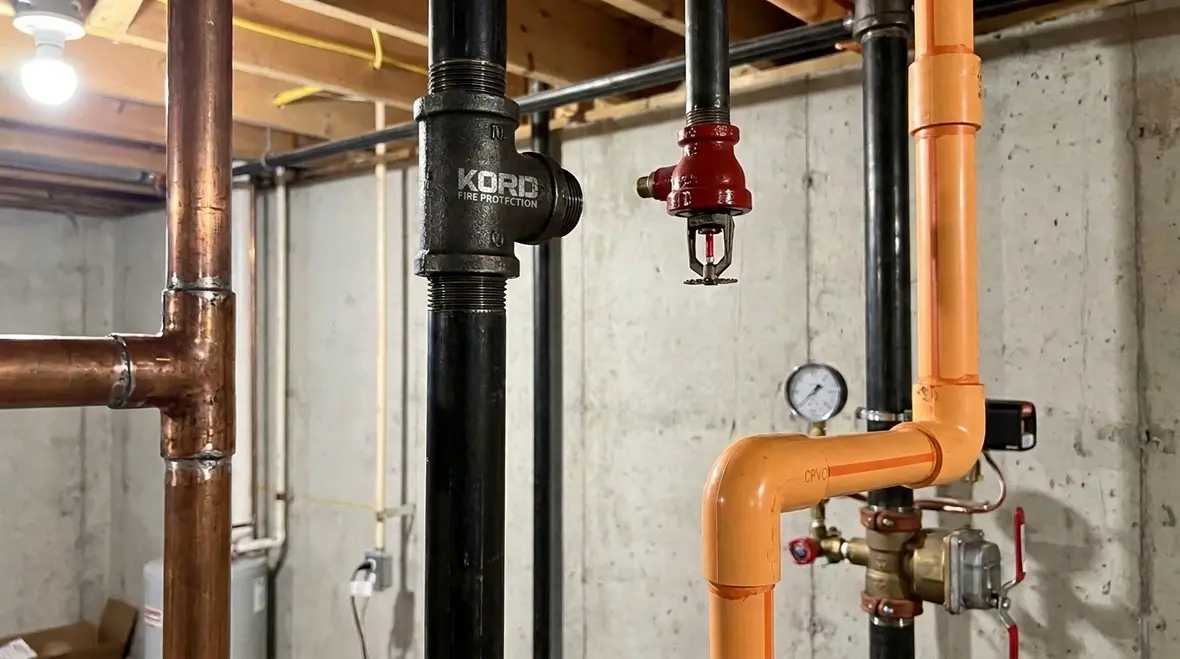
NFPA 13D Section 5.2 establishes a limited menu of aboveground pipe material options for residential sprinkler systems. While the exact list depends on the code edition and the specific listing, the most frequently encountered permitted options in the field include the following categories.
1) Listed metallic pipe systems
Metallic pipes are common for aboveground residential sprinkler distribution due to strength, predictable fit up, and widespread availability of fittings. Compliance hinges on using pipe and fittings that stay within listed and permitted combinations for the system. Field issues commonly include improper thread engagement, damaged threads, and mixed system components from different listing families.
Maintenance staff should expect that metallic pipe repairs often require coordinated replacement of affected sections, correct coupling lengths, and verification that the replacement matches the original internal coating or corrosion allowances, where applicable.
2) Listed copper pipe systems
Copper piping is frequently installed for branch lines and distribution in residential and light commercial applications where compatibility with system components exists. Installers must ensure the proper use of fittings and joining methods compatible with copper and the intended sprinkler system service. Failure points include contaminated joint surfaces, incorrect soldering procedures, and inadequate support that later stresses joints during building movement.
3) CPVC and other permitted plastic piping options (where allowed)
Some residential sprinkler installations use plastic piping materials that are permitted when they meet listing and installation requirements. This category typically requires strict control of solvent cement or joining procedures, thermal movement considerations, and protection from physical damage. Commercial and industrial facilities teams often observe failure modes tied to rough handling, incorrect hanger spacing, UV and environmental exposure outside protected zones, or repairs performed with mismatched adhesives and primers.
Where a facility includes mixed piping types, technicians should verify material transitions carefully. Unapproved adapters or improper coupling can create weak points and complicate future inspection documentation.
Compliance challenges in occupied commercial, industrial, and retail settings
Even though NFPA 13D targets residential sprinkler systems, commercial and industrial environments commonly encounter NFPA 13D piping during tenant improvements, warehouse mezzanine work, retail store buildouts, and mixed occupancy renovations. These settings introduce practical compliance challenges:
- Tenant driven repairs and substitutions. Contractors sometimes replace damaged sections without verifying code edition requirements or the original pipe material basis.
- Fast fit up under downtime constraints. Rushed joining, incorrect torque, and poor alignment increase the likelihood of leaks during system acceptance or periodic monitoring.
- Physical damage risk. Retail and light industrial environments can place piping in paths for deliveries, seasonal merchandising, or equipment maintenance.
- Inspection access limits. Piping concealed behind ceilings or soffits can slow corrective action when nonconforming materials are discovered.
- Maintenance documentation gaps. Incomplete as built records make it difficult to confirm what Section 5.2 permitted material was actually installed.
Facilities teams that treat sprinkler piping like a purely “residential scope” item often underestimate the downstream cost of replacement when inspections, insurance reviews, or sprinkler contractor audits identify noncompliant substitutions.
For a broader system installation context and how material selection interacts with layout and acceptance practices, Kord Fire Protection also aligns day to day field work with the guidance framework covered in: NFPA 13 overview for automatic fire sprinkler system installation.
Inspection, testing, and maintenance: the operational side of Section 5.2
NFPA 13D Section 5.2 pipe allowance requirements become meaningful when maintenance and inspection teams can verify that the installed system stays in a safe condition. The most relevant operational practices include:
1) Visual verification during routine inspections
Inspectors typically check for corrosion, physical damage, improper supports, and leakage indications. The pipe material dictates what inspectors look for. Metallic systems focus attention on corrosion points and coating damage. Plastic systems focus attention on joint condition, discoloration, UV exposure, and mechanical protection.
2) System testing impacts joining integrity
Flow tests, drain tests, and pressure checks can expose weak joints or hidden defects. If the joining method deviated from the permitted material requirements, pressure fluctuations and water hammer can accelerate leakage. This is why replacement work must follow the original permitted material pathway, not just “a similar pipe.”
3) Maintenance alters systems, so control substitutions
The highest risk period occurs during maintenance and after incident events. Facilities and contractors need a substitution control process that confirms:
- Material type matches the original permitted aboveground category under the applicable code edition.
- Fittings and joining methods are compatible and installed using manufacturer and listing requirements.
- Work produces updated as built records for future inspections.
Kord Fire Protection supports these control steps with ongoing compliance services that align field work with acceptance and maintenance expectations, helping prevent repeat repairs and reducing time spent on corrective action.
How to document pipe material compliance so audits pass
Commercial facility audits often focus on evidence. To support NFPA 13D Section 5.2 aboveground pipe materials residential sprinkler system allowed compliance, documentation should capture:
- Pipe and fitting listings used on the project.
- Contractor records for joining methods and installation procedures.
- As built location drawings showing pipe runs and material types, including any transition points.
- Maintenance history that shows repaired sections and the reason for replacement.
When documentation is missing, maintenance teams may have to perform destructive investigation or extensive probing to identify materials. That increases cost, disrupts operations, and can create installation downtime.
For additional background on fire pump and water supply dependencies that affect system performance during testing and inspections, see: FM Data Sheet 3-7 fire pump acceptance testing guide.
Frequently Asked Questions
Get Section 5.2 right before small issues become costly replacements
If your facility includes or inherits residential sprinkler piping, Kord Fire Protection can help verify aboveground pipe material compliance, manage repair substitutions, and maintain documentation for inspection readiness. Contact Kord Fire Protection for an assessment of your sprinkler piping material types, joint and support condition checks, and a practical plan to keep your system compliant and serviceable year round.

Join Our Newsletter!
Get the latest fire safety tips delivered straight to your inbox From our Newsletter.



