
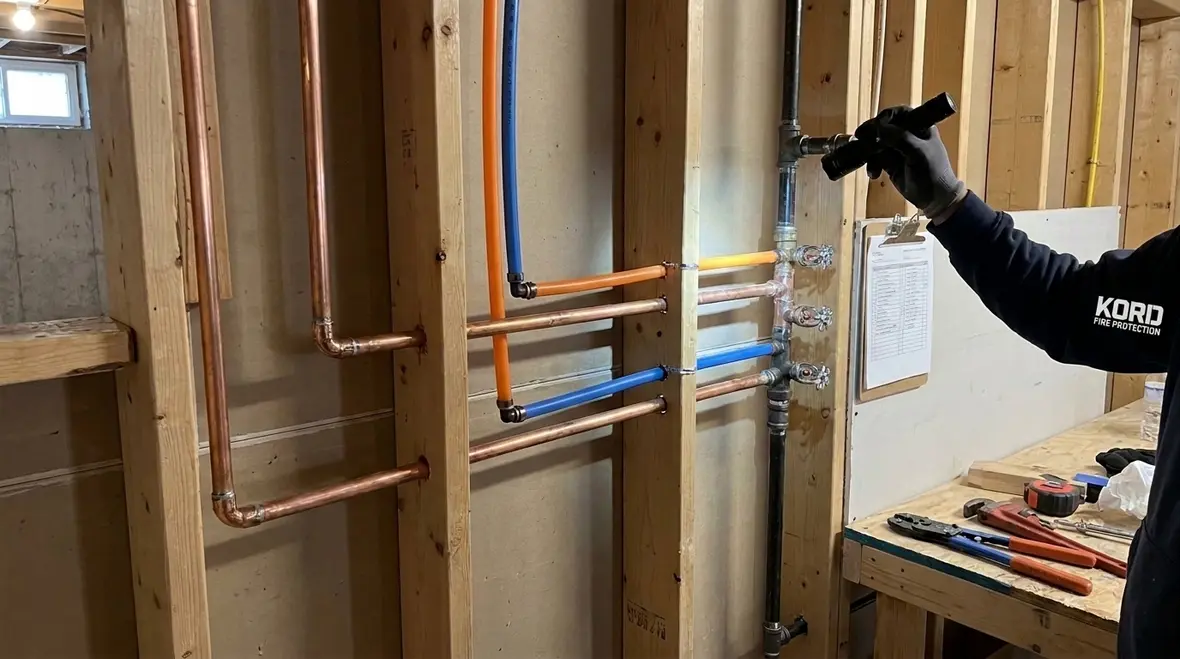
NFPA 13D Section 5.2: Copper, PEX, and Steel Pipe Selection for Home Sprinkler Piping
Quick Answer: NFPA 13D Section 5.2 guides material selection for residential sprinkler piping based on corrosion resistance, pressure and temperature rating, installation compatibility, and joint methods. Copper, PEX, and steel each introduce distinct inspection, freeze protection, and maintenance considerations that affect code compliance and long term performance.
Residential automatic sprinkler systems rely on piping materials that can withstand water chemistry, environmental exposure, mechanical damage risks, and long term service demands. NFPA 13D Section 5.2 copper PEX steel pipe selection home sprinkler piping residential addresses those realities by requiring the selected pipe to be appropriate for the system design and installation conditions. In practice, compliance depends as much on how the piping is installed, joined, restrained, and maintained as it does on the name of the material.
If you want a broader code and installation baseline before getting into residential pipe choices, Kord Fire Protection’s NFPA codes and guidelines resource hub is a useful place to start. It pairs nicely with the more installation focused NFPA 13 overview for automatic fire sprinkler system installation you’ll see referenced throughout this article.
Why NFPA 13D Section 5.2 pipe material selection matters in the real world
Pipe selection directly affects hydraulic performance, leak frequency, inspection readiness, and the ability to keep systems in service. Even where calculations show adequate pressure, field failures often come from poor joining practices, incompatible fittings, inadequate support spacing, or damage during construction.
Commercial, industrial, and retail facilities that run residential style systems or share contractors and maintenance workflows face similar challenges. Their compliance programs typically require documented material traceability, standardized joint inspection routines, and predictable maintenance access for shut downs, testing, and repairs. That expectation increases the operational value of choosing piping systems that are both code compliant and serviceable.
For a broader framework on installation requirements that support correct material selection, installation practices, and system acceptance expectations, see NFPA 13 overview for automatic fire sprinkler system installation. While that page focuses on NFPA 13, many installation fundamentals transfer to NFPA 13D execution and inspection planning.
What Section 5.2 requires you to verify before you buy pipe
Before procurement, a competent installer or inspecting professional confirms that the proposed piping material and joining method are suitable for the system type and protected hazard configuration. In day to day compliance work, the critical checks typically include the following.
1) Compatibility with system design conditions
- Confirm the pipe listing and pressure rating align with the design density and expected operating pressures.
- Verify temperature suitability for the fire sprinkler environment, especially where piping runs through unconditioned spaces.
2) Corrosion resistance and water quality exposure
- Assess water chemistry and internal corrosion potential, including stagnant sections where flow may not exercise the pipe regularly.
- Plan for exposure risks for exterior or damp locations, including condensation and wet crawl spaces.
3) Joining method and inspection visibility
- Confirm that the coupling, transition fitting, or joining technique used in the field is permitted and installed to manufacturer and code requirements.
- Ensure the joints receive workable inspection access before walls and ceilings close.
4) Restraint, support, and movement control
- Verify support spacing and anchorage that manage thermal expansion, vibration, and building movement.
- Plan for changes in direction that often create stress concentrations at joints and fittings.
Copper pipe selection: strengths, common failure points, and inspection focus
Copper piping remains widely used in residential sprinkler systems when properly installed with compatible fittings and joining procedures. Copper can provide good corrosion resistance when installed correctly and protected from conditions that promote external corrosion.
Where copper performs best
- Interior, protected environments with stable moisture conditions.
- Systems where joints can be installed cleanly and inspected during construction.
- Installations that allow proper support and restraint to limit movement at elbows, tees, and transitions.
Common field issues that compromise copper systems
- Improper joint cleaning or overheating during solder or brazing, which can reduce joint integrity.
- Inadequate support, causing stress at joints during expansion and contraction.
- External corrosion from moisture exposure, especially when pipe routing intersects crawl spaces, exterior walls, or wet mechanical chases without adequate protection.
Inspection priorities for copper runs
- Joint workmanship verification before concealment, with documentation for pressure test and as built routing.
- Assessment of support condition and any signs of movement damage at fittings.
- External condition review where moisture exposure exists, including insulation condition and dry wall boundaries.
PEX pipe selection: fit, expansion control, and service realities
PEX provides flexibility that can simplify routing around obstacles. It often reduces the number of fittings required, which can shorten installation time. However, the same flexibility that improves buildability also demands disciplined restraint, proper bend control, and strict attention to manufacturer and code permitted transition methods.
Where PEX typically fits operationally
- Long runs that benefit from fewer mechanical connections.
- Projects with complex framing where rigid pipe would require frequent offsets.
- Environments where maintenance access allows future replacement of selective sections if required by inspection findings.
Common failure points seen in service and closeout
- Improper crimp or insertion depth at fittings, leading to slow leaks or joint separation under pressure.
- Inadequate support or restraint that allows sagging or excessive movement at transitions and bends.
- Exposure to elevated temperatures or direct sunlight during construction, if installation controls and protection measures fall short.
Inspection priorities for PEX systems
- Confirm correct fitting installation technique on every accessible joint, with complete pressure test documentation.
- Verify support and bend management, particularly where the pipe changes direction or passes through building assemblies.
- Check for visible signs of damage, kinks, or abrasion where the pipe contacts framing members.
Steel pipe selection: corrosion management and joint method discipline
Steel piping can be used where design, installation approach, and protection measures meet the intended performance expectations. Steel offers strength and stability but tends to be more sensitive to internal and external corrosion conditions if the system environment and coating or protection approach are not controlled.
Where steel tends to be the right call
- Installations that can support rigid, stable alignment with proper threading or approved coupling methods.
- Projects where local practice supports consistent joint workmanship and qualified installation oversight.
- System layouts that accommodate robust support and restraint schedules.
Common failure points and why they show up
- External corrosion where insulation or protective wrapping is missing, damaged, or incorrectly installed.
- Internal corrosion exacerbated by water chemistry, stagnant sections, or system inactivity patterns.
- Joint defects from poor threading alignment, damaged couplings, or non compliant sealant use where prohibited.
Inspection priorities for steel
- Coating and insulation verification, including inspection of seams and terminations.
- Support and alignment checks to prevent vibration induced movement at couplings.
- Maintenance planning to monitor condition over service intervals and to support fast repair access.
Which material wins for residential sprinkler piping? Use a decision checklist
Instead of choosing by habit, select based on the project constraints that drive long term compliance. The most defensible approach uses a short decision checklist that matches design, environment, and maintainability.
Decision checklist for NFPA 13D Section 5.2 copper PEX steel pipe selection home sprinkler piping residential
- Environmental exposure: Moist or exterior routes favor material and protection methods with strong corrosion resistance control.
- Routing complexity: PEX can reduce fitting counts in tight framing, but restraint and joint workmanship must remain consistent.
- Installation capability: Copper and steel require disciplined joint methods and support details; PEX requires strict fitting installation and handling controls.
- Inspection and access: Select the option that allows complete verification of joints and supports before concealment.
- Maintenance readiness: Plan for repair pathways and documentation so future testing and modifications remain efficient.
In compliance focused commercial operations, the material selection that succeeds is often the one that reduces joint variability across crews and locations. That consistency supports predictable inspection outcomes, fewer corrective actions, and smoother acceptance.
Kord Fire Protection supports installation planning, testing readiness, and ongoing compliance maintenance for facilities that need dependable sprinkler system performance over time. For additional context on industry operational standards and fire pump system considerations that often interface with sprinkler readiness, see this fire pump acceptance testing article.
Frequently Asked Questions
Conclusion and call to action
NFPA 13D Section 5.2 copper PEX steel pipe selection home sprinkler piping residential should be decided by code permitted compatibility, environmental exposure, joint method discipline, and inspection access. For project teams seeking fewer corrective actions and stronger compliance outcomes, engage Kord Fire Protection early for installation review, acceptance testing planning, and ongoing maintenance support. Contact Kord Fire Protection to align your piping selection, joining approach, and documentation with practical inspection expectations.

Join Our Newsletter!
Get the latest fire safety tips delivered straight to your inbox From our Newsletter.



