
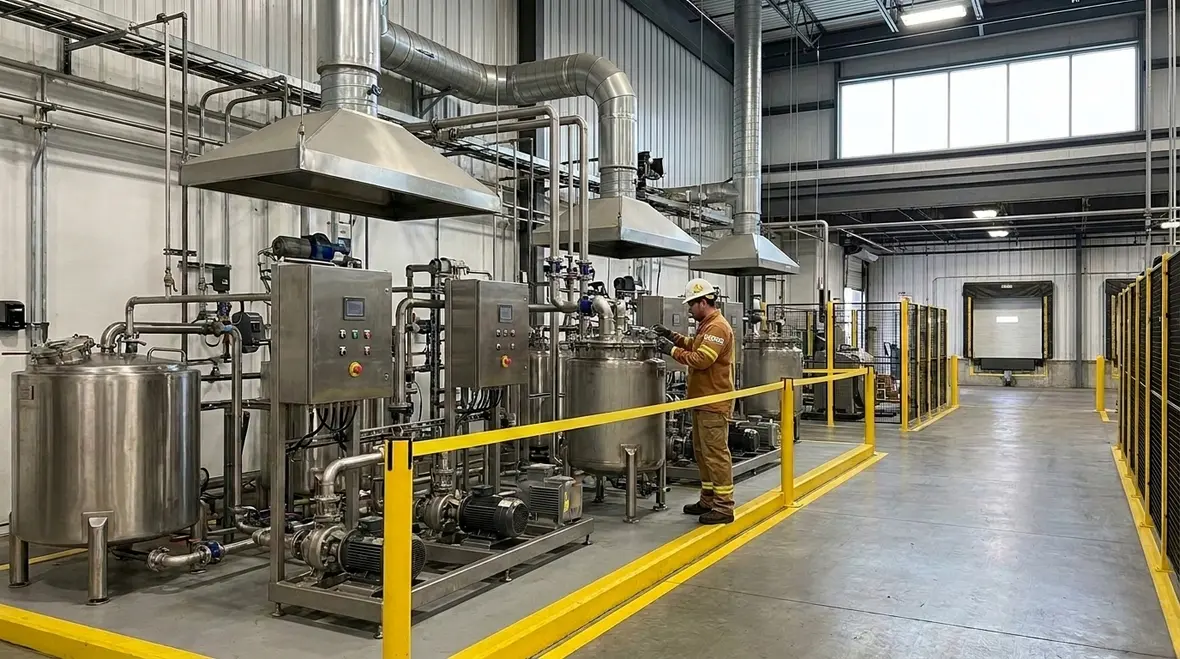
NFPA 36 Section 7.2: Location and Siting of the Extraction Process
Quick Answer: NFPA 36 Section 7.2 requires extraction processes to be located and sited to reduce ignition risk, manage vapor and fire exposure, and support safe operation, inspection, and emergency response. Site decisions should align with process hazards, building layout, ventilation, and reliable separation.
For facilities that need broader compliance support, Kord Fire Protection’s fire suppression services can help connect inspections, testing, maintenance, and corrective planning into one practical path forward.
Why “NFPA 36 extraction process location siting” is a compliance-critical decision
NFPA 36 treats extraction as a high consequence operation because solvent vapors, combustible residues, and ignition sources can align during normal and abnormal conditions. The NFPA 36 extraction process location siting requirements in Section 7.2 focus on where equipment and associated activities are placed inside a facility or relative to other building uses. Compliance is not only about meeting separation distances on paper. It also depends on how the location supports safe vapor control, heat management, reliable shutdown, and practical access for maintenance and inspection.
In commercial facilities such as processing plants, ethanol and biodiesel production sites, and large industrial or retail back-of-house operations that support extraction activities, owners often underestimate the operational impacts of siting. Poor placement can force workarounds that increase hot work frequency, reduce inspection reach, and complicate emergency response. Those operational realities are where enforcement and incident risk converge.
What Section 7.2 expects when siting the extraction process
Section 7.2 centers on controlling the hazards created by extraction systems and their operating environment. While exact details vary by fuel or solvent system, process configuration, and building design, the core siting principles typically include:
Control of vapor hazards: The extraction process location must limit the chance that flammable or combustible vapors accumulate near ignition sources or uncontrolled openings.
Protection from ignition sources: Siting decisions must account for nearby equipment, electrical classification boundaries, hot surfaces, motors, pumps, and maintenance activities.
Separation from incompatible areas: The process area should reduce exposure to activities such as packaging lines, warehouses with high combustibles, or other operations where ignition frequency is higher.
Support for emergency response: Layout must enable safe egress, firefighting access, and operational control of the system.
Practical inspection and maintenance access: Siting must allow for routine checks of seals, gaskets, detectors, ventilation components, and pressure relief devices without bypassing safety features.
In practice, compliance requires that the process area is designed so the extraction system remains within expected operating parameters. When siting creates pressure imbalances or inadequate airflow, vapor control becomes unreliable, and the facility fails the intent of the standard even if basic separation exists.
Operational mechanics that drive siting requirements
Extraction process hazards change across the operating cycle. NFPA 36 Section 7.2 considerations become clearer when facilities examine what happens during loading, processing, solvent transfer, draining, cleaning, and shutdown.
1) Vapor release points and where they matter
Common vapor release scenarios include solvent charging, venting, sampling, filter changes, column maintenance, and equipment gaskets that age over time. Siting must position these potential release points away from ignition sources and away from areas with frequent traffic or uncontrolled electrical equipment. If access corridors place workers near relief discharge locations, maintenance procedures must compensate, typically by requiring controlled ventilation and strict hot work management.
2) Ventilation performance during upset conditions
Many extraction systems rely on localized ventilation or vapor capture rather than building wide dilution alone. If the extraction process location sits where air flow patterns can pull vapors toward doors, loading docks, or electrical rooms, the facility may experience recurring detector alarms without a root cause correction. That is a reliability failure that inspectors notice during documentation review and field walkthroughs.
3) Heat transfer and the proximity of surfaces
Extraction can involve heated vessels, condensers, and distillation steps. Siting near other building systems that also run hot or cycle frequently increases the likelihood of uncontrolled surface ignition. Facilities also need to consider thermal radiation during upset events when normal heat removal is impaired.
4) Relief and discharge routing
Pressure relief devices, vent headers, and condensate drains must terminate in locations that maintain safe conditions. If discharge routing runs through areas where vapors can collect, siting becomes noncompliant in effect. Many enforcement findings come from “acceptable design on drawings” that turns out to be unsafe when the actual discharge path is extended, rerouted, or obstructed during later renovations.
Common commercial facility siting failure points
Commercial and industrial operators often discover late that siting changes during tenant work, remodels, or equipment upgrades can invalidate the original hazard assessment. Typical failure points include:
Vapor pathway changes: New doors, wall openings, or ceiling penetrations create bypass airflow that moves vapors into adjacent occupancy zones.
Ignition source drift: Added portable heaters, upgraded lighting types, or new motors placed nearby introduce higher ignition risk than the original hazard evaluation assumed.
Detector and ventilation mismatch: Detectors are installed but not aligned with expected vapor movement at the actual process location and airflow conditions.
Maintenance access compromises: Piping support placement or improper clearance creates workarounds that delay repairs to seals, gaskets, and sampling valves.
Hot work and cleaning frequency: If siting makes cleaning harder, maintenance personnel increase frequency of certain tasks, raising ignition event probability.
These issues can persist for months because they do not always trigger catastrophic events. Instead, they surface as chronic alarms, repeated troubleshooting, and evidence of deferred maintenance. That operational pattern weakens compliance posture because it demonstrates that hazard control systems are not stable.
How to validate siting compliance in the field
Facilities should treat NFPA 36 extraction process location siting verification as an engineering and inspection activity, not a one time paperwork review. A robust validation program typically includes the following:
Document review that reflects the real layout
Confirm the extraction equipment location, vent routing, and discharge terminations match the latest as built drawings.
Verify that operating procedures account for loading, solvent transfer, sampling, filter or cartridge changes, and abnormal shutdown scenarios.
Field walkthrough aligned to ignition and vapor pathways
Map potential vapor release points against nearby ignition sources, including electrical panels, motors, and frequently used equipment.
Assess ventilation air movement and airflow obstructions that can shift vapor into adjacent areas.
Inspect for physical changes like new racks, signage, stored materials, or temporary barriers near the process area.
Inspection readiness for ongoing maintenance and testing
Confirm safe access for detector checks, ventilation duct inspection, and verification of relief device routes.
Ensure maintenance plans include replacement schedules for seals, hoses, and gaskets based on operating hours and solvent exposure.
When validation shows recurring issues, Kord Fire Protection supports commercial clients with practical life safety and fire protection expertise tied to operational reliability. That partnership helps facilities keep protective systems aligned with how the extraction process actually runs over time, not just how it ran during startup.
If your facility needs ongoing support, explore Kord Fire Protection and review their broader full lifecycle fire protection servicing approach for inspection, testing, and maintenance planning.
Frequently Asked Questions
Next step: tighten your siting verification before problems compound
NFPA 36 extraction process location siting becomes high risk when operational realities drift from the original hazard intent. Kord Fire Protection helps commercial facilities validate protective systems and maintain compliance readiness through practical inspections, testing support, and maintenance planning. Contact Kord Fire Protection to review your extraction area siting, identify likely failure points, and build an execution-ready compliance program.

Join Our Newsletter!
Get the latest fire safety tips delivered straight to your inbox From our Newsletter.



