
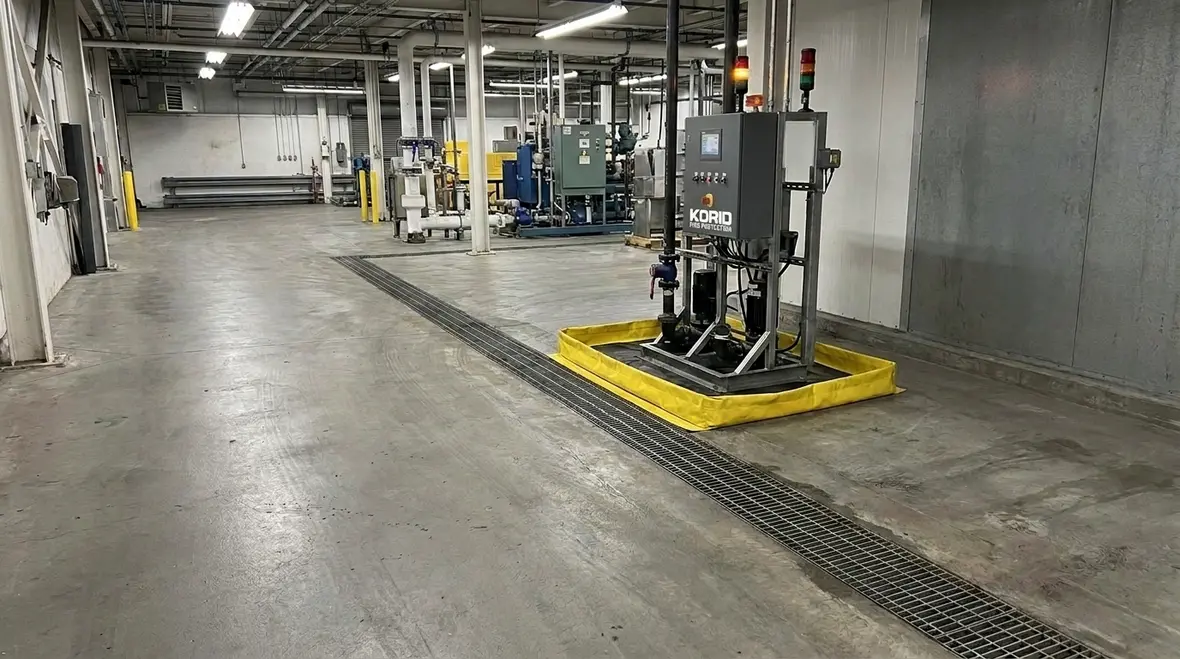
NFPA 36 Section 7.4: Drainage and Spill Control in the Extraction Area
Quick Answer
NFPA 36 Section 7.4 requires extraction areas to manage stormwater, process liquids, and any accidental releases through properly designed drainage, containment, and spill control systems. Facilities must prevent hazardous liquids from migrating beyond designated control zones and must maintain these systems to function as intended during normal operations and abnormal events.
Facilities working to strengthen inspection records and long-term system readiness can also review fire suppression system maintenance basics for owners for a practical look at how ongoing upkeep supports compliance and operational reliability.
Why NFPA 36 drainage spill control extraction requirements matter in the real world
Extraction areas in commercial and industrial facilities typically handle flammable liquids, solvents, and washdown fluids that can carry contamination, odors, and hazardous concentrations. NFPA 36 drainage and spill control extraction requirements focus on one outcome: any leaked or released liquid must be captured, contained, and directed to an approved control point rather than spreading through floor drains, sumps, trenches, or unprotected exterior pathways.
In practice, compliance failures usually trace back to a few recurring issues: floor drains that connect to uncontrolled sewer lines, missing or inoperative backflow prevention, deteriorated trench liners, blocked containment sumps, and spill control hardware that was never maintained after installation or rework.
What Section 7.4 expects for drainage system design
NFPA 36 Section 7.4 centers on controlling where liquids go. The extraction floor and any drainage network must be arranged so spills and accumulated liquids do not migrate into hazardous areas or create uncontrolled vapor generation routes. This includes both intentional drainage, such as routine housekeeping or permitted washdown, and unintended drainage from abnormal releases.
Key design and routing principles
Controlled drainage pathways: Drainage routes must lead to a designed containment or treatment point rather than open ended systems. The system must maintain separation from areas where ignition sources or incompatible materials exist.
Isolation from uncontrolled sewer connections: Where facility drainage could communicate with municipal or uncontrolled lines, systems require appropriate protection and controls to stop migration during spills and upset conditions.
Retention and containment capability: Sumps, interceptors, or tanks must have capacity and mechanical integrity to receive expected releases and prevent overflow to uncontrolled spaces.
Protection against backflow and cross contamination: The drainage network must prevent reverse flow that could push contaminated or flammable liquids back into extraction areas.
Common commercial installation pitfalls
Retrofit drain modifications: Renovations often reroute drains without updating containment strategies, leaving “temporary” piping in place for extended periods.
Improper slope and low spots: Uneven floors can trap liquids, overload drain mouths, and overwhelm containment during a real incident.
Underperforming trench systems: Trench liners, gratings, or seals may degrade under chemical exposure, allowing bypass to adjacent cavities or insulation voids.
How spill control components work and what fails first
Drainage spill control extraction requirements are not just about pipes and slopes. Section 7.4 drives the full functional performance of spill control elements so they prevent spread and maintain capture during the most likely upset scenarios.
Spill control hardware that needs verification
Drain covers, strainers, and seal integrity: Damaged gaskets or missing covers can allow liquid to bypass into concealed spaces.
Backflow prevention and check valves: Check valves can stick due to sediment, chemical residue, or poor maintenance, especially where debris accumulates.
Sump pumps and level controls: Pumps must start at the correct liquid level and run reliably. Failed float switches, clogged intakes, or corroded pump components can quickly defeat containment.
Interceptors and collection systems: Interceptors require periodic removal of accumulated solids and liquids. Overflow risk increases when cleaning schedules slip.
Failure modes that create immediate risk
Containment system bypass: Improperly installed piping, open cleanouts, or unused ports that remain open can create alternate escape routes.
Overflow from limited capacity: A containment sump designed for routine conditions may not handle the maximum credible spill volume or the flow from fire control operations.
Inoperable isolation during emergencies: Valves or dampers may be difficult to access, incorrectly labeled, or left in positions that do not support emergency containment.
Inspection, testing, and maintenance: the compliance gap businesses miss
NFPA 36 emphasizes functional readiness. For commercial and retail operations that run on tight maintenance windows, the compliance gap usually shows up during handoff between construction, operations, and safety teams. Drainage and spill control systems must stay capable of capturing releases, even after chemical changes, equipment layout updates, or tenant improvements.
What inspections should cover
Physical condition: Floor drains, trenches, liners, and seals must show no significant corrosion, cracking, or chemical degradation.
Flow path verification: Facility personnel should confirm that the drainage leads to the intended containment point under both routine and upset conditions.
Mechanical operation checks: Pumps, floats, check valves, and isolation valves require verification that they respond correctly to changing levels.
Housekeeping interaction: Strainers and sumps must not be routinely blocked by debris from normal operations.
Maintenance tasks that directly affect performance
Sump and interceptor cleaning: Remove accumulated liquids, solids, and residues before capacity limits are reached.
Chemical compatibility checks: Confirm materials used for gaskets, liners, and seals remain compatible with current solvents and washdown chemicals.
Functional testing cadence: Test the system on a schedule aligned with risk, historical performance, and operational changes.
Kord Fire Protection supports commercial facilities by helping teams document condition, verify functional readiness, and close maintenance and testing gaps before they become audit findings. For service coverage and documentation workflow, see Kord Fire Protection services.
Common compliance scenarios in extraction areas
Facilities rarely fail because the drainage concept is “bad.” They fail because real operations stress systems in ways design assumptions did not fully anticipate. These scenarios commonly affect NFPA 36 drainage spill control extraction requirements outcomes.
Scenario 1: Daily washdown introduces more than planned
Routine cleaning can add to liquids already present from minor leaks. If interceptors or sumps are sized only for occasional events, cleaning cycles can push the system toward overflow during normal operations.
Scenario 2: Chemical transfers cause localized releases
During tank to equipment transfers, hoses and connections can seep. Liquids can travel quickly along floor joints, drain openings, and cable trays if containment barriers are not in place or if drains are partially obstructed.
Scenario 3: Plant expansion changes drainage connections
New equipment pads, relocated pumps, and revised piping can alter flow paths. Even minor changes can connect a drain to a different outlet, effectively defeating existing containment controls if the system is not evaluated after changes.
How to document compliance-ready performance
Commercial facilities benefit when they treat drainage and spill control as a managed safety system. Documentation should show that inspections occur, defects are corrected, and functional tests confirm that liquids will route to intended collection points.
Maintain as built drainage maps that show every drain, routing path, isolation device, and containment outlet.
Track maintenance history for pumps, floats, check valves, interceptors, and trench components.
Record test results and abnormal conditions, including corrective actions and verification that the system returns to intended performance.
Audit change management so renovations trigger a drainage and containment re evaluation.
When teams align operations, facilities, and fire protection professionals, the facility improves both safety outcomes and audit defensibility. Kord Fire Protection can help establish consistent inspection and maintenance documentation that supports regulatory readiness and reduces operational interruptions.
Frequently Asked Questions
Call to action
Extraction area drainage and spill control performance can only be as reliable as the inspections, testing, and maintenance behind it. Schedule a compliance focused evaluation with Kord Fire Protection to verify drainage routing, containment functionality, and maintenance readiness. This proactive approach reduces audit risk, limits incident escalation, and supports safe day to day extraction operations.

Join Our Newsletter!
Get the latest fire safety tips delivered straight to your inbox From our Newsletter.



