
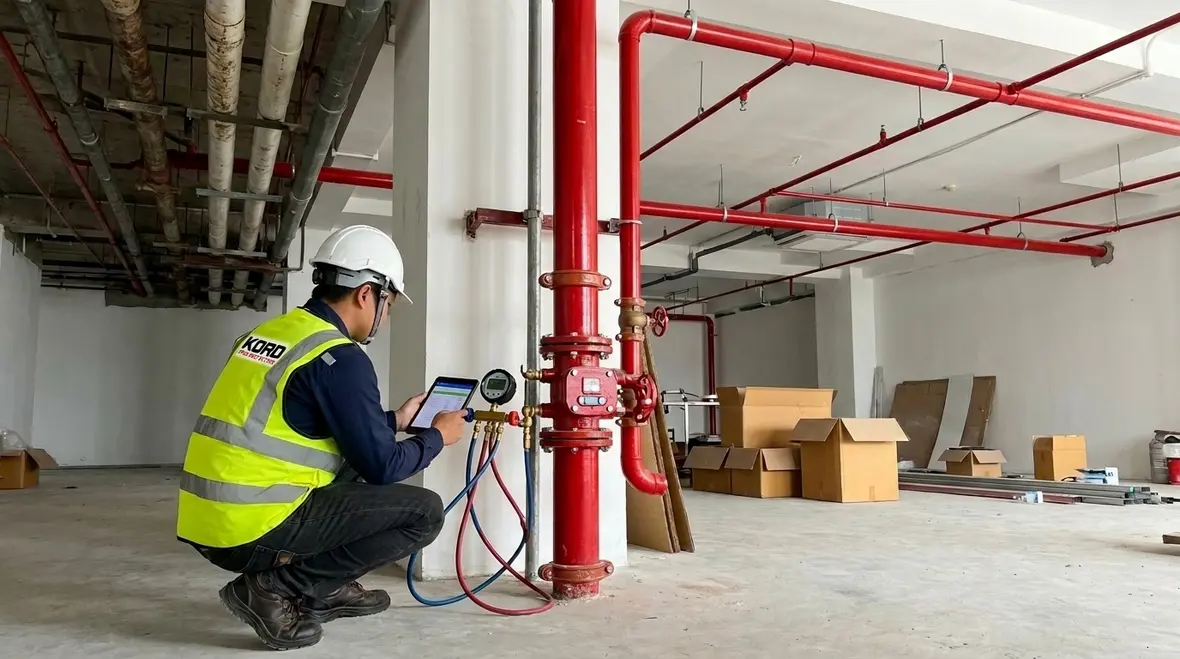
NFPA 13 Section 30.7 — Testing Requirements for Existing Sprinkler System Modifications
Quick Answer
NFPA 13 Section 30.7 requires that sprinkler system modifications be tested in a manner that verifies the altered portion and its interface with the existing system. Testing scope depends on what changed, how the system is configured, and what risks the modification introduces. Documentation must support ongoing compliance.
Why Section 30.7 matters when you alter an existing sprinkler system
Commercial, industrial, and retail facilities rarely “start from scratch.” Tenant improvements, warehouse rack moves, ceiling changes, control valve work, pipe reroutes, and hazard reclassification frequently require sprinkler system modifications. NFPA 13 testing existing sprinkler system modifications focuses on whether the new work performs as intended and whether the modification disturbed existing components.
To support safe operations and pass authority having jurisdiction (AHJ) scrutiny, facility teams need clear procedures for testing, acceptance criteria, and records. This includes coordinating with the hydraulics and system configuration realities of the installed base, not just the new pipe and sprinklers. For background on system types and installation expectations, reference Kord Fire Protection’s NFPA 13 overview.
If your project also involves field coordination and post-installation verification, fire sprinkler services and repair support can help keep the modification work, testing sequence, and return-to-service process aligned with real operating conditions. ([kordfire.com](https://kordfire.com/fire-sprinkler-service/?utm_source=openai))
What triggers additional testing after sprinkler modifications?
Section 30.7 applies when work modifies an existing sprinkler system. The practical question becomes: did the modification change water delivery, detection and control, or system integrity? Common triggers include:
- New sprinkler installations (added sprinklers, moved sprinklers, or changed sprinkler types)
- Piping changes (new mains, branch line extensions, reroutes, hangers and seismic restraint adjustments)
- Valve and control component work (auxiliary drains, check valves, flow switches, alarm valves, control valves, tamper switches)
- Altered system layout or occupancy features (ceiling types, soffits, obstructions, hazard classification boundaries)
- Changes that affect hydraulics (pressure loss changes, different length and fittings, cross connections, changes to supply arrangement)
In the field, compliance gaps often occur when teams treat the modification as an isolated “add-on.” Testing must confirm the altered portion and the interface with the existing system. That includes verifying that detection, water flow signaling, supervision, alarms, and remote monitoring components respond correctly after the physical changes.
How testing is typically executed after modification: step by step
NFPA 13 testing existing sprinkler system modifications is not only about pressurizing pipe. A credible testing plan follows a sequence that reflects real system operation: static conditions, hydraulic performance, supervisory and alarm functions, and system readiness for service.
1) Verify documentation and the “as-built” match
Before any water-based testing, the contractor and fire protection technician confirm that the revised layout, sprinkler schedule, and hydraulic calculations align with the actual installation. This includes verifying:
- Sprinkler identification and listing status
- Concealed or upright orientation, temperature ratings, and deflectors
- Pipe materials, fittings, and threading or joining methods
- Hanger spacing and seismic restraint continuity where applicable
- Riser and branch line elevations and slope or drain logic
Commercial facilities often have legacy details that are difficult to rediscover during renovations. The testing record depends on reconciling old drawings with what actually exists in the ceiling or rack area.
2) Confirm water supply and system configuration interfaces
Modifications can change the flow path or the way water reaches remote areas. Technicians confirm that control valves, check valves, strainer conditions, and flow switch placement remain properly supervised and unobstructed. When modifications involve the alarm valve assembly or flow sensing components, the technician evaluates whether any wiring, relays, or device set points require adjustment after the work.
3) Perform the required system integrity testing for the modified work
The testing strategy depends on the system type and the testing methods used for the system originally. Field teams typically ensure that:
- The modified piping section meets the required pressure and leakage acceptance for the applicable test method
- Valves and detectors are not inadvertently bypassed or left in abnormal positions
- Temporary caps, test plugs, and bypass arrangements are removed and restored to service configuration
Common failure points include trapped air after cap removal, incorrect isolation valve positions, and overlooked cross connections that divert water away from the intended flow path.
4) Validate waterflow and alarm signaling functionality
For systems with supervisory and alarm features, the altered system must correctly generate alarms and supervisory signals that match the installed configuration. That includes:
- Flow switches or alarm checks initiating waterflow alarms as intended
- Supervisory signals restoring to normal after tests
- Interfaces to fire alarm panels, monitoring relays, and remote annunciation systems operating correctly
In multi-tenant retail and light industrial buildings, signaling faults frequently originate from post-renovation changes: device relocation, incorrect wiring terminations after ceiling work, or monitoring channels left disabled during construction.
5) Verify drainage, obstruction clearance, and ceiling impacts
After installation, the technician verifies that the added or modified sprinklers comply with clearance from obstructions and that ceiling or soffit modifications do not alter discharge patterns. Water delivery depends on correct spacing and placement, not only on pressurization results.
Determining the testing scope under Section 30.7: what gets tested and why
NFPA 13 testing existing sprinkler system modifications typically requires a risk based approach tied to how the modification affects system performance. In practical terms, testing scope expands when the modification influences:
- Flow to remote areas due to branch reroutes, main changes, or valve work
- System controls because alarms, supervisory circuits, or monitoring interfaces may have been disturbed
- System hydraulics resulting from changes in pipe lengths, fittings, or elevations
- Occupancy hazards when ceiling characteristics, obstructions, or hazard class boundaries change
When modifications occur in phases, facility teams often plan partial testing to keep operations running. However, partial testing must still demonstrate that the modified portion performs safely and that it does not degrade performance elsewhere. The AHJ may also require evidence that the modified area is fully integrated with the existing system.
For detailed guidance on system installation and typical performance expectations, Kord Fire Protection and partner resources provide complementary context, including kordelectric.com for coordinated life safety system considerations and kordfire.com.au for regional service and compliance support. Fire pump and water supply integration topics can also be reviewed at Fire Pumps’ NFPA 20 fire pump acceptance testing guide. ([firepumps.org](https://firepumps.org/blog/nfpa-20-fire-pump-acceptance-testing-guide/?utm_source=openai))
Common compliance challenges during modification testing
Even when the modification work is correct, testing can fail due to operational details. These are recurring challenges that commercial facility teams should plan for:
- Unrestored valves and supervisory devices: isolation valves left cracked open or tamper switches bypassed during construction
- Ceiling obstruction and layout mismatches: sprinklers installed but later concealed by new soffits, ducts, or structural modifications
- Incorrect sprinkler schedule substitution: field substitution of types, temperature ratings, or orientations that do not match the design intent
- Air or debris in the system: trapped air causing false indications, debris blocking strainers or impacting flow measurements
- Premature turnover: testing completed without confirming monitoring, alarm panel behavior, or remote annunciation
To reduce these risks, many organizations rely on experienced fire protection service partners with established procedures for verification and recordkeeping. Kord Fire Protection supports ongoing compliance with structured inspection, testing, and maintenance workflows aligned to how commercial systems operate in real building environments. ([kordfire.com](https://kordfire.com/?utm_source=openai))
What documentation should be included with modification testing
NFPA 13 testing existing sprinkler system modifications ultimately needs traceable evidence. For audits, insurance reviews, and AHJ review, records typically include:
- Test plans and checklists identifying the scope, sequence, and interfaces
- As-built updates showing what changed compared to design documents
- Hydraulic and interface considerations that confirm system performance was preserved or improved as designed
- Test results including pressure or acceptance data when applicable, and verification that alarm and supervisory functions operated
- Device tagging for sprinklers, valves, and flow detection where the modification impacts numbering and schedules
- Return to service notes confirming valves and controls are restored to normal supervised conditions
Clear documentation prevents repeated visits and reduces the chance of corrective rework after turnover, especially in facilities with strict operational windows for life safety work.
Frequently Asked Questions
Next step: plan your modification testing before work starts
Section 30.7 compliance depends on more than completing new sprinkler installation. It requires a testing strategy that proves the modified work integrates safely with the existing system, including waterflow signaling, supervisory supervision, and interface verification. Kord Fire Protection can help commercial facilities define the right testing scope, execute the work, and produce audit-ready documentation. Contact Kord Fire Protection to schedule a modification review and testing plan for your next renovation, tenant improvement, or hazard change.

Join Our Newsletter!
Get the latest fire safety tips delivered straight to your inbox From our Newsletter.


