
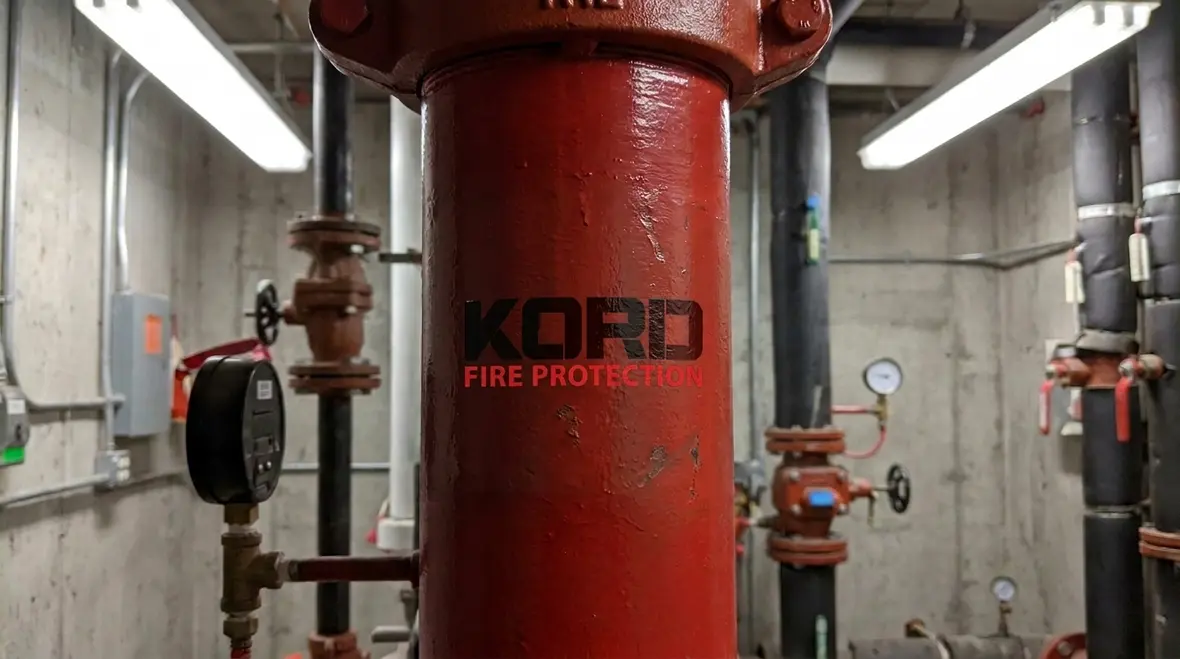
NFPA 13 Section 29.5: Pipe Schedule Design Information Sign (Nameplate)
Quick Answer
NFPA 13 Section 29.5 requires a pipe schedule design information sign, or nameplate, to support field verification, inspection, and ongoing maintenance. The sign provides critical design and routing data so technicians can confirm system intent, materials, and record accuracy during service.
What NFPA 13 Section 29.5 really expects on a nameplate
In commercial sprinkler systems, the NFPA 13 pipe schedule design information sign nameplate functions as a practical reference tool. It bridges the gap between plan documentation and what is actually installed in the building. During handover, inspection, and recurring maintenance, fire protection teams rely on the nameplate to quickly confirm the system’s design intent, pipe schedule details, and the correct information for hydraulic and installation verification.
This requirement matters most in facilities where multiple parties touch the system over time, including property management, tenants, inspectors, and contractors. When the nameplate is missing, incomplete, damaged, or mismatched with as-built conditions, the compliance burden shifts to the field team to reconstruct records under time pressure.
For facilities managing broader inspections and scheduled support, commercial fire protection services from Kord Fire fit naturally into the same compliance workflow. For additional context on how installation practices influence ongoing compliance, see this NFPA 13 overview for automatic fire sprinkler system installation.
What the NFPA 13 pipe schedule design information sign nameplate is used for
The nameplate exists to support three operational goals in real buildings: verification, traceability, and maintenance efficiency.
1) Verification during inspection and testing
During acceptance testing, impairment checks, and periodic inspections, technicians need quick access to system design and pipe schedule information. The sign reduces reliance on searching drawings, emailing engineering teams, or interpreting inconsistent documentation. That speed matters when inspectors require confirmation of the correct piping materials and schedule basis tied to the design.
2) Traceability for as-built accuracy
Pipe routing changes, field offsets, and substitution of components can create documentation gaps. A properly completed nameplate helps demonstrate that the installed piping system aligns with the design record intent, which is especially important in multi-story retail, industrial, and warehouse facilities.
3) Maintenance and repairs with minimal downtime
When leaks occur, sprinkler replacement is needed, or section isolation is performed, the maintenance crew benefits from having the pipe schedule information available onsite. Without the nameplate, field personnel often must pull original plans, which can delay repairs and increase the risk of selecting incorrect fittings, pipe wall thickness assumptions, or related components.
Where the nameplate must be located and why placement matters
NFPA 13 Section 29.5 drives the intent of accessibility and usability. A nameplate that exists but sits in an obscure location often fails its purpose, because technicians cannot reference it during time-sensitive work. Effective placement aligns with normal access patterns used for system inspection, control valve operation, and maintenance documentation review.
Commercial facilities frequently establish standard “document locations” near the fire pump room, sprinkler valve room, or main riser area. The nameplate should be positioned so it can be read without removing covers or requiring unsafe access. In addition, it should remain durable under expected environmental conditions, including condensation risk in mechanical rooms and cleaning exposure in tenant service areas.
Where signage practices integrate with broader fire pump and sprinkler system operation, resources from fire protection organizations can be helpful: firepumps.org.
Common compliance challenges that cause nameplate failures
Field teams often encounter repeat issues with NFPA 13 pipe schedule design information sign nameplate compliance. These problems rarely result from “intentional” noncompliance. They usually stem from workflow gaps between design, installation, and documentation finalization.
Incomplete content
Some projects include a sign template but fail to finalize all required pipe schedule design details before closeout. The nameplate then becomes a partially populated placeholder that does not support field verification.
As-built mismatch
Schedule information can change during field coordination. If the nameplate reflects design intent rather than verified installation conditions, inspections may require additional explanation or corrective documentation updates. The most expensive scenario is discovering the mismatch after piping has been concealed and systems have been pressure tested.
Damaged or unreadable labels
Mechanical room environments can degrade printed labels through abrasion, cleaning chemicals, moisture, or poor lamination. If the nameplate cannot be read quickly during inspections, the sign’s function breaks down even if it remains physically present.
Control valve and riser turnover issues
Fire protection systems in commercial facilities often involve turnover packages prepared by contractors, managed by facilities teams, and used by multiple maintenance vendors. If the nameplate is not included in the final turnover deliverables or not installed at the correct location, the facility inherits a documentation risk.
Kord Fire Protection supports compliance through documentation control and ongoing service planning. Their commercial service model emphasizes reliable closeout workflows and practical field readiness, helping facilities keep their systems supportable over time.
How to ensure the nameplate stays accurate through system changes
Most nameplate problems appear after renovations, tenant improvements, and operational modifications. A robust compliance approach treats the nameplate like living equipment documentation, not a one-time install.
Step 1: Confirm the sign reflects the verified pipe schedule design basis
Before lockup and after any major coordination changes, review the pipe schedule design information against the contract documents and the final verified installation conditions. Where the project team uses a record set process, the sign should match that record set, not a preliminary revision.
Step 2: Tie sign updates to change management
When modifications occur, such as partial reroutes, head relocations affecting upstream piping, or material substitutions, update the nameplate as part of the change package. Maintain a clear audit trail for why changes were made and which record set they reflect.
Step 3: Protect readability and location during maintenance cycles
Facilities should assign responsibility for signage inspection as part of periodic inspections and housekeeping routines. Cleaning practices should avoid abrasive wiping on label surfaces, and signage placement should prevent repeated exposure to direct steam, spray, or chemical contact.
For integrated fire protection and electrical coordination in commercial environments, organizations such as kordelectric.com support broader life safety and facility systems planning that often interacts with fire alarm and auxiliary equipment closeout requirements. Keeping both sets of documentation aligned reduces closeout friction across trades.
Additional regional support may be available through kordfire.com.au depending on project location and service scope.
Inspection, maintenance, and failure prevention with Kord Fire Protection
Even when the initial installation is correct, commercial facilities need ongoing verification to keep compliance practical. A frequent failure point involves documentation drift: the system changes, but the signage and records do not. Kord Fire Protection positions the nameplate requirement inside a broader lifecycle compliance approach that includes inspection support, maintenance planning, and documentation control.
What teams should ask during service planning
- Can technicians locate and read the NFPA 13 pipe schedule design information sign nameplate quickly during routine work?
- Does the nameplate match the current pipe schedule basis used for the system?
- Are there renovation triggers or tenant change processes that update the sign?
- Is the nameplate included in turnover and rechecked after system modifications?
By treating the nameplate as a core compliance control rather than a passive sign, facilities reduce delays during inspections and limit the risk of incorrect repair assumptions.
For additional guidance on installation expectations that affect long-term maintainability, reference: NFPA 13 overview for automatic fire sprinkler system installation.
Frequently Asked Questions
Take action now
Facilities should verify the NFPA 13 pipe schedule design information sign nameplate exists, is readable, and matches current as-built conditions. If renovations or tenant work occurred, treat the nameplate as a documentation control point and update it with the change package. Contact Kord Fire Protection to support compliance checks, closeout verification, and ongoing maintenance so your sprinkler system documentation stays accurate and inspection-ready.

Join Our Newsletter!
Get the latest fire safety tips delivered straight to your inbox From our Newsletter.


