NFPA 13 Section 29.1 – Approval of Sprinkler Systems: Acceptance Process
Quick Answer: NFPA 13 Section 29.1 governs how sprinkler systems receive approval after installation, including document submittals, hydrostatic and flow testing, and inspection of workmanship. The NFPA 13 approval sprinkler systems acceptance process focuses on verifying the design intent, system operability, and compliance readiness before handoff.
If you are planning closeout and want a broader installation baseline first, review this NFPA 13 overview for automatic fire sprinkler system installation. It fits naturally before acceptance because approval gets a whole lot easier when the installation logic is already buttoned up.
What does “approval” mean under NFPA 13 Section 29.1?
NFPA 13 approval is not a single checklist item. It is the structured, documented confirmation that the installed sprinkler system meets the requirements of the applicable standard, the approved plans, and the required performance criteria. In practical terms, approval under Section 29.1 ties together:
- Verification of installation quality and arrangement against the approved drawings.
- Testing of water delivery and hydraulic performance through required inspections and test connections.
- Correction of deficiencies before the system is accepted for service.
For commercial, industrial, and retail facilities, the acceptance process often becomes the point where scheduling pressure, incomplete as built documentation, and incomplete system visibility (concealed work) create compliance gaps. A disciplined approach reduces rework and accelerates closeout.
NFPA 13 approval sprinkler systems acceptance process: the workflow
The NFPA 13 approval sprinkler systems acceptance process commonly follows a predictable flow, even when local Authority Having Jurisdiction (AHJ) procedures vary. The sequence below reflects the operational reality of commercial projects.
1) Pre acceptance readiness: documentation and configuration control
Before testing and closeout, teams confirm the system is ready for verification. This typically includes:
- Approved plans and hydraulic calculations on hand.
- Submittal package completeness: product listings, material compatibility, and schematic alignment.
- Field verification of critical parameters such as sprinkler type, temperature rating, K factor, orifice size, orientation, spacing, and coverage pattern.
- Isolation devices, valves, tamper switches, and supervisory signaling components in correct installed condition.
Common failure point: as built drawings lag behind installation. When the acceptance engineer cannot reconcile actual routing, branch line configuration, or obstruction impacts, testing results become difficult to interpret and deficiencies can snowball.
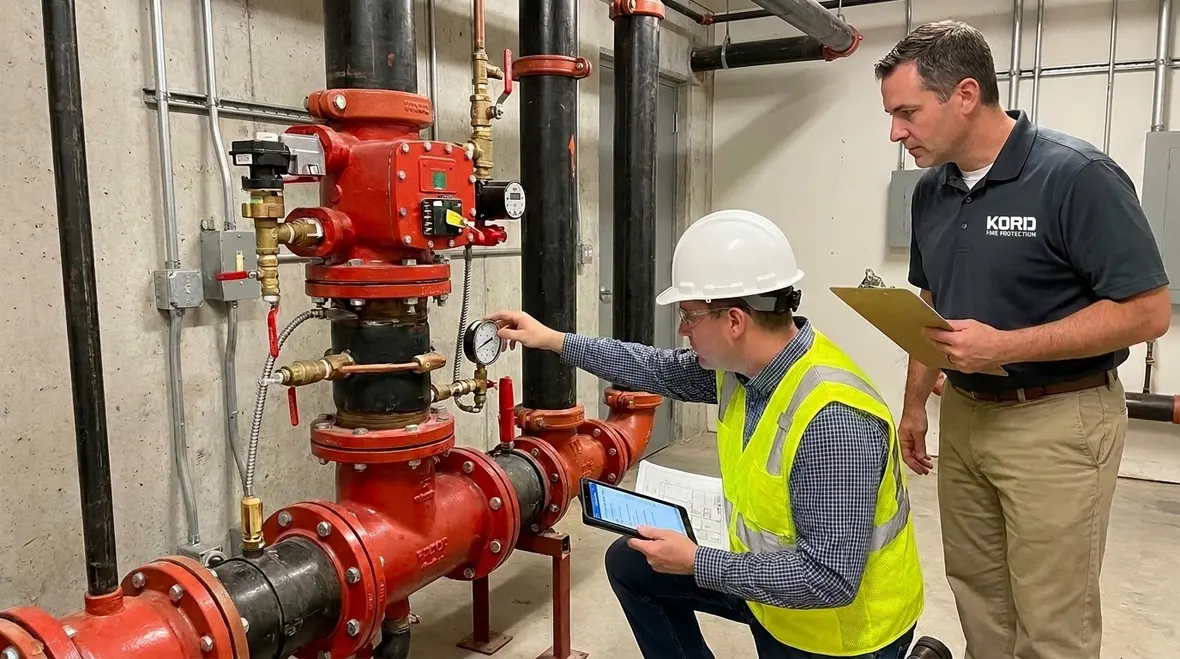
2) System inspection and visual acceptance checks
Inspection establishes whether the system can safely and reliably perform. Typical items include:
- Sprinkler installation quality: proper mounting, correct escutcheons where required, and secure fit without mechanical interference.
- Support and bracing: adequate hangers and seismic restraint where applicable.
- Pipe workmanship: correct threading and joining practices, alignment, and absence of damaging defects.
- Valves and accessories: correct trim, orientation, and signage; supervisory components functional and unobstructed.
For commercial occupancies, visibility matters. Concealed spaces often require coordinated access. Missed access windows can delay inspection until after ceilings close, driving costly exposure for corrective work.
3) Pressure and flow testing: proving water supply performance
Once the system passes inspection readiness, pressure related verification and flow testing support system operability. The acceptance effort focuses on ensuring the installed system can deliver water to the hazard in a manner consistent with the design assumptions.
Operationally, crews verify:
- Pipe pressure performance and system integrity.
- Correct operation of control valves and related devices.
- Waterflow alarm and supervisory signaling response where installed.
- Stability of gauges, proper discharge routing from test connections, and controlled test conditions.
Common failure point: air or debris presence that affects flow patterns, causes false readings, or impacts test outcomes. Commercial facilities with ongoing tenant activity also introduce risk from temporary shutdowns, valve mispositioning, or post installation modifications.
4) Acceptance documentation and AHJ handoff
Section 29.1 approval relies on documented evidence. Acceptance closeout typically includes a compilation of test records, inspection findings, and records of correction. The AHJ often expects a clear chain of proof that:
- Testing occurred as required.
- Deficiencies were identified and corrected.
- The final configuration matches the approved intent.
To streamline this phase, facilities benefit from an organized closeout package supported by installation drawings and verified device lists. Kord Fire Protection supports this readiness by aligning documentation, testing schedules, and maintenance planning for ongoing compliance. For a broader system context, see NFPA 13 overview for automatic fire sprinkler system installation.
What inspectors and AHJs look for in the field
Acceptance is not only about whether water moves. Inspectors concentrate on predictability, repeatability, and safety margins. The field review tends to focus on four themes: design intent, installation integrity, signal and valve performance, and maintainability.
Design intent and hydraulic alignment
AHJs and system evaluators expect that the final installation matches the hydraulic assumptions in the design. That means spacing and hazard classification coherence, correct sprinkler selection, and proper routing relative to obstructions.
Commercial tenants frequently change interior layouts. Even small changes, such as rerouting piping for renovations or adding partitions, can impact coverage patterns and the ability to verify compliance later. Capturing and documenting changes early prevents last minute acceptance failures.
Integrity of components and workmanship
Workmanship issues frequently create acceptance delays. Examples include:
- Incorrect pipe joint integrity or leaks discovered during testing.
- Improper sealing practices leading to corrosion concerns.
- Improper installation of sprinkler sprinklers or related fittings.
- Damaged or misapplied supervisory and alarm devices.
These issues often surface during pressure and flow verification, which reinforces the need for early inspections before fixtures and finishes obscure areas.
Supervisory and alarm performance confirmation
In occupied commercial buildings, alarms affect life safety response and operations. Acceptance therefore often includes confirming that waterflow and supervisory signals report correctly to the monitoring and control systems where required.
When acceptance testing does not coordinate with electrical and fire alarm interfaces, teams can end up with “system passes hydraulics” but “system fails communication” outcomes. Coordination across disciplines reduces that risk. Coordination with building systems matters here, and Kord Electric is a natural reference for the electrical side of commercial system integration.
Commercial compliance challenges that derail acceptance
Acceptance delays usually come from predictable operational constraints. The most common are listed below with the practical impact on schedule and compliance.
Closed ceilings, limited access, and concealed obstructions
When ceilings are closed before inspection, the acceptance process can require destructive access to verify sprinkler placement, bracing, and obstruction clearances. This adds labor cost and can extend occupancy disruption.
Valves and devices left in incorrect positions
During commissioning and tenant turnover, valves can be mispositioned. Acceptance testing may show abnormal readings, or alarms may behave incorrectly due to incorrect supervisory settings.
Debris, water quality, and system contamination
Hydraulic testing may be compromised by debris. This is especially common on projects with long construction timelines, multiple trades working in parallel, or insufficient flushing and cleaning procedures before acceptance.
Documentation gaps and as built inaccuracies
For facilities management teams, the acceptance package is a compliance asset. If it is incomplete, ongoing maintenance and inspection reporting becomes difficult, which increases future risk during annual inspections and impairment tracking.
Kord Fire Protection commonly helps projects prepare not only for acceptance but for continued compliance, including testing and maintenance planning. This broader operational view supports faster acceptance and fewer post acceptance surprises. For a related industry baseline on fire system inspection and testing concepts, you can also review this fire pump acceptance testing guide.
How maintenance ties back to Section 29.1 acceptance
Acceptance under Section 29.1 sets the baseline for how the system will be maintained. A system can pass acceptance and still fail later if maintenance does not preserve operability. Commercial facilities typically need a maintenance approach that accounts for:
- Routine inspection and testing schedules that keep valves and alarms functional.
- Preservation of record accuracy, including updated device information after renovations.
- Rapid response to impairment events and corrective actions.
- Training of facilities staff and contractors on system boundaries and valve identification.
From a trade perspective, the best acceptance packages include a clear handoff plan. Kord Fire Protection positions itself as a long term compliance partner by aligning acceptance closeout with maintenance realities and operational schedules, including commercial occupancies where downtime and access are constrained.
For additional installation and commissioning context, see Kord Fire Protection’s NFPA 13 installation overview and additional regional support through kordfire.com.au.
Frequently Asked Questions
Conclusion and call to action
Plan the NFPA 13 approval sprinkler systems acceptance process as a controlled project phase, not a last minute event. Prioritize as built accuracy, early inspection access, coordinated signal testing, and documented closeout. Kord Fire Protection can support commercial facilities with inspection readiness, acceptance testing oversight, and maintenance planning so your system stays compliant beyond handoff. Request an acceptance readiness review today to reduce rework and protect your operations schedule.

Join Our Newsletter!
Get the latest fire safety tips delivered straight to your inbox From our Newsletter.