
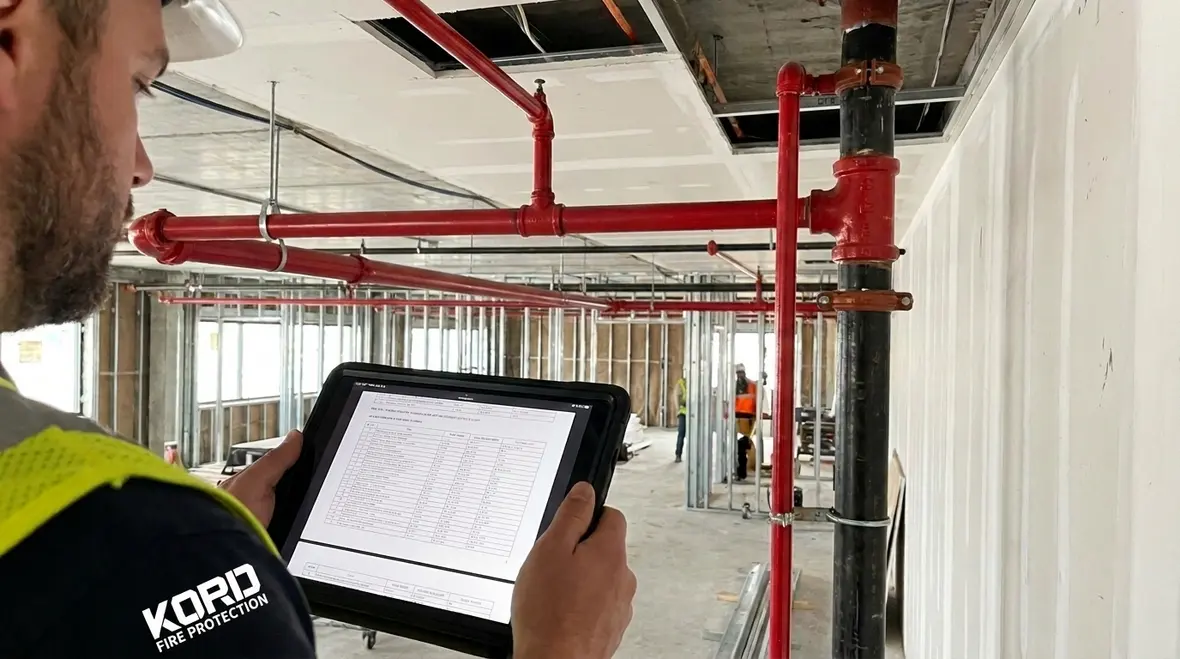
NFPA 13 Section 28.5 – Pipe Schedules for Sprinkler System Documentation
Quick Answer
NFPA 13 Section 28.5 requires detailed pipe schedules as part of the sprinkler system submittal documentation. These schedules align pipe sizes, materials, fittings, lengths, and installation-relevant details with the design basis. Proper schedules reduce field confusion, speed installation, and support compliant inspection and maintenance.
Why NFPA 13 pipe schedules matter in real commercial projects
NFPA 13 pipe schedules sprinkler system documentation is not a paperwork exercise. In commercial, industrial, and retail facilities, pipe routing complexity, tenant buildouts, and phased construction create frequent field questions. Section 28.5 helps ensure the hydraulic design intent translates into a buildable, testable piping layout with consistent information across plans, shop fabrication, and commissioning.
When pipe schedules are incomplete or mismatched to the drawings, the system often still passes initial layout checks but fails during operational flow testing, acceptance inspections, or future maintenance. Common triggers include incorrect lengths, missing offsets, unclear fitting types, and inconsistent identification labels between the plans and the as-built system.
If your team is also tightening documentation and inspection readiness, Kord Fire Protection’s fire safety system documentation for compliance guide fits naturally alongside this topic and helps connect paperwork quality to real-world code performance.
What Section 28.5 expects to show in the documentation
Section 28.5 focuses on documentation clarity and traceability for sprinkler system piping. At a practical level, a compliant pipe schedule captures the information needed to install and verify the piping components without relying on assumptions.
1) Pipe segment identification and traceability
- Pipe runs are identified clearly so they can be referenced on drawings and in the field.
- Schedules maintain alignment with system designations, such as supply and branch lines, standpipes if applicable, and riser locations.
2) Dimensions and sizing that match the hydraulic model
- Pipe size and length are documented for each segment or run.
- Changes in size, reductions, and transitions show the correct sequence and location.
3) Materials and jointing method considerations
- Pipe material and joining method information supports installer accountability and inspection readiness.
- Where corrosion risk, coating needs, or specific materials apply, the schedule supports consistent field selection.
4) Fittings and offsets that affect hydraulics and inspection
- Fittings, valves, hangers, and special components are listed in a way that supports hydraulic equivalencies and verification.
- Offsets and routing features that change elevation or run geometry are documented so that field deviations can be controlled.
How to build pipe schedules that survive installation, testing, and maintenance
Commercial facilities require systems that remain manageable long after installation. The best pipe schedules function as an operational map for maintenance technicians, inspectors, and sprinkler contractors.
Step 1: Align the schedule with the sprinkler system overview and design basis
Start with the system overview and installation intent, then lock the schedule to those design decisions. A reliable reference for system planning and installation concepts is available here: NFPA 13 overview for automatic fire sprinkler system installation. Using that foundation reduces the risk that pipe schedules drift away from the original design logic.
Step 2: Use a consistent run naming convention across plans and documentation
Pipe schedule compliance collapses when field teams cannot match schedule identifiers to drawings. A consistent naming convention supports faster layout and fewer change orders. This is especially important where multiple tenants or phased renovations share the same riser room.
Step 3: Confirm fittings, valves, and offsets before fabrication
Many schedule errors originate in preconstruction assumptions. Fittings, valve trim, and offset geometry can alter pressure loss and field fitment. Fixing these after fabrication forces expensive revisions and can delay acceptance testing.
Step 4: Tie schedule content to acceptance inspection and recordkeeping
During inspection, officials and contractors verify alignment between installed piping and the documented design. A well-structured pipe schedule supports:
- Faster verification that pipe sizes and runs match the design intent.
- Clear identification of components for maintenance access planning.
- More accurate documentation handoff to the facility’s maintenance program.
Step 5: Plan for as-built updates when changes occur
Commercial projects rarely stay still. Changes happen during coordination with electrical, HVAC, structural steel, and ceiling modifications. A disciplined as-built update process should revise the pipe schedule promptly when changes affect pipe routing, sizing, or component types.
Common compliance challenges that drive schedule failures
Section 28.5 compliance issues usually come from avoidable breakdowns in coordination and version control. The following patterns show up repeatedly across commercial, industrial, and retail sprinkler projects.
Challenge 1: Inconsistent identifiers between drawings and schedules
Even if the pipe sizes and lengths are correct, a mismatch in labeling creates inspection and maintenance risk. Technicians may report “correct” installation that cannot be verified because the schedule does not reference the installed segments.
Challenge 2: Missing fittings or incorrect fitting equivalencies
Fittings can materially affect hydraulic calculations and field installation complexity. When schedules omit fittings or list generic fittings without the required specificity, commissioning testing can reveal pressure loss discrepancies that are difficult to resolve quickly.
Challenge 3: Pipeline changes not carried into documentation
Field routing changes, rework after conflicts, or substitutes for availability issues must flow into the pipe schedule. Without that update, NFPA 13 recordkeeping becomes a liability during inspections and future impairment events.
Challenge 4: Poor version control for phased tenant improvements
In retail and multi-tenant facilities, contractors often work under different permit packages. Without strict version control, pipe schedules can represent an earlier basis that no longer matches what is installed.
Operational benefits of good documentation for owners and facilities
Pipe schedules created with Section 28.5 intent provide benefits far beyond acceptance day. Owners and facilities typically experience fewer disruptions and faster troubleshooting during impairments, renovations, and routine maintenance.
- Faster impairment restoration: Clear identification of pipe runs and components reduces guesswork when restoring service after inspections or repairs.
- More predictable maintenance: Schedules support targeted access planning for valves, drains, and sectional control components.
- Better coordination during renovations: Tenant fitouts can be reviewed against documented runs, reducing unplanned conflicts.
As a practical commercial service partner, Kord Fire Protection supports ongoing compliance through testing, maintenance, and documentation support. For more context on sprinkler system installation and compliance workflows, refer to kordelectric.com and kordfire.com.au. For broader industry resources on fire pumps and water supply considerations that impact sprinkler performance, see firepumps.org.
Frequently Asked Questions
Conclusion and call to action
NFPA 13 Section 28.5 pipe schedules protect the project from avoidable field errors, costly rework, and maintenance confusion. For commercial facilities, the schedule becomes a long-term operational tool, not just submittal paperwork. Kord Fire Protection can help keep your sprinkler system documentation accurate through review, commissioning support, ongoing inspection, and maintenance planning. Contact Kord Fire Protection to validate your pipe schedules and strengthen compliance readiness before acceptance and beyond.

Join Our Newsletter!
Get the latest fire safety tips delivered straight to your inbox From our Newsletter.


