
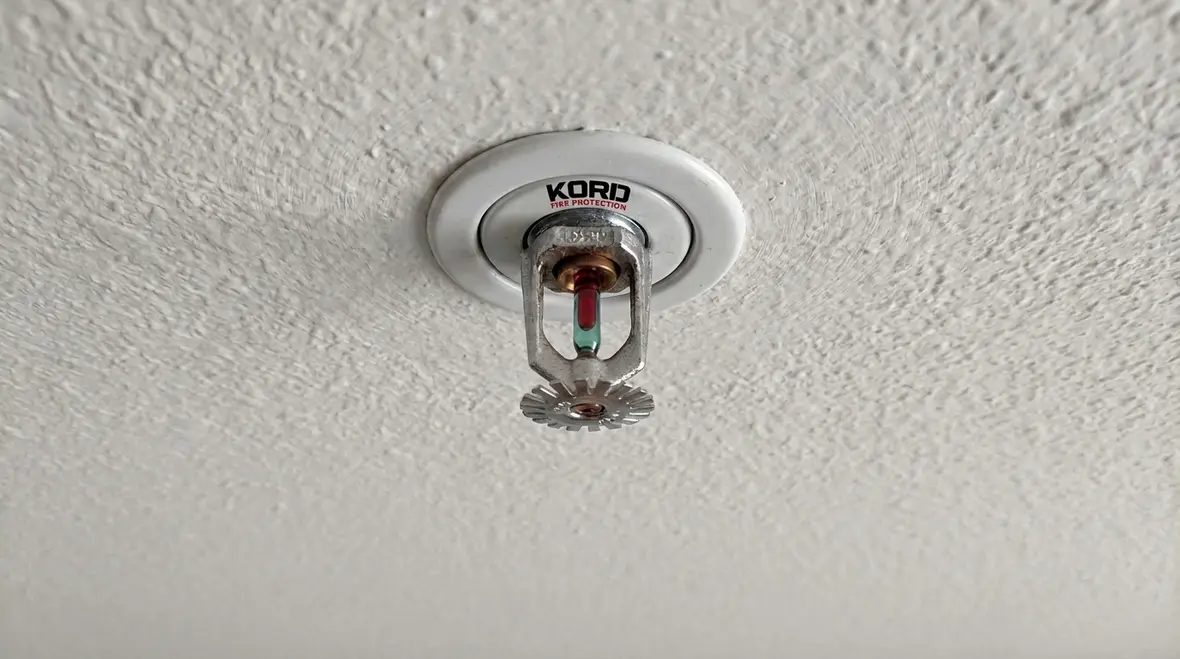
NFPA 13R Section 3.3 Residential Sprinkler Definition: Why RTI 50 and Survivability Matter
Quick Answer: NFPA 13R Section 3.3 defines the type of sprinkler used in residential sprinkler systems. The RTI 50 parameter represents how quickly a sprinkler responds to heat, which directly affects survivability outcomes. Lower RTI 50 generally supports faster activation and improved control of developing fires.
If you’re reviewing system performance, it also helps to understand how commercial fire sprinkler service and repair supports inspections, maintenance, and replacement decisions that keep installed sprinklers aligned with code intent.
What does NFPA 13R Section 3.3 mean in practice?
NFPA 13R limits sprinkler requirements primarily to residential occupancies, using a system approach that can differ from NFPA 13 for many commercial or mixed-use buildings. Within that framework, the NFPA 13R 3.3 residential sprinkler definition RTI 50 survivability concept becomes operational because it ties the sprinkler selection to real-world fire dynamics.
In practical terms, facility teams must ensure sprinklers installed on site match the intent of the code definition, including temperature rating, k factor, and listed response characteristics. When sprinklers with slower response are used in applications requiring the defined behavior, the system may wait too long to actuate. That delay can reduce available time for occupant egress and increase fire growth before water is applied.
Where RTI 50 fits into the NFPA 13R residential sprinkler definition
RTI 50 describes the sprinkler thermal response, including the relationship between ambient temperature changes and the time to reach an activation threshold. It functions as a surrogate measure for how quickly a sprinkler reacts to fire conditions.
Because NFPA 13R residential sprinkler definition RTI 50 survivability relies on response characteristics, the code-compliant sprinkler must perform as listed under defined testing. In other words, compliance depends on using sprinklers that meet listing requirements, not on field judgment.
How RTI 50 affects survivability outcomes
Survivability improves when sprinkler activation occurs early enough to slow fire growth, limit heat release rate, and reduce upper layer temperatures. For occupants, that can mean reduced exposure at the time of evacuation and fewer conditions that compromise visibility and breathable air.
For maintenance and operations leaders, RTI 50 matters because it indirectly affects:
- Time to water delivery: Faster sprinkler response can shorten the gap between heat exposure and suppression.
- Heat and smoke layer development: Earlier suppression helps control temperature stratification.
- Fire spread potential: Reduced heat escalation can limit involvement of adjacent combustible materials.
- Downstream property protection: Faster control generally improves containment performance.
Why “listed response” is not a detail teams can ignore
Commercial, industrial, and retail facilities often interface with residential sprinkler concepts during tenant build-outs, mixed-use developments, and renovation work that reuses existing piping. That creates common compliance pressure points: procurement swaps, substitution during supply shortages, and mismatched sprinkler types during corrective work.
Even when the system hydraulics appear correct, sprinkler response performance can be affected by the specific device installed. For RTI 50 survivability considerations, the field cannot assume that any similar-looking sprinkler will behave the same.
Common real-world failure points
- Inaccurate device substitution: Different response types can be installed when contractors rely on “equivalent” assumptions rather than the listing.
- Temperature rating mismatch: Using the wrong temperature rating can delay or prevent intended activation under design fire conditions.
- Obstructions and thermal shielding: Stored materials, ceilings with unplanned soffits, or close clearance problems can interfere with heat transfer to the sprinkler.
- Defective sprinklers: Mechanical damage, incorrect installation torque, or contamination can change performance reliability.
- Maintenance drift: Inspection gaps or delayed replacement after impairment can allow system performance to degrade over time.
Compliance challenges during inspection and ongoing maintenance
Facility managers typically focus on inspections that verify water supply, supervisory signaling, and valve position. However, RTI 50 survivability considerations require a parallel discipline: confirming that sprinklers installed in the building match the code intent and listing documentation.
What inspectors and engineers look for
- Sprinkler identification verification: Ensuring the sprinkler markings, temperature rating, and response type align with the engineered and listed configuration.
- Obstruction review: Checking for changes since initial occupancy such as new racks, signage, stored goods, or ceiling modifications.
- Installation condition: Confirming correct sprinkler orientation, leak-free fittings, and absence of damage.
- System readiness: Verifying valves, hangers, and piping support remain within expected configuration.
These issues directly connect to automatic sprinkler system installation practices and acceptance procedures. For an installation and commissioning view of how systems are assembled and verified, review: NFPA 13 overview: automatic fire sprinkler system installation.
Operational procedures that protect RTI 50 survivability over time
Code compliance depends on maintaining the system as installed, not just as originally built. A structured operating procedure helps keep response performance aligned with survivability goals.
Recommended facility controls
- Document control and sprinkler register updates
Maintain an up-to-date inventory with sprinkler model, temperature rating, response type, and RTI related characteristics as supported by listing information.
- Replacement procurement standards
Require procurement to use the exact sprinkler listing or the approved substitution documented by the design professional. Avoid “close enough” equivalents when RTI 50 survivability is part of the design basis.
- Impairment management and turnaround discipline
When work requires impairment, ensure impairment duration is minimized and temporary fire safety measures are applied. After work, complete functional verification rather than partial checkout.
- Quarterly obstruction walkdowns in active storage environments
In retail and industrial areas, storage patterns change. Walkdowns catch thermal shielding risks that can undermine sprinkler response behavior.
- Annual performance confirmation through inspection planning
Inspection schedules should verify both system components and device conditions. A maintenance plan must include damaged sprinkler identification, replacement, and proper installation checks.
Service partners such as Kord Fire Protection help commercial teams apply these controls consistently through inspections, testing, and corrective action planning. Their role becomes critical when tenant changes, renovations, and supply substitutions threaten to drift the installed configuration away from the design intent.
FAQs about NFPA 13R 3.3, RTI 50, and survivability
Call to action
Protect RTI 50 survivability outcomes by verifying sprinkler response characteristics, preventing unauthorized substitutions, and maintaining obstruction controls. Kord Fire Protection can support commercial compliance through inspection planning, testing, documentation control, and corrective maintenance. Contact Kord Fire Protection or your local partner to review your installed configuration, replacement standards, and maintenance schedule before renovations and tenant turnover introduce hidden response performance risks.

Join Our Newsletter!
Get the latest fire safety tips delivered straight to your inbox From our Newsletter.



