
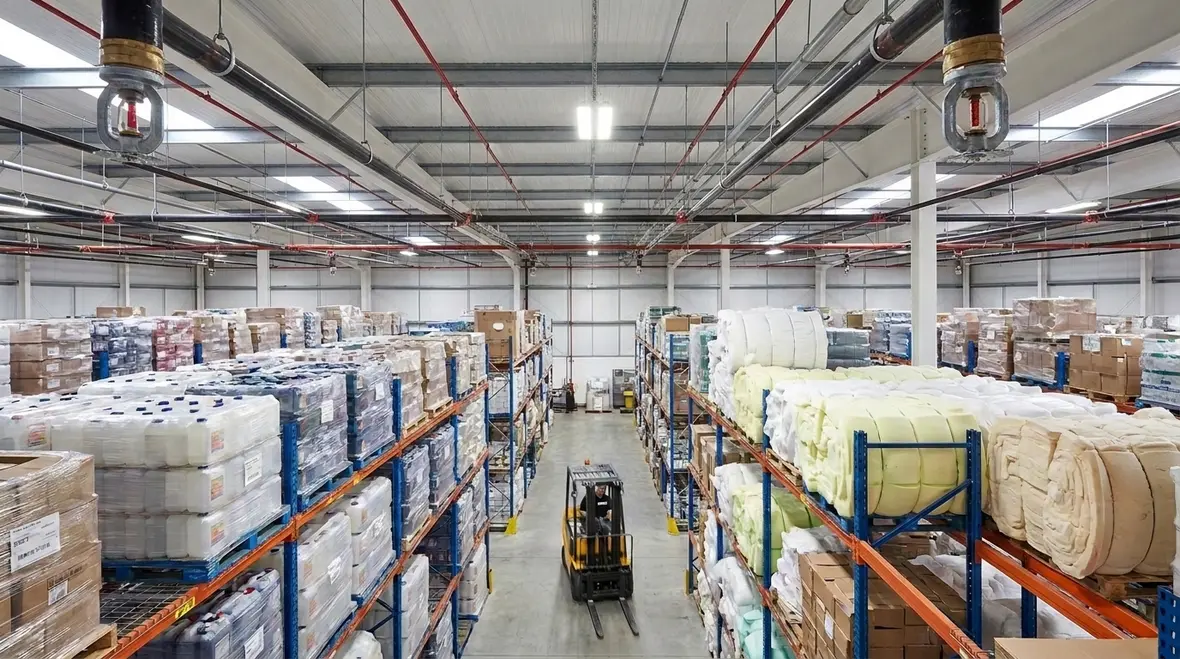
NFPA 13 Section 22.3 — CMSA Protection for Nonexpanded and Expanded Group A Plastics
NFPA 13 Section 22.3 CMSA Protection for Nonexpanded and Expanded Group A Plastics
Quick Answer: NFPA 13 Section 22.3 sets CMSA protection for NFPA 13 CMSA nonexpanded expanded Group A plastic storage, clarifying when CMSA design is required, how to size sprinklers and water supply, and what maintenance and testing are needed to keep protected areas compliant in commercial facilities.
For a broader foundation on sprinkler system design before diving into this storage-specific section, see this NFPA 13 overview of automatic fire sprinkler system installation. It fits naturally here because Section 22.3 makes a lot more sense when the bigger sprinkler design picture is already on the table.
And since water supply performance can make or break a CMSA strategy, it’s also worth reviewing fire pump testing requirements under NFPA 25 near the top of your planning process, especially when you need confidence that the system can actually deliver what the design expects.
Overview of CMSA Protection under NFPA 13 Section 22.3
The CMSA protection approach described in NFPA 13 Section 22.3 provides a framework for safeguarding storage areas that contain Group A plastics. It specifies when CMSA driven design is appropriate, the scale of protection required, and the coordination between sprinkler coverage, water supply, and alarm signaling. In commercial, industrial, and retail facilities, this section informs the balance between protecting life safety and limiting collateral water damage during a fire event.
Practical implementation hinges on aligning storage configuration with the CMSA philosophy. Designers must assess whether nonexpanded or expanded Group A plastics influence sprinkler density, clearance requirements, and the intended area of operation. The objective is to manage heat release, control flame growth, and maintain tenant operations and inventory integrity.
Nonexpanded vs Expanded Group A Plastics: Key Differences and Implications
Nonexpanded Group A plastics typically present a different hazard profile than expanded forms. Nonexpanded plastics may be stored in pallets, bins, or open racks, often requiring greater attention to obstructions, aisle widths, and access for suppression activities. Expanded Group A plastics can create rapid flame spread and heat release, which influences both the required protection strategy and the activation sequence of CMSA measures.
Recognizing these differences helps facility managers select appropriate storage configurations, determine effective tray or pallet consolidation strategies, and plan for targeted water delivery. The NFPA 13 CMSA nonexpanded expanded Group A plastic storage scenario demands an integrated approach to layout, sprinkler coverage, and monitoring that minimizes risk to nearby occupancies and critical equipment.
Design, Layout and Installation Requirements
- Perform a hazard and storage analysis to determine if CMSA protection applies and to identify which plastics categories and configurations are present.
- Define storage height limits and aisle widths to facilitate effective suppression and allow for safe access during inspection, testing, and potential operations.
- Select sprinkler types and spacing consistent with the CMSA strategy, ensuring that coverage aligns with the hazard class and anticipated heat release of the plastics.
- Establish hydraulic calculations and water supply criteria that support the CMSA protection approach while meeting local code expectations and NFPA 25 ITM requirements.
- Develop integration with firealarm and monitoring systems to confirm rapid detection, annunciation, and coordination with sprinkler actuation.
- Document all design decisions, including storage layout changes, sprinkler layouts, and water supply arrangements for future audits and permit renewals.
Kord Fire Protection provides design reviews, field surveys, and commissioning support to ensure CMSA layout decisions stay aligned with NFPA 13 22.3 requirements and facility operating needs. A systematic design process helps prevent over or under protection and supports efficient facility operations.
Inspection, Testing and Maintenance Protocols
- Implement a comprehensive ITM program that covers storage areas, CMSA interfaces, and all sprinkler control modes applicable to nonexpanded and expanded Group A plastics.
- Conduct monthly visual inspections to verify unobstructed access, proper clearance, and intact protective barriers around storage racks and sprinkler heads.
- Perform quarterly water supply and alarm system checks, including flow tests and pump verification, to confirm readiness in the event of a discharge.
- Schedule annual sprinkler maintenance and 5-year sprinkler activity tests as required by NFPA 25, adjusting intervals based on facility risk profile and observed conditions.
- Maintain accurate documentation of all ITM activities, design changes, and test results to support regulatory audits and insurance reviews.
Ongoing maintenance is critical. Kord Fire Protection collaborates with facility teams to keep CMSA protection strategies current, verify that all components operate as intended, and adjust ITM plans in response to storage changes or occupancy shifts.
Compliance Challenges in Commercial Facilities
- Balancing high inventory density with accessibility for suppression activities and post discharge salvage operations.
- Managing legacy storage configurations that may not align with NFPA 13 22.3 classifications or CMSA driven layouts.
- Coordinating building management systems, fire alarm integration, and rapid notification to minimize disruption during maintenance windows.
- Securing budget for upfront design work and ongoing ITM costs while meeting retailer, distributor, and tenant expectations.
- Addressing frequent changes in product mix, packaging, and storage heights that require frequent revalidation of CMSA protection strategies.
In these environments, practical compliance hinges on proactive planning, routine revalidation of storage configurations, and rigorous ITM discipline. Kord Fire Protection offers practical guidance, site surveys, and scalable ITM programs to help facilities stay compliant while controlling lifecycle costs.
Kord Fire Protection: Your Partner for CMSA Compliance and Ongoing Care
Kord Fire Protection brings deep experience in safeguarding facilities that store plastics and other high hazard commodities. The team provides design reviews, field surveys, commissioning, and a proactive ITM program tailored to NFPA 13 Section 22.3. By partnering with Kord, facilities gain access to ongoing performance verification, regulatory alignment, and reduced risk of noncompliance in commercial, industrial, and retail settings.
Frequently Asked Questions
Conclusion and Call to Action: For robust NFPA 13 CMSA nonexpanded expanded Group A plastic storage protection, partner with Kord Fire Protection. We deliver expert CMSA design review, field surveys, commissioning, and a tailored ITM program that aligns with current codes and commercial facility needs. Schedule a protective assessment today to minimize risk, ensure code compliance, and secure reliable fire protection for your facility.

Join Our Newsletter!
Get the latest fire safety tips delivered straight to your inbox From our Newsletter.


