NFPA 13 Section 16.1 — Basic Requirements for Piping and Valve Installation
NFPA 13 Section 16.1: Basic Requirements for Piping and Valve Installation
Quick Answer: NFPA 13 Section 16.1 outlines the basic requirements for piping and valve installation. This article translates NFPA 13 basic requirements piping valve installation into practical steps for commercial facilities, focusing on materials, sizing, supports, accessibility, testing, and ongoing maintenance to sustain reliable life safety performance.
If you want broader context on sprinkler system design before getting into the nuts and bolts, start with this NFPA 13 overview of automatic fire sprinkler system installation. And because valve access is one of those things that seems obvious right up until somebody installs it where only a contortionist can reach it, Kord’s guide to floor control valve assemblies adds useful real world perspective.
Overview and scope of NFPA 13 Section 16.1
Section 16.1 establishes the foundational rules for how piping and valves are installed in water based fire protection systems. It emphasizes simplicity, accessibility, and compatibility with system design goals. For commercial facilities, this means that every riser, branch line, valve, and connection is arranged to maximize hydraulic performance, enable rapid isolation during an incident, and support straightforward inspection and maintenance by facilities teams. The principles here complement downstream requirements in hydraulic calculations, materials, testing, and commissioning.
Piping materials and sizing essentials
What matters most before the pipe ever goes in
- Material compatibility and listing: Piping must be appropriate for fire protection service and listed for use with the specific system type wet, dry, deluge, or foam. Materials should withstand pressure, temperature, and chemical exposure without compromising performance.
- Hydraulic sizing: Pipe diameter and wall thickness are determined by hydraulic calculations to ensure adequate flow and pressure at all sprinklers. Over or under sizing can lead to inadequate coverage or excess energy use.
- Corrosion control and coatings: Select materials with suitable corrosion resistance for the installation environment and consider coatings or dielectric connections where dissimilar metals meet.
- Connection details: Use listed fittings and joints, with proper gaskets or seals, and ensure transitions between pipe materials follow the manufacturer and NFPA guidance.
- Documentation: Record material types, batch numbers, and installation dates to support traceability during maintenance and future upgrades.
Supports routing and alignment practices
Keeping the layout clean, stable, and not weird
- Hangers and supports: Install supports at manufacturer recommended intervals to prevent sagging and vibration. Use flexible couplings where movement is anticipated and to reduce stress at joints.
- Routing considerations: Route piping to minimize exposure to physical damage, avoid interference with electrical conduits, and maintain access for inspection and testing. Plan runs to reduce excessive bends that increase friction losses.
- Seismic and structural considerations: In seismic regions, incorporate bracing and flexible connections as required. Align piping with structural members to reduce movement during events and to preserve valve accessibility.
- Vertical and horizontal alignment: Preserve plumb vertical risers and straight horizontal runs to ensure reliable sprinkler discharge and predictable hydraulic behavior.
Valve installation essentials and accessibility
Because a hidden valve is a future headache with a job title
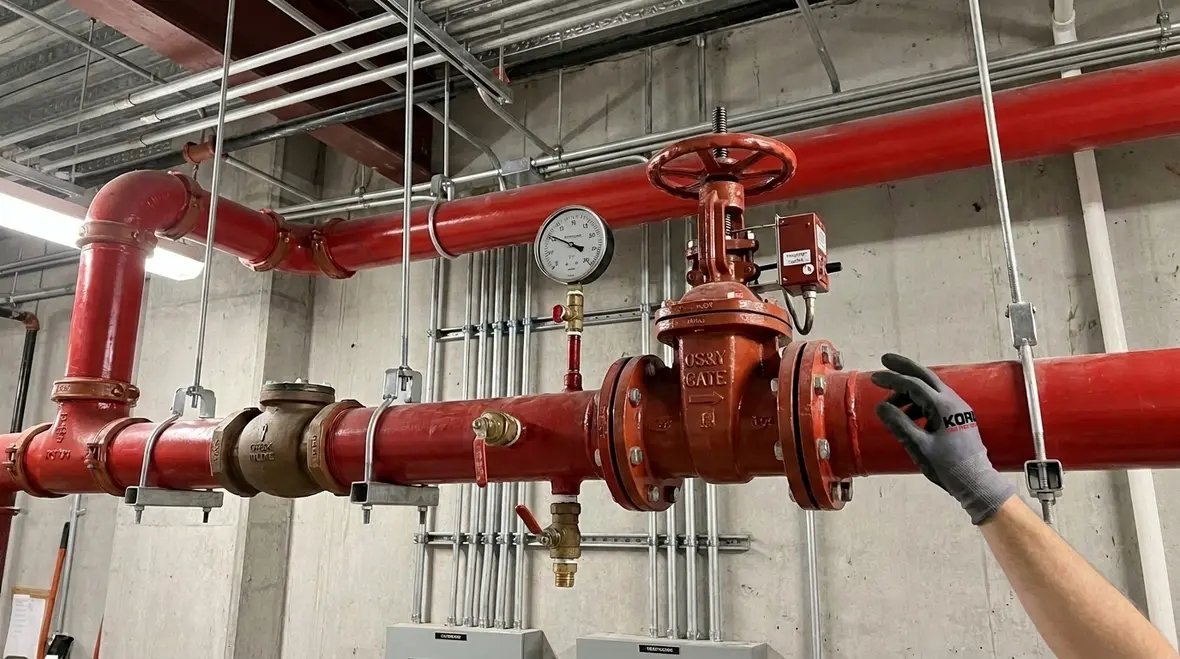
- Valve placement and isolation: Install valves to allow prompt isolation of zones and to facilitate testing and maintenance. Ensure clear sight lines to valve operators and unobstructed access paths.
- Valve types and orientation: Use valves suitable for fire protection service and orient them to enable full closure in an emergency and straightforward operation during routine testing.
- Accessibility and identification: Mark valves with durable tags and signage. Maintain unblocked access so operators can respond quickly in a fire emergency.
- Drainage and test connections: Include drain valves and test connections where required by the system design to support hydrostatic testing and post incident checks. For a closer look at how drains fit into the bigger picture, see Kord’s article on auxiliary drain placement in fire sprinkler systems.
- Valve monitoring and tamper indicators: Where applicable, incorporate indicators or monitoring devices to verify valve position and integrity over time.
Testing, commissioning and maintenance protocols
Trust but verify, then verify again
- Initial testing: Conduct hydrostatic and functional tests in accordance with NFPA 13 and related standards to verify leaks, flow paths, and valve operation before system activation.
- Record keeping: Maintain complete test records, including pressures, observed leaks, and valve operation results. Documentation supports regulatory audits and future upgrades.
- Commissioning process: Validate hydraulic performance, ensure correct zone isolation, and confirm accessibility to all critical valves during commissioning.
- Maintenance programs: Establish ongoing inspection cycles, annual inspections, and periodic valve exercising. Include documentation of deviations and corrective actions.
- Coordinated testing: Align testing windows with building operations to minimize disruption while ensuring timely verification of system integrity.
Compliance challenges in commercial facilities and the Kord Fire Protection advantage
Commercial, industrial, and retail facilities frequently face real world hurdles when implementing NFPA 13 basic requirements piping valve installation. Space constraints, retrofits in existing structures, and coordinating with architectural, electrical, and mechanical teams can complicate piping layout and access. Supply chain delays and labor availability further impact installation schedules. Thorough planning, site surveys, and accurate as built documentation are essential to avoid non compliance during inspections.
Kord Fire Protection provides a practical, end to end service model for ongoing compliance. From initial design review and site surveys to installation oversight and proactive maintenance programs, Kord ensures the system remains compliant, up to date, and ready for inspections in commercial, industrial, and retail facilities. Their teams specialize in field verification, test planning, and documentation management to minimize downtime and regulatory risk.
Frequently asked questions
For commercial facilities seeking reliable NFPA 13 compliance, ongoing maintenance, and audit readiness, partnering with a seasoned specialist is essential. Kord Fire Protection brings hands on experience, field proven processes, and a track record of keeping systems code compliant across retail, industrial and office environments.
Conclusion and call to action
Ensure your facility meets NFPA 13 basic requirements piping valve installation with expert guidance from Kord Fire Protection. Schedule a site assessment today to review piping layouts, valve accessibility, and your maintenance program. Our team delivers actionable recommendations, helps you plan for upcoming inspections, and establishes a proactive maintenance cadence that protects lives and property.

Join Our Newsletter!
Get the latest fire safety tips delivered straight to your inbox From our Newsletter.