
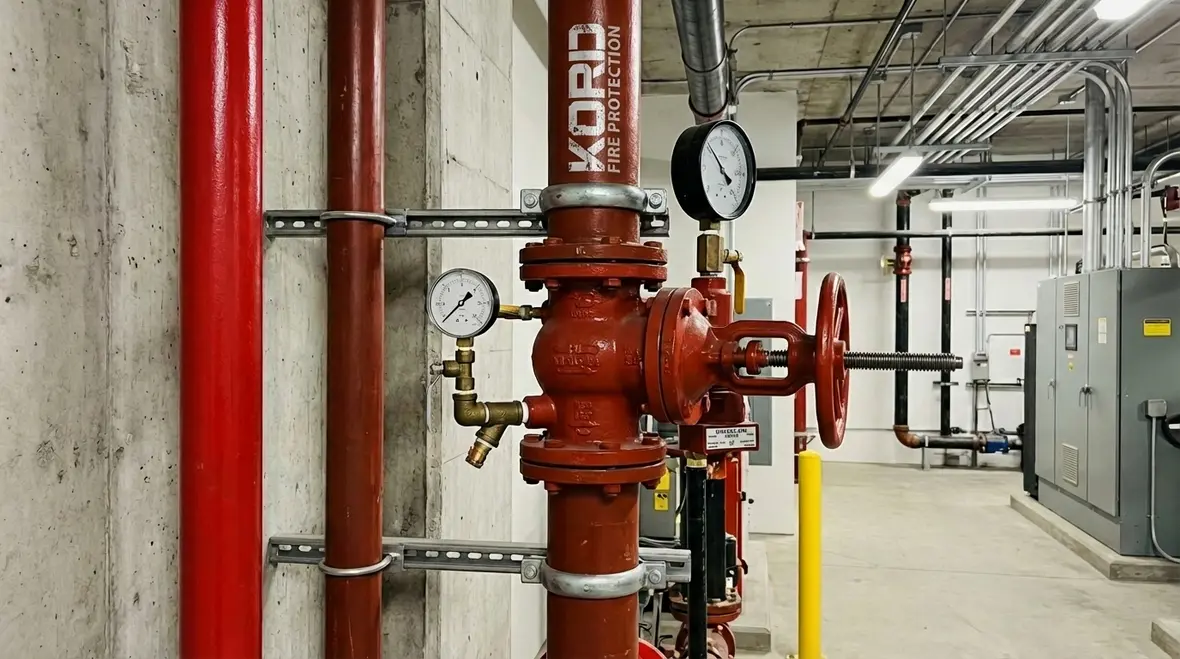
Floor Control Valve Assemblies in Southern California
Floor Control Valve Assemblies and When They Are Required in a Building
In Southern California, building safety begins with clarity. The fire sprinkler control valve placement guidelines for Southern California outline how and where valves must be installed to ensure safe, fast, and reliable fire protection. Within the first 100 feet of a sprinkler riser, at accessible locations, and clearly identified for emergency response, these valves serve as the backbone of a compliant system. However, beyond simple placement, the strategy behind floor control valve assemblies shapes how entire buildings respond to fire. Kord Fire Protection technicians often explain that understanding these assemblies is less about memorizing code and more about understanding how water moves, how buildings behave, and how people stay safe.
So let us slow things down and walk through the subject with steady confidence.
Understanding Floor Control Valve Assemblies
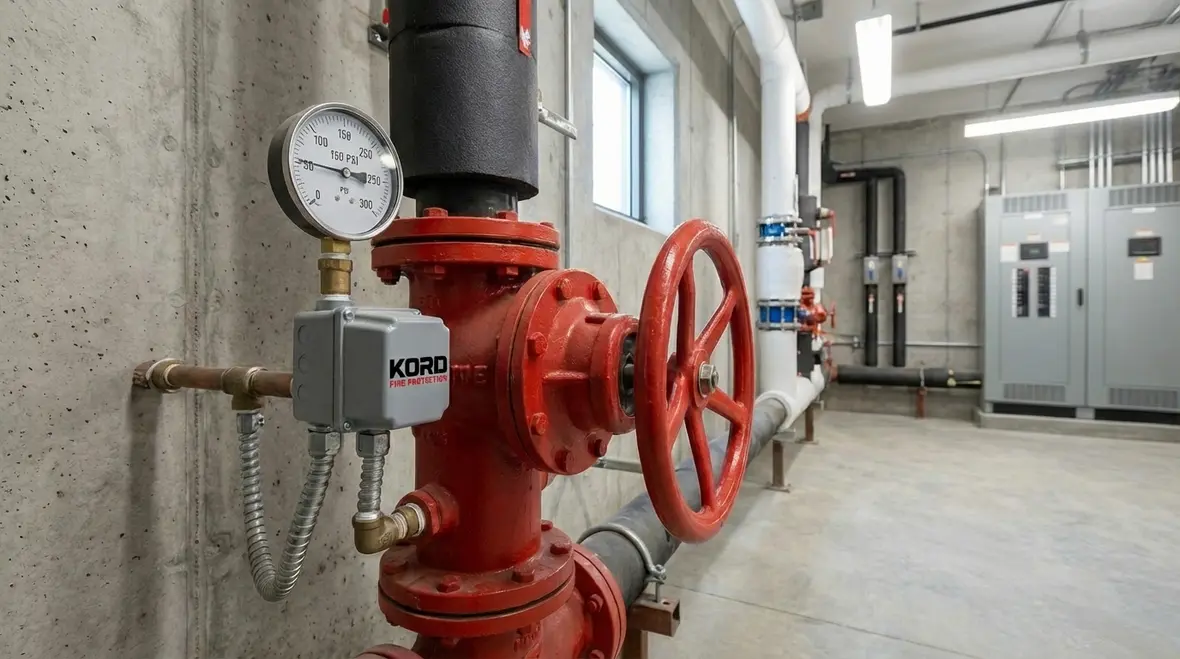
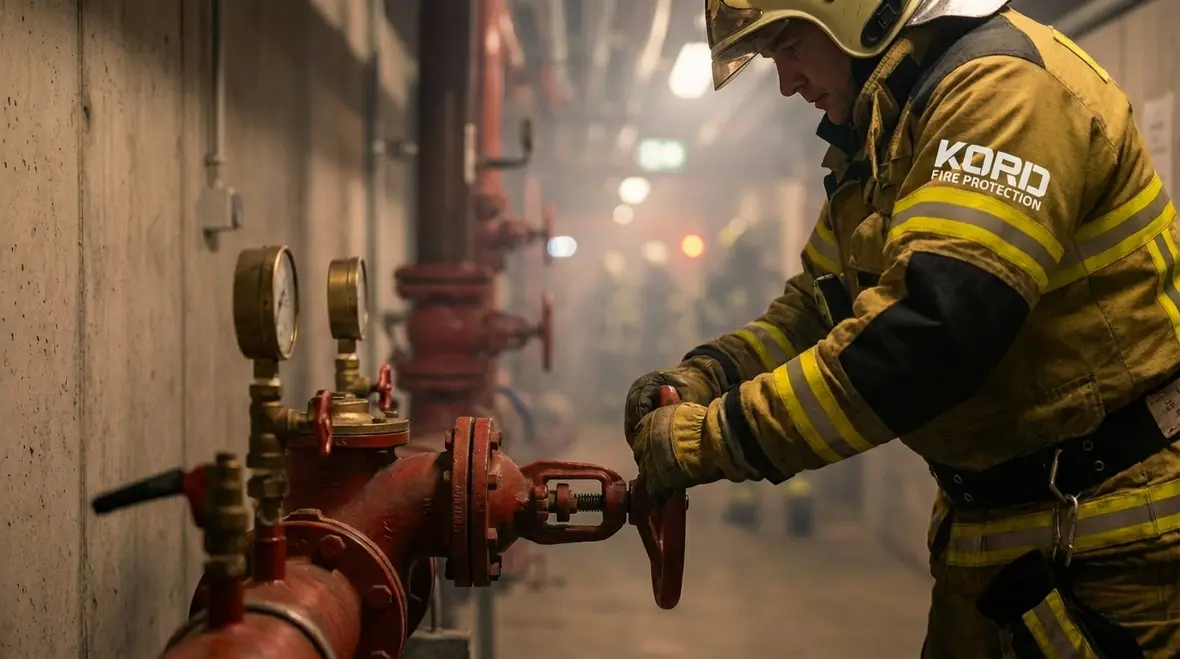
A floor control valve assembly is a dedicated valve arrangement installed on individual floors of a multistory building. It allows water flow to be controlled, supervised, and monitored at each level. In simple terms, it gives firefighters and maintenance teams the ability to isolate one floor without shutting down protection to the entire structure.
Typically, the assembly includes:
- A control valve
- A waterflow switch
- A pressure gauge
- A test and drain connection
- Supervisory monitoring components
While that list may not sound thrilling, the impact certainly is. When a sprinkler activates on the tenth floor of a high rise, the system must respond instantly. At the same time, crews need a way to test or repair that floor without affecting the ninth or the eleventh. That precision is where floor control valve assemblies shine.
Kord Fire Protection technicians often describe it this way. Imagine shutting off the water to your entire house just to fix one bathroom faucet. That would be inconvenient at best. Now imagine doing that in a hospital. Suddenly, precision becomes essential.
Because these assemblies sit at the intersection of design and real-world response, they also influence how mechanical rooms and riser locations are planned. From tight mechanical rooms to long vertical risers, Kord’s designers balance hydraulics, access, and code compliance much like they do when planning valves and piping around fire pumps or jockey pumps elsewhere in the system.
If you are reworking risers, mechanical rooms, or key valve locations, you can also look at how Kord approaches mechanical rooms and sprinkler layouts for more context on access, clearances, and long-term serviceability.
When Buildings Are Required to Install Them
Not every structure needs a floor control valve assembly. However, many do. Requirements depend on building height, occupancy type, and local enforcement of the fire sprinkler control valve placement guidelines for Southern California.
Generally, these assemblies are required in:
- High rise buildings
- Multistory commercial buildings
- Residential towers
- Hospitals and healthcare facilities
- Large mixed use properties
In high rise structures, for example, codes require sectional control so that each floor can be independently managed. Additionally, hospitals require continuous fire protection. Therefore, isolating one floor during maintenance must not interrupt patient safety elsewhere.
According to Kord Fire Protection technicians, many property owners initially see floor assemblies as just another line item in a construction budget. However, once they understand the operational benefit during an emergency, they quickly realize it is more like insurance that works in real time.
In dense cities such as Los Angeles, these decisions tie directly into broader commercial fire sprinkler system requirements and local amendments, especially in high rise and mixed use occupancies where water control on a floor-by-floor basis can make or break an emergency response plan.
How Southern California Valve Placement Guidelines Influence Design
Accessibility, supervision, and seismic reality
Designing a system in Southern California demands careful attention to seismic activity, accessibility, and fire department coordination. The fire sprinkler control valve placement guidelines for Southern California address these realities directly.
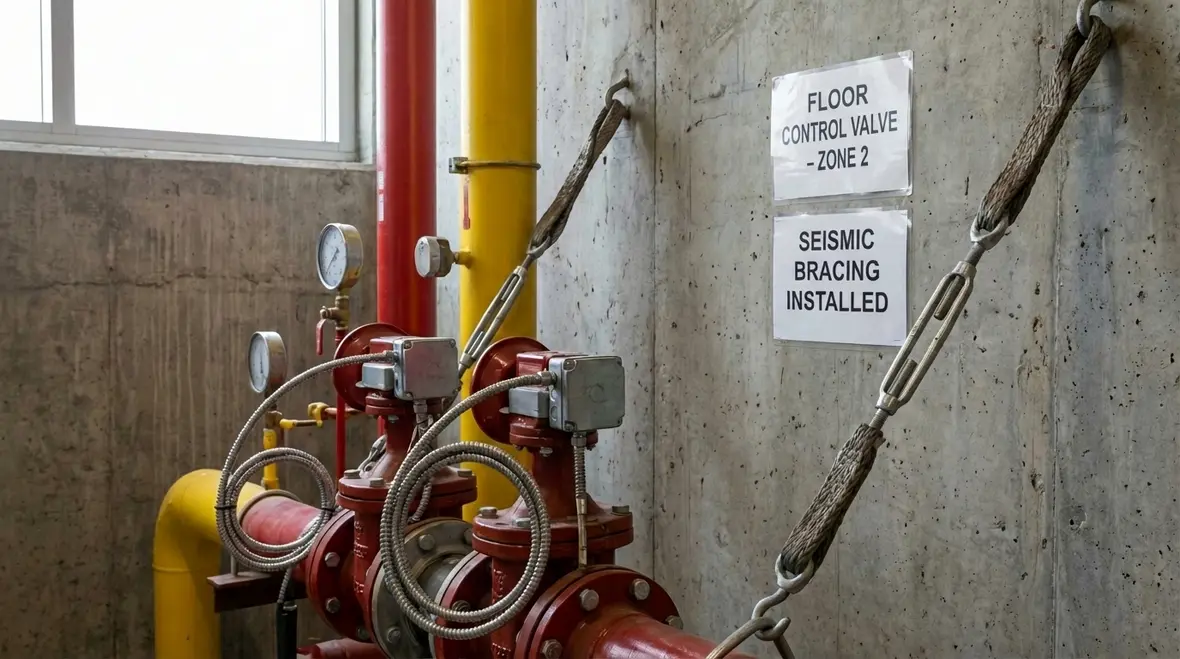
First, valves must remain accessible. They cannot hide behind drywall or above inaccessible ceilings. Firefighters need immediate access during an emergency. Second, clear signage and supervision through alarm systems ensure that no valve is closed without notice. Third, seismic bracing and structural considerations ensure that valves stay secure during an earthquake.
Earthquake performance and long-term resilience
Because Southern California sits in earthquake territory, proper placement becomes even more critical. A poorly supported valve can fail during seismic movement. Consequently, system integrity depends on both mechanical installation and code driven placement rules.
Kord Fire Protection technicians often explain that compliance is not about passing inspection alone. Instead, it is about anticipating real world conditions. Earthquakes, tenant renovations, and even accidental damage can compromise a system. Therefore, thoughtful valve placement protects against more than fire alone.
The Operational Advantage During Emergencies
Seconds, diagnostics, and water damage control
During a fire event, seconds matter. Floor control valve assemblies allow first responders to control water flow precisely where it is needed. Moreover, they provide diagnostic information through gauges and waterflow switches.
For example, if a sprinkler head activates on one floor, responders can confirm water movement at that specific assembly. At the same time, they can shut down only that floor once the fire is contained. This targeted control reduces water damage to unaffected areas.
Water damage, after all, has a way of overstaying its welcome. While firefighters battle flames, building owners silently worry about flooded offices, soaked inventory, and repair costs. Because floor control valve assemblies allow sectional shutoff, they reduce that collateral impact.
Routine inspections and simpler compliance
Additionally, these assemblies simplify routine inspections. Maintenance teams can conduct drain tests on one floor without interrupting the entire building. As a result, compliance with the fire sprinkler control valve placement guidelines for Southern California becomes easier to maintain year after year.
In jurisdictions like Los Angeles and San Francisco, where officials pay close attention to sprinkler performance and testing intervals, that ease of access helps building owners stay ahead of inspection cycles and local requirements.
Design Considerations for Engineers and Owners
Hydraulics, access, and smart locations
When engineers design sprinkler systems, they must consider hydraulic calculations, pipe sizing, pressure zones, and occupancy hazards. However, they must also integrate floor control valve assemblies in locations that support long term access.
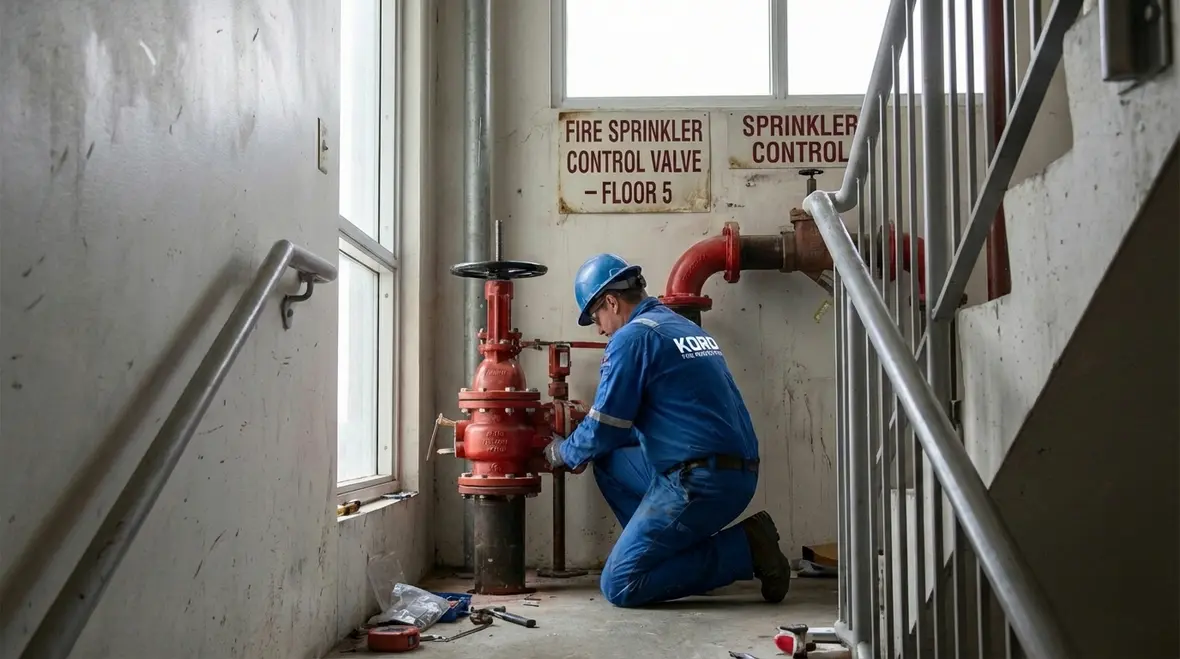
Placement often occurs in stairwells or mechanical rooms. These areas provide protection from tampering while remaining accessible to emergency personnel. Furthermore, visibility and signage must meet code requirements.
Below is a simplified comparison showing how design choices influence outcomes:
| Design Element | Impact on Safety and Compliance |
| Accessible stairwell placement | Faster firefighter response and easier maintenance |
| Clear signage and labeling | Reduced confusion during emergencies |
| Supervised control valves | Immediate alerts if a valve is closed |
| Seismic bracing | Protection during earthquakes |
| Proper hydraulic zoning | Balanced water pressure on each floor |
Each of these elements ties back to the fire sprinkler control valve placement guidelines for Southern California. When aligned correctly, they create a system that works quietly in the background, ready when called upon.
Are Floor Control Valve Assemblies Necessary in Every Multistory Building?
Not always. However, many multistory buildings fall within thresholds that trigger requirements.
Building height is a primary factor. Once a structure exceeds certain story limits, sectional control becomes mandatory. Additionally, occupancy risk influences the decision. Residential towers, offices with high occupant loads, and healthcare facilities often require individual floor control.
Local authorities enforce the fire sprinkler control valve placement guidelines for Southern California with particular care in dense urban zones. Because high population density increases risk, regulators aim to ensure that no single valve failure compromises an entire building.
Kord Fire Protection technicians emphasize that even when not strictly required, many owners choose to install floor assemblies voluntarily. The reason is simple. Flexibility during maintenance saves time and money. And frankly, avoiding a full building shutdown makes tenants much happier. No one enjoys surprise interruptions, especially when elevators and water systems are involved.
Maintenance, Inspections, and Long Term Reliability
Fire protection systems demand ongoing care. Floor control valve assemblies support that effort by simplifying inspection routines. Inspectors can test waterflow switches, verify pressure readings, and confirm valve supervision at each floor.
Moreover, localized testing reduces disruption. Instead of draining an entire riser, technicians isolate a single level. This efficiency encourages consistent compliance with the fire sprinkler control valve placement guidelines for Southern California.
Kord Fire Protection technicians often remind property managers that a closed valve remains one of the most common causes of sprinkler system failure. Supervised floor control valves send alerts when someone closes them. Consequently, management can address issues before they escalate.
Think of it as a smoke alarm for the plumbing side of fire protection. It quietly watches, and when something changes, it speaks up.
Common Mistakes in Installation and Planning
Even well intentioned projects can encounter problems. Some common mistakes include:
- Installing valves in inaccessible ceiling spaces
- Failing to provide proper signage
- Ignoring seismic bracing requirements
- Overlooking pressure zone coordination
- Skipping supervision connections to alarm systems
Each of these errors can compromise compliance with the fire sprinkler control valve placement guidelines for Southern California. More importantly, they can delay emergency response.
For example, if a valve hides above a locked ceiling grid, firefighters lose precious time locating it. Similarly, without supervision, a partially closed valve might go unnoticed for months.
Kord Fire Protection technicians approach installations with a practical mindset. They evaluate how a firefighter will access the valve at three in the morning, in smoke filled conditions, under stress. That perspective shapes smarter placement decisions.
The Broader Role in Life Safety Strategy
Floor control valve assemblies do not stand alone. They integrate with alarms, standpipes, fire pumps, and emergency response planning. Together, these systems form a layered defense strategy.
Because Southern California faces unique risks such as seismic activity and dense development, compliance with the fire sprinkler control valve placement guidelines for Southern California supports broader resilience goals. Buildings must withstand both fire and structural stress.
Additionally, insurance providers often view sectional control favorably. Reduced water damage potential and improved system reliability lower overall risk. Therefore, investing in properly designed assemblies can yield financial benefits over time.
In many ways, floor control valve assemblies represent quiet guardians. They do not make headlines. They do not flash or beep dramatically. Yet when activated, they deliver water precisely where it is needed, while preserving the rest of the structure.
FAQ About Floor Control Valve Assemblies
Conclusion and Next Steps
Floor control valve assemblies provide precision, safety, and long term reliability for multistory buildings. When aligned with the fire sprinkler control valve placement guidelines for Southern California, they strengthen compliance and protect occupants. Kord Fire Protection technicians stand ready to evaluate, design, and maintain these systems with steady expertise. Building owners who value safety and operational confidence should consult experienced professionals and ensure every floor remains protected, accessible, and ready when it matters most.
If your building is in Los Angeles, San Diego, the Bay Area, or anywhere in between, and you are planning a new riser, retrofit, or tenant improvement, it is worth reviewing your sectional control strategy at the same time. A clear floor-by-floor valve plan keeps future renovations simpler and reduces surprises when local inspectors arrive.
From initial design to long term testing, a trusted service partner can help align your assemblies with both NFPA requirements and local interpretations. Kord’s team regularly supports owners through everything from riser reconfiguration to pump and jockey pump integration, so that valve layouts, hydraulics, and clearances all work together instead of fighting one another.
Need help with floor control valve assemblies or broader sprinkler work?
Explore Kord’s dedicated fire sprinkler services and repair in Southern California to schedule a consultation. Whether you are troubleshooting existing risers or planning a new multistory project, their team can review your floor control valve strategy, provide code-informed recommendations, and keep your system inspection-ready year after year.
Know Your Weapon Before You Fight the Flame
Kord Fire Protection is your go-to when it comes to all things fire protection. For over 20 years, we’ve been serving Southern California with the quality service and equipment to keep your home or business safe at all times. Our competitive prices reflect our unwavering commitment to protecting what matters most in the event of a fire emergency. Give us a call, send an email, or use that form!

Join Our Newsletter!
Get the latest fire safety tips delivered straight to your inbox From our Newsletter.


