NFPA 10 Section 7.2 and 7.3 Annual Inspection vs Internal Maintenance
Quick Answer
NFPA 10 Section 7.2 covers the annual inspection of fire extinguishers, while Section 7.3 covers internal maintenance and the deeper service work that keeps units ready for use. In simple terms, one checks the outside, the other checks the inside. Both matter, and Kord Fire Protection can help facilities stay compliant, safe, and ready.
Fire extinguishers sit quietly on walls and in cabinets, hoping for a peaceful life. Then the day comes when they are needed, and suddenly everyone wants them in top shape. That is why nfpa 10 annual fire extinguisher inspection matters so much for industrial, retail, commercial, and facility sites. It helps confirm that the unit is visible, accessible, charged, and ready. However, NFPA 10 does not stop at a simple look over. It also sets out deeper service rules under Section 7.3, and that difference is where many sites get tangled up like a headset cord in a rush.
For businesses that need a dependable fire extinguisher service program, understanding that split between inspection and internal maintenance is more than technical trivia. It affects safety, records, costs, and the working life of the equipment. And yes, it can also save a site manager from that dreaded moment when a missing pin, low pressure, or hidden fault turns into a very expensive lesson.
Why Section 7.2 and 7.3 Get Mixed Up So Often
On paper, the difference sounds simple. One is an annual inspection. The other is internal maintenance. In the real world, though, both happen under the broad umbrella of extinguisher servicing, so people tend to blur them together. The result is a lot of assumptions, a few crossed wires, and the occasional compliance headache that arrives right on schedule.
A strong refresher on the broader standard helps. Kord Fire’s NFPA 10 portable fire extinguishers guidelines outlines how portable extinguishers are selected, located, inspected, and maintained. That bigger picture matters because annual checks and internal service are not competing tasks. They are separate layers of the same protection strategy.
If a facility treats them as interchangeable, it can miss required maintenance intervals or assume a unit is fine simply because the outside looks tidy. Unfortunately, fire protection equipment is not impressed by optimism. It prefers actual servicing.
What NFPA 10 Section 7.2 Means for Annual Inspection
The outside check that catches obvious problems first
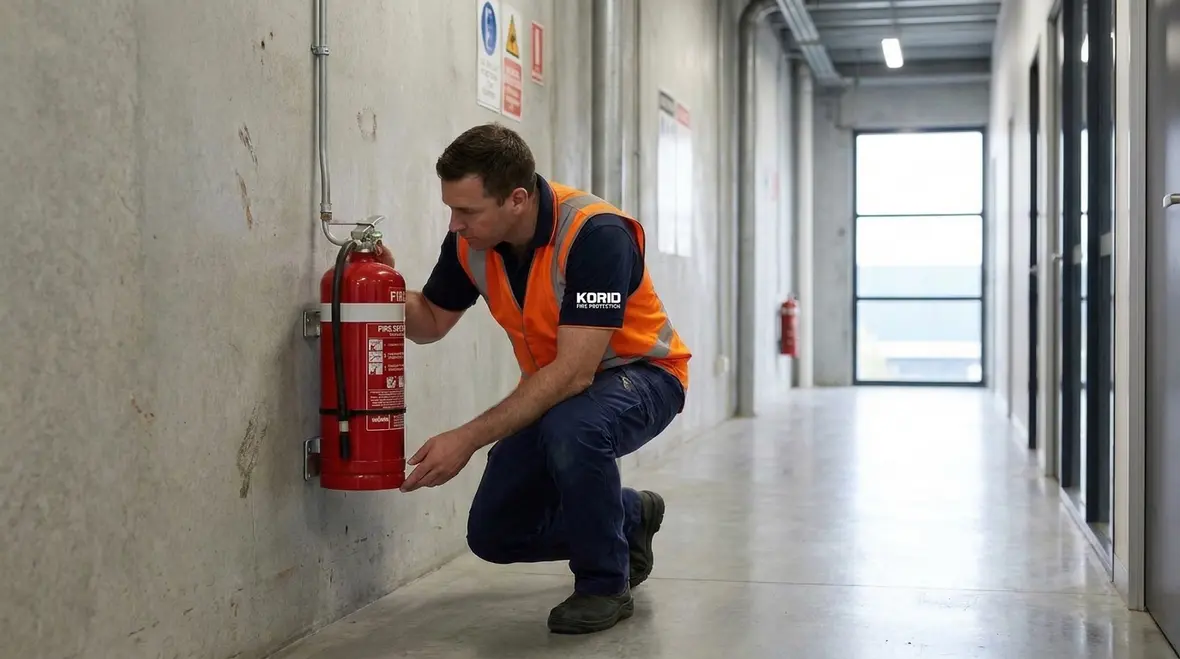
Section 7.2 focuses on the yearly inspection of each extinguisher. This is the visible check. A trained person confirms that the extinguisher is in the right place, has a readable label, shows no damage, and sits at proper pressure. The hose, nozzle, pin, seal, and bracket also need attention. In addition, the inspection confirms that the unit has not been blocked, painted over, or treated like a forgotten prop from an old warehouse scene.
For a busy site, this step matters because many extinguisher problems show up on the outside first. A missing pin, a dented body, or a clogged nozzle can be spotted before the unit fails. Therefore, the annual inspection acts like the first line of defense. It does not dismantle the extinguisher, but it does confirm whether it remains fit for service at a basic level.
- Correct location and visibility
- Clear access with no storage blocking the unit
- Readable operating instructions and labels
- Pressure gauge in the proper range where applicable
- Pin and tamper seal intact
- No obvious dents, leaks, corrosion, or nozzle damage
That is why annual inspection should never be treated as a casual once over. It creates the routine opportunity to catch placement issues, tampering, physical damage, and pressure loss before those small problems become very large, very smoky problems.
What NFPA 10 Section 7.3 Means for Internal Maintenance
The deeper service work you cannot verify from the outside
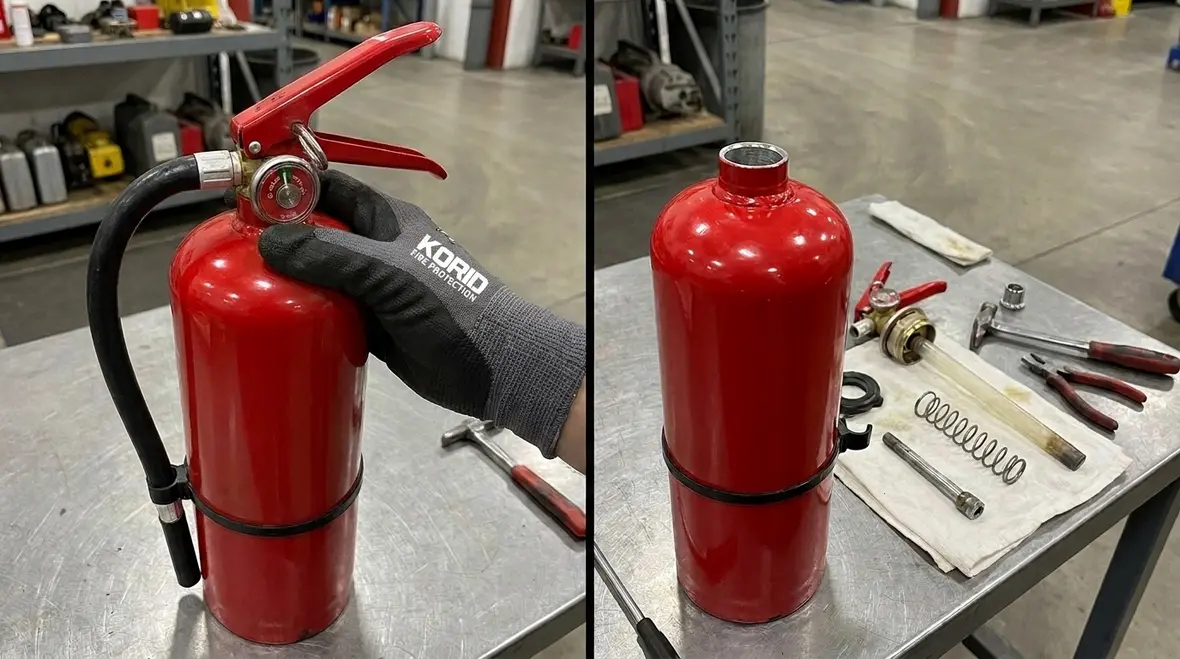
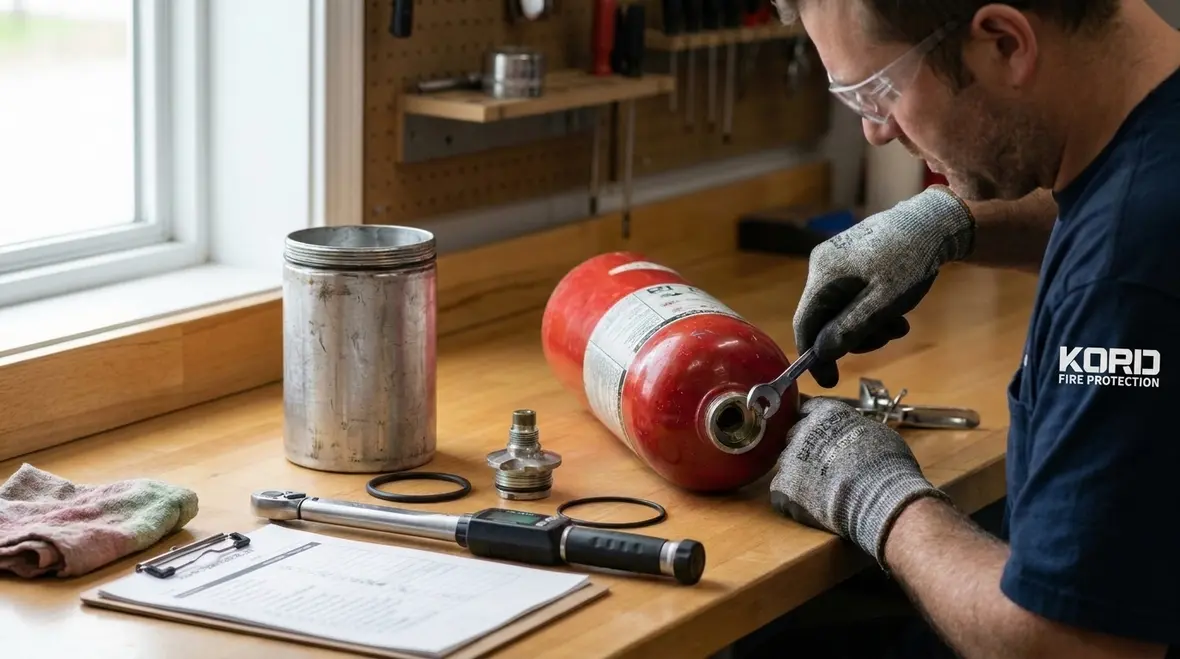
Section 7.3 goes further. It covers internal maintenance, which means the extinguisher is opened, examined, and serviced based on the agent type and the condition of the unit. This is not a quick glance. It involves checking internal parts, seals, valves, gaskets, and the condition of the extinguishing agent. If the extinguisher needs refilling, replacement parts, testing, or deeper repair, this is the stage where it happens.
In many cases, internal maintenance happens on a set schedule or when the inspection reveals a concern. Some units may also require servicing after use, damage, corrosion, or pressure loss. So while the annual inspection says, “This looks fine,” internal maintenance asks, “What is happening inside this thing?” That is a much bigger question, and it deserves a proper answer.
For facilities trying to understand where this fits into long term care, Kord Fire’s six year fire extinguisher maintenance guide is a useful companion resource. It helps explain why deeper internal examination exists at all. Extinguishers may look sturdy and uncomplicated, but inside they rely on components that age, seals that wear, and pressurized contents that cannot simply be trusted on good vibes.
This is also where a lot of hidden faults get discovered. Corrosion inside the cylinder, deteriorated valve components, damaged threads, contaminated agent, and other internal issues can stay invisible until a unit is opened and properly evaluated. In other words, the annual inspection checks if the extinguisher looks ready. Internal maintenance confirms whether it actually is.
Annual Inspection vs Internal Maintenance at a Glance
| Annual Inspection | Internal Maintenance |
|---|---|
| Checks the outside condition and accessibility | Checks the inside condition and working parts |
| Usually performed every year | Performed on a deeper service schedule or when needed |
| Looks for damage, pressure issues, and placement problems | Looks for wear, leaks, internal faults, and agent condition |
| Confirms the extinguisher is ready for basic service | Restores the extinguisher to proper working condition |
This difference matters because a clean outside does not always mean a healthy inside. A fire extinguisher can look ready for action and still fail the moment it is pulled from the wall. And that, as any facilities manager knows, is not the kind of surprise anyone wants before lunch.
Why This Distinction Matters for Facilities
Compliance, reliability, and fewer ugly surprises
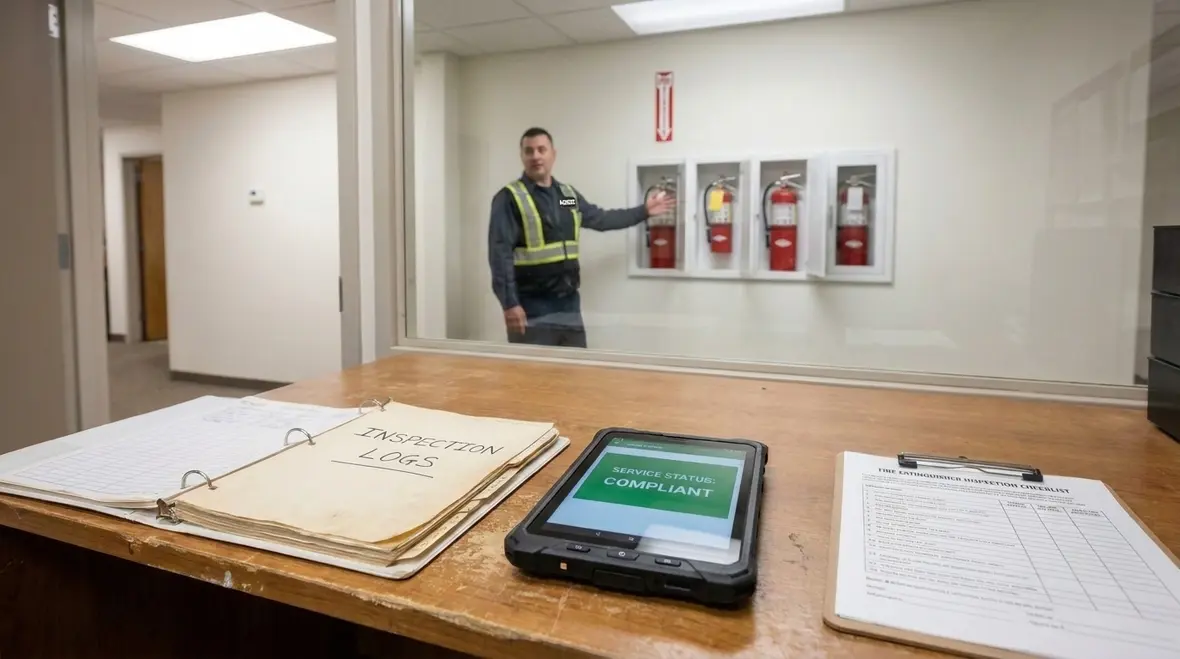
For businesses managing risk, compliance, and uptime, the line between annual inspection and internal maintenance is not just technical. It affects documentation, scheduling, replacement planning, and the overall reliability of the fire protection program. A unit that passes a visible inspection but misses deeper maintenance can still become the weak link in an otherwise solid safety system.
That is especially true for facilities with large equipment inventories, multiple buildings, or several operating sites. Records need to stay clean, service intervals need to stay organized, and each extinguisher needs to receive the right level of attention at the right time. If not, compliance becomes reactive instead of planned, and reactive compliance is usually just stress wearing a reflective vest.
Kord Fire’s related resources on annual fire extinguisher inspection and inspecting and replacing fire extinguisher parts help illustrate how visible checks and component level servicing support each other. One identifies the red flags. The other resolves the deeper causes.
How Kord Fire Protection Can Help
Kord Fire Protection can become a vital partner for sites that need dependable extinguisher inspection and maintenance support. Their role goes beyond ticking boxes. They help identify which units need only an annual inspection and which units need internal maintenance or other service work. As a result, facilities can keep their equipment compliant without wasting time or money on guesswork.
For multi site operations, this kind of support becomes even more valuable. Kord Fire Protection can help standardize service, keep records organized, and reduce the chance of missed intervals. In addition, their service approach can help site leaders plan around maintenance windows, limit disruption, and keep safety systems aligned with daily operations.
Many facilities teams already handle enough moving parts to make a movie studio jealous. Lighting, access, equipment, staff changes, compliance, and downtime all compete for attention. A trusted fire protection partner helps cut through that noise. They bring a clear process, trained eyes, and practical advice. That support can mean faster decisions when a unit fails inspection, better guidance on replacement needs, and fewer surprises during audits.
FAQ
Conclusion
NFPA 10 Section 7.2 and 7.3 work together to keep fire extinguishers ready for real emergencies. One checks the outside, the other protects the inside. That difference matters because visible readiness and internal reliability are not the same thing, even when a unit looks perfectly fine sitting on the wall.
For industrial, retail, and commercial sites, a strong service plan keeps the process clear, compliant, and on schedule. If the goal is fewer surprises, better records, and equipment that performs when it is actually needed, understanding both sections is a smart move and working with the right service partner is even smarter.

Join Our Newsletter!
Get the latest fire safety tips delivered straight to your inbox From our Newsletter.