NFPA 10 Section 6.7 Fire Extinguisher for Solid Fuel Cooking
Quick Answer: NFPA 10 Section 6.7 sets special fire extinguisher rules for solid fuel cooking appliances such as wood or charcoal equipment. For industrial, retail, and commercial sites across Australia, this means the right extinguisher type, correct placement, and routine checks. Kord Fire Protection can help businesses stay compliant, protect staff, and reduce fire risk.
If your site uses wood, charcoal, or similar cooking fuel, it also helps to connect extinguisher planning with a broader commercial kitchen fire suppression strategy so the portable unit is not trying to do the whole job alone. For a wider code overview, Kord Fire’s NFPA 10 portable fire extinguisher guidelines are also worth keeping handy.
What NFPA 10 Section 6.7 Means for Solid Fuel Cooking
NFPA 10 fire extinguisher inspection requirements do more than keep a tag on a cylinder. They help businesses confirm that the right extinguisher is ready when fire shows up uninvited. For solid fuel cooking appliances, Section 6.7 adds another layer of control because wood, charcoal, and similar fuels create hot grease, flying embers, and stubborn heat. In other words, this is not a place for guesswork, because fire does not care about a lunch rush or a showroom opening.
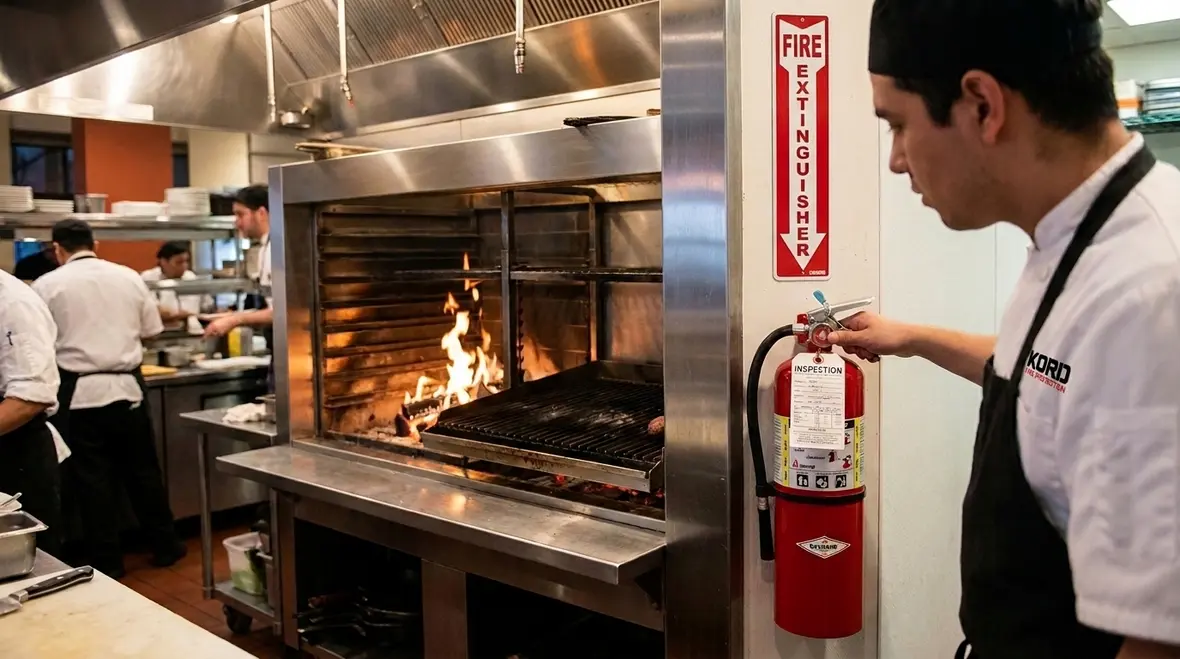
Section 6.7 focuses on special protection where standard kitchen coverage may not be enough. As a result, facilities must match extinguisher selection, access, and inspection practices to the real fire load in the cooking area. This matters for restaurants, food courts, industrial canteens, hospitality sites, and any commercial kitchen that uses solid fuel equipment.
Where this usually matters most
The rule becomes especially important in facilities where cooking is constant, heat is intense, and staff move fast. Think retail food tenancies, restaurants with open flame concepts, production kitchens, hotel food operations, school canteens, event venues, and industrial lunch facilities. These are the places where a nice-looking extinguisher on the wall means very little if it is the wrong type, mounted in the wrong spot, or hidden behind a stack of boxes that somehow became “temporary storage” three months ago.
Why Solid Fuel Cooking Needs Special Protection
Solid fuel appliances burn differently from gas or electric units. They hold heat longer, produce more embers, and can restart a fire if the wrong extinguisher gets used. Therefore, the risk profile changes fast. A small flare up can spread into ducts, hoods, nearby packaging, or stored stock before someone finishes saying, “I thought it was under control.”
That is why NFPA 10 fire extinguisher inspection requirements become part of a wider fire safety plan, not just a monthly chore. The site must confirm that extinguishers suit the hazard, remain visible, and stay easy to reach. Also, staff need clear training so they do not grab the wrong unit in a panic. Panic, as the fire service would say, is a terrible supervisor.
The problem with leftover heat
One of the main reasons these cooking systems need extra attention is simple: the danger does not always end when the visible flame drops. Solid fuel keeps radiating heat, embers can drift, and surfaces can stay hot enough to restart ignition. That means response planning has to consider not just extinguishing the flame, but reducing the chance of re ignition in the minutes that follow. A rushed response with the wrong equipment can turn a near miss into a second emergency, which is a deeply unfair sequel no kitchen asked for.
How to Apply the Requirements in Busy Facilities
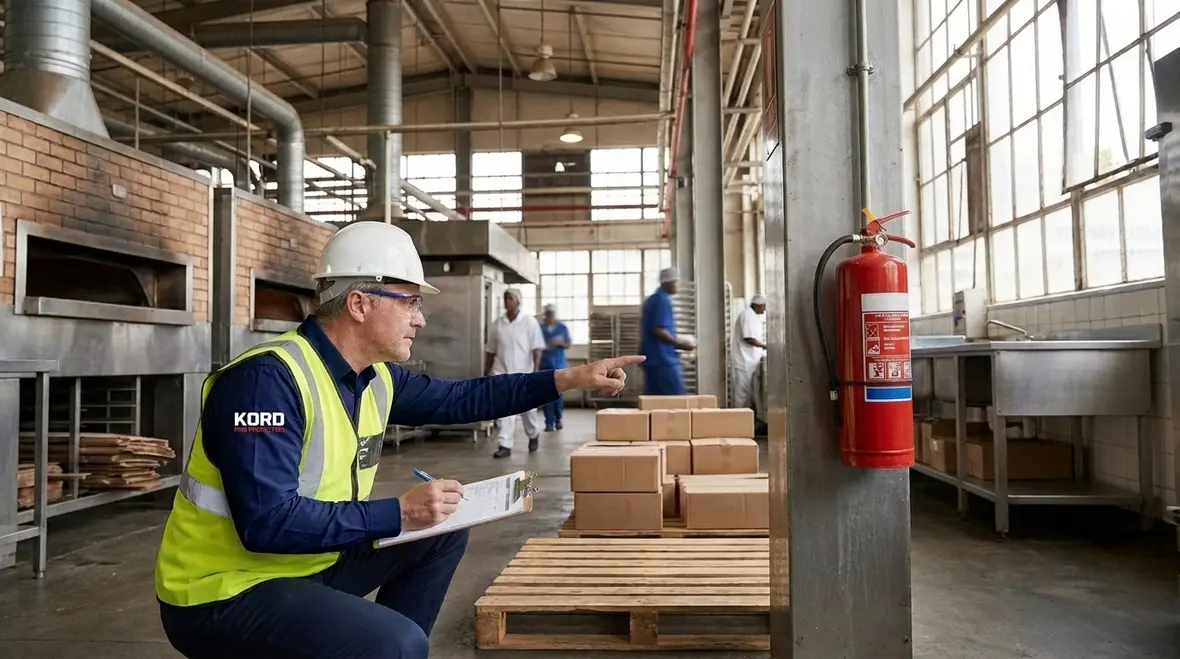
Commercial and industrial sites need a simple but strict routine. First, they must identify every solid fuel cooking appliance and map the fire risk around it. Then they should confirm the required extinguisher type, the mounting position, and the travel path to the unit. After that, they need regular checks to make sure nothing blocks access.
In practical terms, the process should include:
- Verifying the correct extinguisher type for the appliance and nearby hazards
- Keeping the unit mounted where staff can see and reach it fast
- Checking pressure, seals, labels, and physical condition
- Making sure no stock, chairs, bins, or display items block the area
- Training staff on when to use the extinguisher and when to evacuate
These steps support compliance and reduce delays. Furthermore, they help sites avoid the classic “we knew it was somewhere near the prep bench” problem.
Build the routine around real movement
The best inspection routine is not built for an imaginary perfect kitchen. It is built for the real one, with deliveries at the back door, staff changing shifts, rush periods, mobile prep stations, and that one trolley that always seems to park in the worst possible place. Businesses should review access during actual operating conditions, not just during a quiet morning walk-through. If the extinguisher disappears behind supplies during service, compliance on paper will not save time in a real emergency.
What Inspectors Look for During Fire Extinguisher Checks
Inspectors usually look for more than a green gauge and a tidy tag. They want proof that the extinguisher remains ready for immediate use. That means checking condition, location, mounting height, signage, and service history. They also look at the cooking setup itself, because a solid fuel appliance can create extra exposure around heat shields, ventilation, and nearby combustibles.
Common inspection focus and why it matters
Inspection Focus
- Correct extinguisher type
- Clear access path
- Visible signage
- Current service tag
- No damage or corrosion
Why It Matters
- Reduces fire response time
- Supports safe use in an emergency
- Helps staff find the unit fast
- Shows compliance during audits
- Prevents failure at the worst moment
Because fire safety problems love surprise visits, consistent inspection records help businesses stay ahead of issues instead of chasing them after the fact.
Small details that become big problems
A missing sign, an unreadable label, a bent bracket, grease build-up on the cylinder, or a blocked line of travel might seem minor during a normal day. Inspectors do not see those things as minor, and neither should operators. In an emergency, every extra second spent looking, reaching, or second guessing matters. The point of inspection is not to admire equipment. It is to confirm that it will perform properly when the room gets loud, hot, and very committed to making everyone’s day worse.
How Kord Fire Protection Can Support Compliance
Kord Fire Protection can become a vital partner for businesses that need practical fire safety support, especially across Australia’s busy commercial and industrial sites. They can help assess cooking areas, confirm suitable extinguisher placement, and maintain inspection schedules that align with NFPA 10 fire extinguisher inspection requirements. In addition, they can support staff training so teams know what to use, where to find it, and what to do if the fire grows faster than the morning coffee line.
For facilities with solid fuel cooking appliances, this support can make a major difference. Kord Fire Protection can help reduce risk, improve readiness, and keep compliance work organised. That matters for retail food tenants, hospitality operators, commercial kitchens, and large multi site facilities that need a reliable partner rather than another spreadsheet with a heroic title.
Businesses that also want more context around extinguisher positioning can explore commercial fire extinguisher placement guidance, while teams focused on cooking oil hazards may find Kord Fire’s article on when commercial kitchens need a K Class fire extinguisher especially useful.
How Often Should Extinguishers Be Reviewed?
Facilities should review extinguishers on a regular schedule, with visual checks taking place often and formal service handled by trained professionals. However, solid fuel cooking areas may need closer attention because heat, grease, and traffic can wear equipment down faster. So, even if the extinguisher looks fine from a distance, the site should still check for damage, blockage, or changes in the cooking setup.
When layouts change, equipment gets moved, or menus shift toward more solid fuel use, the fire protection plan should change too. Otherwise, the site may be protecting yesterday’s kitchen while running today’s fire risk.
Review triggers that should not be ignored
Sites should take a second look whenever they add a grill, move a smoker, change hood coverage, increase fuel storage, rework prep lines, or convert part of the kitchen to a different menu concept. Renovations and small operational changes often create fire protection gaps by accident. The equipment may still be on the wall, but the hazard it was selected for may have shifted a few metres away. That is the sort of mismatch inspectors notice quickly and busy operators discover the hard way.
FAQ
Keep Solid Fuel Cooking Safe and Ready
Solid fuel cooking brings great flavour, but it also brings real fire risk. Therefore, businesses should treat NFPA 10 Section 6.7 as a practical safeguard, not paperwork theater. With the right extinguisher setup, regular inspections, and expert help from Kord Fire Protection, commercial and industrial facilities can stay compliant and better protect people, property, and operations.
Now is the time to review the site and make sure the fire plan is ready before the fire decides to test it. A clear layout, the correct extinguisher, trained staff, and a reliable maintenance routine create the kind of boring preparedness that becomes extremely exciting when it saves the day.

Join Our Newsletter!
Get the latest fire safety tips delivered straight to your inbox From our Newsletter.