Fire Extinguisher Recharging Procedures for Compliance
Quick Answer
The procedures for fire extinguisher recharging matter because a discharged unit is only useful as wall decor. NFPA 10 Section 7.8 calls for proper recharging, agent replacement, checks, and documentation so the extinguisher returns to service safely. For industrial, retail, and commercial sites across Southern California, Kord Fire Protection can help keep that process compliant, efficient, and ready when trouble starts.
If your property needs broader support beyond extinguishers alone, Kord Fire Protection also provides full fire protection services for facilities that want one partner handling compliance, service scheduling, and system readiness in a more organized way.

Why NFPA 10 Section 7.8 Matters for Busy Sites
NFPA 10 Section 7.8 gives clear direction on how a fire extinguisher must be recharged after use or when its pressure drops. In plain terms, the unit should not be put back in place until trained people inspect it, refill it with the correct agent, and confirm it can work as designed. This matters because a half ready extinguisher is no better than a superhero with one shoe. It looks capable, but the job is not going to end well.
For industrial plants, shopping centres, warehouses, and office sites, this step is more than a box ticking task. It supports safety, insurance needs, and site uptime. Therefore, fast and correct service helps reduce risk and keeps operations moving. Kord Fire’s own NFPA 10 portable fire extinguisher guidelines page also reinforces why maintenance, inspection, and proper servicing are not optional extras when compliance is on the line.
Why this becomes a real operations issue
On a busy commercial site, a missing or undercharged extinguisher can create more than a safety gap. It can trigger failed inspections, create headaches during insurance reviews, and leave managers scrambling to explain why equipment was returned to the wall before it was truly ready. Recharging procedures exist to stop that chain of problems before it starts.
What the Procedures for Fire Extinguisher Recharging Require
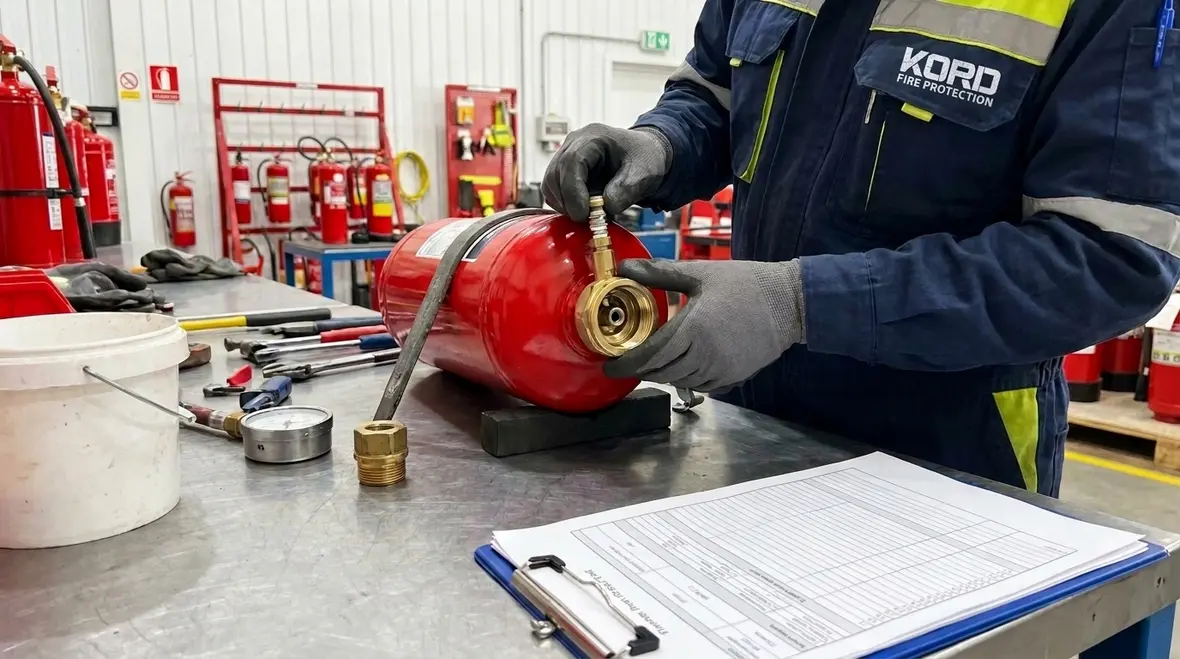
The procedures for fire extinguisher recharging begin with removal from service. Once an extinguisher has been used, damaged, or found below charge, the team should take it out of use right away. Next, trained technicians inspect the cylinder, valve, hose, nozzle, and seal. If any part shows wear or damage, they replace or repair it before filling the unit again.
After that, the extinguisher receives the correct extinguishing agent and propellant as listed by the maker and the extinguisher type. Water, foam, dry chemical, CO2, and wet chemical units each have their own needs. Using the wrong agent is not clever innovation. It is how compliance goes to take a long lunch.
Finally, the technician tests the unit, restores pressure, tags it, and records the service date. That record helps prove the extinguisher is ready and keeps site audits much calmer. It also makes future service easier because the next technician can see what was done, when it was done, and whether recurring issues keep showing up on the same unit.

What trained technicians are really checking
A recharge is not just a refill. Technicians look at whether the shell is compromised, whether the valve assembly is operating correctly, whether the hose and nozzle are free of obstruction, and whether seals and pins are intact and appropriate for safe return to service. That deeper check is what separates compliance from guesswork.
How Agent Replacement Protects Performance
Agent replacement does more than refill a cylinder. It restores the extinguisher’s ability to discharge the right material in the right way. Over time, the agent can settle, absorb moisture, or break down. In some cases, contamination can also enter the unit after discharge or poor handling. Because of that, service teams often empty the old material, clean the cylinder, and install fresh agent.
This step matters most in commercial and industrial settings where fire types vary. Electrical rooms, kitchens, fuel areas, and production floors all need different protection. As a result, the correct refill becomes part science, part routine, and part let’s not wing this.
It also protects performance consistency. An extinguisher may look fine from the outside and still fail to discharge as expected if the internal contents have compacted, degraded, or become contaminated. That is one reason Kord Fire’s article on common fire extinguisher failures and prevention is such a useful companion read for facilities trying to avoid unpleasant surprises.
Which Steps a Technician Should Follow During Service
The service process usually follows a strict path. First, the technician confirms the extinguisher type and checks its service history. Then, the technician discharges or safely removes the remaining contents if required. After that, the unit gets opened, inspected, cleaned, and reassembled with the proper parts and agent.
Typical service steps
Remove the extinguisher from active use
Inspect the shell, valve, hose, and nozzle
Empty old or contaminated agent when needed
Replace worn seals, parts, or damaged components
Refill with the correct agent and pressure
Test the unit and apply service tags
Log the work for compliance records
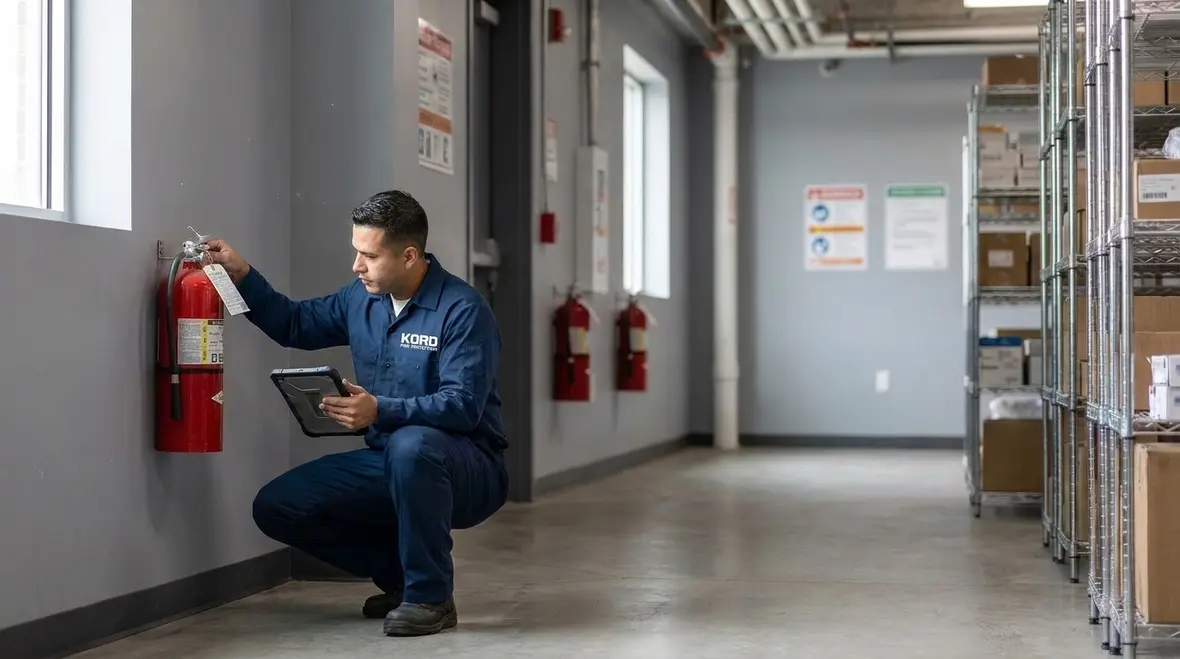
Because the process touches both safety and legal duty, trained service staff should handle it from start to finish. A quick visual check is helpful, but it does not replace a full service procedure. If there is any confusion about who is allowed to do what, Kord Fire also addresses that directly in who can service fire extinguishers legally, which helps explain why qualifications matter here.
Dual Column View: What Good Recharging Looks Like Versus Risky Shortcuts
Good practice
Trained technician completes the full inspection
Correct agent matches the extinguisher type
Worn parts get replaced before return to service
Pressure and discharge readiness get verified
Records stay current for audits and site checks
Risky shortcut
Unit gets refilled without full inspection
Wrong agent gets used because it was available
Damaged parts stay in place to save time
Pressure is assumed, not tested
No clear service record exists when auditors ask
How Kord Fire Protection Supports Compliance and Readiness
Kord Fire Protection can become a vital partner in this service because it brings structure to a task that many sites only notice after an extinguisher has already been used. With regular maintenance support, Kord Fire Protection helps industrial, retail, and commercial clients keep extinguishers charged, documented, and ready for action.
Just as important, a trusted provider reduces downtime. Instead of managers chasing service dates, parts, and paperwork, Kord Fire Protection can handle the work in a planned way. That means less disruption, fewer surprises, and better confidence during audits or inspections. In a busy facility, that kind of help is worth its weight in gold, or at least in very calm sleep.
For businesses that want specialized extinguisher help, Kord Fire’s fire extinguisher service page outlines support for inspections, testing, maintenance, training, and emergency recharges, which fits naturally with facilities trying to stay ahead of both compliance deadlines and real world fire risk.
How Southern California Facilities Can Stay Ready Year Round
Across Southern California, facilities face heat, dust, traffic, machinery, kitchens, and packed public areas. Because of that, extinguisher upkeep should stay on a regular schedule. Sites should train staff to report use right away, check service tags often, and book recharge work without delay. In addition, managers should match each extinguisher to the hazard area so the right unit sits in the right place.
When sites pair good internal checks with expert support, they create a safer place to work and trade. That approach also supports smoother compliance during routine inspections and emergency planning. The goal is simple: no guessing, no shortcuts, and no discovering an empty extinguisher at the exact moment everybody wishes that was not true.
FAQ
Keep Extinguishers Ready Before They Are Needed
Proper recharging protects people, property, and operations. It is one of those tasks that feels routine right up until the moment it becomes very important. A compliant recharge process helps make sure each extinguisher is actually capable of doing its job instead of just hanging there looking heroic.
So, if a site needs dependable support with fire extinguisher servicing, Kord Fire Protection can help maintain readiness, improve compliance, and reduce hassle. The best time to recharge an extinguisher is before anyone needs it. The second best time is right now.

Join Our Newsletter!
Get the latest fire safety tips delivered straight to your inbox From our Newsletter.