Six Year Fire Extinguisher Maintenance Guide
Six Year Fire Extinguisher Maintenance: What a Tear Down Actually Includes
There comes a point in every fire extinguisher’s life when a simple glance at the gauge just will not cut it. Around the six year mark, professionals perform what the industry calls six year fire extinguisher maintenance, a detailed internal service often referred to as a tear down. It sounds dramatic, almost like a reality show for safety equipment. However, it is far less chaotic and far more precise. Kord Fire Protection technicians often explain that this service is not about replacing an extinguisher. Instead, it is about restoring its reliability from the inside out.
Because fire safety depends on equipment that works without hesitation, this internal inspection matters more than most people realize. So let us walk through what really happens during a tear down, why it is required, and how it protects both property and people.
Why Six Year Fire Extinguisher Maintenance Is Required
At first glance, a fire extinguisher seems simple. Pull the pin. Aim. Squeeze. Sweep. It feels like something a middle school safety video covered in under five minutes. Yet inside that red cylinder lives pressurized chemicals, moving parts, and seals that age over time. Therefore, standards require deeper service at specific intervals.
According to national fire codes and NFPA 10 guidelines, certain types of extinguishers must undergo an internal examination every six years, along with other inspection milestones that keep equipment reliable over time. For a broader view of those schedules, resources like Kord Fire’s guide on how often a fire extinguisher needs to be serviced lay out monthly, annual, and long term testing requirements in plain language. These requirements apply primarily to stored pressure dry chemical extinguishers, which are common in offices, warehouses, retail stores, and industrial spaces. While monthly visual checks confirm that the unit appears ready, they cannot reveal internal corrosion, moisture contamination, or worn seals.
Kord Fire Protection technicians often explain it this way. A fire extinguisher is like a seatbelt. It looks fine hanging there. However, no one wants to discover a hidden failure during the one moment it truly matters. As a result, the six year internal service provides assurance that the extinguisher will discharge properly under pressure.
Moreover, insurance carriers and local authorities may require documentation of this maintenance. Without it, businesses risk compliance issues, fines, or denied claims after a fire incident. In short, this service protects more than equipment. It protects accountability.
How six year maintenance fits with other extinguisher rules
Six year internal maintenance does not replace monthly or annual checks. Instead, it adds a deeper layer of protection to the overall schedule. Monthly visual inspections and annual maintenance inspections, as outlined in Kord’s NFPA 10 overview, keep eyes on obvious issues, while internal service catches long term wear that would otherwise stay hidden until it is too late.
What Does a Tear Down Actually Mean?
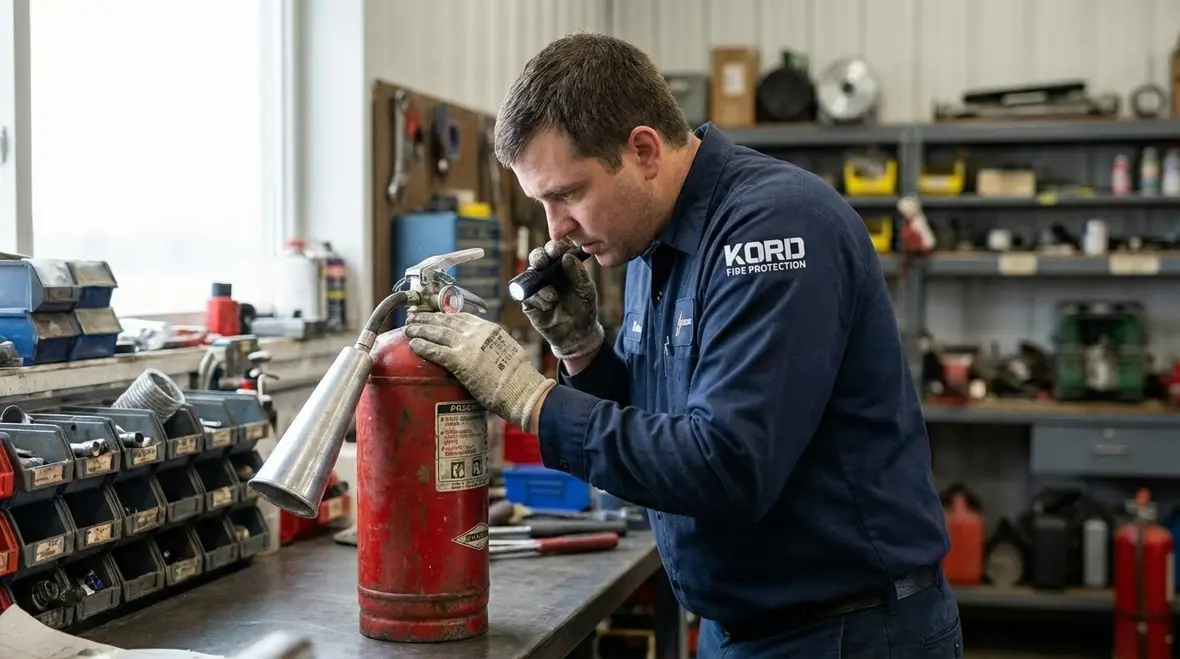
The phrase tear down might sound like technicians are taking a sledgehammer to safety gear. Thankfully, that image belongs in an action movie, not a service shop. In reality, a tear down is a controlled and methodical disassembly of the extinguisher to inspect its internal components.
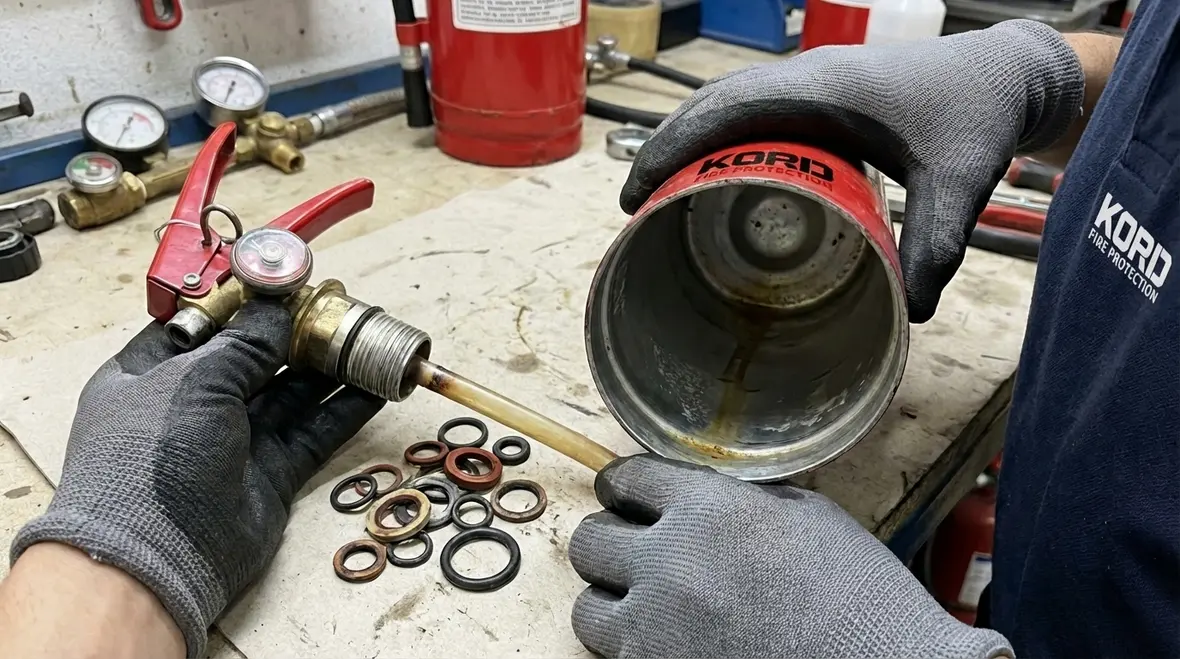
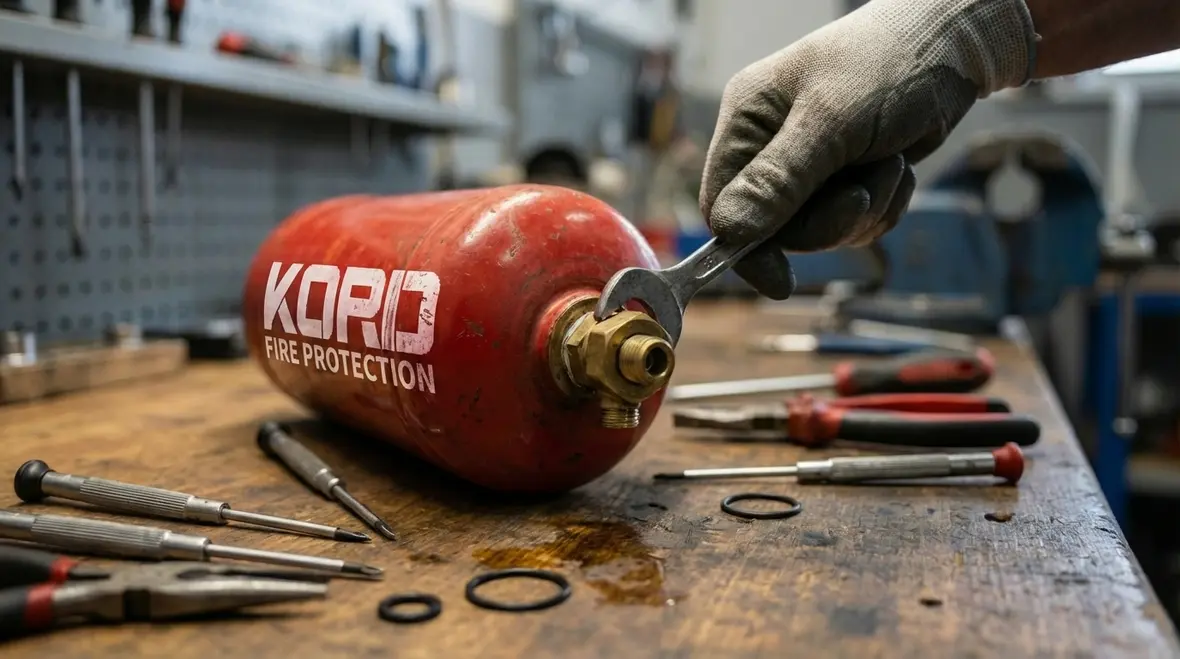
First, the technician safely depressurizes the extinguisher. Next, they remove the valve assembly from the cylinder. This step allows access to the internal parts that remain hidden during routine inspections. Because pressure vessels demand careful handling, trained professionals follow strict procedures to prevent injury or damage.
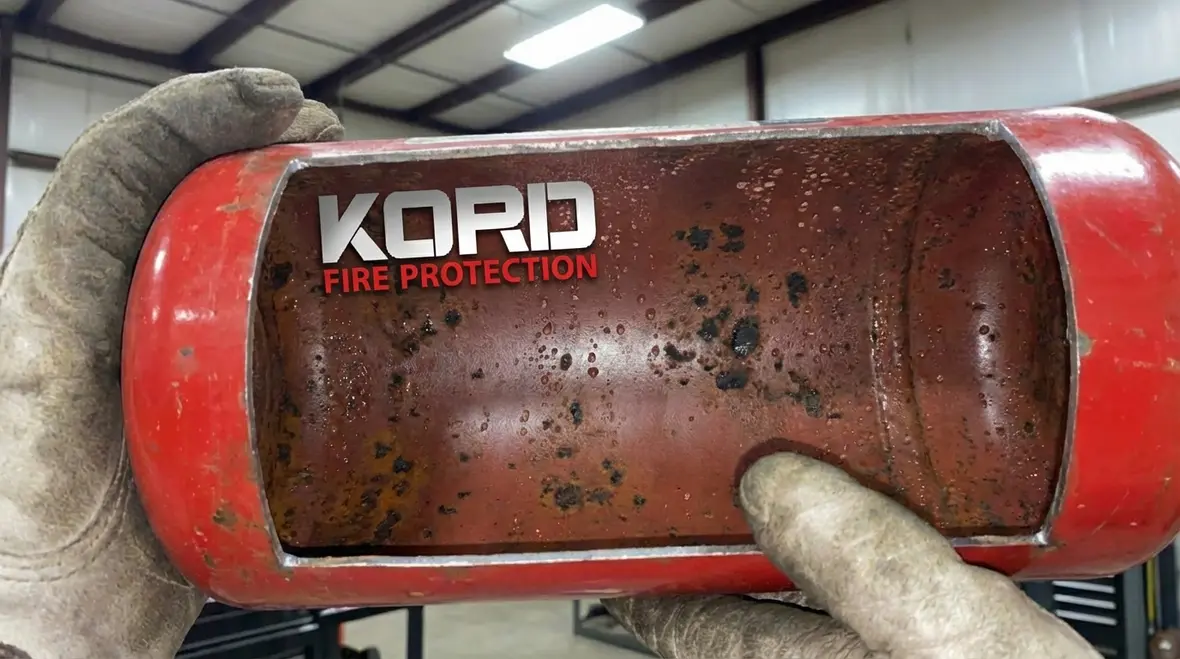
Once opened, the extinguisher is emptied of its dry chemical agent. The technician then examines the inside of the cylinder for corrosion, pitting, or moisture buildup. Even small signs of internal rust can weaken the cylinder wall over time. Therefore, identifying these issues early prevents future failure.
Meanwhile, the valve stem, spring, and sealing components receive close inspection. Rubber O rings and gaskets may harden or crack after years under pressure. Consequently, technicians often replace these small but critical parts during the service. It is a bit like changing the oil in a car. The parts are inexpensive, yet their role is essential.
After inspection and cleaning, the technician refills the extinguisher with new or properly conditioned dry chemical agent. Finally, they reassemble, repressurize, and test the unit to confirm proper function. The extinguisher then receives updated service labeling to document completion of the six year requirement.
When to consider replacement instead of rebuild
Sometimes, a tear down reveals damage or aging that makes rebuilding a poor investment. Deep corrosion, severe pitting, or damage to the cylinder itself can mean the safer and more cost effective option is to replace the extinguisher outright. Kord Fire’s expired fire extinguisher disposal and safety guide explains how to handle units that are past their useful life so that they are removed from service safely and responsibly.
Inside the Cylinder: What Technicians Look For
Many business owners ask what professionals actually search for during this internal exam. It is not guesswork. Instead, it is a structured evaluation guided by industry standards.
Column One: Internal Components Examined
- Cylinder Interior
Technicians inspect for corrosion, pitting, and residue buildup. Even slight rust can signal moisture intrusion. - Valve Assembly
The valve body must remain free of cracks or deformities that could cause leaks. - Siphon Tube
This tube draws the agent upward during discharge. If cracked or clogged, performance suffers. - O Rings and Seals
These parts maintain pressure. Over time, they lose flexibility and require replacement.
Column Two: Functional and Safety Checks
- Thread Integrity
Damaged threads can prevent a secure seal between valve and cylinder. - Agent Condition
Dry chemical powder must remain free flowing. Caked or compacted agent may not discharge evenly. - Pressure Capability
After reassembly, the unit must hold the correct internal pressure without leaks. - Label and Markings
Clear instructions and inspection records support compliance and safe use.
Because each of these elements affects performance, skipping the internal inspection would leave blind spots. Kord Fire Protection technicians often explain that the tear down reveals problems invisible from the outside. It is like checking the foundation of a house rather than just repainting the walls.
How This Service Differs From Annual Inspections
Some clients understandably ask why an annual inspection is not enough. After all, the extinguisher receives attention every year. However, annual maintenance focuses on external condition and basic function.
During a typical yearly visit, technicians confirm that the gauge shows proper pressure, the pin and tamper seal remain intact, and the unit has no visible damage. They also verify that the extinguisher sits in its designated location and remains accessible. These steps matter. Yet they do not involve opening the cylinder.
By contrast, six year fire extinguisher maintenance goes deeper. It involves emptying the agent, inspecting the interior, and replacing internal parts as needed. Therefore, it addresses long term wear that surface checks cannot detect.
Think of it like visiting a doctor. A routine checkup measures blood pressure and heart rate. Meanwhile, a more thorough procedure might involve lab work to examine what cannot be seen from the outside. Both services have value. However, they serve different purposes.
Connecting six year service to your existing schedule
Many businesses simplify things by working with a single provider for monthly inspection support, annual service, and long term testing. Kord Fire’s monthly inspection & annual service resources explain how those recurring visits work, while the dedicated Six Year Break Down/Tear Down service page focuses on exactly what happens during internal maintenance and how it fits into compliance requirements over the life of each extinguisher.
What Happens If This Maintenance Is Ignored
Ignoring required service may save time in the short term. Yet it can create serious risk later. Because extinguishers operate under pressure, neglected internal corrosion can weaken the cylinder. In extreme cases, structural failure may occur during discharge. No one wants that plot twist.
Moreover, compacted or contaminated dry chemical agent may not flow properly. When seconds matter, uneven discharge can reduce the effectiveness of the extinguisher. Consequently, a small, controllable fire could grow larger.
From a compliance standpoint, failure to perform six year internal service can result in citations during inspections. Insurance providers may also question maintenance records after a claim. Therefore, the cost of skipping service often exceeds the price of doing it correctly.
Kord Fire Protection technicians often remind clients that fire safety is not about optimism. It is about preparation. While everyone hopes never to use an extinguisher, readiness requires consistent care.
How Long Does Six Year Fire Extinguisher Maintenance Take?
Business owners frequently ask how this service affects operations. The good news is that trained professionals perform it efficiently. However, the timeline depends on the number of extinguishers and their condition.
For a small office with a handful of units, the process may take only a short visit. Larger facilities with dozens of extinguishers require more coordination. In many cases, service providers rotate units to ensure continuous coverage. As a result, the building never sits unprotected.
Because technicians must depressurize, empty, inspect, refill, and repressurize each unit, the process demands care rather than speed. Still, experienced teams streamline the workflow without cutting corners. Efficiency and thoroughness can coexist. It is not a myth, despite what some sitcom workplaces might suggest.
How To Know If Your Facility Is Due
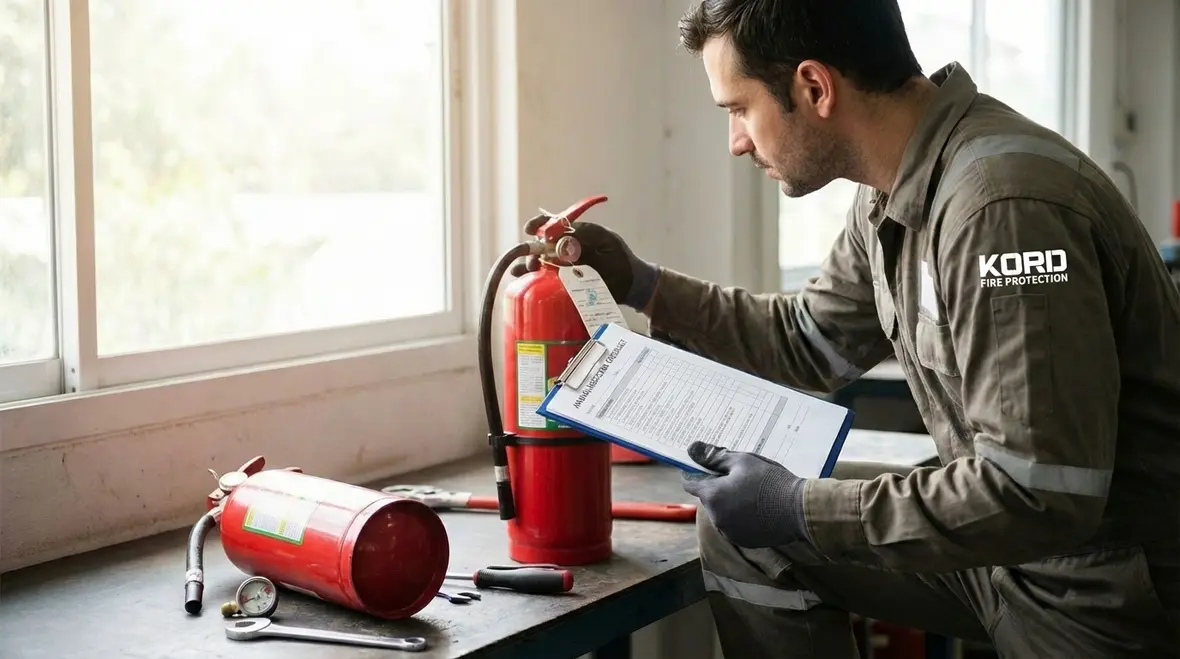
Determining whether a building requires six year service involves checking the manufacture date and maintenance records. Each extinguisher carries a label that documents prior inspections and internal exams. Therefore, reviewing these records provides clarity.
If the last internal maintenance occurred nearly six years ago, it is time to schedule service. Additionally, if documentation appears incomplete or missing, professionals can assess the unit and recommend next steps. Because compliance depends on accurate records, keeping organized documentation simplifies future inspections.
Kord Fire Protection technicians often advise facilities to track service dates digitally. While a paper tag works, digital reminders reduce the chance of oversight. After all, most people rely on smartphones for everything from grocery lists to streaming subscriptions. Fire safety deserves the same level of attention.
The Value Behind the Investment
Some decision makers focus first on cost. That is understandable. Budgets rarely stretch themselves. However, viewing six year internal maintenance as an expense misses the broader picture.
This service extends the life of the extinguisher. By replacing worn seals and refreshing the agent, technicians restore the unit to reliable condition. Therefore, businesses avoid premature replacement costs. In addition, documented compliance reduces liability exposure.
More importantly, functioning extinguishers protect employees, customers, and property. A small fire addressed quickly can prevent major damage and business interruption. Consequently, the return on investment extends beyond dollars. It reaches into continuity, reputation, and peace of mind.
As Kord Fire Protection technicians often explain, a fire extinguisher is a quiet guardian. It does not ask for attention often. Yet when it does, it deserves thorough care.
FAQ: Six Year Fire Extinguisher Maintenance
Conclusion: Protect What Matters Most
Fire safety does not demand daily attention, yet it does require timely action. Six year internal service keeps extinguishers ready for the moment no one plans for. Therefore, partnering with experienced professionals ensures compliance, reliability, and peace of mind. Kord Fire Protection technicians stand ready to guide facilities through every step. Schedule your service today, and let preparation replace uncertainty before an emergency ever begins.
If you are reviewing your broader extinguisher program, Kord Fire’s in depth Fire Extinguishers – The Masters Guide for 2025 is a helpful companion to this six year maintenance overview. When you are ready to book service or coordinate internal breakdowns across multiple locations, use the dedicated Six Year Break Down/Tear Down service page to request a quote and connect with the team that keeps your extinguishers inspection ready and response ready.
Know Your Weapon Before You Fight the Flame
Kord Fire Protection is your go-to when it comes to all things fire protection. For over 20 years, we’ve been serving Southern California with the quality service and equipment to keep your home or business safe at all times. Our competitive prices reflect our unwavering commitment to protecting what matters most in the event of a fire emergency. Give us a call, send an email, or use that form!

Join Our Newsletter!
Get the latest fire safety tips delivered straight to your inbox From our Newsletter.