NFPA 291 Section 4.1 and the Purpose of Water Flow Testing for Fire Protection
Quick Answer: Water flow testing checks how much water a hydrant or supply line can deliver during a fire. It helps fire systems match real site conditions, supports safe design, and confirms available pressure and flow. It also gives teams the hard numbers they need before they trust a system with a very serious job.
In the fire protection world, the purpose of hydrant flow testing is simple: find out what water is truly available before a fire ever shows up uninvited. NFPA 291 Section 4.1 focuses on that exact job. It helps teams measure water supply, pressure, and flow so fire systems can perform as planned. For industrial plants, retail centers, warehouses, offices, and mixed commercial facilities, this is not just a nice checkup. It is a practical safeguard, and one that can save a system from looking good on paper while acting like a sleepy extra in the final scene.
That is where Kord Fire Protection can step in as a vital partner. Their full fire protection services support facilities that need testing, reporting, and follow through without turning the process into a scavenger hunt. With the right testing, reporting, and support, a site can better understand its water supply and make smart decisions for fire safety, compliance, and system performance. ([kordfire.com](https://kordfire.com/full-fire-protection-services/?utm_source=openai))
What NFPA 291 Section 4.1 means in plain language
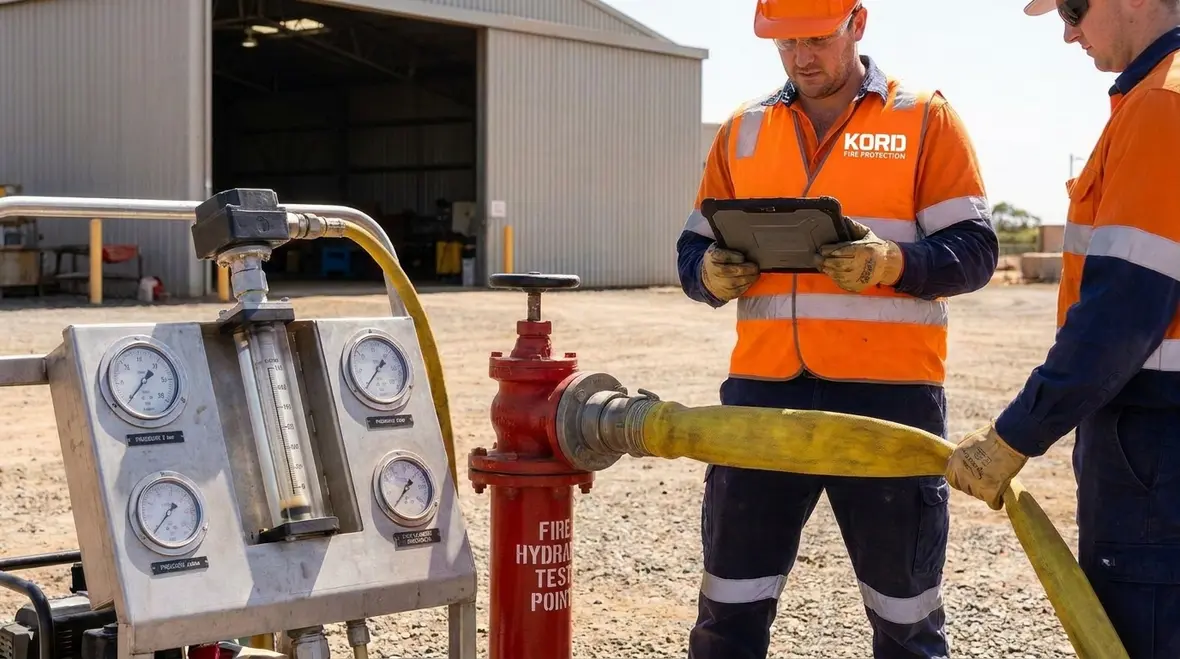
NFPA 291 Section 4.1 explains why water flow testing matters. It gives fire protection teams a way to check how much water a hydrant system can deliver and how well it performs under demand. In simple terms, it asks one basic question: if fire needs water right now, how much is actually there?
This matters because real water supply often differs from expected supply. A system may look strong on drawings, yet pressure can fall once water moves through pipes, pumps, valves, and mains. Therefore, flow testing helps confirm real world performance instead of relying on guesses. And in fire protection, guesses are about as useful as a chocolate teapot.
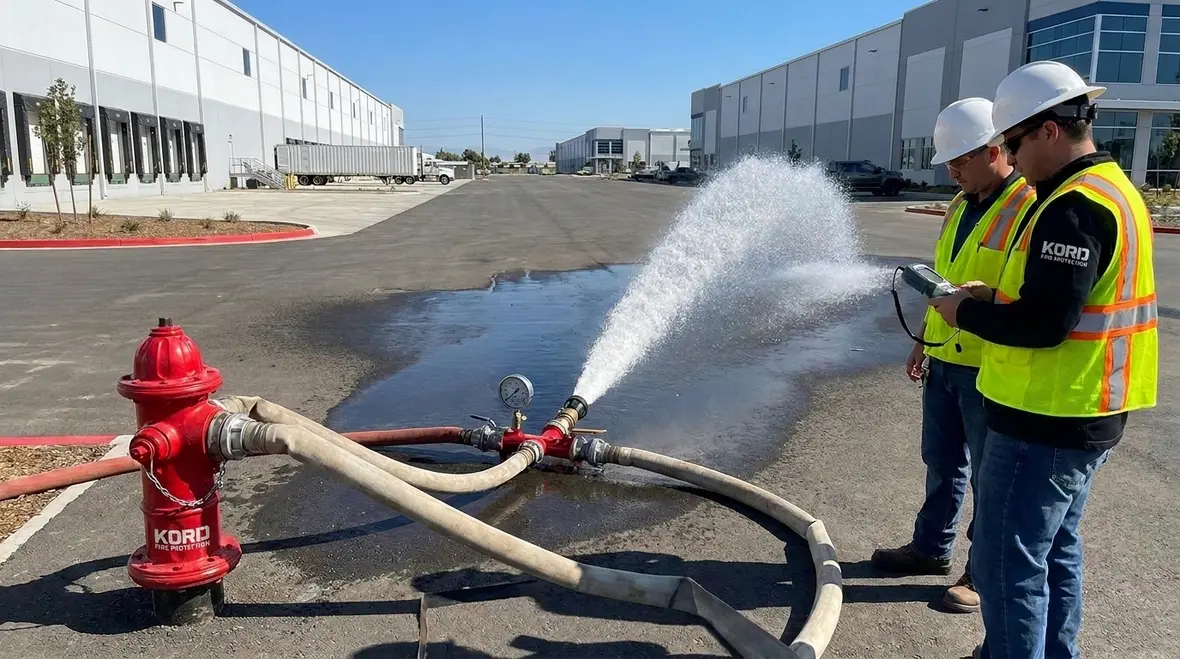
Kord Fire Protection’s own guidance on hydrant flow testing explains that a proper test measures static pressure, residual pressure, and flow rate so teams can see how the system behaves once demand is applied. That is the difference between assuming the hydrant is ready and actually knowing what it can deliver. ([kordfire.com](https://kordfire.com/fire-hydrant-flow-test-guide-to-water-pressure/?utm_source=openai))
Why the numbers matter before system design starts
Before engineers size pipe, review pump needs, or validate sprinkler demand, they need water supply data that reflects the real site. Old assumptions can age badly. Infrastructure changes, municipal conditions shift, and site demand rarely sends a courtesy email first. Flow testing gives the project team a current snapshot so fire protection decisions rest on evidence instead of vibes, which is reassuring because nobody wants their emergency water supply evaluated like a horoscope. ([kordfire.com](https://kordfire.com/fire-hydrant-flow-test-guide-to-water-pressure/?utm_source=openai))
The purpose of hydrant flow testing in fire protection planning
The purpose of hydrant flow testing goes beyond checking a box. It supports better planning for suppression systems, hydrant coverage, and site risk review. Also, it helps engineers and facility teams understand whether the current water supply can support the fire load on site.
This kind of testing can support:
- System design for new builds and upgrades
- Verification of available water supply
- Assessment of hydrant performance
- Review of pressure loss in the network
- Better decisions for pumps, tanks, and storage needs
- Coordination between site teams, consultants, and compliance stakeholders
Because industrial and commercial sites often have changing demands, this testing gives teams a clear view of current capability. Then they can plan with facts rather than hope, which is a much better business model than “let’s cross our fingers and call it strategy.”
Kord Fire’s related articles consistently frame flow testing as a way to turn unknowns into clear numbers and confident decisions. That is especially useful when the question is not whether water exists, but whether enough water exists under real fire demand. ([kordfire.com](https://kordfire.com/fire-hydrant-flow-test-guide-to-water-pressure/?utm_source=openai))
Where flow data influences real site decisions
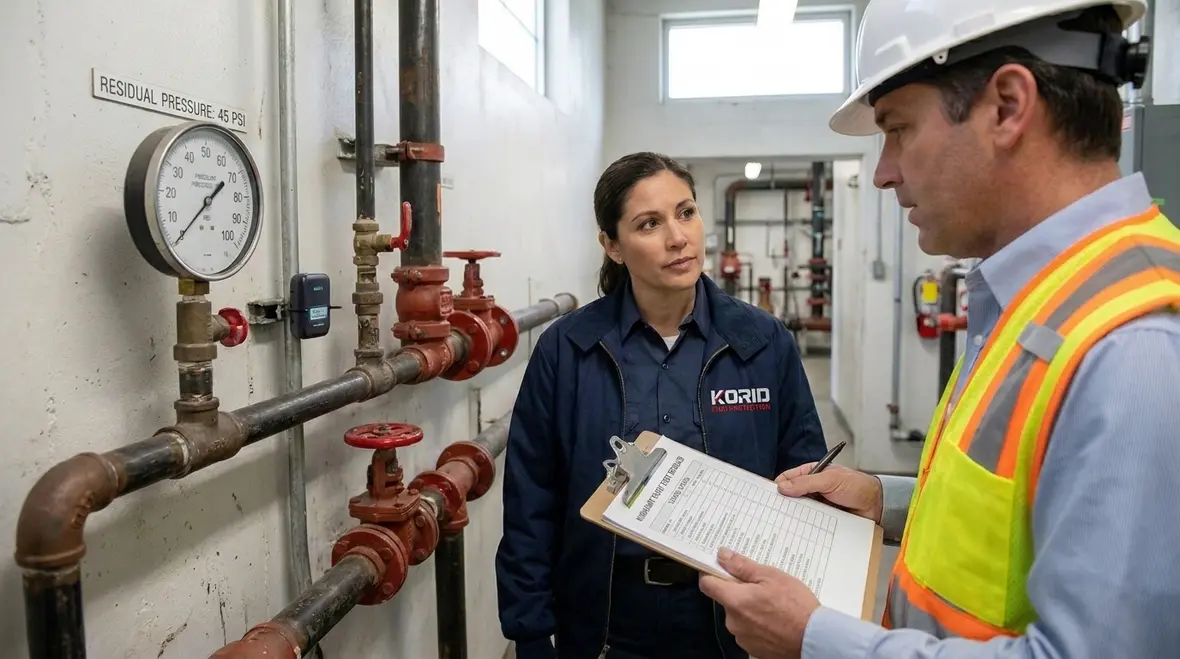
Flow test data affects more than one line on a report. It can influence hydrant placement assumptions, sprinkler system calculations, standpipe strategy, fire pump review, and emergency planning. If the residual pressure drops too far during discharge, the site may need changes to improve reliability. If the numbers are healthy, teams can move ahead with more confidence and less dramatic eyebrow raising in meetings. Kord Fire’s broader system design content also points to flow testing as part of comprehensive fire protection planning. ([kordfire.com](https://kordfire.com/designing-a-comprehensive-fire-protection-system/?utm_source=openai))
How water flow testing supports compliance and risk control
Water flow testing helps a site stay aligned with fire safety expectations and risk management goals. Although standards and local requirements can vary, the test often supports documentation, due diligence, and system review. As a result, facility managers can show that they have checked the water supply used by fire protection systems.
In practice, the test helps answer these questions:
| Question | Why it matters |
| How much water can the hydrant supply? | It shows whether the site can meet fire demand. |
| What pressure is available during flow? | It helps predict system performance under use. |
| Does the supply support current risk levels? | It helps protect staff, assets, and operations. |
| Will upgrades or layout changes affect demand? | It helps teams plan before small issues become expensive ones. |
Because fire risk can change as buildings grow, tenants shift, or plant layouts change, this process should not be treated like a one time event. Instead, it should sit inside a regular fire safety plan.
Kord Fire Protection’s service and blog content both emphasize clear reporting, practical recommendations, and testing that fits live site conditions. That combination matters because risk control only works when the information is understandable enough to act on. ([kordfire.com](https://kordfire.com/exterior-fire-hydrant-flow-testing-for-commercial-sites/?utm_source=openai))
Why compliance is not the only reason to test
Compliance may get the calendar invite, but resilience is the real reason to care. A test can expose undersized mains, aging infrastructure, partially closed valves, or pressure losses that would stay hidden until a real emergency. Discovering those issues during planned testing is inconvenient. Discovering them during a fire is the sort of plot twist nobody asked for.
What a proper test shows on site
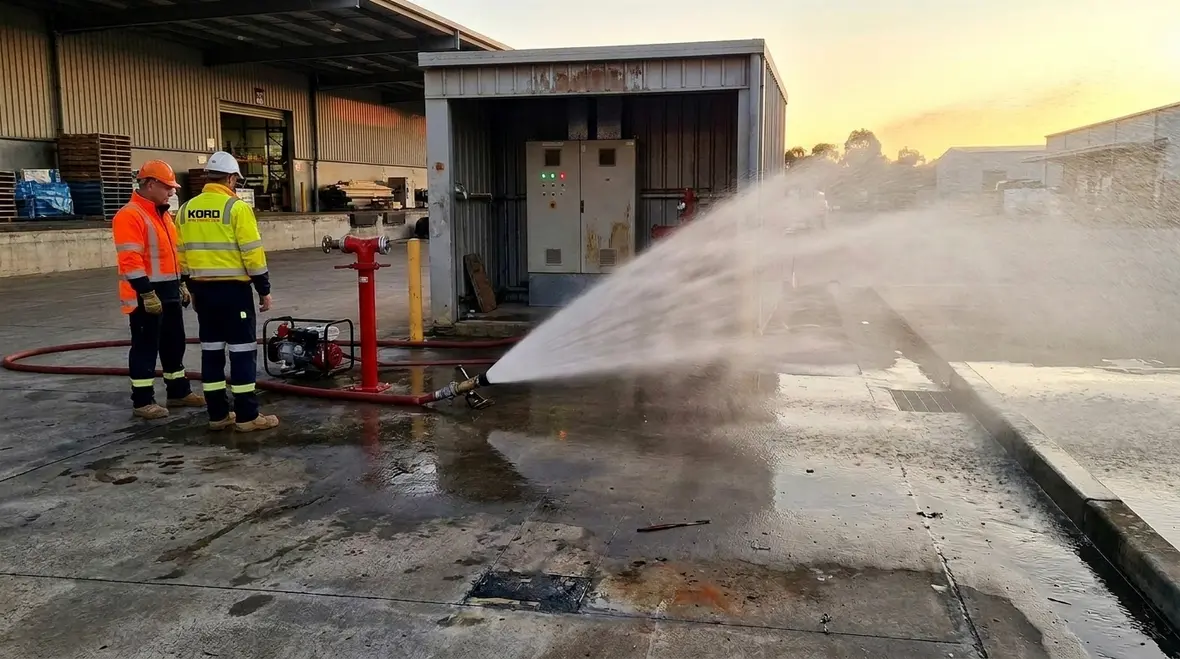
A proper hydrant flow test does more than collect numbers. It reveals how the water supply behaves in real conditions. For example, it can show static pressure before flow starts, residual pressure during flow, and the amount of water that can move through the system.
These results can highlight weak points, such as old mains, undersized pipes, or pressure loss across long runs. In addition, they can show whether a fire pump or water storage setup needs review. That makes the test a powerful planning tool for sites with complex operations, such as warehouses, food processing plants, shopping centers, logistics hubs, and large office sites.
Kord Fire’s hydrant testing material describes the process as reading the pulse of the water system. That is a useful comparison because the test does not just ask whether water exists. It asks how the system responds when it is expected to perform under stress. ([kordfire.com](https://kordfire.com/fire-hydrant-flow-test-guide-to-water-pressure/?utm_source=openai))
And yes, the data can also stop awkward surprises. No one enjoys discovering a weak water supply after the site already has a hot date with a fire inspector.
How Kord Fire Protection can help
Kord Fire Protection can become a vital partner by handling testing with care, skill, and a clear focus on site needs. Because industrial and commercial facilities often deal with tight schedules and active operations, they need a service provider that understands both safety and downtime pressure.
Kord Fire Protection can support the process by:
- Planning the test around site operations
- Carrying out hydrant flow testing with the right equipment
- Recording clear results for review and reporting
- Helping interpret what the results mean for fire protection
- Supporting follow up work where upgrades or repairs may be needed
- Connecting testing findings to broader site fire protection priorities
As a result, the site gains more than a test report. It gains a partner that can help turn raw data into practical action. That kind of support matters when a facility must protect people, stock, equipment, and uptime at the same time. Kord Fire’s exterior hydrant testing page and full services page both reinforce that focus on practical recommendations and broader protection support. ([kordfire.com](https://kordfire.com/exterior-fire-hydrant-flow-testing-for-commercial-sites/?utm_source=openai))
For readers who want a closely related reference after this article, Kord Fire also has an NFPA 291 fire hydrant testing and marking guide that fits naturally with the same topic and helps extend the conversation beyond raw flow numbers. ([kordfire.com](https://kordfire.com/exterior-fire-hydrant-flow-testing-for-commercial-sites/?utm_source=openai))
Why industrial and commercial sites should care
Industrial, retail, and commercial sites face varied fire risks. Some deal with high fuel loads, while others manage crowded public spaces, sensitive equipment, or critical production areas. Therefore, the purpose of hydrant flow testing becomes even more important because each site needs water supply data that matches its own layout and risk profile.
Also, local conditions can affect performance. Distance from mains, aging infrastructure, site expansion, and changing water demand can all influence results. So, a flow test helps decision makers stay ahead of problems instead of reacting after the fact. That approach protects more than compliance. It protects business continuity, which is the real prize hiding behind the paperwork.
A small test with large consequences
On the surface, a flow test can look simple. Open hydrants, take readings, do calculations, file the report. But the consequences travel much farther. The results may affect fire system confidence, upgrade budgets, insurance conversations, design assumptions, and emergency readiness. That is why this modest sounding exercise keeps showing up in serious planning discussions. It may be one test, but it answers a surprisingly large number of expensive questions.
FAQ
Final take on fire water readiness
The purpose of hydrant flow testing is to prove water supply before an emergency tests it for real. For industrial, retail, and commercial facilities, that proof supports smarter design, better compliance, and stronger protection. It gives teams the confidence to plan around facts, not assumptions, and that confidence is worth quite a lot when the stakes include people, property, operations, and reputation.
Kord Fire Protection can help make the process clear, smooth, and useful through testing support, reporting, and practical follow through. If a site wants confidence in its hydrant supply, it is time to test, review, and act before the sirens start singing. For a wider look at connected fire protection support, Kord’s services and related hydrant resources are a natural next step. ([kordfire.com](https://kordfire.com/exterior-fire-hydrant-flow-testing-for-commercial-sites/?utm_source=openai))

Join Our Newsletter!
Get the latest fire safety tips delivered straight to your inbox From our Newsletter.