Commercial Fire Extinguisher Placement with Kord Fire Protection
Quick Answer: Strategic placement for commercial fire extinguishers starts with risk, travel distance, and site layout. Teams map hazards, identify likely fire growth, and install units so occupants can reach them fast and safely. With the right plan, kord fire protection can coordinate inspections, signage, and upgrades, helping facilities stay compliant and ready.
In many Australian workplaces, effective commercial fire extinguisher placement is not a box-ticking exercise. It is a practical decision that protects staff, customers, assets, and downtime budgets. In the rest of this guide, a facilities team learns how to place extinguishers the right way across industrial sites, retail floors, and commercial buildings. Then, importantly, it explains how kord fire protection becomes a vital partner for ongoing service, inspection readiness, and smarter fire safety planning. Because nobody wants to discover their extinguisher is either hidden, inaccessible, or out of date. That is not a fun surprise, unless the surprise is winning the lotto.
Near the top of any serious placement strategy, it also helps to connect with professional fire extinguisher service and certification support so placement, inspection, and ongoing readiness all stay tied together instead of drifting into separate jobs.
Know the site risks before placing anything
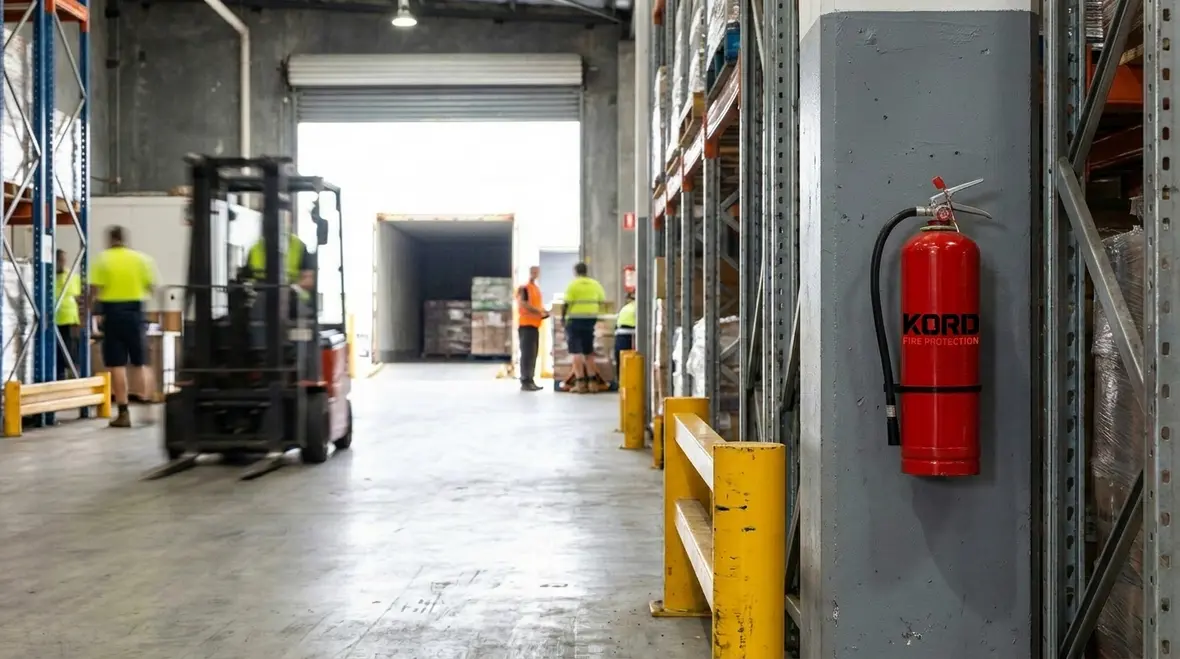
First, a competent service team starts by understanding where fires can start and how they spread. In warehouses, that means racking areas, loading bays, battery charging zones, and drum storage. In retail, it often involves electrical panels, kitchen or break-room areas, cashier zones, and back-of-house storage. In offices and mixed-use commercial spaces, it tends to concentrate around plant rooms, server areas, and corridors with higher traffic.
Next, they match extinguisher types to the likely fuel and hazard. For example, ordinary combustibles may need a different approach than flammable liquids or energized electrical risks. However, placement and type must work together. A correctly rated extinguisher sitting behind a locked door does not help anyone, and it definitely does not stop a fire from doing what fires do: spreading like a rumor at a corporate meeting.
After that, facilities teams should consider how long occupants can realistically walk to reach equipment during an emergency. People move slower when smoke appears. Therefore, placement decisions should account for visibility, travel paths, and likely blockages. Kord Fire’s own placement resources consistently emphasize that good extinguisher strategy follows the layout, the risk level, and the travel paths people actually use, while accessibility and visibility stay central to the decision. ([kordfire.com](https://kordfire.com/fire-extinguisher-placement-guide-basics-for-safety/?utm_source=openai))
Why risk mapping comes before wall mounting
If a team skips this step, the entire plan starts leaning on assumptions. Assumptions are great for guessing who stole the last biscuit from the break room. They are not great for emergency response. A proper hazard review helps teams decide not only how many extinguishers may be needed, but also where each one actually earns its spot.
Plan coverage using exits, corridors, and practical access
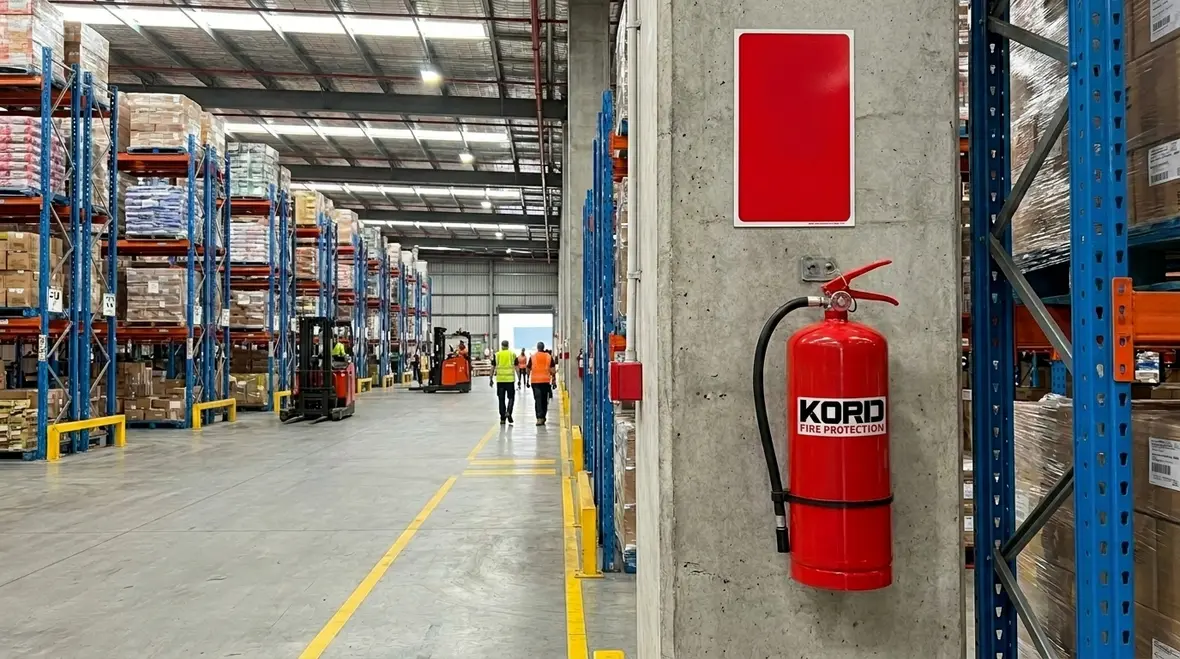
Once the risks are clear, the next step is mapping access routes. A well-designed plan places units along travel paths so staff can reach them without weaving through danger. In corridors, that often means positioning near doorways or at turning points, not only at the ends. In large open areas, units should support walk-to-point access rather than relying on everyone to sprint to a single location.
Additionally, teams should keep extinguishers where they remain visible and reachable. Avoid hiding them behind displays, stacking them behind pallets, or mounting them behind ladders. In Australian commercial settings, it is common for fit-outs to change. Therefore, placement plans must stay aligned with current layout, not last year’s layout, and definitely not the “we will fix it later” layout.
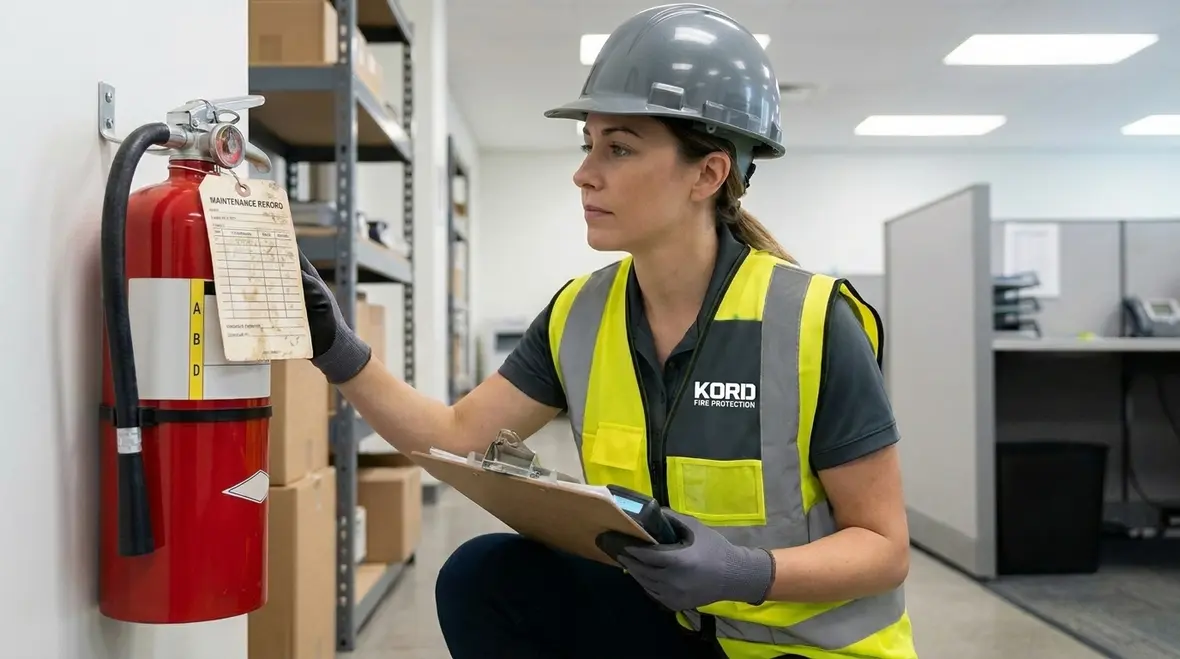
They should also consider height and mounting position, so people can quickly lift the unit and operate it. If the extinguisher becomes awkward to reach, it can delay response at exactly the wrong time. Kord Fire’s placement guidance notes that technicians verify access routes, avoid blocked corners, and treat doors, rails, and nearby equipment as meaningful placement factors rather than minor details. ([kordfire.com](https://kordfire.com/fire-extinguisher-placement-guide-basics-for-safety/?utm_source=openai))
Finally, coverage should align with the intended response. If employees are expected to use portable extinguishers, then access matters as much as rating. If they cannot access it fast, the plan fails even if the extinguisher is the right one.
Visibility beats technical correctness alone
A unit can be technically present and still practically useless. That is why visible, repeatable placement near natural movement routes matters so much. People under stress do not want a scavenger hunt. They want the extinguisher where common sense says it should be. Kord Fire makes the same point in several placement articles, warning that hidden or obstructed extinguishers still leave a facility exposed. ([kordfire.com](https://kordfire.com/fire-extinguisher-placement-for-complete-safety-coverage/?utm_source=openai))
Use extinguisher spacing logic that matches the hazard load
Strategic placement relies on more than “one per room.” A facility needs spacing logic that reflects hazard intensity and fire growth potential. For example, a high-risk storage area with denser combustibles requires tighter coverage than a low-risk office zone. In retail, storage rooms and loading areas can behave very differently from the shop floor.
Also, teams should think about where people actually work and move. A placement plan that follows foot traffic reduces reaction time. Conversely, a plan that ignores movement patterns turns a safety system into a scavenger hunt. Fire safety should not include hidden quests.
Then, teams must handle special situations. Large machinery rooms, plant areas, and workshops often contain obstructions that block access. Therefore, units should be positioned so occupants can reach them without crossing likely fire pathways. Likewise, areas with frequent vehicle movement should prevent accidental damage to mounted units and ensure equipment remains in serviceable condition.
Spacing should follow how the building behaves
That logic lines up with Kord Fire content across office, warehouse, and general placement guides, where technicians repeatedly connect coverage decisions to risk concentration, occupant movement, and realistic access conditions rather than generic room counts. ([kordfire.com](https://kordfire.com/fire-extinguisher-placement-for-office-guide/?utm_source=openai))
Choose locations that survive real-world changes
Commercial sites across Australia evolve. Fit-outs get updated, racking changes, seasonal stock arrives, and offices get reconfigured. If placement decisions do not anticipate change, extinguishers drift out of ideal locations and service teams spend time “catching up” instead of preventing issues.
To keep placement stable, teams should create a practical review rhythm. They can align reviews with refurbishments, changes in storage arrangements, and any update to building occupancy. Additionally, they should check that signage remains clear and that the extinguisher stays accessible from the normal travel path.
This is where commercial fire extinguisher placement becomes a management system, not a one-time install. A facility should document what is where, why it is there, and how it matches the hazard profile. When the layout changes, the documentation guides quick adjustments so the safety plan stays current.
Even the best plan benefits from ongoing service checks. If mounting brackets, hose integrity, or pressure indicators degrade, the extinguisher might look fine until the moment it matters. Preventive service keeps the equipment reliable rather than hopeful. Kord Fire’s service page states that its technicians install, test, inspect, repair, and service commercial and industrial fire extinguishers, and that they provide a fire protection plan intended to keep extinguishers and their place of installation compliant. ([kordfire.com](https://kordfire.com/fire-extinguisher-service-certification/?utm_source=openai))
How kord fire protection supports placement and ongoing readiness
Strategic placement only works if the extinguisher system stays maintained and aligned with site reality. That is why kord fire protection can become a vital partner for this service and job. They help facilities move from “we installed units” to “we can prove readiness, stay compliant, and respond with confidence.”
First, kord fire protection supports sites with practical inspection and service schedules. They help teams track the health of each unit, so staff do not discover defects during an emergency drill or the next audit cycle. They also assist with correcting accessibility issues, damaged signage, and placement drift caused by refurbishments.
Second, they align fire protection planning with operational realities across industrial, retail, and commercial settings. Warehouses, workshops, and busy shop floors do not behave like quiet office corridors. Therefore, service teams plan around real access patterns, maintenance constraints, and risk changes.
Third, kord fire protection helps facilities document what is installed and where, which improves decision-making. When management asks “Are we covered properly now?” the answer becomes grounded in facts, not guesswork. And in business, guesswork is how budgets go missing. That is before anyone even jokes about it.
In short, kord fire protection strengthens the placement strategy by keeping equipment reliable, visible, and supported over time. Kord Fire’s own resources reinforce this broader approach by connecting placement with inspection, installation, compliance support, signage, and access reviews rather than treating mounting as a one-off task. ([kordfire.com](https://kordfire.com/fire-extinguisher-placement-and-accessibility-by-kord/?utm_source=openai))
Common placement mistakes in Australian facilities
Even well-intentioned teams can slip up. One common mistake is placing extinguishers only near exits, ignoring internal hazard pockets. While exits matter, many fires start deeper inside areas where staff spend time. If units sit only at the door, occupants may not reach them before conditions worsen.
Another mistake involves blocking and clutter. Temporary stock, promotional displays, and maintenance equipment can cover units or make them difficult to access. Over time, these barriers form like dust bunnies, except the consequences are more serious than a messy floor.
Facilities also sometimes install units in locations that fit the original layout but fail after changes. Racking updates, partition moves, and new equipment can create blind spots or obstruct access routes. A good placement plan includes review triggers so changes do not quietly weaken coverage.
Finally, teams can overlook correct mounting and signage. If an extinguisher sits too high, too low, or without clear guidance, people waste seconds. Seconds are expensive. They are also the difference between “small incident” and “major event.” Kord Fire articles repeatedly flag blocked access, hidden placement, poor visibility, and inconsistent coverage between hallways and deeper rooms as recurring problems that slow response. ([kordfire.com](https://kordfire.com/fire-extinguisher-placement-and-accessibility-by-kord/?utm_source=openai))
Quick featured FAQs
Next steps for safer coverage
Strategic placement for commercial extinguishers works best when it starts with risk mapping and stays current through change. Facilities across Australia should review access routes, hazard pockets, and visibility, then support the plan with reliable service.
Reach out to kord fire protection to strengthen readiness, keep equipment dependable, and ensure your fire safety approach holds up when it matters most.

Join Our Newsletter!
Get the latest fire safety tips delivered straight to your inbox From our Newsletter.