NFPA 1 Wharf Flammable Liquid Marine Terminal Code
Quick Answer
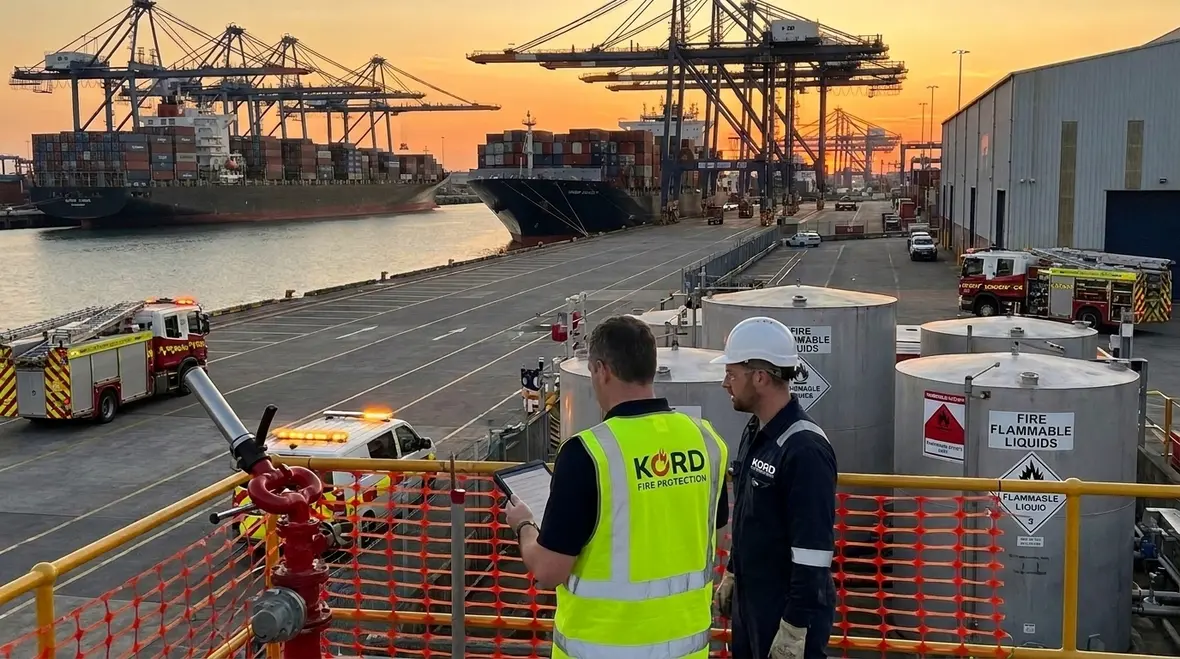
NFPA 1 Section 66.29 lays out essential fire protection standards for wharf flammable liquid operations at marine terminals. It covers hazard assessment, ventilation, ignition control, storage practices, and emergency planning. Kord Fire Protection can become a vital partner by delivering expert assessment, design, installation and ongoing on site support to help facilities meet these requirements with confidence.
Facilities dealing with dockside hazards may also benefit from a broader look at fire suppression for port and terminal equipment, especially where mixed ignition sources and exposed outdoor conditions make protection planning more demanding.
Introduction to the NFPA 1 wharf flammable liquid marine terminal fire code
At busy docks and port facilities, safety is a steady voyage not a one off event. The NFPA 1 wharf flammable liquid marine terminal fire code is the compass that guides every step from risk assessment to response. For Australian industrial, retail and commercial sites it translates into practical procedures that fit local operations while upholding global best practices. The aim is to protect workers, ships and assets without slowing down commerce. Think of the code as a steady lighthouse guiding teams through the fog of complex containers, vapors and moving machinery.
For readers who want the wider context behind this section, Kord Fire Protection also breaks down the broader code framework in NFPA 1: A Comprehensive Guide to Fire Prevention and Safety.
What NFPA 1 Section 66.29 Wharf Flammable Liquid Operations covers
This section focuses on safe handling of flammable liquids at the wharf and in adjoining terminals. It requires clear hazard identification and control, proper storage and segregation, reliable ignition source control, and robust fire protection systems. It also calls for clear communication of procedures, routine maintenance, and drills so that response times stay sharp when pressure rises. In practice, this means engineered ventilation, reliable fuel and vapor detection, accessible firefighting equipment, and practical housekeeping that keeps ignition risks low.
The code in plain dockside language
In other words, the code expects facilities to know what can burn, where vapors can collect, what might spark, and how crews will respond when something goes sideways. That sounds simple until wind, salt air, traffic, pumps, and vessel schedules all join the party at once.
Key requirements for marine terminal safety and operations
Facilities must perform risk assessments that consider weather, ship operations, and traffic on docks. They need fixed and portable fire protection systems that can operate under port conditions. Procedures should address hot work, leaks, spills, and pumping operations. Training must be ongoing, with drills that test alarm response and coordination with local emergency services. In Australia these measures align with national and state guidance while keeping pace with evolving vessel standard practices, ensuring the approach remains practical and enforceable.
What strong compliance usually looks like
- Documented hazard reviews for transfer points, storage zones, and dockside activity
- Protection systems suited to flammable liquid risks rather than a one size fits all setup
- Controls for hot work, ignition sources, and maintenance tasks
- Emergency coordination that does not begin five minutes after the emergency starts
The role of Kord Fire Protection as a trusted partner
Kord Fire Protection helps industrial, retail and commercial sites across Australia meet the NFPA 1 wharf flammable liquid marine terminal fire code with clarity. The team conducts thorough site surveys, reveals hidden hazards, and helps design systems that fit the real world on a dock. They assist with documentation that regulators request and provide training so crews act quickly when alarms sound. With Kord on the team, facilities gain a calm, reliable ally who translates a dense code into clear steps and practical actions.
Where foam protection is part of the strategy, related planning can be explored further in layered fire protection system for flammable liquids, which fits naturally with wharf environments where hazards rarely stay politely in one place.
Practical steps for Australian facilities to implement safe wharf operations
First, complete a risk inventory that includes vapors, ignition sources and near by electrical systems. Next, verify ventilation, gas detection and adequate extinguishing capability, making sure equipment is accessible in adverse weather. Then establish clear procedures for routine operations and specifically for hot work and maintenance. Finally, set up a training program with regular drills and performance reviews so procedures stay current and personnel stay confident.
Column A
Focus on risk control and documentation. The aim is to have a clear, written plan that covers hazard assessment, equipment maintenance, and incident reporting. Coordination with port authorities and emergency responders should be included in the plan.
Column B
Emphasize hands on readiness and training. Regular drills, staff briefings, and equipment familiarization ensure that when a real event happens the team moves with calm precision similar to a seasoned orchestral conductor guiding a performance.
FAQ
Conclusion and call to action
Adhering to the NFPA 1 wharf flammable liquid marine terminal fire code is a steady course for safer operations. With Kord Fire Protection as a trusted partner, facilities gain expert assessment, tailored system design and practical training that keeps everybody safe and operations steady. Contact Kord today to map a clear path from risk review to ongoing compliance and improved performance on the dock. Your team deserves a safe harbor.

Join Our Newsletter!
Get the latest fire safety tips delivered straight to your inbox From our Newsletter.