NFPA 1 LP Gas Propane Fire Code Compliance Australia
Quick Answer
NFPA 1 LP Gas propane equipment appliances fire code sets safety rules for industrial propane systems, covering storage piping venting and inspections. This article outlines key requirements and shows how Kord Fire Protection can become a vital partner to keep facilities across Australia compliant and safe through design installation and ongoing maintenance.
For facilities reviewing broader gas safety and fire protection systems early, Flamefast gas safety and fire protection systems fit naturally into the conversation because they help show how detection control and shutdown strategies support propane risk management.
Introduction
Industrial propane systems demand careful planning and steady compliance. The NFPA 1 LP Gas propane equipment appliances fire code provides the baseline standards for how propane is stored handled and maintained in commercial and industrial facilities. By outlining clear rules for equipment placement piping materials ventilation and regular testing the code helps prevent leaks fires and explosions. Facilities across Australia benefit when these standards are translated into practical site practices and ongoing safety programs. Kord Fire Protection offers a comprehensive pathway from assessment to certification delivering guidance installation and ongoing support so operations can focus on productivity while safety stays at the heart of every decision. In short the code acts like a steady compass even when the workday feels like a high stakes heist in a sci fi movie. Kord Fire Protection stands ready to guide every step with calm clarity.
For readers wanting the wider prevention picture, NFPA 1 a comprehensive guide to fire prevention and safety adds useful context around how code based fire safety thinking supports day to day operations.
Understanding the NFPA 1 LP Gas propane equipment appliances fire code in practice
The scope of the NFPA 1 LP Gas propane equipment appliances fire code reaches all areas where propane is used stored or transported within a facility. It covers outdoor and indoor storage as well as portable cylinders and fixed equipment. The code sets rules on clearances from walls and heat sources and mandates proper pipe sizing materials and shut off devices. It requires venting to protect spaces from gas accumulation and sets criteria for leak detection systems and alarm integration. Documentation training and competent personnel are part of the package all aiming to reduce risk and improve response times. For Australian sites this means translating national and local permit requirements into a practical plan that fits the site layout and operating hours.
What this means on real sites
In practice compliance is not just about where the tank sits or which pipe gets installed. It is about how the whole propane system behaves under normal use maintenance shutdowns and emergencies. That means layout decisions documentation and response planning all need to work together rather than living in separate folders that only meet during an audit.
Compliance Essentials for Industrial and Commercial Sites
Key compliance steps include conducting a site risk assessment mapping propane flows and identifying critical control points. Proper storage means guarded areas with approved containers and correct separation distances from ignition sources. Piping and fittings must be compatible with LP Gas and protected from physical damage. Clear labeling signage and emergency shutoff locations must be visible to staff. Regular inspections and maintenance schedules are mandatory and records kept for audits. Training programs ensure workers know how to handle cylinders safely and how to respond in a gas release event. When these pieces come together the risk profile drops and confidence rises.
Core compliance priorities
- Risk assess the full propane process from delivery to point of use
- Protect storage and piping from ignition sources and physical damage
- Keep labeling signage and shutoff points obvious and accessible
- Schedule inspections maintenance and recordkeeping for audit readiness
- Train staff so emergency actions are fast clear and repeatable
Preventive Maintenance for Safe Propane Systems
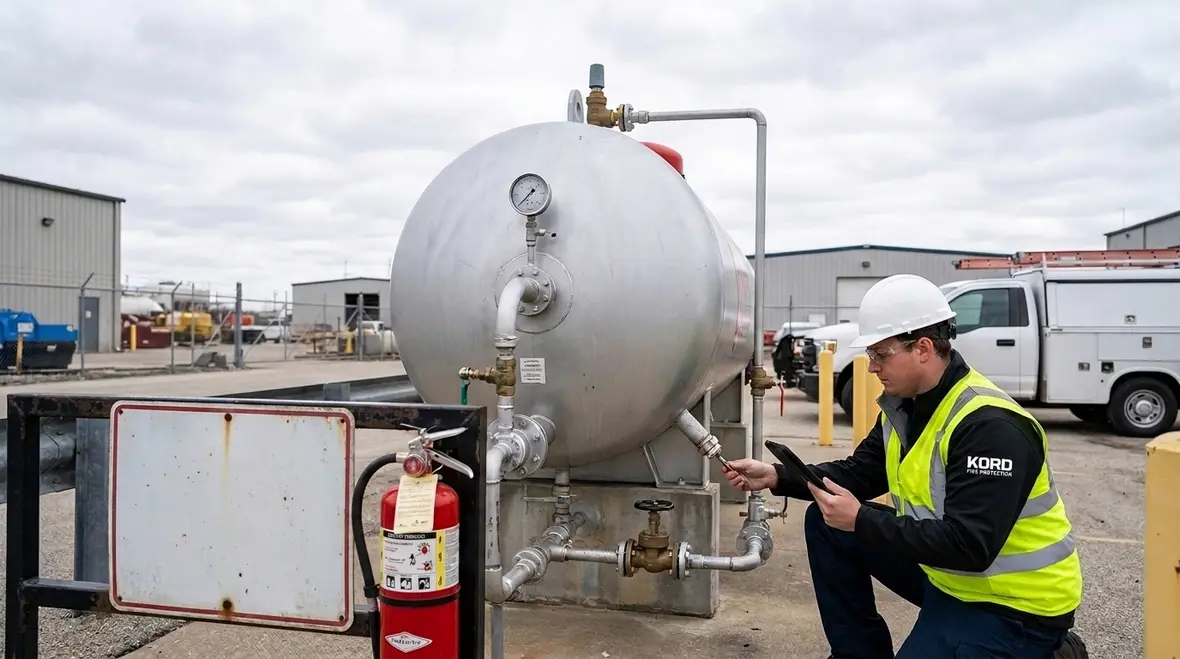
A proactive maintenance plan keeps systems reliable. Routine checks should verify valve operability regulator performance and hose integrity. Leaks are identified with calibrated detectors and periodic pressure tests confirm containment. Regulators and seals are inspected and replaced as needed. Electrical components associated with gas systems get attention to ensure they do not create ignition sources. Documentation of each service visit is essential for traceability and future planning. With regular care propane systems run smoothly reducing downtime and protecting people and property.
Why maintenance matters
Small faults in propane systems rarely send a polite calendar invite before they become serious. Routine servicing helps catch wear drift and damage early so issues can be corrected before they turn into leaks downtime or the kind of incident nobody wants replayed in the next toolbox talk.
Kord Fire Protection as a Trusted Partner
Kord Fire Protection brings experience across industrial retail and commercial facilities to every project. They begin with a thorough assessment of site needs and existing equipment then map this against the NFPA 1 LP Gas propane equipment appliances fire code requirements. They design compliant layouts install the necessary propane equipment and conduct rigorous testing before handover. Ongoing services include scheduled inspections corrective actions and staff training to ensure the team remains proficient. Their support extends to emergency response planning and rapid remediation when issues arise. By partnering with Kord facilities gain a steady ally who speaks the language of safety and understands the Australian landscape. The result is practical compliance that fits real world operations and reduces risk through thoughtful planning and reliable execution.
How Kord supports the full lifecycle
The value is not limited to installation day. Kord Fire Protection helps connect assessment design commissioning inspections corrective actions and ongoing documentation into one practical workflow. That joined up approach is what keeps compliance from becoming a frantic scavenger hunt later.
Practical Steps for Australian Facilities
- Perform a comprehensive propane use inventory noting all storage locations and equipment types
- Confirm all installations meet local permit and code requirements and schedule a formal review
- Establish a maintenance calendar including tests inspections and part replacements
- Train staff on leak detection emergency steps and safe handling practices
- Prepare clear documentation including drawings manuals and service logs
- Coordinate with a trusted partner to translate NFPA 1 LP Gas propane equipment appliances fire code into site policies
- Implement verification checks during and after installation to ensure compliance
- Integrate monitoring alarms and shutdown procedures with site safety systems
- Keep records up to date to support audits and continuous improvement
- Review and update procedures after any process change or equipment upgrade
NFPA 1 LP Gas propane equipment appliances fire code aligned audits and documentation
Audits help verify that the facility remains in step with the code and with internal safety standards. A good program keeps current drawings equipment lists and material certifications. It records inspection dates test results and maintenance actions. Regular audits identify gaps before they become problems and provide confidence to operators, workers, and regulators alike. With Kord Fire Protection the audit trail is thorough clear and easy to navigate ensuring compliance is a living practice not a one off event. The emphasis on documentation makes training simple and incident response faster.
Audit readiness without the panic montage
When records are current and service actions are traceable audits become far less dramatic. Instead of digging through email chains and mystery folders the facility can show a clean history of inspections test results changes and follow up actions. That is a much better plot twist.
FAQ
Conclusion and Call to Action
Facilities across Australia can stay safe and compliant by partnering with Kord Fire Protection. Their practical expertise helps translate the NFPA 1 LP Gas propane equipment appliances fire code into actions that fit real operations. Reach out to start an assessment and build a tailored safety plan today.

Join Our Newsletter!
Get the latest fire safety tips delivered straight to your inbox From our Newsletter.