NFPA 1 Section 10.4 Emergency Action Plan for Fire Safety
Quick Answer
NFPA 1 Section 10.4 calls for a clear, tested emergency action plan fire safety strategy that helps people leave fast, stay calm, and reduce harm during a fire. For Australian industrial, retail, and commercial sites, a strong workplace fire emergency plan also supports safer operations, better compliance, and faster recovery. Kord Fire Protection can help build, review, and maintain that plan.
When a fire starts, nobody wants confusion, heroics, or a replay of a bad movie scene. A strong emergency action plan fire safety system gives people clear steps, calm direction, and a better chance to get out safely. Under NFPA EAP requirements, Section 10.4 focuses on practical planning, staff training, and quick response. For industrial, retail, and commercial sites across Australia, that same thinking supports a stronger workplace fire emergency plan that works when real pressure hits.
For sites trying to connect planning with real system readiness, full fire protection services can help tie alarms, sprinklers, extinguishers, inspections, and training into one coordinated response instead of a stack of disconnected tasks.
What NFPA 1 Section 10.4 Means in Practice
NFPA 1 Section 10.4 centers on emergency action planning for fire events. In plain terms, it expects a business to prepare before smoke, heat, and panic enter the room. That means more than a document sitting in a folder collecting dust like an old TV remote. It means a living plan that tells people what to do, where to go, and who takes charge.
For a commercial site, the plan should fit the actual layout, fire risk, and team size. A warehouse will need different steps than a retail center. Likewise, a plant with machinery, chemicals, or high loads needs more than a basic exit map. The plan should match the site, not the other way around.

Why site specific planning matters
A generic plan looks nice until it meets a real building. Then it falls apart faster than a cheap folding chair. Site specific planning accounts for occupant flow, high hazard areas, loading zones, storage density, shutdown points, and after hours access. It also gives emergency leaders a clearer picture of what could go wrong first and where confusion is most likely to start.
That same practical thinking also connects well with Kord Fire Protection’s guide to building fire safety emergency planning for commercial facilities, where planning is treated like an operational tool instead of decorative paperwork.
Why Emergency Action Plans Matter for Fire Safety
An emergency action plan fire safety program helps reduce confusion during the first few minutes of an incident. Those minutes matter. In fact, they often decide whether a small event stays small or turns into a major loss.
A good plan supports three key goals:
- Protect people by giving clear exit paths, roles, and alarm steps.
- Protect assets by reducing delay and limiting damage spread.
- Protect operations by helping teams recover faster after an event.
Therefore, the plan does more than tick a box. It becomes part of business continuity. For busy sites, that matters as much as the fire alarm itself.

Planning also supports business continuity
Plenty of people think of fire planning as something that only shows up during inspections. That is a mistake. A workable plan helps a business restore order sooner, communicate more clearly, and avoid the operational mess that follows when nobody knows who is responsible for what. Fires are disruptive enough already. They do not need extra help from poor planning.
What a Workplace Fire Emergency Plan Should Include
A workplace fire emergency plan should be simple enough for daily use and strong enough for real emergencies. It should clearly state who does what, where people meet, and how the site reacts if fire, smoke, or power loss appears.
Key parts usually include:
- Alarm activation steps
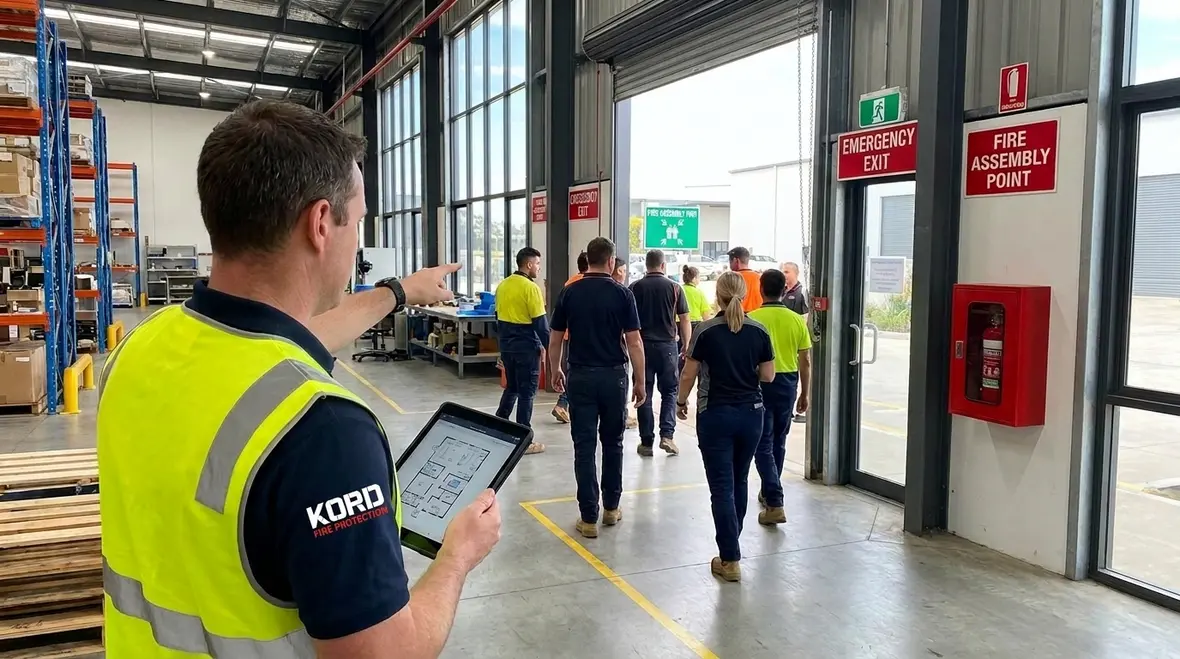
- Evacuation routes and assembly points
- Wardens or emergency leaders
- After hours and shift based instructions
- Fire equipment locations
- Communication steps for staff and emergency services
- Special support for visitors, contractors, and mobility limited workers
- Review and update timing
Simple does not mean shallow
A strong plan is easy to follow under stress, but that simplicity usually comes from careful work behind the scenes. Someone has to map the hazards, define roles, verify the exits, confirm equipment locations, and decide how warnings get passed along. The finished plan may read cleanly, yet it should rest on real site knowledge rather than wishful thinking and crossed fingers.
Core EAP Elements
- Clear evacuation routes
- Alarm and notification steps
- Warden roles and duties
- Assembly and roll call process
- Training and drill schedule
- Plan review and update cycle
Common Site Risks
- High storage loads
- Machinery and hot works
- After hours staffing gaps
- Mixed visitor traffic
- Electrical and battery hazards
- Layout changes and expansions

What NFPA EAP Requirements Expect from Employers
NFPA EAP requirements focus on action, not theory. Employers need a plan that people can understand and use under stress. As a result, the plan should be clear, current, and trained into the workforce.
It should also cover how staff receive warnings, how they leave the site, and how leaders account for everyone after evacuation. In larger facilities, the plan may also need role based duties for floor wardens, shift supervisors, and site managers. Moreover, the plan should reflect any fire risks linked to storage, production, hot works, or electrical systems.
In short, if a plan would fail in a real emergency, it is not ready yet. That sounds blunt, because fire is blunt.
Training turns paper into performance
Employers cannot assume people will magically absorb the plan through office air. Staff need orientation, refreshers, and realistic drills. They need to know the alarm sound, the nearest exits, the assembly point, and the chain of command. Visitors and contractors need direction too. During a real event, familiarity beats improvisation every single time.
How Kord Fire Protection Adds Real Value
This is where Kord Fire Protection becomes a vital partner. A strong plan needs more than paperwork. It needs technical knowledge, site experience, and regular review. Kord Fire Protection can help assess the site, spot gaps, and shape an emergency action plan fire safety program that fits the building and the business.
For commercial and industrial clients, that support can include fire safety reviews, emergency planning input, training support, and plan updates after site changes. Furthermore, Kord Fire Protection can help align the workplace fire emergency plan with the real demands of operations, not just the minimum on paper. That is the difference between a plan that looks good and a plan that works when the alarm sounds.
If you want broader context around planning, prevention, and code alignment, it also helps to review NFPA 1: A Comprehensive Guide to Fire Prevention and Safety, which pairs nicely with emergency action planning and wider site readiness.
How to Keep the Plan Alive and Useful
A fire plan should never stay frozen in time. Teams change, layouts change, equipment changes, and risks change. Therefore, the plan should be reviewed after building changes, staffing changes, drill results, or any fire event.
Training also matters. Staff should know the alarm, the exits, the assembly point, and their role. Regular drills build memory, and memory matters when nerves are high. In addition, new workers and contractors should receive the same basics before they start work. A plan only helps if people actually know it exists.
Review triggers that should never be ignored
Certain changes should immediately raise the question, “Does the plan still fit?” Renovations, tenant shifts, production changes, storage reconfiguration, new equipment, staffing turnover, and access control updates can all affect emergency response. If the site changes but the plan does not, that old plan starts telling a new building the wrong story.
FAQ
Conclusion
NFPA 1 Section 10.4 makes one thing clear: preparation saves time, reduces risk, and protects lives. For Australian businesses, a well built emergency action plan fire safety program is not optional in spirit, even when it is treated that way in practice.
Kord Fire Protection can help turn that plan into something useful, current, and ready for the real world. That is smart business, plain and simple.

Join Our Newsletter!
Get the latest fire safety tips delivered straight to your inbox From our Newsletter.