NFPA 1 Section 10.21 Powered Micromobility Fire Safety
Quick Answer
NFPA 1 Section 10.21 sets clear fire safety expectations for powered micromobility devices like e bikes and e scooters. For industrial, retail, commercial, and facilities teams across Australia, it helps reduce battery fire risk, improve storage and charging controls, and support safer operations. Kord Fire Protection can help turn those rules into real world protection.
Powered micromobility has gone from trend to daily transport. In busy sites, this shift brings new risks, especially around battery charging, storage, and smoke spread. That is why e scooter fire safety, electric bike fire code, and micromobility device fire protection now matter in more places than ever. The job is no longer just about having a fire extinguisher on the wall and hoping for the best. The goal is clear control, strong planning, and systems that work when things heat up, literally.
If your site is already reviewing broader fire protection support for compliance and readiness, this topic fits naturally into that discussion because battery risk does not stay politely in one corner of the building. It spreads into operations, storage planning, staff habits, and emergency response faster than most teams expect.
What NFPA 1 Section 10.21 Means for Modern Sites
NFPA 1 Section 10.21 focuses on powered micromobility devices and the fire risks that come with them. In simple terms, it gives site managers a framework for safe storage, charging, and response. It helps reduce the chance that one damaged battery turns a normal workday into a very expensive lesson in smoke management. Because of that, facilities teams can use it as a practical guide, not just another document in the growing pile of safety paperwork.
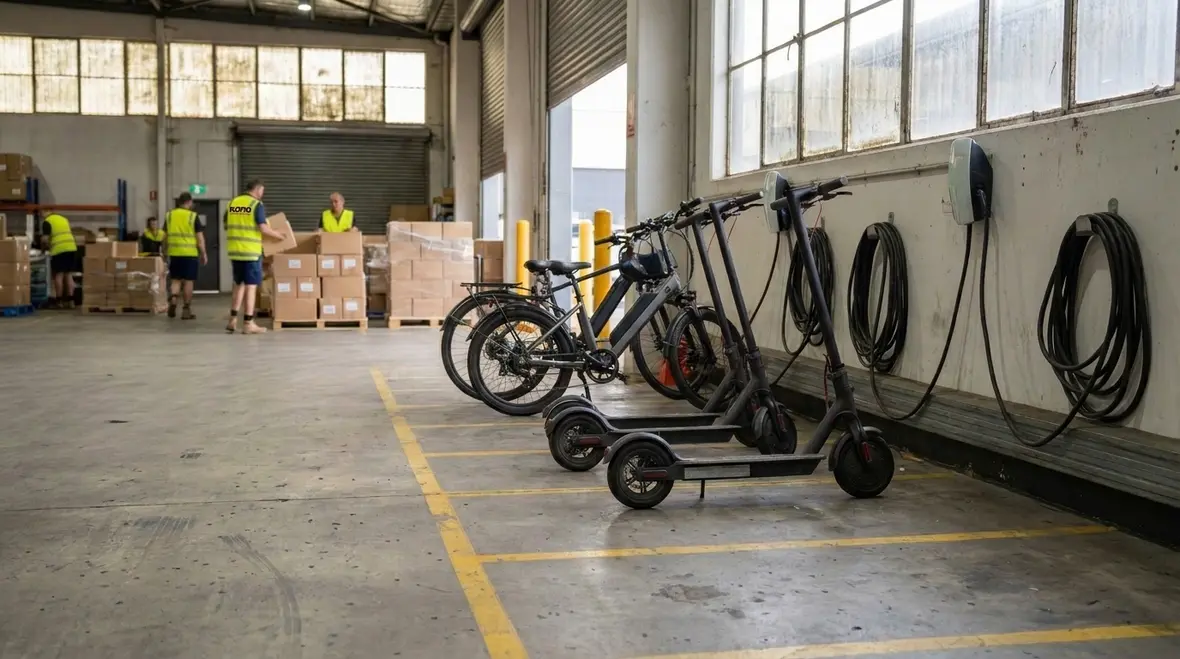
For commercial and industrial settings, this section matters because these devices often enter spaces not designed for battery charging at scale. As a result, loading docks, staff areas, back rooms, and shared storage zones can become weak points. NFPA 1 Section 10.21 helps leaders identify those weak points before they become headline material.
Why this section matters beyond the code book
The practical value is that it forces sites to think about battery behavior as an operational issue, not just a maintenance issue. That means asking better questions. Where are devices being parked? Who is charging them? Are chargers approved? What happens when a battery looks damaged, feels hot, or starts acting suspiciously? Those questions may sound basic, but basic questions tend to be the ones people forget right before something dramatic starts producing smoke.
It also connects neatly with broader NFPA planning. For teams that want a wider code context, Kord Fire Protection also covers NFPA 1 fire prevention and safety guidance, which helps frame how this section fits into a larger prevention strategy instead of living as one lonely rule on an island.
Why E Scooter Fire Safety Needs a Site Plan
E scooter fire safety depends on more than keeping devices off the floor. Batteries can fail from damage, poor charging habits, heat, or bad equipment. Therefore, the site plan must cover where devices sit, how long they charge, and what happens if a battery swells, smokes, or catches fire.
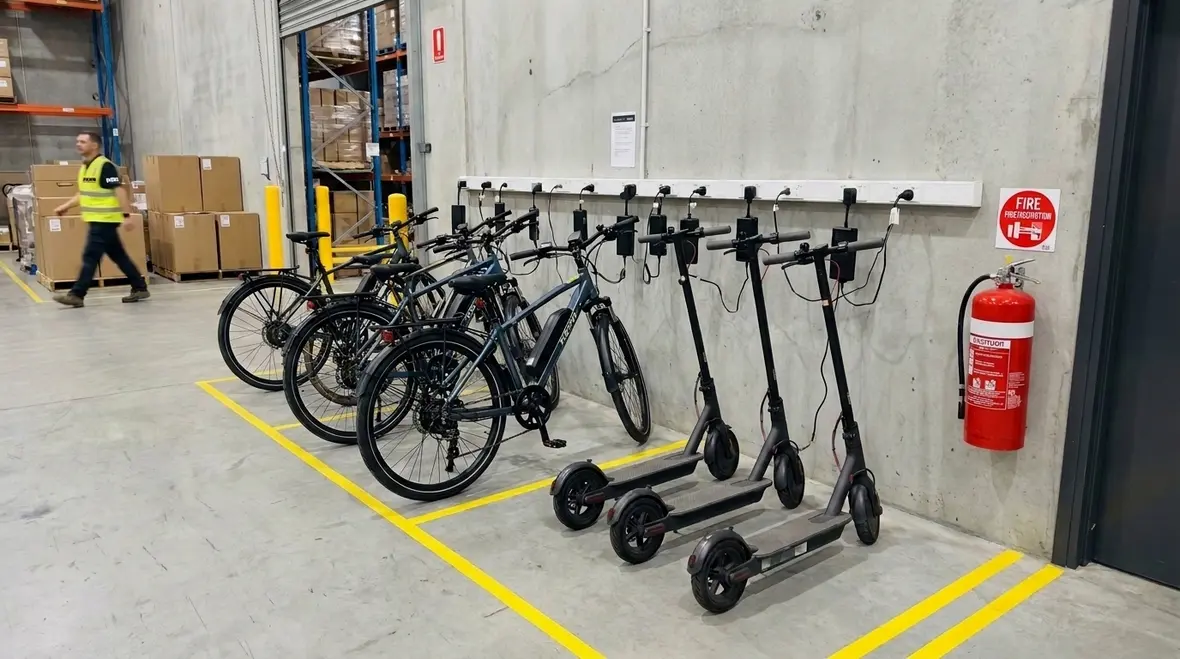
For retail centres, distribution sites, and office campuses, the answer usually starts with control. Devices should charge in approved areas only. Also, charging points should stay away from exits, combustibles, and clutter. That sounds obvious, yet chaos loves a loose cable and a rushed morning.
Core elements of a workable micromobility plan
Designate approved charging zones with supervision and separation from high traffic routes.
Keep devices away from exits, stairwells, combustible stock, and critical equipment.
Limit charging duration and avoid leaving devices plugged in without oversight.
Set procedures for damaged batteries, overheated devices, and swollen battery packs.
Train staff to report warning signs early rather than pretending the smell will magically solve itself.
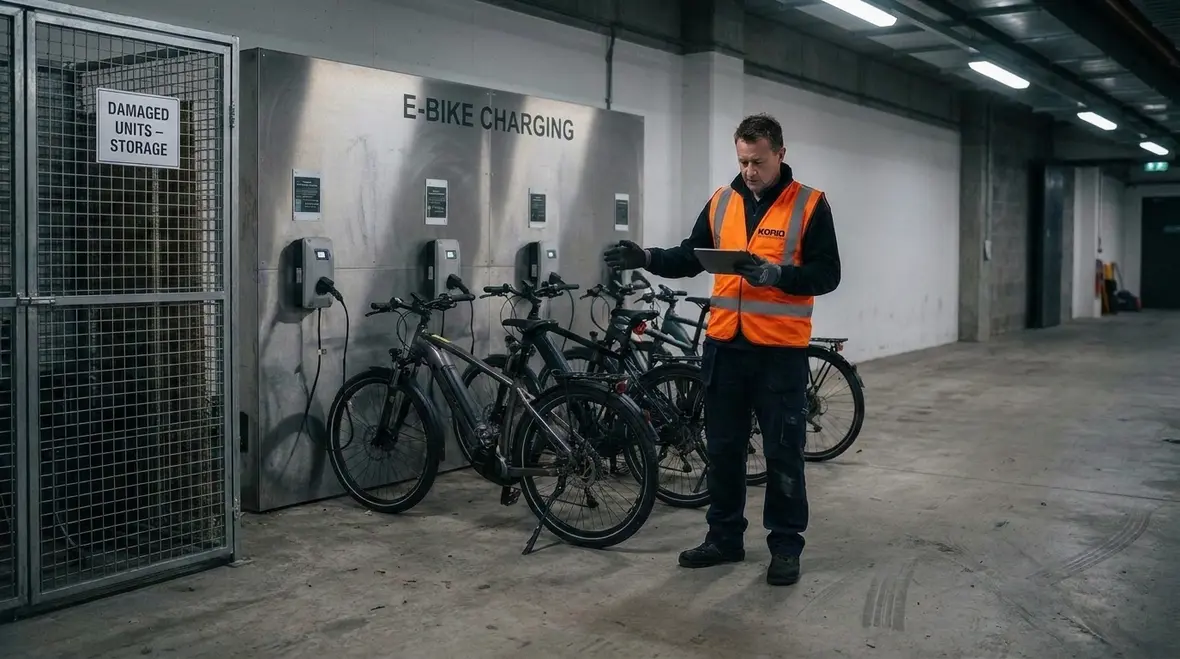
Electric Bike Fire Code Controls That Reduce Risk
The electric bike fire code approach focuses on safe use from arrival to shutdown. First, the site should verify the condition of batteries and chargers. Next, it should limit modified or damaged units. After that, managers should set clear rules for storage, inspection, and disposal. This matters because a small issue today can become a thermal runaway event tomorrow, and lithium battery fires do not politely wait for after hours.
Facilities across Australia should also review local requirements alongside insurance needs, site rules, and emergency planning. While NFPA 1 gives a strong model, the best result comes when teams adapt it to the building, the business, and the real traffic flowing through the site each day.
Controls worth putting in writing
Written controls reduce confusion and make enforcement much easier. A site policy can define approved chargers, battery inspection expectations, who may charge devices on site, and what happens when a device fails inspection. It can also prohibit risky improvisation, which is a polite way of saying “please stop using mystery chargers from the bottom of a drawer.”
| Control Area | Why It Matters |
| Battery condition checks | Helps identify swelling, damage, leaks, or overheating before charging begins |
| Approved charger use | Reduces mismatch risk and poor charging performance |
| Storage limits | Keeps devices out of exits, corridors, and cluttered hazard zones |
| Damaged unit isolation | Creates a safer response path if a battery becomes unstable |
| Inspection records | Shows the site is managing risk with evidence rather than wishful thinking |
Micromobility Device Fire Protection in Daily Operations
Micromobility device fire protection works best when it is built into routine work, not added after a problem. That means staff training, inspection logs, battery handling rules, and clear response steps. In addition, the site should know who to call, where to isolate a device, and how to protect nearby people and property.
Good protection also depends on the surrounding environment. For example, strong ventilation, clear separation, and protected charging zones can all reduce impact. Furthermore, early detection matters because battery fires can move fast and create toxic smoke. In that moment, a calm plan beats panic every time. Panic, as history keeps proving, is not a great fire strategy.
Daily habits that make protection real
This is where routine wins. Staff should know what normal battery condition looks like, what warning signs require escalation, and when not to move a device. Supervisors should know how to inspect storage areas, confirm chargers are used correctly, and keep access routes clear. The building systems around the risk also matter. Detection, notification, suppression planning, and electrical reliability all shape how well the site performs when time gets short.
Sites managing battery related hazards can also benefit from related Kord Fire Protection insight on special hazard fire suppression in Australia, especially when a charging or storage area sits near high value equipment, dense stock, or sensitive operations.
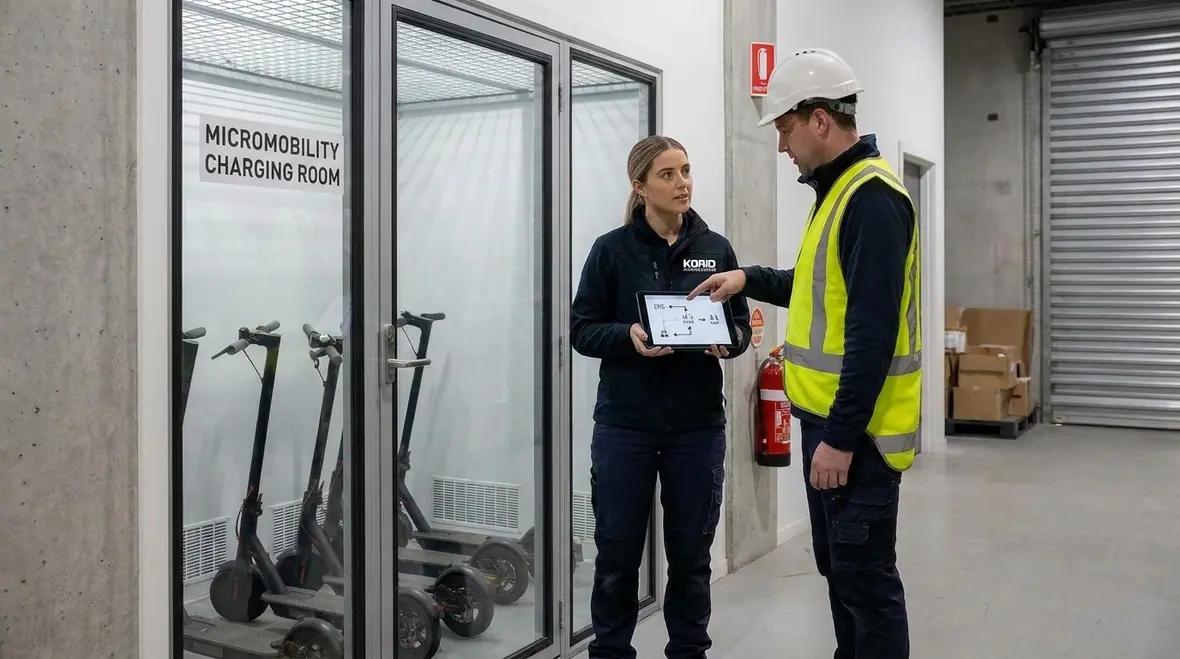
Where Kord Fire Protection Becomes a Vital Partner
| Need | How Kord Fire Protection Helps |
| Risk review | Assesses charging and storage areas for powered micromobility hazards |
| Compliance support | Helps align site practices with NFPA 1 Section 10.21 and local requirements |
| System selection | Recommends fire protection solutions suited to battery risk and site layout |
| Training and readiness | Supports staff with practical response steps and safer daily habits |
| Ongoing care | Helps maintain protection systems as operations and device use change |
Kord Fire Protection can become a vital partner because this issue sits at the point where fire risk, compliance, and operations meet. The team can help facilities move from general concern to real protection. Moreover, Kord Fire Protection can support a site with the kind of practical advice that makes sense on a busy floor, not just in a policy meeting that goes nowhere fast.
That matters because micromobility risks rarely stay neatly contained inside one department. Facilities, operations, safety leads, and maintenance teams all touch the problem from different angles. A good partner helps those groups work from the same plan instead of four separate interpretations and one heroic guess.
How Facilities Across Australia Can Put the Rule to Work
Across Australia, industrial, retail, and commercial sites need a plan that fits local conditions. First, they should map where powered micromobility devices enter the site. Then, they should identify charging points, storage rooms, and waste areas. After that, they should set rules for damaged batteries, damaged chargers, and overnight storage.
It also helps to review fire response procedures with local emergency planning in mind. If a device smokes, staff should know when to isolate the area and when to evacuate. In addition, managers should keep records of inspections and maintenance so the site can show control, not guesswork. After all, “we meant to check that” is not the kind of line anyone wants in a report.
A simple action sequence for facilities teams
Map all entry points and common parking or charging habits.
Review storage, separation, and ventilation around approved charging areas.
Inspect chargers, batteries, and any devices showing visible damage.
Document response steps for overheating, smoke, or fire events.
Schedule periodic reviews as device volume and site activity change.
FAQ
Conclusion
NFPA 1 Section 10.21 gives facilities a real path to safer powered micromobility management. For sites across Australia, the next step is simple: review the risks, tighten the controls, and bring in Kord Fire Protection for expert support.
When the right protection meets the right plan, safety stops being a wish and starts being a system. That is the real value of a micromobility fire safety strategy: fewer blind spots, stronger response, and much less reliance on luck, which has never been a particularly dependable compliance tool.

Join Our Newsletter!
Get the latest fire safety tips delivered straight to your inbox From our Newsletter.