NFPA 1 Section 10.15 Generator Safety for Portable and Vehicle Mounted
Quick Answer: NFPA 1 Section 10.15 sets the safety rules for portable and vehicle mounted generators used in commercial and industrial settings. It focuses on safe placement, fuel handling, exhaust control, grounding, and clear operating space. For facilities across Australia, these rules support safer temporary power fire safety and reduce risk during outages, worksites, and planned shutdowns.
When power fails, work does not always stop. That is where portable generator fire safety, vehicle generator fire code, and temporary power fire safety step into the spotlight. In busy industrial plants, retail sites, and commercial facilities, generators keep systems alive, but they can also bring heat, fuel vapour, exhaust, and electrical risk into the same room. That mix can turn ugly fast. NFPA 1 Section 10.15 gives a clear path to safer use, and it matters even more when operations depend on temporary power every hour of the day.
In Australia, many sites rely on generators during shutdowns, peak demand, emergencies, and remote work. Therefore, a strong safety plan is not just a nice extra. It is part of good site control, fire risk reduction, and business continuity. Near the top of that planning stack, facilities often benefit from broader full fire protection services that help tie generator risk into inspections, readiness, and site wide life safety planning. Kord Fire Protection can become a vital partner here, helping teams align generator setup and fire safety controls with practical site needs. A generator may look like a box that hums. Still, it can create a major incident if someone treats it like a friendly toaster with ambition.
What NFPA 1 Section 10.15 covers for site teams
NFPA 1 Section 10.15 addresses portable and vehicle mounted generators used as power sources during normal work, outages, and emergency support. It guides how sites should place, operate, and protect generators so fire and smoke hazards stay under control. In simple terms, it helps teams avoid common mistakes that can lead to ignition, fuel leaks, exhaust build up, or unsafe contact with equipment.
For industrial and commercial sites, the focus usually falls on four things. First, the generator must sit in a safe location. Second, fuel and hot parts need proper control. Third, exhaust must not enter occupied or enclosed spaces. Finally, electrical connections need to stay sound and suitable for the load. That may sound basic, and it is, but basic rules have saved more sites than a hero speech ever did.
This section is especially useful for site teams because generators often arrive when everything already feels urgent. The building has lost power, the schedule is sliding, tenants are asking questions, and somebody is already pointing at a cable as if that will somehow fix it. A standard like this helps bring calm to the chaos. It turns temporary power from a frantic patch into a controlled process with clear expectations around spacing, operation, and monitoring.
The practical goal behind the rule
The real goal is not to make generator use complicated. It is to keep a useful machine from becoming the loudest problem on site. Good control over placement, fuel, exhaust, and electrical integrity lowers the chance of a fire starting and improves the odds that crews can react quickly if something goes wrong. That is a strong bargain, especially when the alternative is discovering a hazard by smell, smoke, or a deeply regrettable spark.
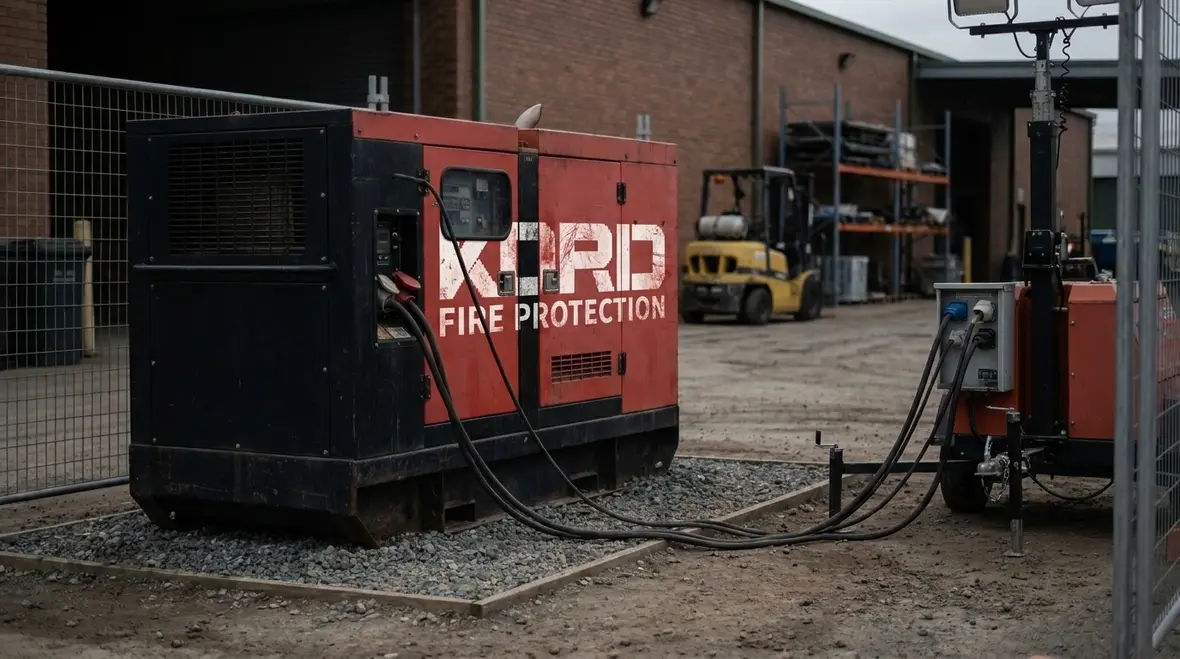
Portable generator fire safety for industrial and commercial sites
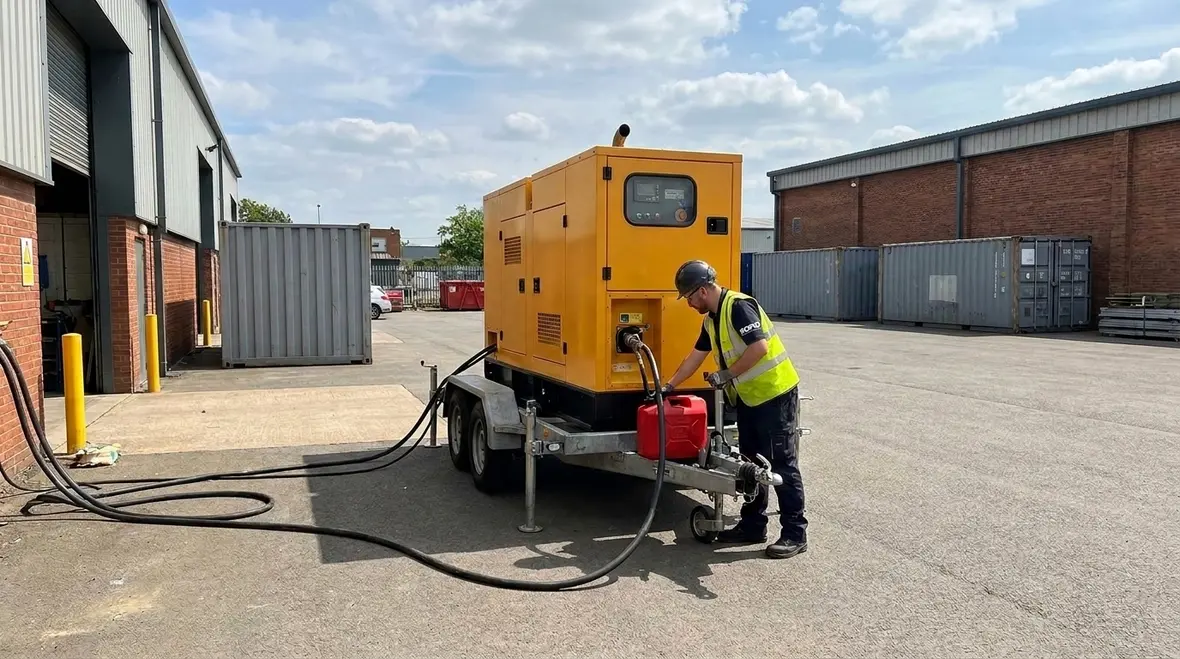
Portable generator fire safety starts with location. Generators should run in open, well ventilated areas and away from combustible stock, packaging, waste, and building openings where fumes can collect. As a result, site teams reduce the chance of ignition and make emergency access easier.
Fuel handling matters just as much. Diesel and petrol need proper storage, clear labels, secure containers, and safe refuelling habits. In addition, refuelling should happen only when the generator is cool and when the area is free from sparks, smoking, and other ignition sources. A small spill can become a big problem very quickly, especially around cardboard, racking, or equipment bays.
Maintenance also plays a major role. Worn cables, loose fittings, damaged guards, and blocked cooling paths all increase fire risk. Therefore, teams should inspect generators before use, during use, and after shutdown. That routine may feel a bit like checking a movie sequel nobody asked for, but it is cheaper than a fire callout.
Common mistakes crews should avoid
- Running a unit too close to doors, loading docks, or intake points.
- Storing spare fuel beside hot equipment because it feels convenient in the moment.
- Using damaged leads, overloaded boards, or makeshift cable routing that turns walkways into obstacle courses.
- Skipping cooldown time before refuelling because the schedule is yelling louder than common sense.
- Leaving housekeeping to chance while packaging, rubbish, or oily materials build up around the machine.
Portable units are often treated like flexible problem solvers, and to be fair, they are. But flexibility is exactly why discipline matters. A permanent installation usually comes with fixed controls, fixed clearance expectations, and predictable surroundings. A portable unit can land almost anywhere, which means teams have to create safe conditions on purpose instead of assuming the space will magically behave.
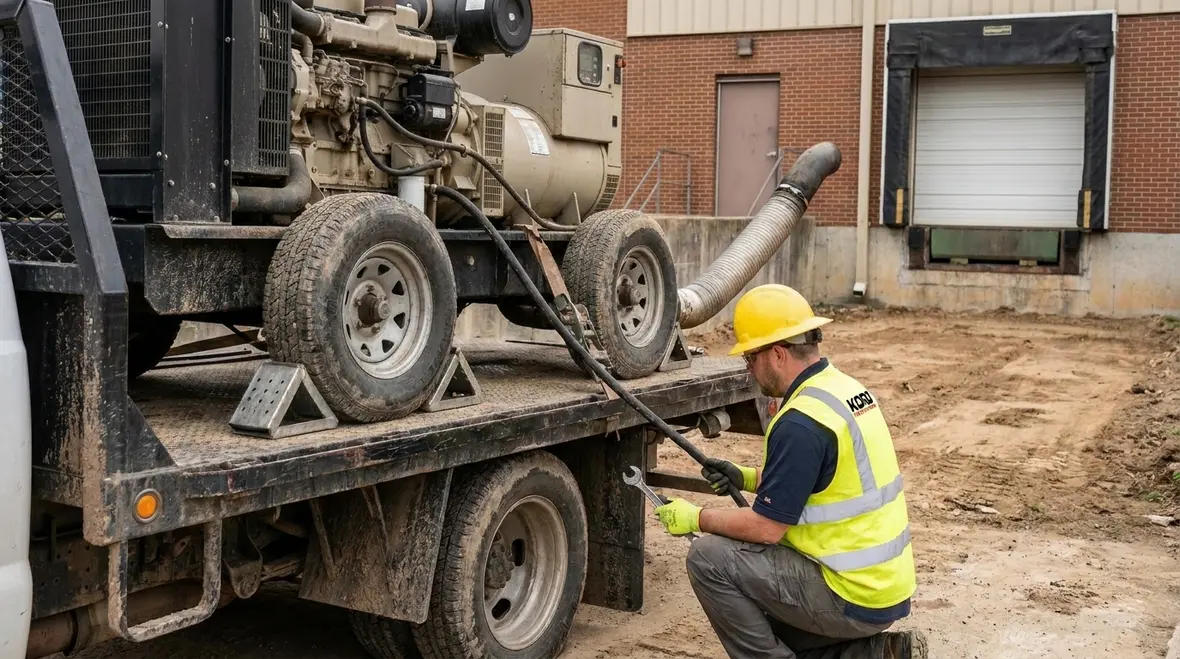
Vehicle mounted generator fire code and why it matters
Vehicle mounted generator fire code requirements matter because the vehicle itself adds new hazards. Heat from the engine, vibration, moving parts, and fuel storage can all affect safe operation. Moreover, when a generator rides on a truck, trailer, or service vehicle, the setup must stay stable during travel and operation.
Sites that use mobile power units for shutdown support, construction work, events, or field service should make sure the generator is secured, protected from impact, and positioned so exhaust does not expose people or building openings. In addition, operators should know how long the unit can run, what load it can carry, and what happens if the vehicle parks near flammable materials.
Vehicle mounted systems often support critical work, so a weak setup can create a chain reaction. One loose connection can lead to heat. One hot surface can lead to ignition. One poor parking choice can turn a routine job into a midnight incident report with far too much coffee involved.
Mobile units need mobile thinking
Because the platform moves, the risk picture moves too. Parking grade, nearby traffic, weather exposure, and proximity to the building all matter. Crews should think about what sits above, below, and beside the vehicle, not just what bolts onto it. This is also where related protection strategies can help. Facilities that manage higher risk engine spaces or mobile assets may already be looking at engine compartment fire suppression as part of a broader risk reduction plan.
That wider view matters because generator safety is rarely a solo act. The machine, the vehicle, the load, and the environment all interact. If one part gets sloppy, the rest of the setup does not politely ignore it. It joins in.
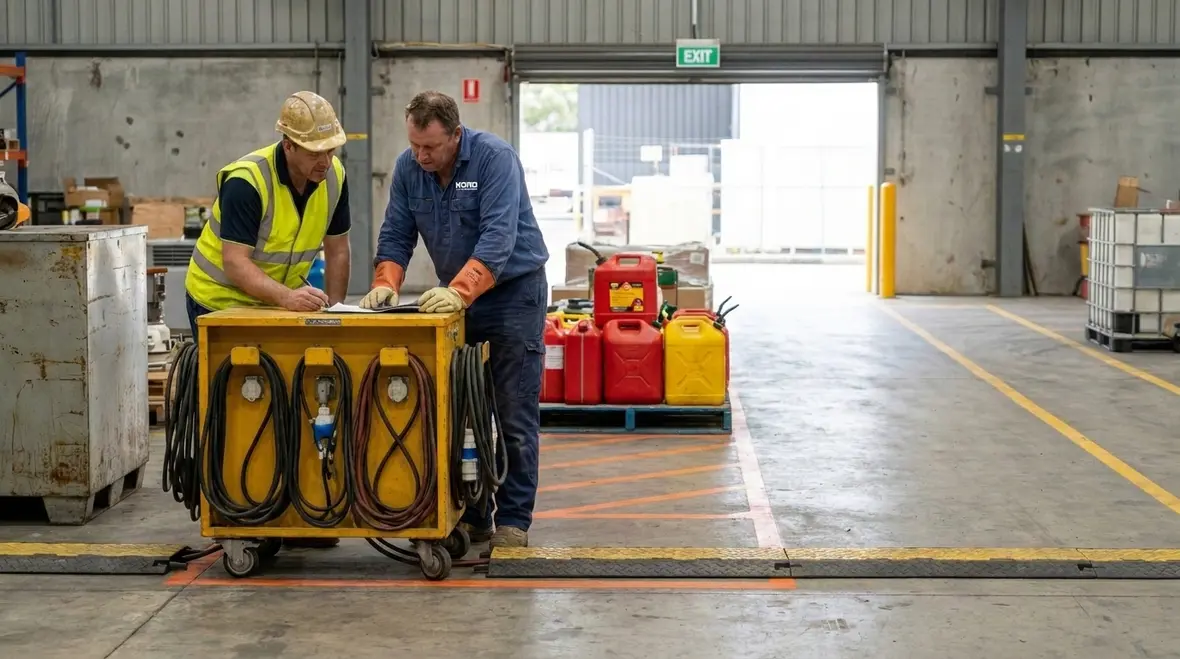
How temporary power fire safety should work on site
Temporary power fire safety works best when teams plan before the generator arrives. That means reviewing the site layout, identifying fuel and heat risks, and deciding how the unit will connect to the electrical system. It also means confirming that workers understand shutoff steps, clear zones, and emergency actions.
Temporary power fire safety checklist
Site control and setup
Generators should sit on stable ground, away from traffic paths, and clear of stacked goods or waste.
Ventilation and exhaust
Exhaust should never drift into enclosed rooms, loading bays, plant rooms, or air intakes.
Fuel and refuelling
Fuel must be stored safely, transferred carefully, and kept away from heat and sparks.
Electrical integrity
Cables, plugs, and changeover systems should match the load and stay in good condition.
Emergency response
Staff should know who shuts down the unit, who isolates power, and who calls for help.
Monitoring during use
Someone should actually own the task of checking heat, noise, leaks, cable condition, and site access while the unit is operating.
Planning also works better when temporary power is treated as part of a wider electrical and fire strategy, not a standalone patch job. That is why articles like Protecting Electrical Infrastructure Fire With Kord Fire Protection are useful companion reads for facilities trying to keep both power continuity and fire prevention in view. One issue often nudges the other.
Where Kord Fire Protection fits into generator safety
Kord Fire Protection can become a vital partner by helping facilities build a practical fire safety plan around generator use. That support can include fire risk review, equipment placement guidance, inspection support, and advice that fits the real world of industrial and commercial operations. In addition, Kord Fire Protection can help teams think beyond the generator itself and look at the whole hazard picture, including fuel storage, nearby assets, access paths, and response readiness.
That matters because generator safety is rarely just about the machine. It is about the site around it. It is about people walking past it, forklifts passing near it, and maintenance teams working under pressure while the clock keeps moving. With the right partner, a site can reduce risk without slowing operations to a crawl.
For facilities that want a broader code context, it also makes sense to connect this topic with NFPA 1: A Comprehensive Guide to Fire Prevention and Safety. Generator rules do not exist in a vacuum. They sit inside a larger framework of hazard reduction, safe operations, and practical fire prevention decisions that sites have to make every day.
Why Australian facilities should take this seriously
Across Australia, facilities face long service hours, harsh weather, remote conditions, and tight turnaround times. Therefore, generator risk can rise fast when teams rush setup or skip checks. Industrial sites may use generators for planned outages. Retail sites may use them to protect trading systems. Commercial facilities may depend on them for critical services. Each one needs the same core approach: control heat, control fuel, control exhaust, and control the environment around the unit.
NFPA 1 Section 10.15 offers a strong benchmark for that approach. Even when local requirements differ, the safety logic still holds. Good generator practice reduces fire risk, supports compliance efforts, and protects people, stock, and operations. That is not drama. That is good management.
The big lesson is consistency. Teams do not need a heroic speech, a panic purchase, or a lucky guess. They need a repeatable setup, trained operators, clear exclusion zones, and a habit of checking the boring details before the boring details become exciting for all the wrong reasons. In generator safety, boring is beautiful.
FAQ
Final word
Generators keep business moving, but they need discipline, not guesswork. For sites that rely on temporary power, the best next step is a clear fire safety review that covers placement, fuel, exhaust, and electrical control. Kord Fire Protection can help turn that plan into action, so operations stay safer, smarter, and ready when the lights go out.
The smartest generator setup is the one that looks a little boring, runs where it should, stays away from what it should, and never forces the team to improvise under pressure. That is the real win. Not flashy. Just safe, practical, and much less likely to become the story everyone retells later with a grim laugh.

Join Our Newsletter!
Get the latest fire safety tips delivered straight to your inbox From our Newsletter.