NFPA 1 Section 10.14 Outdoor Event Fire Safety
Quick Answer
NFPA 1 Section 10.14 sets the fire safety baseline for special outdoor events, from fairs to carnivals and large public gatherings. It helps reduce risk through clear controls for tents, cooking, access, exits, and fire protection planning. For Australian industrial, retail, commercial, and facility operators, Kord Fire Protection can help turn those rules into practical, site ready safety measures.
NFPA 1 Section 10.14 matters because outdoor events often mix crowds, heat sources, temporary structures, and fast moving hazards. One loose cable, one overloaded generator, or one poorly placed cooking setup can turn a fun night into a headline nobody wants. That is where outdoor events fire safety, carnival fire code requirements, and fair fire safety regulations come into play. In short, the goal is simple: keep people moving, keep fire risks low, and keep emergency response clear.
For sites that already rely on fixed protection, pairing event planning with NFPA compliant fire sprinkler services can help make sure the permanent system side of the property is ready while temporary event controls are built around it. That combination is often what keeps a busy venue from becoming a very expensive lesson in hindsight.
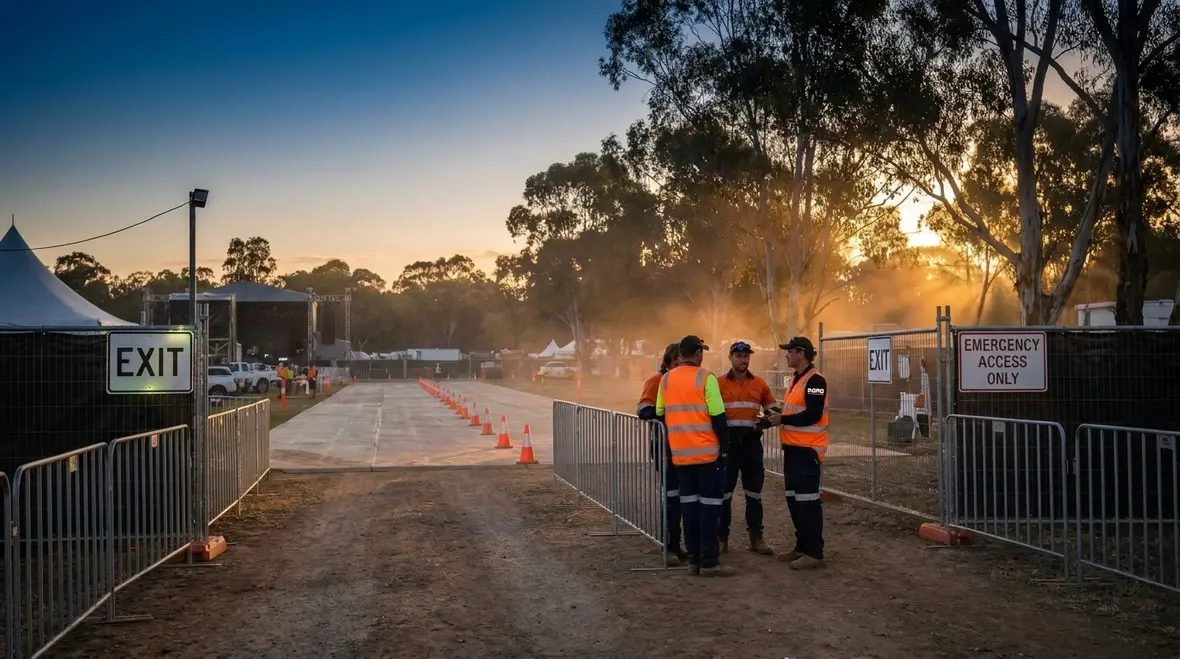
What NFPA 1 Section 10.14 Covers
NFPA 1 Section 10.14 gives fire officials a framework for special outdoor events. It focuses on safe site layout, crowd movement, temporary structures, fuel use, cooking areas, and emergency access. It also pushes event organisers to plan early, not after the sausage sizzle becomes a smoke show worthy of a bad action movie.
For commercial and industrial clients across Australia, this matters whenever they host public events, staff days, promotional activations, trade shows, markets, or large customer gatherings. The code helps reduce confusion and supports safer event approvals. More importantly, it gives everyone a shared language for risk control.
That shared language becomes especially useful when multiple parties are involved. Venue managers, stallholders, contractors, food vendors, maintenance teams, and security crews often arrive with very different priorities. One group wants bump in access, another wants power, another wants signage, and someone always wants to squeeze one more setup into a space that was already looking optimistic. Section 10.14 helps sort those competing needs into a structure that puts life safety first.
Why temporary event sites need structured controls
Unlike a permanent building, an outdoor event site can change by the hour. Tents appear, generators roll in, food stalls fire up, and cable runs snake across walkways like they own the place. Because the environment is temporary, the controls must be intentional. A good layout is not just tidy. It is a safety system in plain sight.
This is also where broader code awareness helps. Kord Fire Protection has published related guidance in NFPA 1: A Comprehensive Guide to Fire Prevention and Safety, which gives helpful context for how event specific controls fit into the wider fire prevention picture. Section 10.14 is not floating alone in space. It sits inside a bigger framework designed to keep properties and people safer before trouble starts.
How Outdoor Events Fire Safety Works on Site
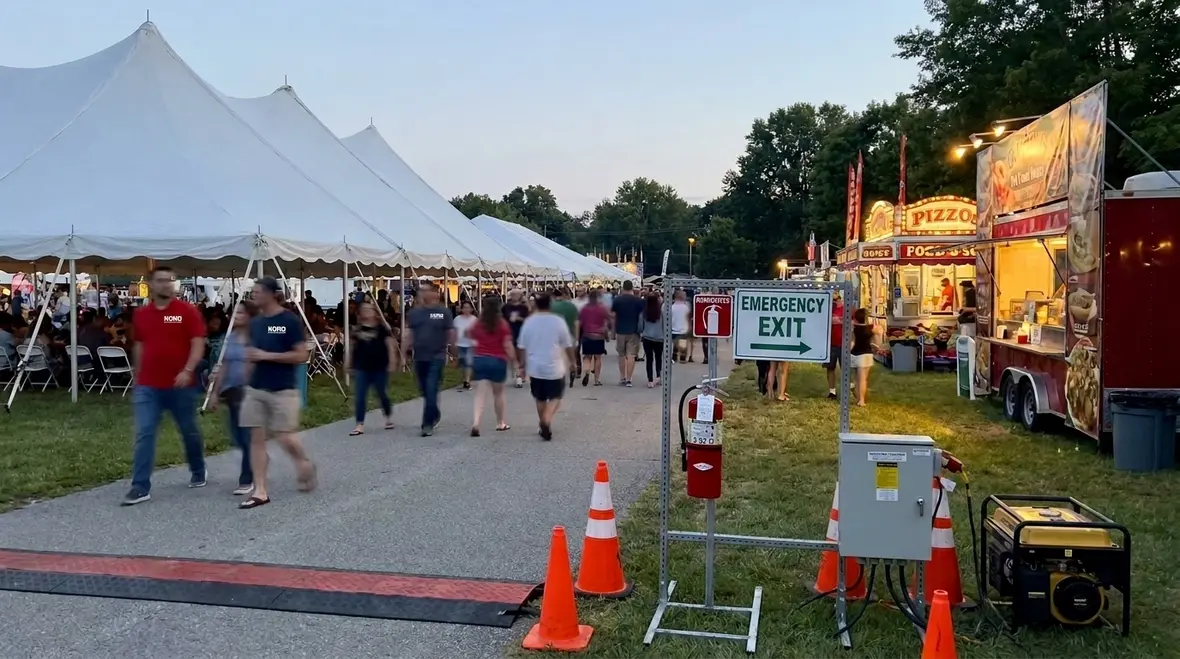
Outdoor events fire safety starts with the site itself. The layout must support safe entry and exit, clear access for emergency vehicles, and enough space between hazards and crowds. Fire extinguishers need the right placement. Flammable materials need smart storage. Cooking and power sources need separation from the public.
Event teams should also check weather, ground conditions, and wind exposure. After all, a calm afternoon can turn ugly fast. A lightweight tent frame does not care about anyone’s schedule, and neither does fire. Therefore, event safety planning must look at real site conditions, not just the floor plan on a neat office screen.
On site controls should be visible, practical, and easy for staff to verify during setup and operation. Exits should stay obvious. Access lanes should stay clear. Fire fighting equipment should never end up hidden behind stock, spare chairs, or a suspicious pile of promotional banners that somehow appeared five minutes before opening. If a control only works on paper, it does not really work.
The site walk through that actually matters
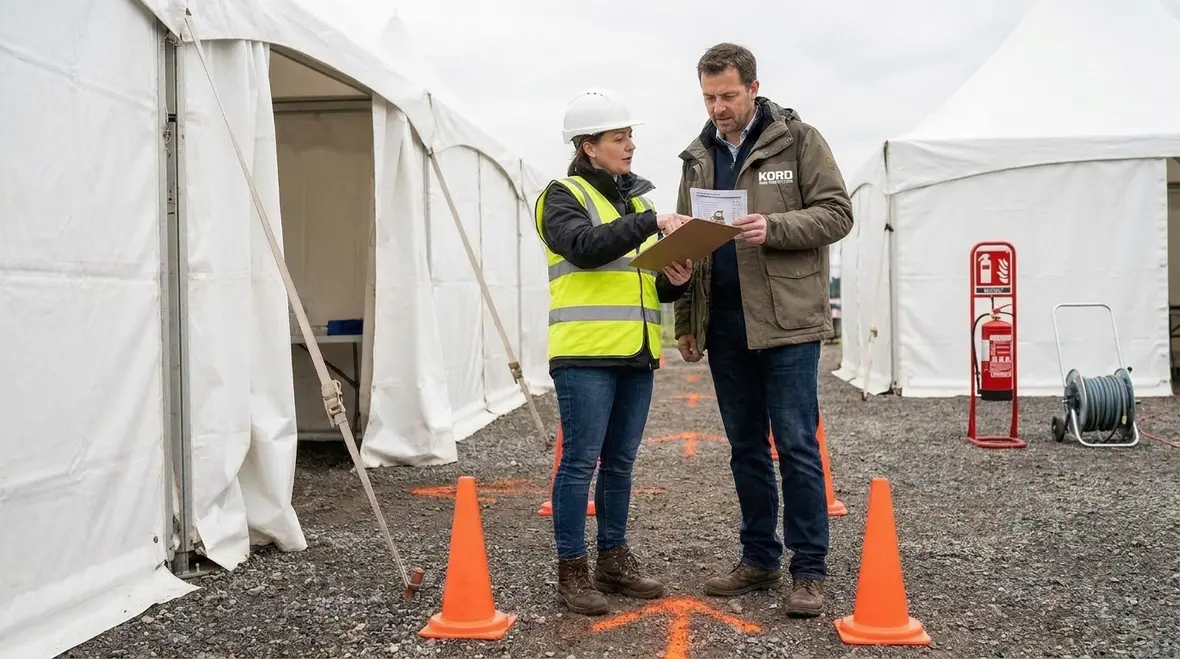
A proper walk through should happen before the public arrives and before teams get too busy improvising. Check tent anchoring, verify aisle widths, confirm extinguisher locations, inspect generator placement, review cooking separation, and make sure emergency vehicle access is not being slowly stolen by convenience. It sounds simple because it is simple. The hard part is doing it consistently when the schedule gets loud.
Carnival Fire Code Requirements Explained
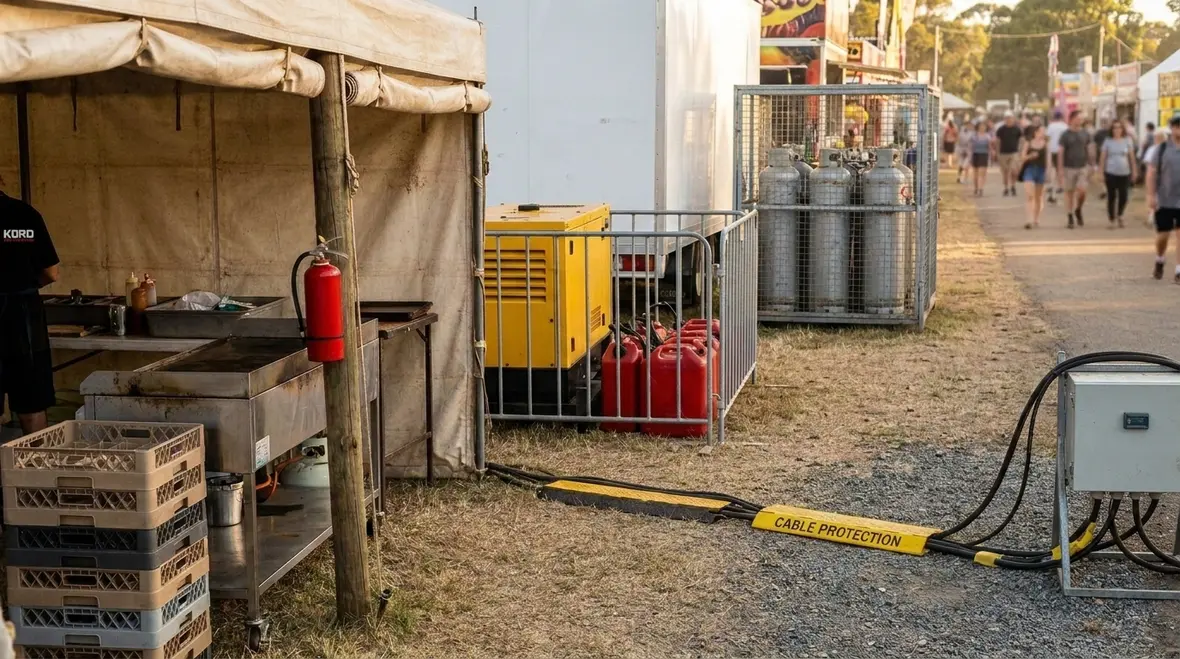
Carnival fire code requirements usually focus on temporary attractions, food stalls, rides, generators, and electrical loads. These spaces often run close together, so fire separation matters. Fuel powered equipment should stay away from public paths and ignition sources. Likewise, extension leads and distribution boards must handle the load without overheating.
Event managers should also look at open flame use, gas cylinder storage, and cooking exhaust. Small mistakes build up quickly. One vendor may want to set up just a little closer to the crowd. Another may ask for one more plug point. Soon enough, the site looks like a chessboard designed by chaos. Fire safety keeps that board from catching fire.
Carnivals are especially tricky because they combine movement, power demand, public excitement, and temporary infrastructure. Rides need room. Queues need flow. Vendors need energy sources. Staff need access. If those needs clash, the fire risk rises quickly. Separating ignition sources from combustibles, checking electrical integrity, and controlling fuel storage are not glamorous tasks, but they are often the difference between a smooth event and a long conversation with investigators.
Common carnival trouble spots
- Generators placed too close to public walkways or stalls
- Overloaded leads and makeshift electrical connections
- Gas cylinders stored without proper spacing or protection
- Cooking stalls crowding exits or major pedestrian routes
- Temporary structures packed tighter than the site plan allowed
If those issues are found early, they are usually fixable. If they are found during an emergency, they are suddenly everyone’s problem at once.
Fair Fire Safety Regulations and Crowd Protection
Fair fire safety regulations protect both people and property by controlling how crowds move around a site. Wide aisles, marked exits, and clear signage help avoid bottlenecks. In larger events, organisers should map evacuation paths before the first guest arrives. That way, staff can guide people out without guessing under pressure.
Communication also matters. Staff need to know who calls emergency services, who shuts down power, and who leads evacuation. In a crowded fair, every minute counts. Therefore, a simple plan, repeated clearly, often works better than a thick binder nobody reads until the day after the incident. That, as they say, is a little late.
Crowd protection is not only about evacuation after something goes wrong. It is also about preventing panic and reducing confusion before conditions escalate. Clear wayfinding, sensible stall placement, and visible staff presence help guests move naturally and safely. If people can see where to go and staff know what to do, pressure stays lower and response stays faster.
What staff should know before gates open
Every team member should know the nearest exit routes, alarm or communication methods, location of extinguishers, who has authority to stop operations, and how to report hazards quickly. This does not require a dramatic seminar with forty slides and one dying projector. It requires a clear briefing that people can actually remember when stress shows up.
Dual Column View: Key Safety Areas and Site Controls
Here is a simple way to understand the main control points for special outdoor events:
Safety Area
- Crowd flow
- Cooking zones
- Fuel storage
- Electrical supply
- Emergency access
- Temporary structures
- Fire equipment
Site Control
- Keep exits open and marked
- Separate heat sources from the public
- Store gas and fuel safely
- Use tested equipment and proper load limits
- Maintain clear lanes for responders
- Anchor and space tents correctly
- Place extinguishers where staff can reach them fast
This simple structure helps event planners and facility teams avoid the usual last minute scramble. It also gives contractors and vendors a clear list of what must stay in place. When everyone can see the basics in one view, there is less room for crossed wires, crossed purposes, and crossed fingers.
Why Kord Fire Protection Becomes a Vital Partner
Kord Fire Protection can play a vital role in making these requirements work in the real world. Rules only help when people can apply them properly. Kord Fire Protection can support site checks, fire equipment planning, compliance guidance, and practical risk review for outdoor events across Australia.
For industrial, retail, commercial, and facility clients, that support is valuable because event sites often change quickly. Kord Fire Protection can help align temporary setups with fire safety needs, confirm extinguisher coverage, review access routes, and support planning for high risk areas like kitchens, fuel points, and generator zones. In other words, Kord helps turn code into action, which is where safety actually lives.
That practical support matters even more when a property already has existing fire systems, multiple contractors, and a schedule that refuses to slow down. It is one thing to know what the code expects. It is another thing entirely to apply it in a live venue with changing layouts, public pressure, and a parade of last minute decisions. Kord Fire Protection helps bridge that gap without adding noise to an already busy operation.
How to Prepare an Event Plan That Meets the Standard
A strong event plan should begin with a site walk through. Next, it should identify hazards, assign duties, and list the controls needed for each area. Then, it should cover training, communication, and emergency steps. Finally, it should confirm that all vendors understand the site rules before setup begins.
Teams should also keep records of inspections, equipment checks, and approvals. This helps during audits and supports future events. With repeated use, the process becomes smoother. The first event may feel like herding cats with clipboards. However, a good system soon becomes routine, and routine is a beautiful thing when fire risk is involved.
A practical planning checklist
- Walk the site and confirm real conditions
- Mark exits, access lanes, and assembly points
- Review tents, stalls, rides, and generator positions
- Confirm extinguisher placement and accessibility
- Check gas, fuel, and cooking controls
- Brief staff on communication and evacuation roles
- Document inspections, approvals, and corrective actions
If that checklist is handled early, the rest of the planning process tends to become far less dramatic. Which is ideal, because the only fireworks anyone should remember at an outdoor event are the planned ones.
FAQ
Conclusion
Outdoor event safety should never depend on luck or a hopeful shrug. With NFPA 1 Section 10.14 as a guide, teams can build safer sites, protect crowds, and reduce fire risk with confidence. That means thinking through access, exits, cooking, power, fuel, staffing, and communication before the first guest shows up and before the first problem has a chance to grow teeth.
Kord Fire Protection can help make that process practical, clear, and ready for real world use. For the next event, start early and plan smart. It is far easier to build order into a site from the beginning than to untangle chaos later while everyone pretends this was definitely the plan all along.

Join Our Newsletter!
Get the latest fire safety tips delivered straight to your inbox From our Newsletter.