NFPA 1 Section 10.16 Outside Storage Fire Safety Australia
Quick Answer
NFPA 1 Section 10.16 sets the baseline for safe outside storage by limiting fire spread, keeping access clear, and controlling pile size, spacing, and materials. For industrial, retail, and commercial sites across Australia, strong outdoor storage fire safety plans help cut risk, protect crews, and keep operations moving.
NFPA 1 Section 10.16 matters because outside storage can turn into a fast moving fire problem when piles sit too close, access roads get blocked, or hazardous materials mix with ordinary stock. In the world of outside storage fire code planning, outdoor storage fire safety is not just about compliance. It is about keeping a site open, safe, and ready for business. In plain terms, exterior storage fire regulations help stop one bad spark from becoming a very expensive headline.
For commercial and industrial operators across Australia, this standard offers a strong framework even when local rules differ. The goal stays the same: reduce ignition risk, slow fire spread, and protect people, property, and supply chains. That is where a trusted partner like Kord Fire Protection’s Australia fire protection support becomes vital, because practical fire safety needs more than a clipboard and a hopeful attitude.
What NFPA 1 Section 10.16 Covers
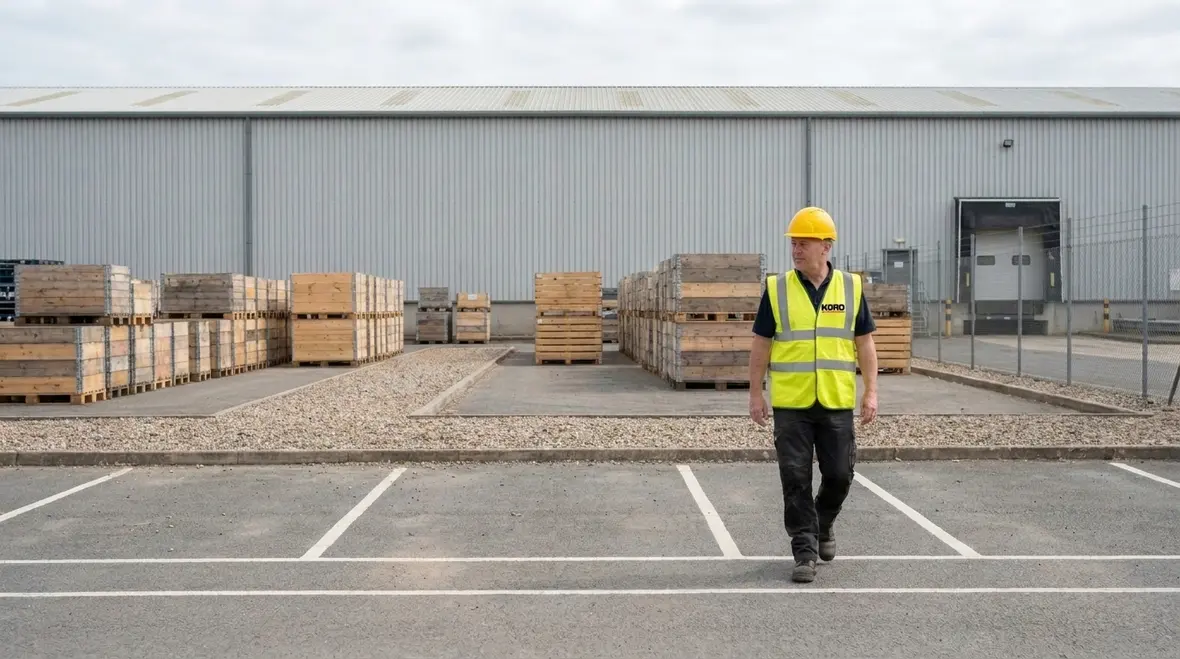
NFPA 1 Section 10.16 focuses on outside storage areas where goods, waste, pallets, packaging, or other combustible items sit outdoors. It sets rules for how much can be stored, how far stacks must sit from buildings and property lines, and how sites should keep fire lanes and access paths open. It also guides how operators should manage ignition sources and keep storage from becoming a fuel load with a bad attitude.
In practice, this section helps facilities think beyond simple stacking. It pushes them to look at exposure to walls, roof edges, fences, vehicles, and nearby stock. It also supports safer site design, because outside storage often grows over time. One day it is a neat pile. A month later it looks like a scene from an action film nobody asked for.
The Real World Scope of Outside Storage
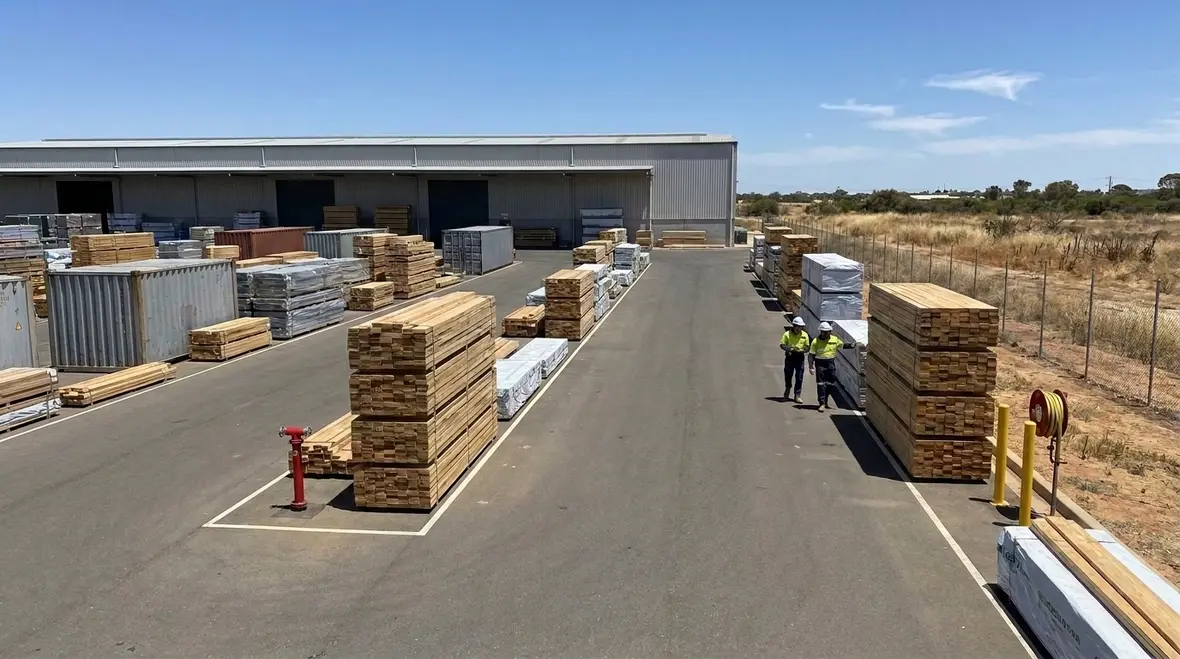
This is where the standard earns its keep. Outdoor stock does not stay politely in one corner forever. Timber stacks creep outward, spare pallets multiply like rabbits with a procurement budget, and packaging waste somehow appears even when everyone swears they cleared it yesterday. Section 10.16 gives operators a practical lens for judging what belongs outside, how much of it can sit there safely, and what separation is needed before the yard starts acting like an extension of the fire load inside the building.
That matters for facilities with loading docks, fenced compounds, service lanes, and mixed use yards. Outdoor storage is rarely isolated. It tends to sit next to movement, traffic, maintenance work, and waste handling. When those functions overlap, fire risk stops being theoretical and becomes an operational problem waiting for a bad decision and a windy afternoon.
How the Code Shapes Safer Storage Layouts
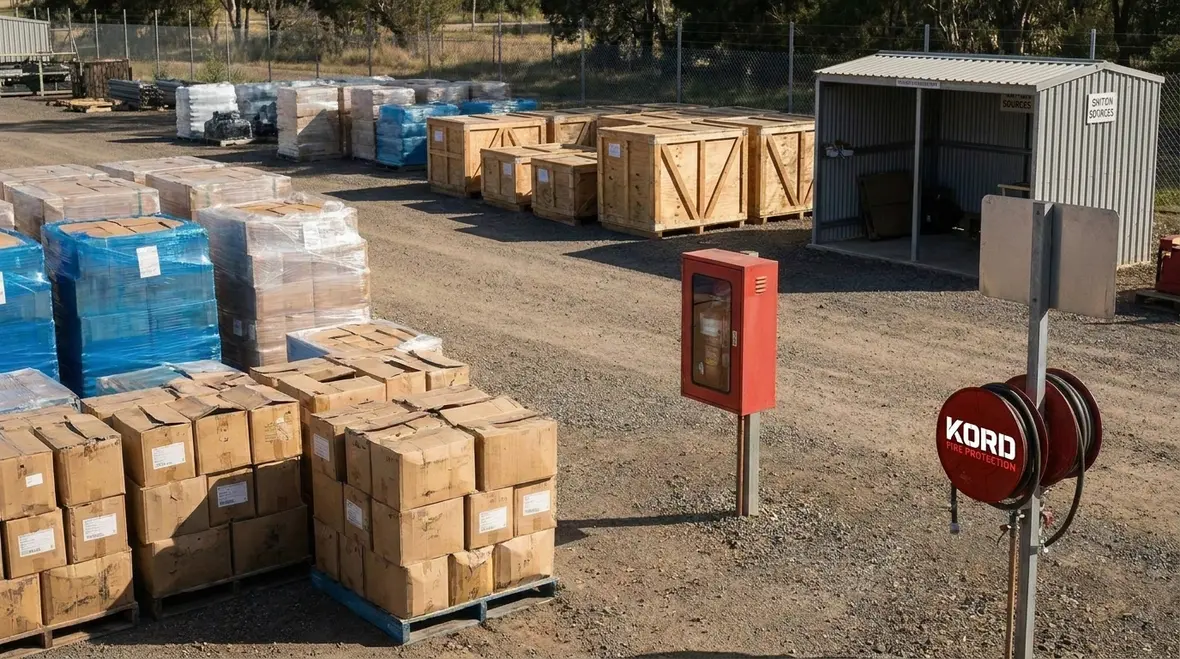
Good layout is the first line of defence. NFPA 1 Section 10.16 encourages separation distances that help stop radiant heat from jumping from one pile to another or from a pile to a building. It also helps facilities keep orderly rows, clear aisles, and open routes for fire crews. As a result, response becomes faster and safer if trouble starts.
Industrial and commercial sites often use these principles to sort storage by hazard level. For example, plastic goods, timber, cardboard, and waste all behave differently in fire. Therefore, they should not all live in one large pile and hope for the best. A disciplined layout reduces both ignition risk and smoke spread, which makes a big difference for large sites with multiple tenants or mixed operations.
Spacing, Access, and the Stuff People Keep Forgetting
A safe yard layout is not just a pretty diagram in a compliance folder. It has to survive forklifts, delivery surges, seasonal overflow, contractor habits, and that universal phrase, “we’ll move it later.” Clear spacing between piles helps slow lateral fire spread. Clear access around stock helps crews reach the seat of a fire. Clear boundaries around buildings help reduce exposure to walls, openings, and structural elements that were never meant to roast beside a mountain of cardboard.
When operators treat spacing as optional, the storage yard starts writing checks the emergency response team may have to cash. Better layouts make inspections easier too, because a messy yard hides problems. A clean one practically points at them and says, “there’s your blocked lane, mate.”
Key Controls for Exterior Storage Fire Regulations
Several controls show up again and again in strong outside storage programs. These controls make the site easier to inspect and easier to defend in an emergency.
- Keep access roads and fire lanes clear
- Separate combustible stock from buildings and fences
- Limit pile height and pile size where needed
- Store materials in stable rows with clear spacing
- Control weeds, waste, and loose packaging
- Keep ignition sources away from storage zones
- Inspect outdoor areas often, especially after busy shifts
These steps sound simple, and that is the point. Simple controls work. However, they only work when people keep using them. A neat outdoor yard on Monday can turn messy by Friday, especially when a site is busy and everyone is “just putting it there for now.” Those words have launched more problems than a season finale cliffhanger.
Turning Controls Into Habits
The strongest outside storage programs do not rely on a single clean up day and crossed fingers. They build routine. Yard checks after dispatch peaks, quick reviews before close of business, and simple accountability for who owns each storage zone all make a real difference. If nobody owns the problem, the problem usually buys real estate and settles in.
It also helps to classify materials by behavior. Combustible waste, empty pallets, shrink wrap, cardboard, and high plastic content stock should not be treated as if they all carry the same heat release and smoke profile. Better separation and better housekeeping cut the chance that a small ignition source becomes a site wide event.
Why This Matters for Australian Facilities
Across Australia, weather, wind, heat, and open site layouts can make outside storage more dangerous. Strong sun can dry out packaging and timber. Wind can push flames and embers across open yards. In addition, many sites store goods near loading docks, waste areas, or transport routes, which raises the chance of exposure. That makes outdoor storage fire safety a serious operational issue, not just a compliance task.
Retail distribution centres, warehouses, manufacturing plants, recycling sites, logistics yards, and commercial storage areas all face this risk. Even when a site follows local codes, outside storage still needs active management. Therefore, many operators use NFPA 1 Section 10.16 as a guide to build better site rules and reduce fire load before a problem starts.
For teams already reviewing broader prevention strategy, it also helps to connect yard risk back to wider code thinking. Kord’s guide to NFPA 1 fire prevention and safety fits naturally here, because outside storage does not exist in a vacuum. It affects access, exposures, maintenance planning, and the basic question every facility should ask: if something catches, what stops it getting worse?
How Kord Fire Protection Adds Real Value
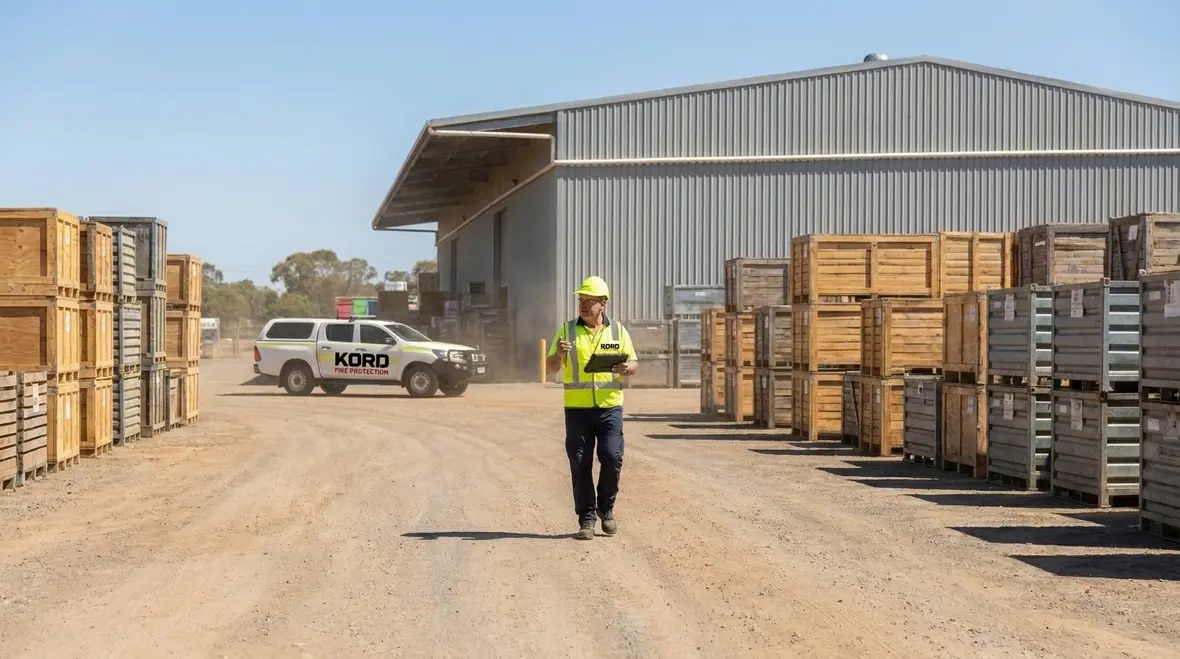
Kord Fire Protection can play a vital role by helping sites assess storage areas, identify gaps, and build fire safety systems that fit real operations. That includes reviewing site layout, checking access routes, and supporting the design of practical controls for outdoor stock areas. Instead of offering generic advice, Kord Fire Protection can help match fire safety plans to the way a site actually runs.
That support matters because outside storage changes fast. Stock moves. Yard space fills. New products arrive. Old pallets linger like they pay rent. So, a fire protection partner can help maintain order, document risks, and support ongoing reviews. For busy industrial and commercial teams, that kind of help saves time, lowers confusion, and strengthens compliance.
From Paper Compliance to Real Site Control
A good fire strategy should survive contact with the actual site. That means controls people can follow, storage zones they can understand, and review processes that do not collapse the second peak season arrives. Kord Fire Protection adds value by making outdoor storage guidance practical. It is easier to sustain a plan when it reflects how freight moves, where overflow appears, and which hazards tend to crop up in the same place every month like an unwanted sequel.
What a Strong Outside Storage Plan Looks Like
| Area | What strong practice looks like |
| Layout | Clear rows, open access, and safe separation from buildings and boundaries |
| Materials | Grouped by risk, with combustibles kept under control |
| Housekeeping | Waste, weeds, and loose packaging removed often |
| Inspection | Regular checks for blocked access, unsafe stacking, and ignition hazards |
| Support | Fire protection review and site guidance from a specialist partner |
The best plans are boring in the best possible way. They are clear, repeatable, documented, and easy to audit. They define where materials go, how high they can stack, who checks access, when housekeeping happens, and what gets escalated when yard conditions drift. If a plan depends on memory alone, it is not really a plan. It is optimism with a clipboard.
FAQ
Conclusion
NFPA 1 Section 10.16 gives commercial and industrial sites a clear path toward safer outdoor storage. When facilities apply those controls with care, they reduce risk and protect daily operations. That is especially important on busy Australian sites where wind, heat, traffic, and changing stock can turn a small oversight into a major fire event.
For businesses that want practical support, Kord Fire Protection can help turn fire rules into real site protection. The smarter move is simple: review the yard now, before the yard writes the review for them.

Join Our Newsletter!
Get the latest fire safety tips delivered straight to your inbox From our Newsletter.