NFPA 1 HazMat Fire Safety Requirements Australia
Quick Answer
NFPA 1 hazardous materials general fire safety requirements set the baseline for how facilities handle HazMat. This guide translates that standard into practical steps for industrial, retail and commercial sites across Australia. It also shows how KORD Fire Protection can become a vital partner in achieving compliant and safer operations.
Introduction
Across Australia industrial, retail and commercial facilities face HazMat challenges daily. NFPA 1 hazardous materials general fire safety requirements provide a clear framework for labeling, storage, handling and emergency response. While the standard is US based, its principles cross borders when applied with local codes. This article distills the essentials for Australian sites and explains how a trusted partner can help implement and sustain compliance. From risk assessment to training and drills, the goal is not fear but preparedness. By aligning with safe practice and practical controls, operations stay efficient and safer for workers and customers. The content respects local WHS duties, ADG Code expectations, and state guidelines while drawing on NFPA 1 as a robust reference point.
Facilities that need broader support across planning, installation, inspections, and long term system readiness can also explore fire protection for compliance and readiness as part of a larger site safety strategy.
NFPA 1 hazardous materials general fire safety requirements explained
The core concept is simple yet powerful. HazMat must be identified, labeled and segregated to prevent reactions. Storage areas require containment that limits spills and minimizes exposure. Ventilation and monitoring protect workers from fumes. Clear emergency procedures guide actions during incidents, and ongoing training keeps teams prepared. Documentation proves the right checks are in place and that the site follows a disciplined approach. For managers this means a living program rather than a one time box to tick. In practice, sites implement controls that fit their operations and scale as needed.
For a broader prevention lens, it also helps to review NFPA 1: a comprehensive guide to fire prevention and safety so hazardous materials planning connects naturally with the rest of a facility’s fire safety responsibilities.
Compliance for Australian facilities
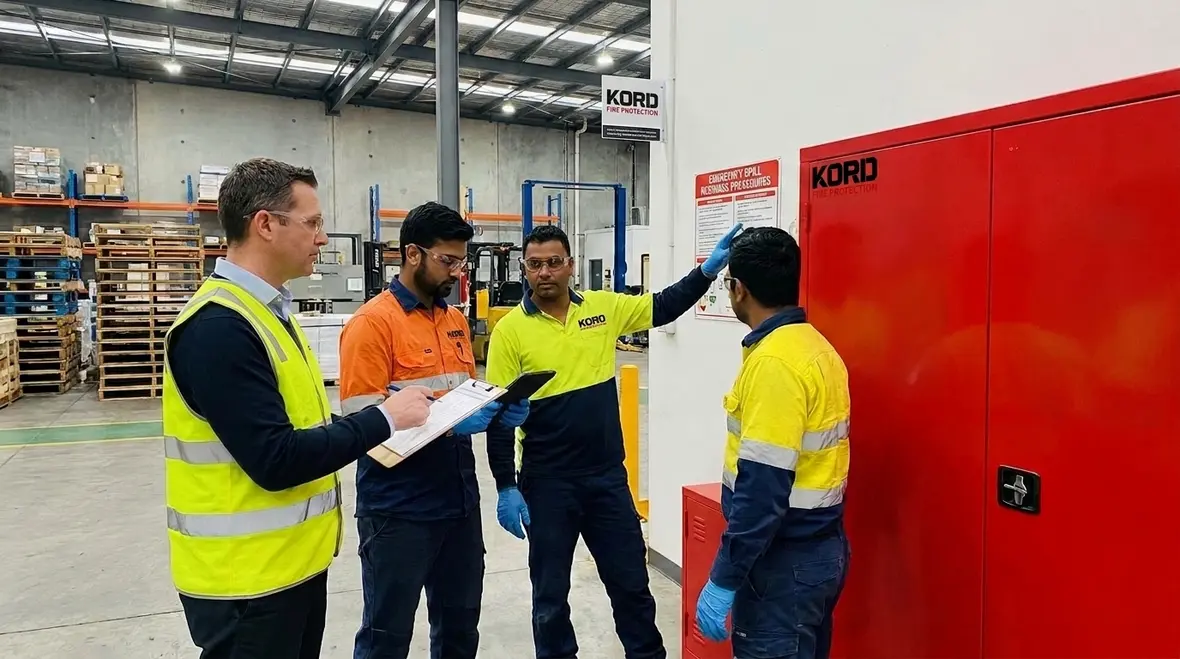
Australian sites align HazMat controls with local laws while using NFPA 1 as a benchmark. Operators consider the ADG Code for dangerous goods and WHS obligations alongside state fire authority guidance. A practical plan starts with a site hazard assessment and ends with a sustainable program. Roles are defined, signage is clear and storage standards are tested through routine inspections. When a team asks what to do next, the answer is often simple and practical rather than perfect but unattainable. KORD Fire Protection brings experience to these steps and helps keep momentum intact.
In this partnership the goal is steady reliability. The approach blends technical compliance with everyday workflows so teams stay productive. The client gains a partner who speaks their language and understands their site footprint. The result is safer workplaces, fewer incidents and confidence during audits. And yes, a little peace of mind goes a long way, especially when a fire drill ends with everyone smiling at the end of the hallway.
Two Column Quick Reference
HazMat Storage Best Practices
- Store HazMat in clearly labeled, compliant containers
- Keep incompatible materials apart in separate zones
- Use secondary containment to catch leaks and spills
- Maintain proper ventilation and temperature control where needed
- Post emergency contact and procedure information in key areas
Training and Drills
- Provide initial HazMat safety training for all staff
- Schedule regular refreshers and drills for new changes
- Document attendance and training results for audits
- Practice incident response with realistic scenarios
- Review performance and improve procedures after drills
What does NFPA 1 hazardous materials general fire safety requirements mean for my facility?
The guidance means each site designs a HazMat program that fits its operations. For a warehouse it means controlled storage and rapid spill containment. For a retail outlet it means clear signage and simple emergency steps for staff. For a manufacturing floor it means robust ventilation and trained responders. In every case the program aims to protect workers, customers and the environment. It is practical, not theoretical.
How this guidance influences training and documentation
Training becomes a living process with regular updates as processes change. Documentation proves that staff understand hazards, know emergency steps and can perform required actions. Drills verify readiness and highlight gaps for quick fixes. The approach favors clear, simple language and realistic expectations. When teams can recite the procedure and show up prepared, confidence rises and risk falls. This is not just compliance; it is culture built on awareness and care.
Where the risk profile is higher or more specialized, teams may also benefit from reviewing special hazard fire suppression in Australia to connect procedures and training with the systems protecting those areas.
FAQ
Conclusion
Ensuring NFPA 1 hazardous materials general fire safety requirements translates into safer sites and smoother operations across Australia. KORD Fire Protection stands ready to help assess risks, design practical controls and train teams. Reach out today to start a focused HazMat safety program that protects people, property and profits.

Join Our Newsletter!
Get the latest fire safety tips delivered straight to your inbox From our Newsletter.