NFPA 1 Ozone Equipment Automatic Shutdown Fire Safety
Quick Answer
NFPA 1 ozone equipment automatic shutdown fire safety keeps ozone systems in check by stopping ozone production when sensors detect unsafe levels. This protects workers, preserves equipment and lowers risk across industrial, retail and commercial sites in Australia. Kord Fire Protection serves as a vital partner from design through ongoing support to keep systems compliant and reliable.
For facilities planning broader code aligned safety improvements, clean agent interlocks and shutdown coordination offer a useful parallel in how equipment, alarms and ventilation should work together.
NFPA 1 Ozone Equipment Automatic Shutdown Fire Safety Principles
Ozone equipment is powerful and effective in cleaning air and water, but it must be kept under strict control. Section 54.4 of NFPA 1 requires an automatic shutdown when monitoring confirms unsafe ozone levels. This safeguard prevents exposure, guards machinery and preserves workplace safety. The goal is clear, and it mirrors the calm assurance of a well executed plan rather than a last minute scramble.
How the System Functions
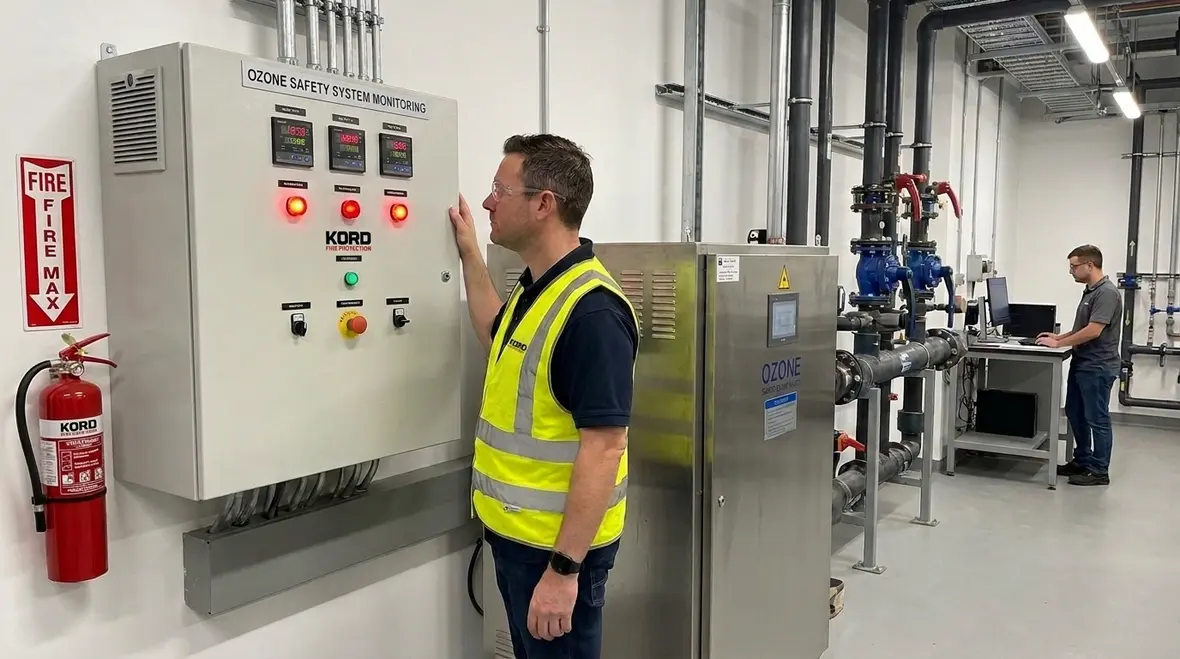
At the heart of the setup are three layers working together. First, ozone monitors continuously sample the air and compare it to safe limits. Second, a robust interlock circuit connects to the ozone generator and to the building controls. Third, a shutdown relay trips the generator and can trigger related ventilation actions. When a fault is detected or a sensor crosses the threshold, the system shuts off automatically and alerts staff. In practice these steps are tested regularly so that when the moment comes the response is swift and precise rather than dramatic and chaotic.
Implementing NFPA 1 Ozone Equipment Automatic Shutdown Fire Safety in Australia
While NFPA 1 is a United States standard, many Australian facilities adopt it as a best practice for ozone safety. Local codes, insurance requirements and health and safety guidelines shape how the installation is carried out. Kord Fire Protection works with site teams to tailor solutions that meet local rules while aligning with NFPA 1 54.4 objectives. The result is a system that protects personnel and equipment without slowing operations more than necessary.
If you want a broader foundation on the code itself, read NFPA 1: A Comprehensive Guide to Fire Prevention and Safety for more context on where this requirement fits into the larger fire and life safety picture.
Benefits for Industrial and Retail Facilities
Embracing an automatic shutdown approach brings tangible gains. First, it reduces exposure risk for workers who may encounter ozone during cleaning or processing tasks. Second, it protects sensitive equipment from ozone damage that can lead to costly downtime. Third, the system supports consistent compliance and makes audits smoother. As operations evolve the safety layer remains steady, offering peace of mind much like a trusted supervisor watching over the floor.
Kord Fire Protection Role as a Partner
Kord Fire Protection delivers a comprehensive service package designed for busy facilities. They assess site needs, engineer a solution that fits existing fire protection systems, install with care, and validate performance. They offer ongoing maintenance, testing and rapid response when issues arise. They can train staff to recognize alarms and operate safely during routine maintenance. In short, Kord Fire Protection helps clients stay ahead of risk while keeping disruptions to a minimum.
- Design for NFPA 1 compliance and site specific factors
- Installation that integrates with alarms and ventilation
- Functional testing and commissioning
- Calibration of ozone sensors and control logic
- Documentation for audits and insurance
- Staff training and emergency response drills
- Remote monitoring and rapid service response
- Retrofits for aging facilities or new processes
Two Column Overview
- Key protection features include continuous monitoring and automatic shutdown when safe limits are exceeded
- Kord Fire Protection provides design, installation, maintenance and training for Australian sites
- Interlocks connect ozone control to ventilation and fire safety systems
- Regular testing and documentation support compliance and audits
- Staff training ensures quick and calm reactions during alarms
- Retrofitting capabilities help modernize older facilities
Frequently Asked Questions
Conclusion
Facilities across Australia can gain real value from NFPA 1 ozone equipment automatic shutdown fire safety by pairing strong design with reliable service. Kord Fire Protection offers the expertise to tailor, install and maintain these systems so sites stay compliant and safe. Reach out now to plan a risk assessment and begin a partnership that protects workers, equipment and operations.

Join Our Newsletter!
Get the latest fire safety tips delivered straight to your inbox From our Newsletter.