NFPA 1 Cooking Equipment Inspection and Maintenance
Quick Answer
NFPA 1 Section 50.6 sets the standard for cooking equipment inspection and maintenance in commercial kitchens. Regular inspections prevent fires and keep operations compliant. Kord Fire Protection can be a vital partner, delivering audits, cleaning, testing and documentation that align with the fire code while minimising downtime for Australian facilities.
For teams reviewing kitchen protection as part of a broader safety plan, commercial kitchen fire suppression system support fits naturally alongside inspection and maintenance planning.
NFPA 1 cooking equipment inspection maintenance fire code Essentials
The NFPA 1 cooking equipment inspection maintenance fire code provides a framework for how kitchens should care for their cooking gear. It calls for a formal inspection program, routine cleaning of hoods and ducts, proper maintenance of suppression systems and accurate record keeping. The aim is to reduce grease build up and ensure readiness of safety systems at all times. In practice this standard helps owners and managers show due diligence and protect lives and property. For facilities across industry it translates into safer kitchens, smoother operations and fewer costly interruptions.
For a wider code context, Kord Fire Protection also covers NFPA 1 fire prevention and safety requirements, which helps connect kitchen compliance to the rest of the building’s fire protection strategy.
What NFPA 1 Section 50.6 Covers
This section focuses on the ongoing care of cooking equipment used in commercial settings. It covers the inspection frequency and the types of checks needed. It emphasises cleaning and maintenance of grease removal systems and the fire suppression equipment. It requires documentation that demonstrates when inspections occur and what actions were taken. It also highlights the need for staff training so every person on site knows how to identify issues and who to call for repairs. Using the standard helps facilities stay aligned with best practice and regulators.
Regular Inspections in Kitchens
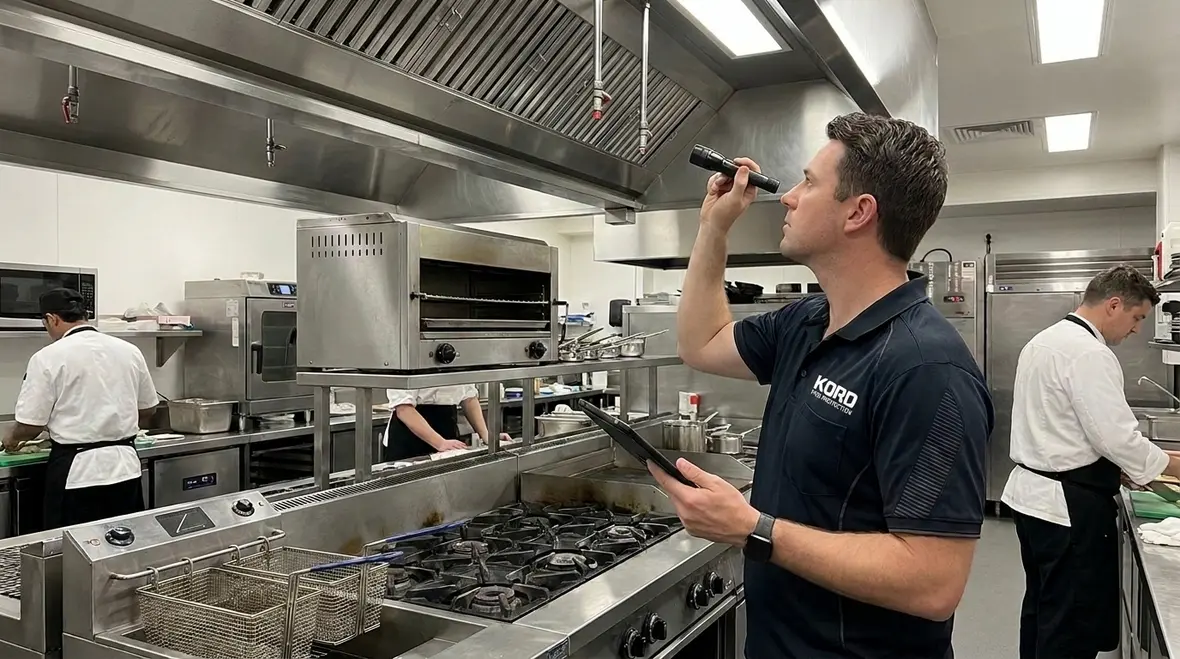
Inspections should be part of daily routines and scheduled maintenance. Visual checks help catch obvious problems early. Cleaning of hoods, filters and ductwork reduces grease fires. The fire suppression system must be tested and serviced as required by the manufacturer and the local fire authority. Electrical and gas connections should be examined for signs of wear or leakage. Records from these checks form the backbone of a compliant program and support evidence in audits or investigations.
Inspection Focus Areas
- Cooking equipment such as ranges ovens fryers griddles and ovens
- Ventilation components including hoods ductwork and filters
- Grease management with pans catch basins and trays
- Fire suppression system readiness and release mechanisms
- Electrical connections and gas lines for signs of wear
- Fire extinguishers and emergency lighting
- Maintenance tasks including cleaning lubrication and adjustments
Program Cadence
- Daily visual checks and immediate reporting
- Monthly cleaning schedules and grease removal
- Quarterly functional tests and minor service
- Annual professional inspection and service
- Record keeping and documentation retention
- Staff training and safety briefings
- Coordinated action with licensed technicians
Kord Fire Protection as a Vital Partner
Kord Fire Protection offers more than a service. It becomes a trusted partner for facilities in Australia facing complex kitchen safety demands. The team brings knowledge of NFPA 1 cooking equipment inspection maintenance fire code and the practical realities of large kitchens. They perform on site inspections clean tests and system checks while supplying clear records and guidance. When a facility needs fast response a partner who understands both local regulations and international best practices is essential. With Kord on the project kitchens keep operating safely and compliant without unnecessary delays or guesswork.
Getting a compliant program started in Australia
Starting a program that follows NFPA 1 cooking equipment inspection maintenance fire code requires a practical plan. First an inventory of all cooking equipment and ventilation is completed. Next a tailored inspection schedule is created that matches usage patterns and local regulations. Then the right people are assigned responsibilities with clearly defined procedures. Finally a system for records and reporting is put in place so audits and investigations are straightforward. Engaging a partner like Kord Fire Protection can speed this process with tested checklists and proven workflows. The aim is clear durable safety and minimal disruption to service.
Applying NFPA 1 cooking equipment inspection maintenance fire code in practice
In real world terms facilities benefit from a practical program that blends the standard with everyday operations. A disciplined approach uses checklists personal training and a documented maintenance log. It is important to couple routine cleaning with professional inspections at least annually. When issues arise quick assessment and action prevent larger problems. The result is safer kitchens lower risk of fire events and meetings with regulators that feel less tense. Kord Fire Protection can help design and implement this approach ensuring the program remains up to date as equipment changes or new regulations come into force.
FAQ
Conclusion
For industrial retail and commercial facilities in Australia NFPA 1 cooking equipment inspection maintenance fire code sets the mark for safety and reliability. Partners like Kord Fire Protection help implement the standard with ease providing audits cleanings testing and documentation that keep operations compliant and efficient. When the time comes to protect people and property choose a partner who understands the code and the reality of busy kitchens. Contact Kord Fire Protection to build a compliant program today.

Join Our Newsletter!
Get the latest fire safety tips delivered straight to your inbox From our Newsletter.