NFPA 1 Section 51.2 Industrial Oven Placement Fire Code
Quick Answer
NFPA 1 Section 51.2 sets clear rules for the placement of industrial ovens, focusing on safe clearances, ventilation, ignition control, and access for maintenance. This guidance helps prevent fires and protects workers. kord fire protection can be a vital partner by guiding site assessments, installation, and ongoing compliance across Australian facilities.
Introduction
In industrial settings across Australia, the safety plan for ovens is not just about heat warnings and fire alarms. The NFPA 1 industrial oven location placement fire code acts as a compass for where ovens sit on a site and how they interact with exits, walls, and combustible materials. NFPA 1 Section 51.2 specifically calls for adequate clearance, proper ventilation, and dependable ignition control. The rest of this article digs into these requirements and shows how a trusted partner like kord fire protection can translate a dense code into practical, site specific actions that keep factories, warehouses, and processing plants safe and productive.
For facilities planning broader system support, it is also worth exploring fire suppression system services early in the project so oven placement, detection, and suppression strategy work together instead of meeting awkwardly in the hallway later.
Understanding NFPA 1 Section 51.2
Section 51.2 is about risk minimization through thoughtful placement. It requires clearances from walls and exits, consideration of exhaust paths, and separation from potential ignition sources. The code also emphasizes accessibility for maintenance and inspection so that ovens stay safe year after year. For facilities equipped with heavy or complex ovens, the rule book is a reminder that safety is built into the plan from day one rather than added as a band aid after a scare. The practical takeaway is simple: design with ventilation, separation, and maintenance in mind and audits will feel less like a headache and more like a routine checkmark.
Why the Fire Code Matters in Real Facilities
Industrial ovens do not operate in isolation. They sit among people, equipment, products, ductwork, and deadlines. A placement rule that looks simple on paper can have a major impact on evacuation paths, service access, and heat exposure once the oven is actually installed. That is why the code matters. It pushes teams to think ahead, reduce preventable hazards, and avoid turning a layout issue into an emergency with a very expensive sequel.
Site Assessment and Placement Best Practices
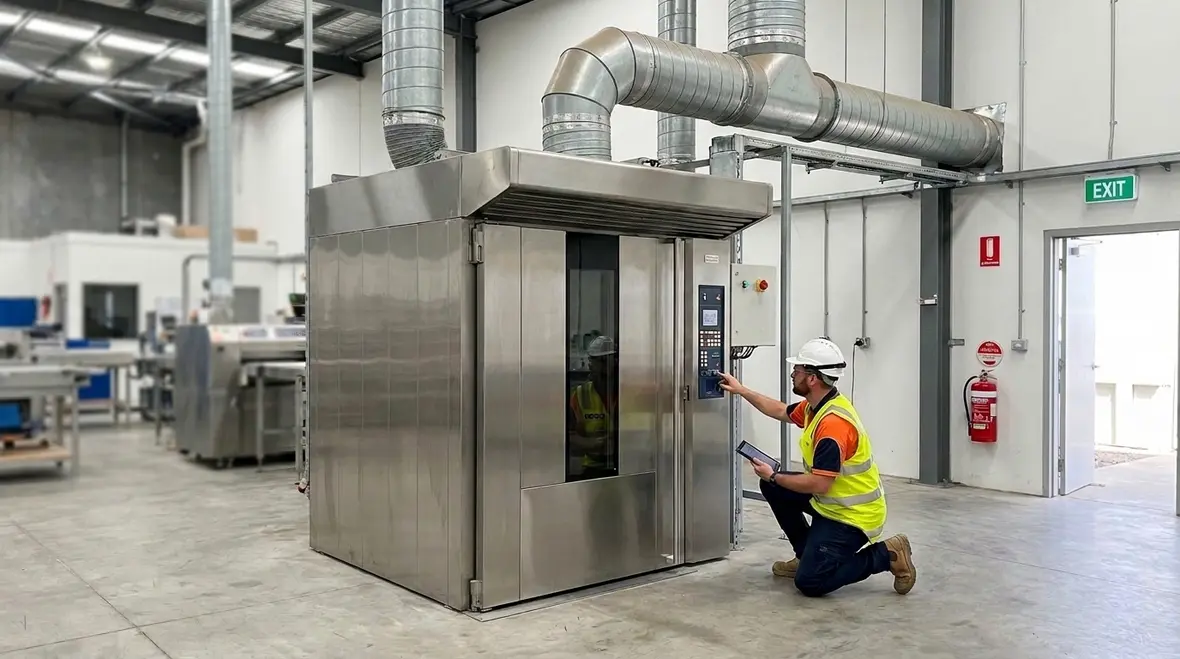
A strong oven location strategy begins with a thorough site assessment. Evaluate current layouts for heat plumes, radiant heat, and the flow of people. Map escape routes and ensure that the oven does not obstruct exits or emergency shutoffs. Measure clearance to combustible materials and confirm that walls and ceilings have appropriate fire resistance ratings. In addition, review exhaust systems and ductwork to ensure they remove heat and fumes efficiently without recirculation. When in doubt, treat the space like a high stakes kitchen where a calm team can keep the heat where it belongs and away from the unintended audience.
What a Good Assessment Usually Includes
- Heat source mapping and equipment spacing review
- Exit access and emergency shutoff clearance checks
- Combustible material separation measurements
- Wall and ceiling fire resistance review
- Exhaust path and airflow performance checks
- Maintenance and inspection access verification
Ventilation, Exhaust and Clearance
Ventilation is a central theme in NFPA 1 industrial oven location placement fire code. A well designed exhaust path moves hot air and smoke away from occupied areas while keeping ignition sources contained. Installations should include dampers, heat sensors, and automatic shutoffs if airflow drops below safe levels. Clearances around the oven prevent hot surfaces from bypassing barriers. Finally, maintain unobstructed access to doors, panels, and controls so trained staff can act quickly if needed.
Fire Protection Systems and Codes
Beyond placement, a robust protection system is essential. Fire detection, automatic extinguishing where appropriate, and a monitored alarm network contribute to a safer environment. Equipment should be compatible with local authorities and the broader safety program. In practice, this means documentation, routine testing, and a plan for changes when processes evolve. A steady partner brings not only gear but also guidance through audits and inspections, keeping the operation aligned with NFPA 1 industrial oven location placement fire code practices.
If you want a wider foundation on the code framework behind these decisions, see NFPA 1: A Comprehensive Guide to Fire Prevention and Safety, which gives helpful context to the broader requirements surrounding industrial fire and life safety planning.
Operational Practices and Maintenance
Daily operations should reflect the code in routine tasks. Confirm that operators understand ignition controls, ignition source management, and shutoff procedures. Schedule regular maintenance for vents, controls, and sensors. Record keeping is vital; logs should show inspection dates, maintenance performed, and any corrective actions. When teams stay proactive, incidents drop and confidence rises, much like a steady captain steering a ship through calm seas.
Maintenance Habits That Support Safer Oven Operation
- Routine cleaning of vents and ductwork
- Functional checks of controls, dampers, and sensors
- Verification of shutoff response during testing
- Updated maintenance logs and corrective action records
- Refresher training for operators and supervisors
The kord Fire Protection Advantage
kord fire protection brings a blend of local knowledge and nationwide standards experience. They translate NFPA 1 guidance into practical site plans, detailed installation layouts, and maintenance programs tailored to Australian facilities. Their team can assist with risk assessments, code compliant oven placements, training for staff, and ongoing support after project handover. By partnering with kord, facilities gain a trusted advisor who speaks the language of safety and production, reducing guesswork and accelerating compliance with a calm, measured approach.
Australia Focused Implementation and Partnerships
Australian facilities often operate within a landscape of diverse standards and local authorities. While NFPA provides a robust framework, real world compliance requires practical adaptation. kord fire protection works with site engineers, facility managers, and safety teams to bridge gaps between code theory and site realities. Whether upgrading an existing oven setup or designing a new line, this partnership aims for clear responsibilities, transparent timelines, and safety outcomes that let operations run smoothly, day after day.
Dual Column Insight for Oven Location
Column A Focus Areas
- Clearances and layout planning aligned with NFPA 1 51.2
- Ventilation and exhaust path optimization
- Maintenance access and documentation
Column B Support Services
- On site risk assessment and design reviews
- Installation, testing, and commissioning
- Staff training and ongoing maintenance programs
FAQ
Conclusion and Call to Action
In the end, placing industrial ovens with care under the guidance of NFPA 1 industrial oven location placement fire code and NFPA 1 Section 51.2 is a steadying force for safety and productivity. kord fire protection stands ready to help Australian facilities plan, install, and maintain compliant oven locations. Reach out today to start a calm, thorough conversation about your site and your goals.

Join Our Newsletter!
Get the latest fire safety tips delivered straight to your inbox From our Newsletter.