Mobile Kitchen Fire Suppression for Food Trucks Rolling
Mobile kitchen fire suppression keeps food trucks rolling, not burning
Every food truck operator knows the truth: the menu can change faster than the weather, but fire safety cannot wait for a “someday” plan. Mobile kitchen fire suppression protects the cooking area while crews run hot grills, fryers, and ovens, often in tight spaces where smoke turns into trouble fast. In other words, when flames show up, the system should already know what to do. And yes, it should work even when the line is long, the staff is tired, and someone inevitably says, “It is probably nothing.”
That is why kord fire protection can become a vital partner for food truck businesses and mobile kitchens. They help teams choose equipment, train staff, and stay ready for inspections, so the business keeps earning money instead of learning lessons the hard way. For operations that also run service vehicles, support equipment, or generator setups, Kord Fire Protection’s vehicle fire suppression systems page offers useful context on how suppression planning changes when fire hazards move with the job.
What makes fire risk higher in mobile kitchens
Fire risk rises in mobile operations because equipment sits closer together, ventilation space stays limited, and power loads can shift during busy hours. Moreover, many trucks run on gas, electric, or both, which means the fire picture can change depending on the day. Grease, oil vapors, and food particles build up on hoods, filters, and cooking surfaces. Then, a small flare can become a bigger event when heat spreads quickly.
To make it worse, mobile crews often work in different locations with different weather and wind patterns. Therefore, fire prevention must handle more than one scenario. A kitchen can look “fine” until a fryer reaches an unsafe condition, or a hose connection loosens, or an electrical fault sparks behind equipment. In short, mobile kitchens demand a plan that reacts fast, not a hope that things stay calm.
Why tight layouts change everything
A restaurant kitchen has room to spread risk out. A food truck does not. Heat sources, fuel lines, wiring, stainless surfaces, and exhausted staff all end up sharing a surprisingly small footprint. That compressed layout means problems escalate faster, visibility can drop quickly, and access for manual response may feel awkward right when every second matters. It is basically the culinary version of trying to solve a crisis in a hallway.
How fire suppression systems work on trucks and trailers
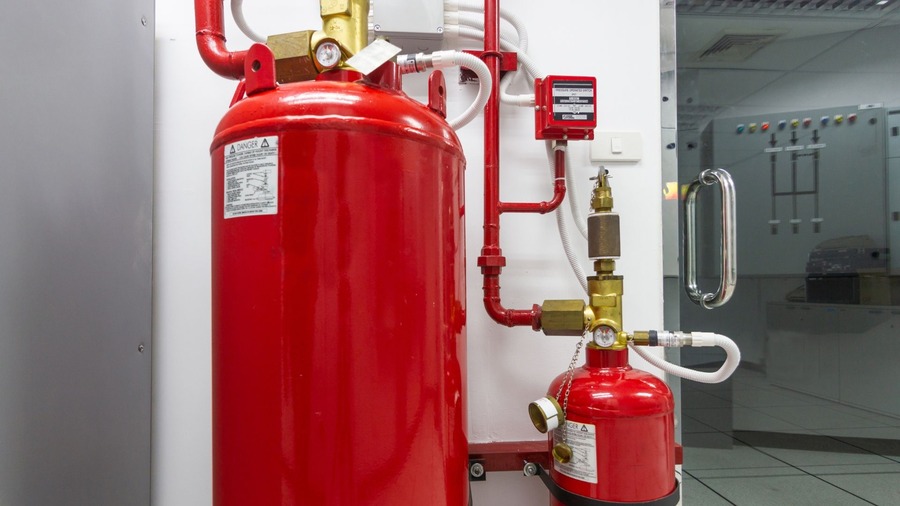
A proper suppression approach does not rely on guesswork or an extra fire extinguisher that stays dusty in the corner. Instead, it uses a designed system that protects the areas where flames start most often. Typically, that includes cooking appliances, hood enclosures, ductwork, and the space above the cooking line where grease accumulates.
When heat rises beyond a preset limit, the system detects the condition and releases an extinguishing agent. Consequently, the agent helps smother flames and interrupts the heat source. Some systems also focus on clearing hot surfaces and preventing re ignition. At the same time, the design aims to protect the hood and duct system where fire travels.
People sometimes compare suppression systems to seatbelts. You do not feel them until you need them. Then, you are incredibly grateful they were installed, checked, and ready.
The protected zones that matter most
On trucks and trailers, protection usually centers on the hood plenum, ducts, fryer areas, grills, charbroilers, ranges, and other high heat appliances. The idea is not just to hit visible flames. It is to cover the spots where grease and heat quietly build a bad attitude before anyone notices. That is why nozzle placement, appliance spacing, and equipment changes matter so much during design and service.
Design and compliance: matching the system to the cooking setup
Mobile kitchen fire suppression does not mean “one size fits all.” Each truck or trailer varies by layout, hood type, fryer count, grill style, and exhaust design. For instance, a small trailer with one fryer needs a different setup than a large truck with multiple cook lines and a deep hood enclosure.
Because of that, the business should plan the system during build or upgrade, not after problems appear. A well matched design considers distance between appliances and hood surfaces, the type of grease exposure, and the size of the protected area. It also considers power options and any existing suppression lines.
From a compliance standpoint, local fire code requirements can differ by jurisdiction. Therefore, operators should work with qualified partners to document the system, schedule inspections, and follow service records. Kord Fire Protection can help teams navigate these needs with a steady, practical approach. They make it easier to keep paperwork tight and inspections smoother, which saves time, money, and the kind of stress that ruins lunch.
Businesses that want a broader understanding of how suppression layouts are evaluated can also explore Kord Fire Protection’s fire suppression system design, types and maintenance guide. It is a helpful interlink for owners comparing installation strategy, maintenance planning, and long term readiness across different hazards.
Training staff and reducing human error without killing morale
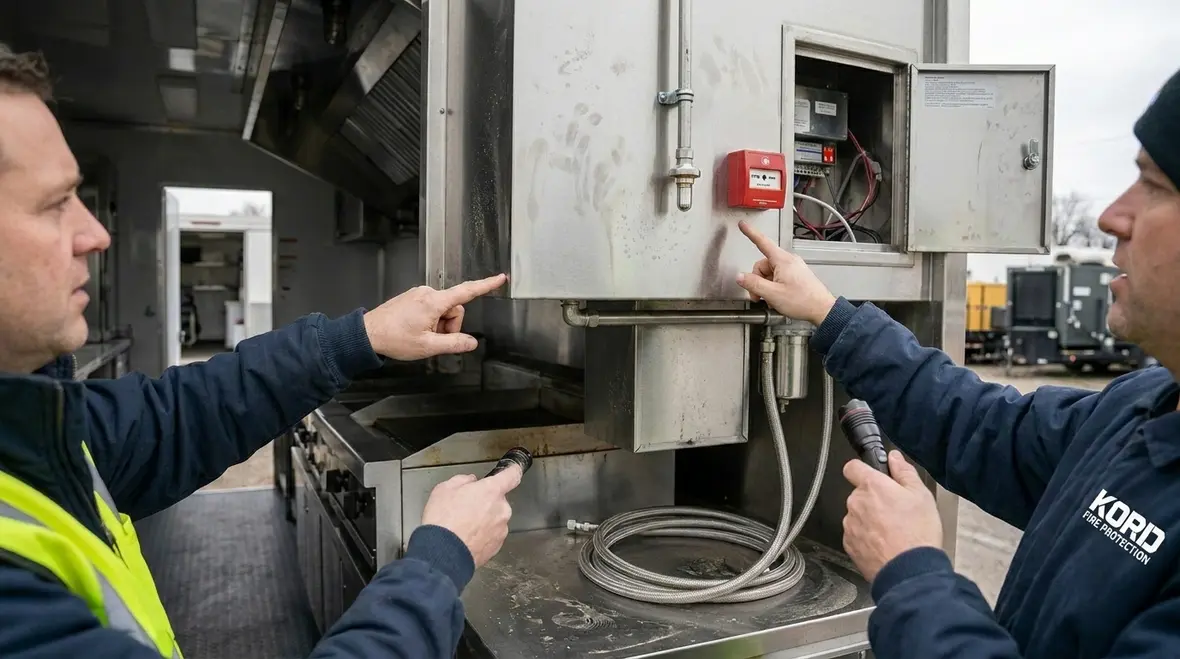
Even the best suppression system cannot replace basic habits. Yet training does not have to feel like a lecture. Crews need simple, repeatable steps: know where the manual pull stations are, understand the shutdown process, and learn what happens after discharge. Moreover, staff should know how to keep the hood, filters, and grease collectors clean enough that the system does not fight a daily buildup battle.
Effective training also covers communication. If something goes wrong, the crew must respond fast and consistently. Transitioning from cooking to emergency steps needs clarity, not improvisation. When a team rehearses once, they move better during real moments.
And here is a small joke that comes with real value: a fire extinguisher is not a substitute for prevention. It is like a backup plan. You do not want to live on your backup plan. You want the main plan to be solid, calm, and ready.
Simple habits crews can remember during a rush
- Confirm the cooking line is clear before startup.
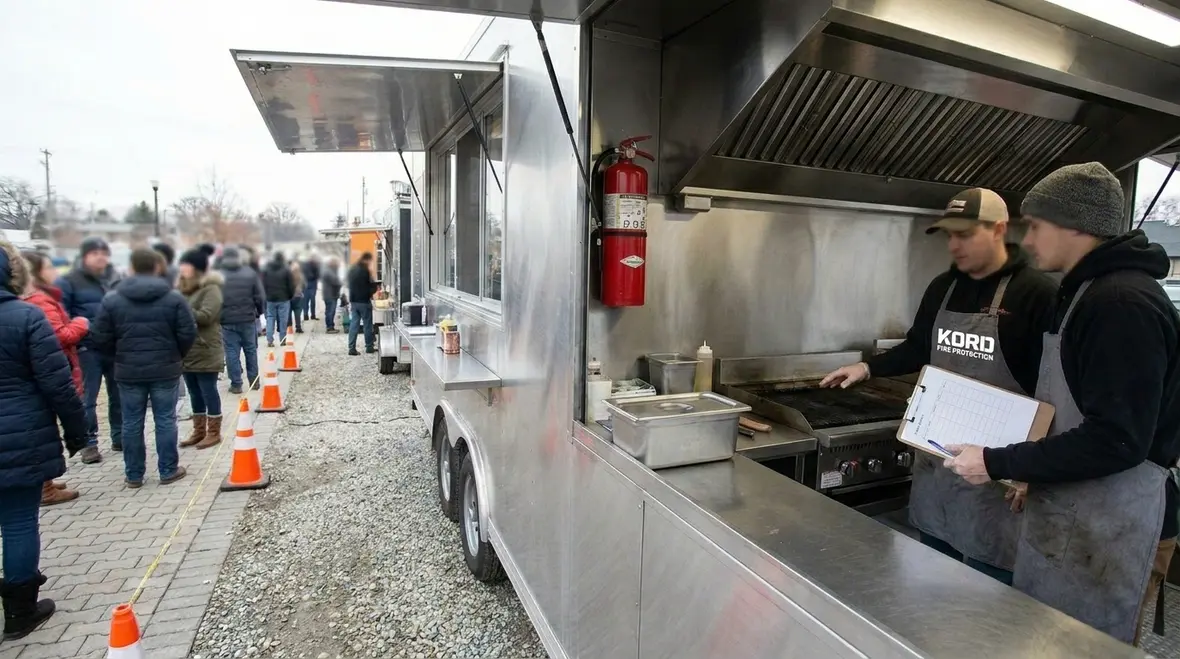
- Check that extinguishers are visible and accessible.
- Keep manual pull stations unobstructed.
- Watch for grease buildup instead of pretending future-you will love cleaning it later.
- Review shutdown steps so everyone knows who does what.
Maintenance, inspections, and service schedules that keep protection reliable
Systems protect only as well as their last inspection and last service. Over time, components can wear, inspectability can fade, and discharge pathways can collect grime. Because mobile kitchens face vibration, travel, weather exposure, and frequent setup changes, maintenance matters even more.
A good service program includes routine inspections, verification of components, and timely recharge or part replacement as needed. It also includes cleaning and verifying the ventilation and hood operation so grease does not build up in hidden pockets. Furthermore, the service schedule should align with the actual usage level. A truck serving heavy fry menus every day needs different attention than one that runs limited hours.
kord fire protection supports this work by helping businesses stay consistent. When service records stay current and technicians verify function, operators reduce surprise downtime. They also improve readiness for audits, permits, and event requirements. In this business, reliability is not just a nice idea. It is a profit strategy.
If your team wants more detail on why ongoing checks matter in moving environments, Kord Fire Protection’s vehicle fire suppression systems maintenance guide is another strong internal resource. While the applications differ, the lesson is familiar: systems that travel, vibrate, and work hard need disciplined inspection to stay dependable.
Best practices for safer operations at events and on the road
Operators can lower risk before the system even detects anything. First, they should manage grease handling and keep cooking areas organized. Second, they should verify that hoses, regulators, and electrical connections stay tight and in good shape. Third, they should use checklists before each shift, especially for hood airflow and cooking readiness.
At outdoor events, wind and crowd positioning can complicate safety. Therefore, teams should plan the truck location, keep clear access routes for emergency responders, and ensure extinguishers remain visible and reachable. Additionally, staff should avoid blocking ventilation intakes with storage items or boxes.
Another practical step is to set rules for deep cleaning. If someone waits until “after the rush,” the kitchen will pay interest on that decision later. Instead, a scheduled cleaning rhythm keeps the system’s job simpler and improves cooking quality. Everyone wins when safety and cleanliness align.
Pre-shift checks worth keeping on paper
A short checklist can prevent a long night. Review fuel connections, test accessible safety devices, verify hood airflow, check power routing, and confirm nothing is stored where heat, grease, or emergency access should be. These steps are not glamorous, but neither is explaining to customers why dinner service ended in flashing lights.
FAQ: Fire suppression for food trucks and mobile kitchens
Conclusion: bring in kord fire protection before the next busy night
Fire safety for food trucks and mobile kitchens should feel steady, not last minute. Mobile kitchen fire suppression protects the areas where grease and heat combine into real danger, and ongoing service keeps that protection dependable. When a business works with kord fire protection, it gains a partner that helps with design support, training guidance, and maintenance planning.
So do not gamble on “it has never happened.” Reach out today, get a clear plan, and keep the line moving. If you are ready to talk through options, Kord Fire Protection’s fire suppression services page is a strong next step for scheduling support, exploring system options, and turning good intentions into actual protection.

Join Our Newsletter!
Get the latest fire safety tips delivered straight to your inbox From our Newsletter.