Automatic Vehicle Fire Suppression Installation by Kord Fire Protection
Automatic vehicle fire suppression systems are not magic wands, but they can feel pretty close when a real fire starts. In the first moments of an engine or cargo blaze, every second matters, and these systems help detect heat and release agent fast enough to limit flame spread and reduce damage. In other words, they aim to stop the fire before it turns into a full blown “movie scene” where everyone runs around yelling. And while owners can build strong safety plans, they often need a skilled partner to design, install, test, and service the solution. That is where Kord Fire Protection can become a vital partner with this service job, bringing the calm, methodical professionalism that keeps vehicles protected and operations running. Kord Fire Protection highlights that vehicle fire suppression systems are widely regarded as a primary defense against vehicle fires, and its service page emphasizes installation, testing, inspection, documentation, and 24/7 support for these systems. ([kordfire.com](https://kordfire.com/vehicle-fire-suppression-systems/?utm_source=openai))
For fleets, specialty operators, and companies that cannot afford long downtime, the value goes beyond the dramatic moment of discharge. A properly planned system supports business continuity, protects expensive equipment, and gives operators one less thing to lose sleep over. That matters whether the vehicle is hauling materials across a worksite, running a delivery route, or moving passengers through a daily schedule. And yes, while nobody wants to imagine a fire event, it is much better to prepare with calm logic than to rely on heroic improvisation later. If that sounds obvious, good. Fire safety is one of those areas where obvious wisdom still saves the day.
How automatic vehicle fire suppression works in the real world
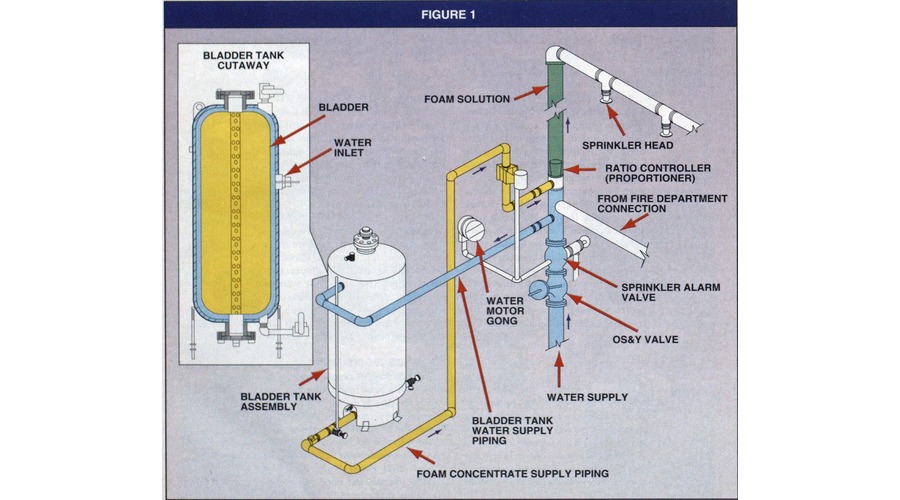
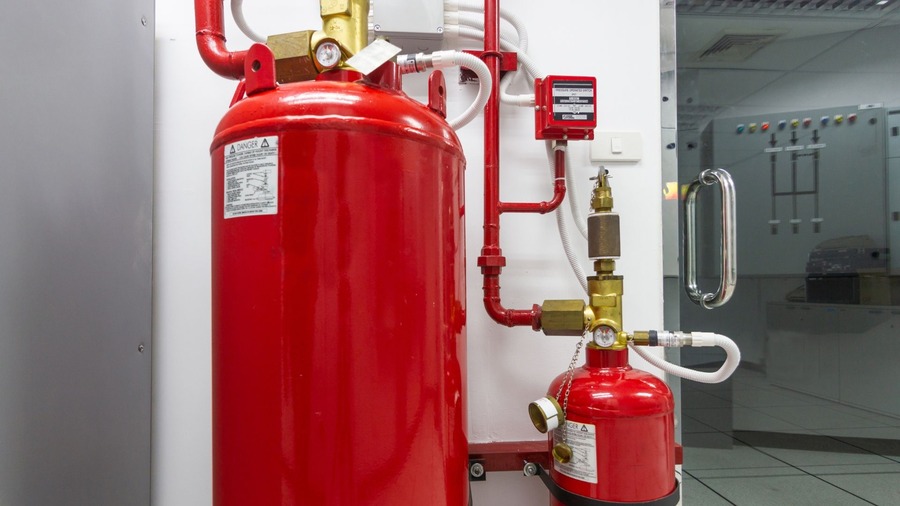
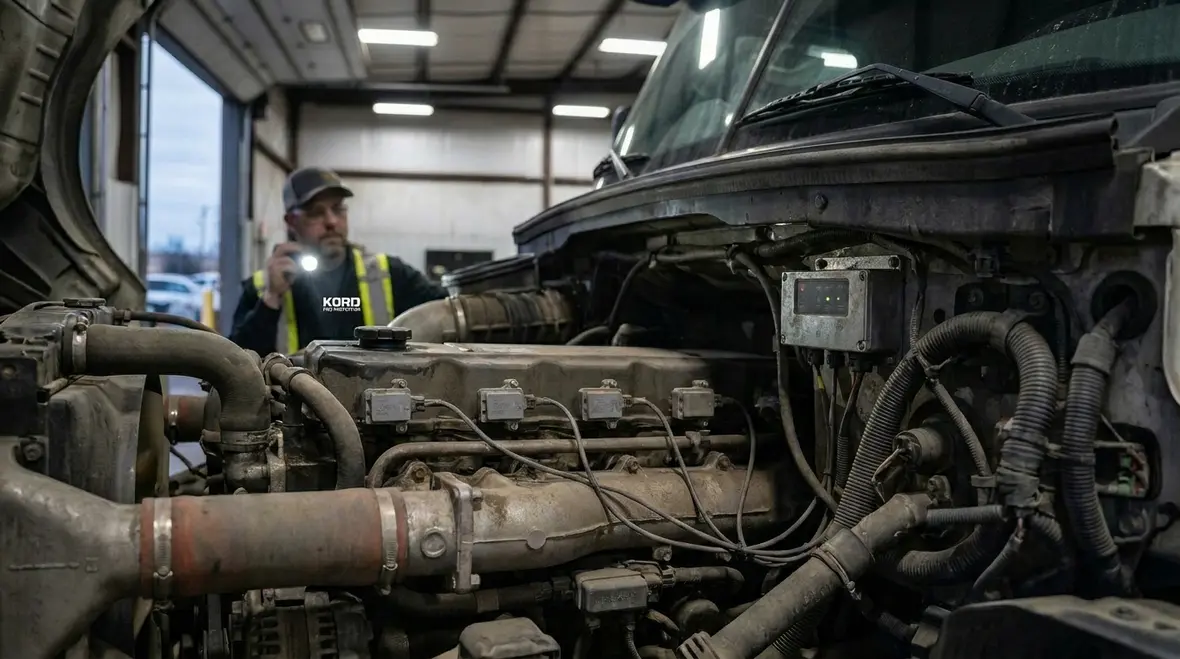
Automatic vehicle fire suppression starts with detection. Sensors and heat or flame triggers watch for rapid temperature rise and fire signatures. Then, once conditions match the preset range, the control system releases the extinguishing agent. Kord Fire Protection describes vehicle suppression systems as typically including detection sensors, a control panel, tanks with agent, a manual or automatic discharge method, and a distribution network. ([kordfire.com](https://kordfire.com/vehicle-fire-suppression-systems/?utm_source=openai))
Most designs fall into two practical categories. First, many systems use agent stored under pressure and released through nozzles aimed at key hazard areas. Second, some vehicles use special housings that direct discharge into compartments where fire can grow. Either way, the goal stays consistent: deliver the right amount of agent to the right spot at the right time. That simple sentence does a lot of heavy lifting, because timing and placement are where a real system earns its keep.
However, speed alone does not make the difference. The system also needs correct coverage. For example, the engine bay, battery area, and any high risk heat zones often require different nozzle placement than cargo compartments. Therefore, a competent installer plans the layout, verifies clearances, and ensures the discharge pattern matches the vehicle geometry. After all, fire does not respect good intentions. Kord Fire Protection also notes that systems are custom designed based on the vehicle and hazard profile rather than treated as one-size-fits-all equipment. ([kordfire.com](https://kordfire.com/vehicle-fire-suppression-systems/?utm_source=openai))
Detection, discharge, and the difference between fast and effective
In plain terms, detection finds the problem, discharge responds to it, and design makes sure the response actually helps. That is why a system that looks tidy on paper can still fail in practice if the hazard zones were mapped poorly. A nozzle pointed where there is open space instead of concentrated risk might look innocent enough during installation, but fire has a very rude way of grading the work later.

Common vehicles and applications that benefit
Automatic vehicle fire suppression supports a wide range of fleets and specialty builds. Fire risk changes with vehicle design, so the right system depends on what the vehicle carries, how it operates, and where heat can build. Kord Fire Protection specifically identifies industries and applications including mining, oil, steel, waste handling, forestry, wood, paper, construction, transportation, military, coal, and agriculture as common users of vehicle suppression systems. ([kordfire.com](https://kordfire.com/vehicle-fire-suppression-systems/?utm_source=openai))
- Delivery trucks with engine and battery hotspots
- Box trucks and service vehicles with enclosed compartments
- Commercial buses with defined equipment areas
- Fire sensitive cargo vans and refrigerated transport
- Specialty vehicles like mobile workshops and equipment haulers
- Industrial units that operate near hot work or high power loads
When fleets standardize these systems, maintenance becomes easier and training becomes clearer. Yet, each vehicle still needs its own assessment. Even sister trucks can differ due to wiring routes, mounting points, and aftermarket changes. That is one reason Kord Fire Protection stresses risk assessment before installation, so the design fits the actual vehicle instead of a generic sketch someone once thought looked convincing. ([kordfire.com](https://kordfire.com/vehicle-fire-suppression-systems/?utm_source=openai))
Why fleets, transit, and industrial operators think differently about risk
A city bus, a refrigerated truck, and an industrial hauler do not live the same life, so they should not be protected the same way. Some run long hours with repeated thermal cycling. Others pack equipment into tight compartments that trap heat. Some carry people, while others carry expensive cargo or mission-critical tools. The point is not to make things complicated for sport. The point is to match protection to actual exposure, because that is where money and safety both stop arguing and start agreeing.
Key design factors that prevent costly mistakes
People often think the system simply “sprays and prays,” but good engineering does not work that way. Instead, design choices control performance, and small errors can create big gaps.
Agent selection matters because different agents suit different fuels and fire behaviors. Kord Fire Protection explains that dry chemical, liquid, and dual agent systems each have different strengths depending on the hazard. Discharge coverage matters because a well aimed system can choke the fire’s growth. Mounting stability matters because vibration and vehicle motion can shift components over time. Line routing matters because abrasion and heat exposure can weaken components. ([kordfire.com](https://kordfire.com/vehicle-fire-suppression-systems/?utm_source=openai))
Additionally, the system must integrate with the vehicle’s environment. That includes routing around exhaust heat, protecting sensors from false triggers, and using safe wiring practices. Transitioning from “buy a kit” to “install a working system” requires real skill, documentation, and verification. Kord Fire Protection’s broader fire suppression content also emphasizes that design, system type, and maintenance planning need to work together instead of being treated like separate chores. ([kordfire.com](https://kordfire.com/fire-suppression-system-design-types-and-maintenance/?utm_source=openai))
Here is a quick joke, because even safety plans deserve a chuckle. If someone installs a nozzle where it looks neat instead of where it works, that system will eventually show them exactly how neatness meets reality. Fire always has the last word, and it is rarely kind.
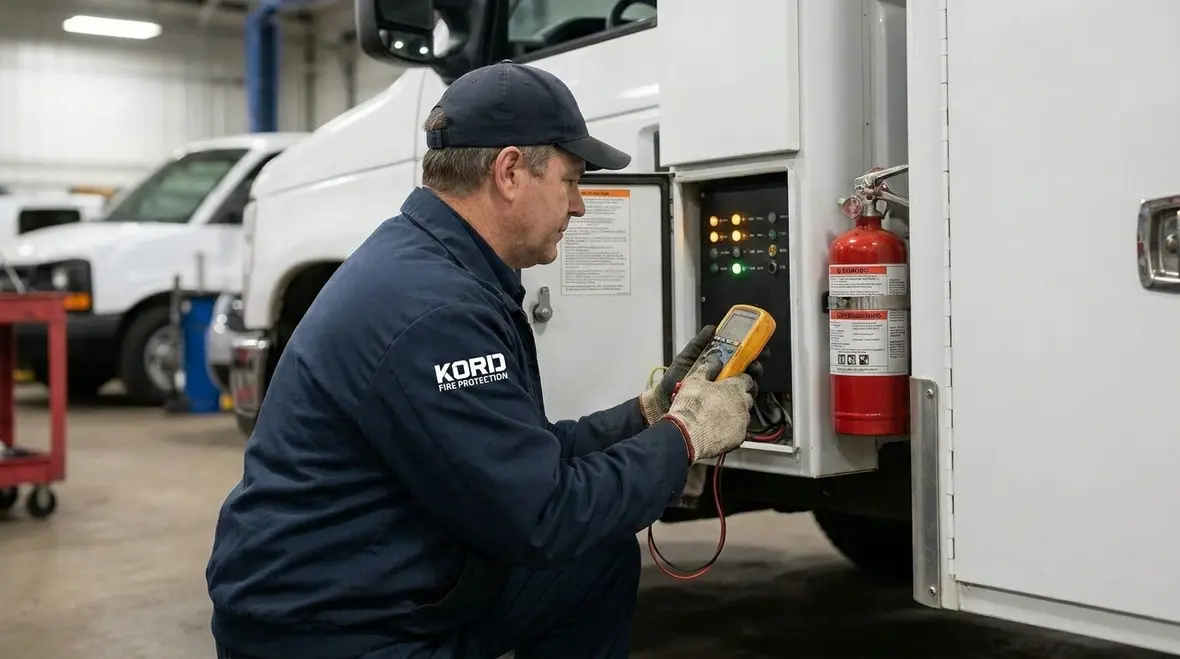
Installation and commissioning: what a proper job looks like
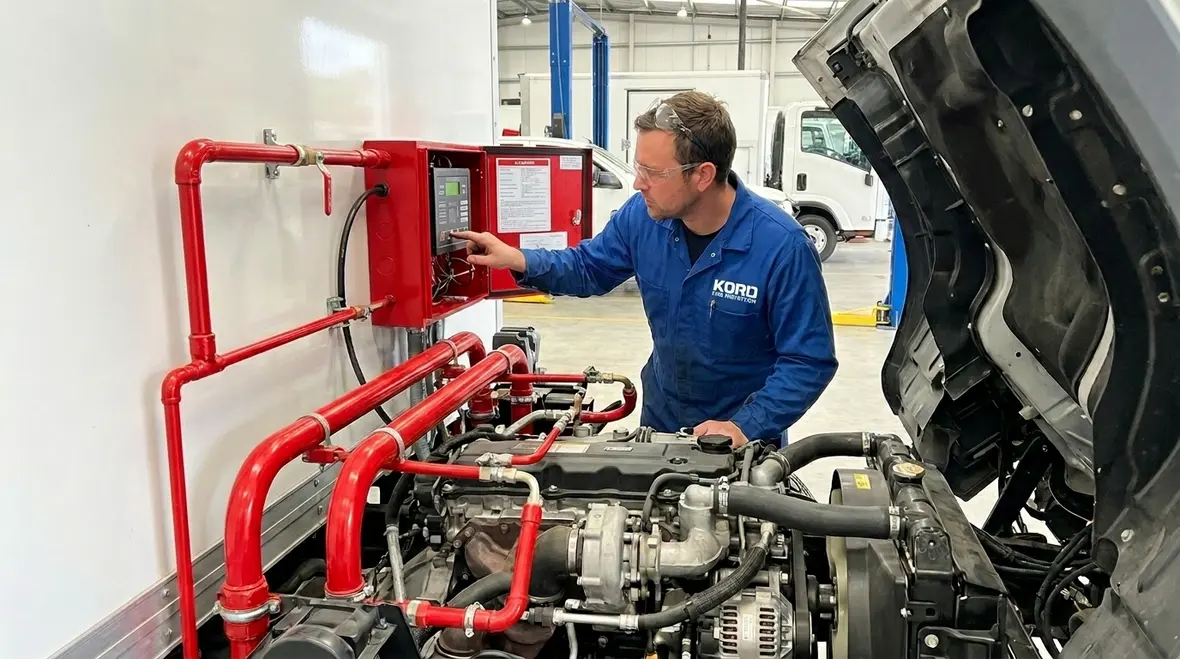
Installation is where the service becomes real. A correct install follows a step by step process: site survey, hazard mapping, component placement, wiring and securement, system labeling, and final testing. During commissioning, the technician verifies that detection triggers work as designed and that the agent releases through the intended pathways. Kord Fire Protection states that installation, testing, and maintenance should be handled by certified professionals and that it conducts a full risk assessment before installation. ([kordfire.com](https://kordfire.com/vehicle-fire-suppression-systems/?utm_source=openai))
Kord Fire Protection approaches these projects with business casual clarity. That means no drama, no guesswork, and no “we will fix it later” mindset. Instead, the team focuses on proof. They confirm mounting points, check cable runs, and confirm that the system’s discharge paths do not get blocked by common equipment. If that sounds refreshingly unglamorous, good. Reliable life safety work is supposed to be a little boring in the best possible way.
Also, fleets should receive a plan for ongoing service. That includes inspection schedules, documentation, and guidance for what to report after an incident. When operations know exactly what to do, response becomes faster and safer. Kord Fire Protection’s service page and maintenance guide both emphasize documentation, testing, and tailored ongoing support as part of keeping systems ready instead of just installed. ([kordfire.com](https://kordfire.com/vehicle-fire-suppression-systems/?utm_source=openai))
Why commissioning matters more than people think
Commissioning is the moment where assumptions get replaced by evidence. Components may be mounted, wiring may be dressed nicely, and labels may look terrific, but none of that answers the important question: will this system respond the way it should under the conditions it was designed for? That is why commissioning is not just the finish line. It is the reality check that keeps a protection system from becoming expensive wall art for a vehicle.
Maintenance, testing, and compliance that keep systems ready
Fire suppression systems do not work well if they sit untouched for years. Over time, vibration, weather exposure, and component aging can reduce reliability. Therefore, a maintenance plan must include routine inspections and function checks aligned with the manufacturer and local standards. Kord Fire Protection specifically notes maintenance, testing, inspection, and detailed documentation as core parts of its vehicle suppression support. ([kordfire.com](https://kordfire.com/vehicle-fire-suppression-systems/?utm_source=openai))
- Visual inspection of nozzles, hoses, and mounting hardware
- Verification of sensor condition and wiring integrity
- Agent pressure or container status checks based on the design
- Verification of control panel function and indicator behavior
- Documentation updates for audit readiness
Moreover, staff should know how to recognize alerts and when to take vehicles out of service. If a driver sees a warning light but ignores it, the system becomes a decoration. And nobody wants a safety feature that only looks good in a photo. For related reading, Kord Fire Protection’s Vehicle Fire Suppression Systems Maintenance Guide expands on how regular upkeep turns a system from hopeful equipment into dependable protection. ([kordfire.com](https://kordfire.com/vehicle-fire-suppression-systems-maintenance-guide/?utm_source=openai))
How Kord Fire Protection supports fleets beyond the install
Beyond installation, Kord Fire Protection can become a vital partner with this service job by supporting the full lifecycle of readiness. That includes help with system planning for different vehicle types, service scheduling that fits fleet operations, and clear reporting after each visit. Kord Fire Protection’s service pages describe a broader full-service model that includes multiple fire protection disciplines and coordinated support, which helps fleets that need more than a single one-time install. ([kordfire.com](https://kordfire.com/full-fire-protection-services/?utm_source=openai))
In addition, the team helps owners stay organized with documentation, so compliance and audits do not feel like a last minute panic sprint. They also help reduce downtime by coordinating service timing and planning parts needs. In short, when a fleet treats automatic vehicle fire suppression as an ongoing program rather than a one time purchase, reliability improves. And when reliability improves, the whole operation benefits. That includes less damage, faster returns to service, and fewer “why did this happen” conversations.
If you want the direct service overview, Kord Fire Protection’s Vehicle Fire Suppression Systems page outlines installation, testing, maintenance, and support. For companies evaluating wider protection needs across facilities and equipment, the Full Fire Protection Services page is a helpful next stop. ([kordfire.com](https://kordfire.com/vehicle-fire-suppression-systems/?utm_source=openai))
FAQ
Conclusion and call to action
Automatic vehicle fire suppression protects vehicles when it matters most, and Kord Fire Protection helps fleets make that protection dependable. Instead of relying on guesswork, owners get a clear plan for design, installation, testing, and ongoing service. That means fewer surprises, less downtime, and a safer operation for drivers and the public. If a vehicle program is growing, or if a system needs inspection or upgrade, Kord Fire Protection can step in and handle it with steady professionalism.
Reach out today to review needs and schedule service through Kord Fire Protection’s Vehicle Fire Suppression Systems service page. If your organization is also reviewing broader life safety support, the Full Fire Protection Services page offers a useful path for a larger consultation and coordinated protection planning. ([kordfire.com](https://kordfire.com/vehicle-fire-suppression-systems/?utm_source=openai))

Join Our Newsletter!
Get the latest fire safety tips delivered straight to your inbox From our Newsletter.