
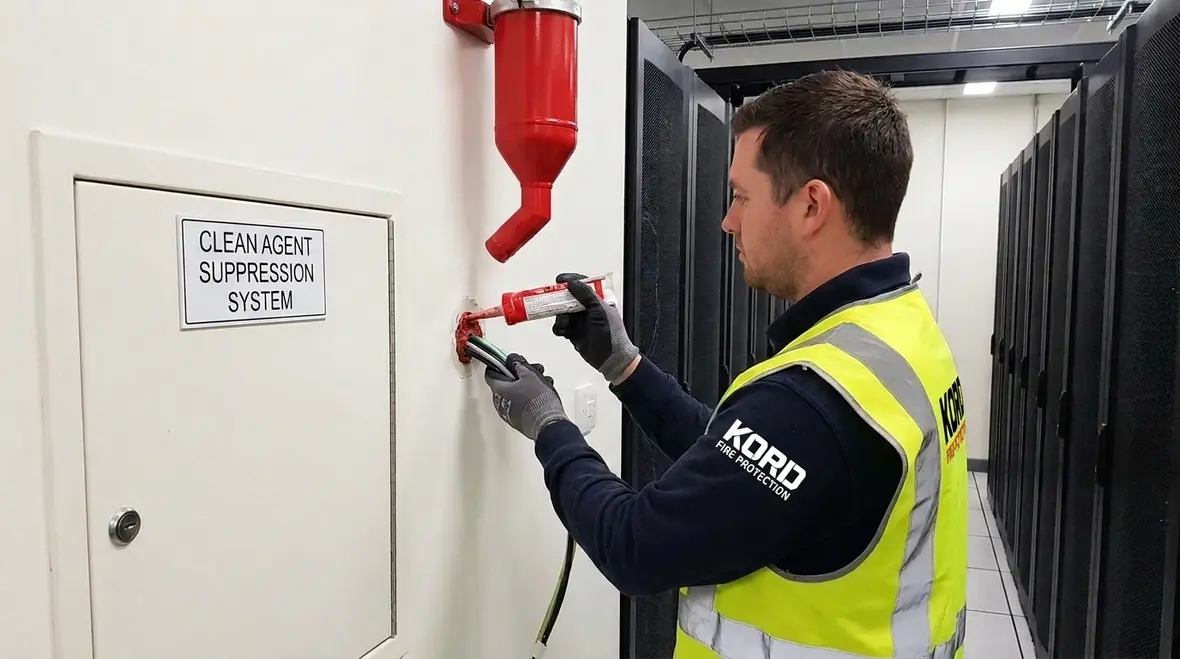
NFPA 2001 Section 7.4 Opening Protection for Clean Agent
Quick Answer
NFPA 2001 Section 7.4 requires every opening in a clean agent system enclosure to be sealed so the agent stays where it is needed. That means doors, vents, and penetrations must be closed off with care. Done well, this protects performance, supports compliance, and helps facilities avoid costly failures during discharge.
Near the start of any project, it also helps to connect enclosure sealing with the broader fire suppression services program so system design, installation, and ongoing maintenance are working together instead of acting like distant cousins at a family barbecue. For teams focused specifically on agent based protection, Kord Fire’s NFPA 2001 guidelines for clean agent fire suppression systems is a useful companion read that fits naturally with Section 7.4 planning.
NFPA 2001 Opening Protection Clean Agent Total Flooding: Why It Matters
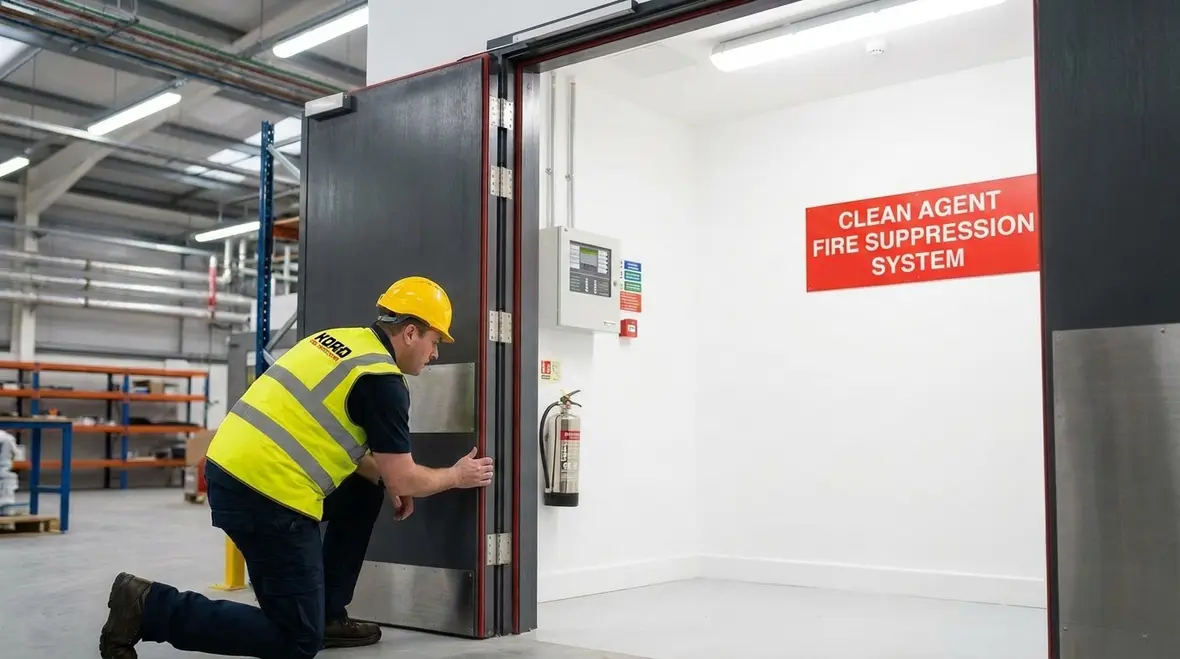
In a clean agent fire system, success depends on more than the cylinders and nozzles. NFPA 2001 opening protection clean agent total flooding works only when the room can hold the agent long enough to suppress a fire. That is where Section 7.4 comes in. It focuses on opening protection, and it demands real attention to doors, vents, cable holes, pipe gaps, and every other little escape route a gas can use. In plain terms, if the room leaks like a bad plot twist, the system loses strength fast.
This requirement matters because total flooding systems rely on concentration and hold time, not hope. A discharge can be perfectly sequenced, the detection can work beautifully, and the hardware can be in excellent condition, yet the enclosure can still undermine the whole performance if leakage is ignored. That is why opening protection is not a side note. It is one of the quiet details that decides whether the system actually delivers when conditions get ugly.
What Section 7.4 Requires in Simple Terms
Section 7.4 tells designers and installers to seal openings that could let the clean agent escape before the fire is controlled. This includes permanent openings, moving parts, and hidden gaps around services. As a result, the enclosure must be treated like a sealed system, not just a room with a suppression label on the wall.
For industrial, retail, commercial, and critical facilities, this matters because agent retention affects both fire protection and business continuity. Moreover, when a server room, control room, or switch room is not sealed properly, the system may discharge exactly as designed and still fail to perform as intended. That is the kind of irony no one wants on a site audit.
Doors, Vents, and Penetrations: The Real Problem Areas
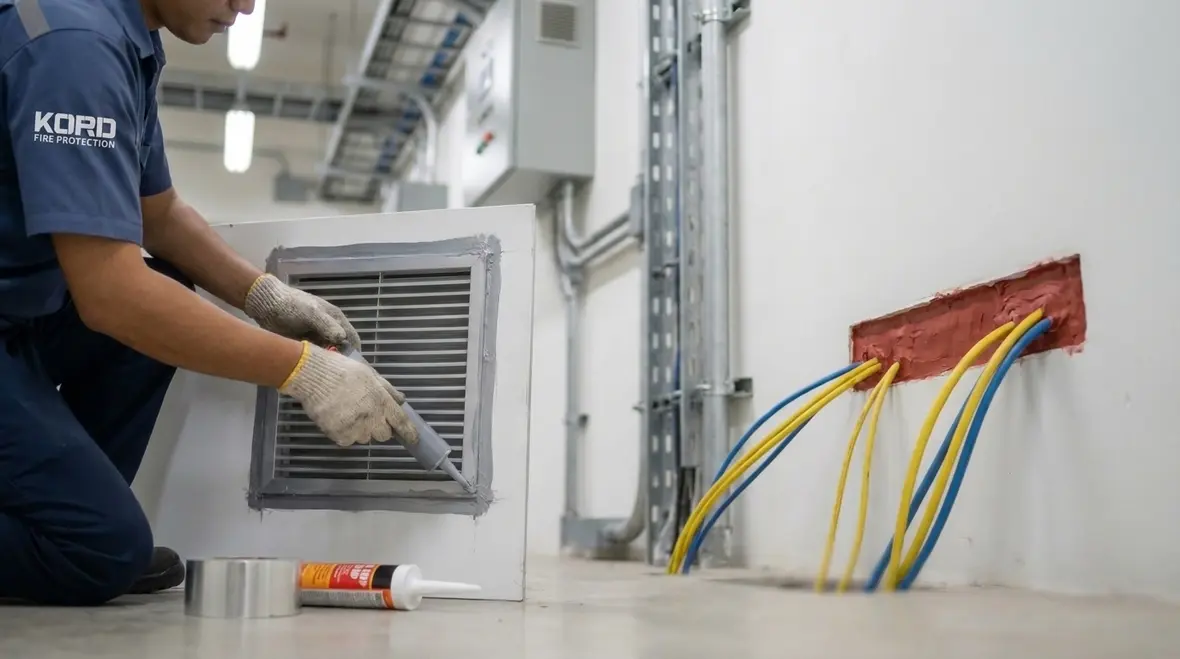
Doors are often the biggest weak point. They may look solid, yet gaps around frames, damaged seals, or poor closing hardware can allow agent loss. Vents also create risk, especially where fresh air movement or pressure relief is part of the building design. Meanwhile, penetrations for pipes, cables, trays, and sensors can become tiny escape routes that act like tiny villains with big consequences.
To stay effective, the enclosure must resist leakage for the required hold time. Therefore, each opening must be assessed, sealed, tested, and confirmed as part of the system design. This is not guesswork. It is controlled, measured work.
Where leaks usually hide
- Door undercuts and frame gaps
- Return air paths and vent grilles
- Cable tray pass throughs above ceilings or below raised floors
- Pipe, conduit, and sleeve penetrations
- Access panels, service hatches, and legacy openings from old work
A useful companion topic here is room integrity testing. Kord Fire has covered that in Clean Agent Suppression System and Room Integrity Testing, which fits neatly with Section 7.4 because sealing without verification is basically confidence wearing a hard hat.
How Kord Fire Protection Supports This Job
Kord Fire Protection can become a vital partner in this service because opening protection is not just a side task. It is part of system integrity. Their role may include site review, leakage control support, sealing recommendations, and coordination with the full clean agent installation process. In other words, they help turn a good design into a working result.
Because this work often sits at the meeting point of fire protection, building services, and compliance, Kord Fire Protection can help facilities avoid delays, reduce rework, and improve system reliability. That is especially important in busy sites where downtime costs money and nobody has time for “we’ll fix it later.” Later, as everyone knows, has a terrible safety record.
Facilities protecting server rooms and other sensitive spaces may also find useful context in Clean Agent Fire Suppression for Server Rooms by Kord, which explains why clean agent performance depends on a room that behaves the way the design expects it to behave.
What needs sealing
- Doors
- Vent grilles
- Cable tray pass throughs
- Pipe and conduit holes
- Access panels
Why it matters
- Stops agent loss
- Protects hold time
- Supports discharge performance
- Helps compliance with NFPA 2001
- Reduces system failure risk
Testing and Verification Before Commissioning
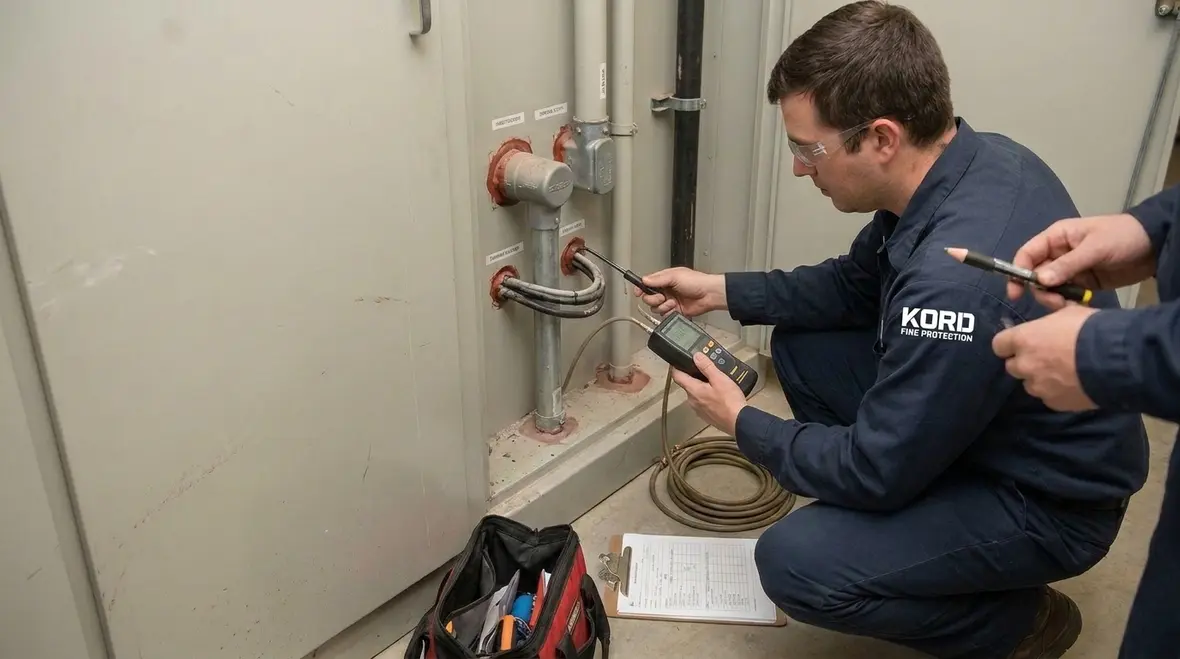
Good sealing work must be checked before handover. Therefore, leakage testing and visual inspection play a major role. A room can look sealed, yet still leak through joints, poorly fitted doors, or old service penetrations. That is why verification matters just as much as installation.
In many projects, the team should confirm that seals suit the room’s use. For example, a facility with frequent access needs may need a door solution that balances daily operation with fire performance. Likewise, an area with heavy cabling may need a more durable method around penetrations. The goal is not just to close gaps. The goal is to keep the full suppression system ready when the alarm sounds.
That is one reason Kord Fire’s Fire Suppression Systems for Data Centers and Compliance is a relevant internal read. It reinforces the bigger point that commissioning discipline, documentation, and readiness all matter when uptime and critical equipment are on the line.
Compliance Benefits for Facilities
Facilities often manage strict uptime, safety rules, and tenant expectations at the same time. Because of that, NFPA 2001 opening protection clean agent total flooding systems need careful planning from the start. Proper sealing helps protect high value assets such as data systems, electrical rooms, archives, and process equipment.
It also helps support inspection and maintenance over time. When openings are documented and sealed well, future service becomes easier. And yes, that makes life better for everyone involved, including the person who has to explain the project at Monday’s site meeting.
Long term value beyond the first inspection
Opening protection also improves change management. Rooms rarely stay frozen in time. New cable runs get added, panels get moved, contractors open things they promised they would close, and airflow assumptions quietly drift. When the enclosure is documented and managed properly, those changes are easier to catch before they become performance problems. That makes Section 7.4 useful not only during installation, but throughout the life of the protected space.
FAQ
Seal It Right, Then Let It Work
NFPA 2001 opening protection clean agent total flooding depends on tight enclosure control. So, if a facility wants real protection, it must treat every door, vent, and penetration as part of the system. Kord Fire Protection can help deliver that result with practical support and clean execution.
For industrial and commercial sites, that partnership can make the difference between a system that looks ready and one that truly is. When the room holds, the agent can do its job. Simple idea, big consequence, and thankfully no dramatic twist ending required.

Join Our Newsletter!
Get the latest fire safety tips delivered straight to your inbox From our Newsletter.



