
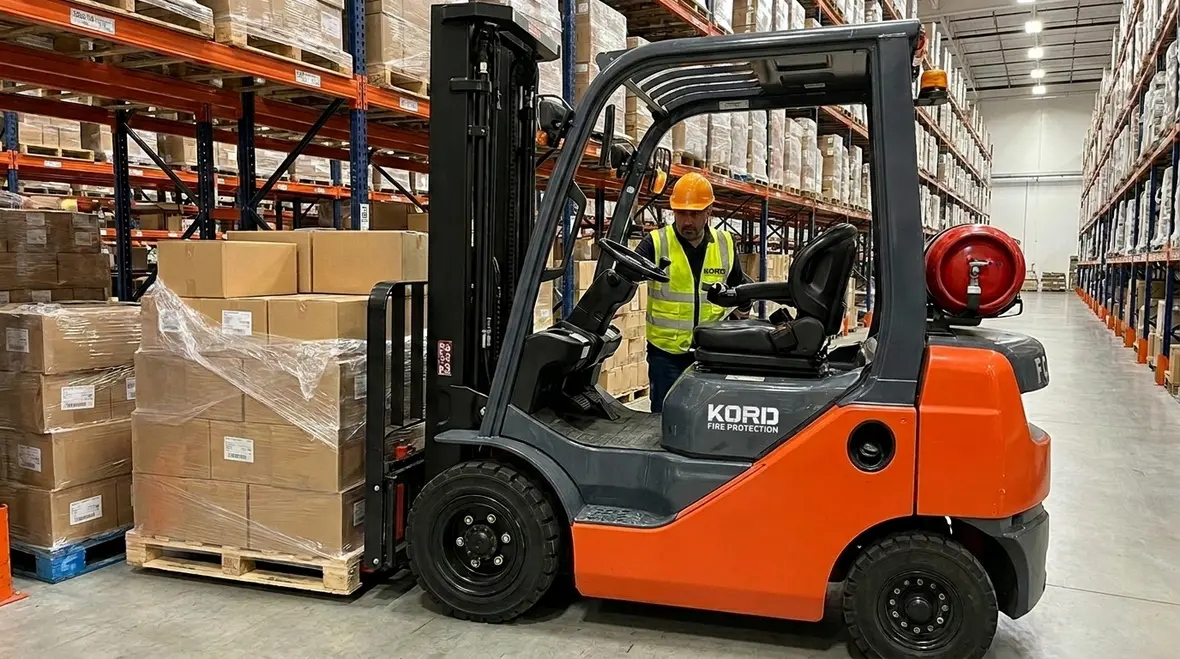
Forklift Fire Suppression System for Warehouse Vehicle Safety
When a forklift sparks, a warehouse can turn from “business as usual” to “how fast can we evacuate” in minutes. That is why a forklift fire suppression system matters. It helps protect operators, inventory, and the building itself by responding quickly when heat and flames show up where they should not. Of course, sprinklers and alarms play their part, but many warehouse fires begin in tight spaces around fuel lines, batteries, and hydraulic components. So, the goal is simple: control the fire early, before it grows teeth.
Now, the boring part would be listing equipment. Instead, this article explains how suppression works for forklift and warehouse vehicles, what must be planned before installation, and how Kord Fire Protection can become a vital partner when companies want the right system, the right documentation, and the right maintenance rhythm.
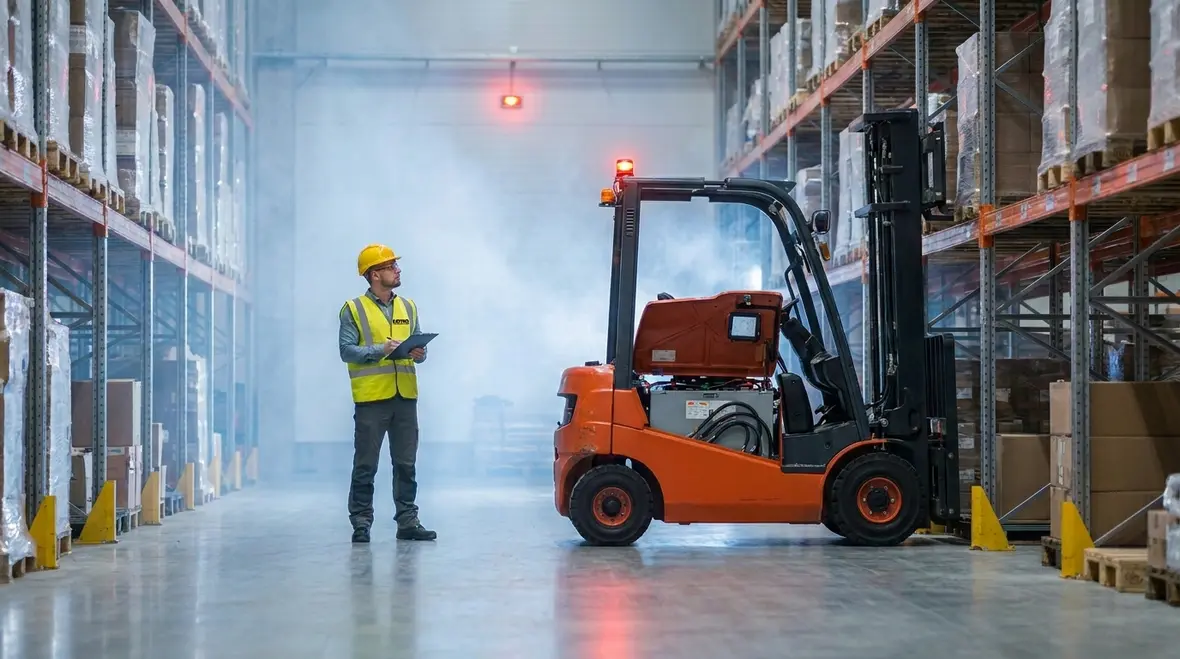
How a forklift fire suppression system prevents early-stage fire spread
Forklifts bring power, speed, and tight clearances into the same place. That combination can turn a small problem into a fast-moving event. A proper suppression setup aims to stop the fire during the earliest stages, when fuel sources still exist in a small area and smoke levels have not yet flooded aisles.
Typically, the system monitors specific conditions and releases agent at the right time. As a result, it can reduce flame spread and help protect key zones like the operator compartment and nearby stored materials. Meanwhile, the operator benefits because the system buys time for safe shutdown and evacuation. Kord Fire Protection notes that vehicle systems commonly include detection sensors, a control panel, tanks with agent, a manual or automatic discharge method, and a distribution network, all working together as the primary defense against vehicle fires. ([kordfire.com](https://kordfire.com/vehicle-fire-suppression-systems/?utm_source=openai))
In plain terms, the suppression system acts like the warehouse’s seatbelt. Nobody plans to crash, but everyone wants the protection when physics decides to do something creative.
Why speed matters in a warehouse fire
A warehouse is not a gentle environment for fire growth. Aisles create travel paths, storage creates fuel, and vehicle movement creates friction, heat, and opportunity for things to go sideways. Kord Fire Protection’s warehouse guidance emphasizes that fire behavior changes quickly in facilities with stored commodities, electrical loads, and vertical storage conditions. ([kordfire.com](https://kordfire.com/city-of-industry-warehouse-fire-suppression/?utm_source=openai))
What hazards exist in warehouse vehicles and mobile equipment
Warehouse vehicle fires do not come from one single cause. They come from the reality of daily operations: charging, fueling, maintenance, and movement under load.
Common hazard sources include
- Battery issues on electric forklifts, including thermal runaway when cells fail.
- Hydraulic leaks that spray hot fluids onto exhaust or overheated components.
- Fuel system failures on LPG or diesel units, including lines, fittings, and filters.
- Electrical shorts from wear, vibration, or improper repairs.
- Combustible nearby loads like stretch wrap, pallets, or cardboard that accelerate fire growth.
Then there is human reality. People get busy. They skip inspections. They borrow tools. And sometimes they “temporarily” store things where they do not belong. However, a suppression plan accounts for those everyday patterns so the building does not rely on perfect behavior.
Kord Fire Protection’s maintenance guidance points out that common issues in vehicle suppression systems can include hose cracking, distribution nozzle clogging, and components shifting during regular use. That matters because warehouse equipment takes vibration, impact, dust, and routine abuse as part of the job description. ([kordfire.com](https://kordfire.com/vehicle-fire-suppression-systems-maintenance-guide/?utm_source=openai))
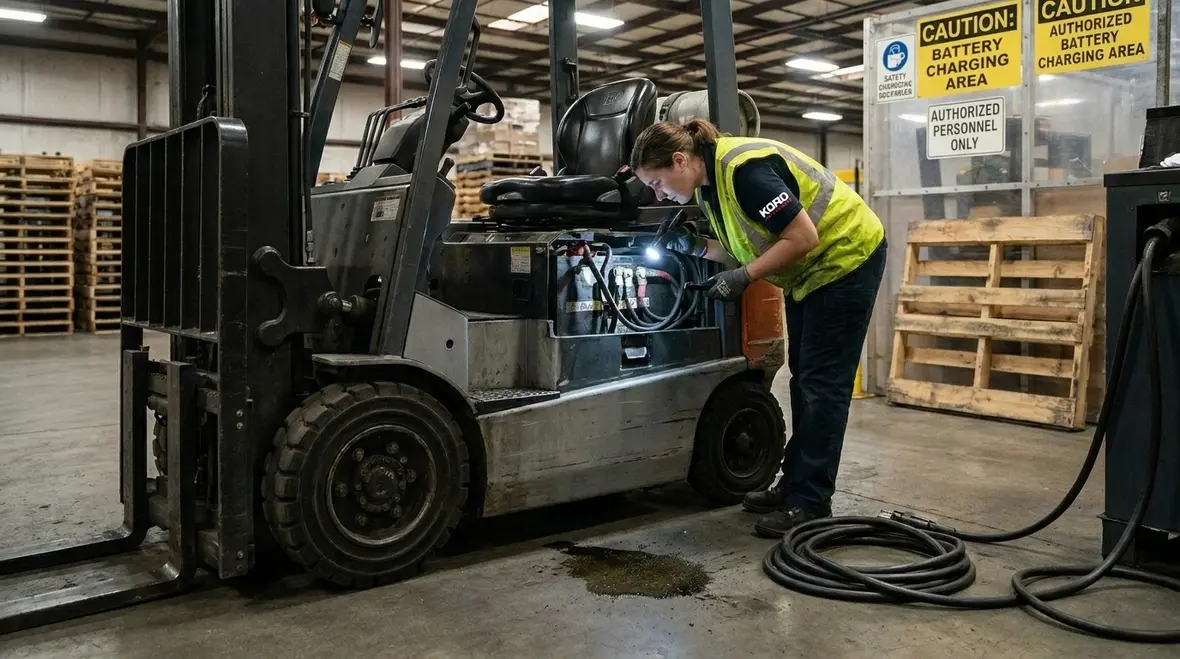
Where suppression should be installed for best protection
To protect forklifts and warehouse vehicles effectively, installers must focus on the most likely ignition and fire growth points. That means the system placement should cover the engine bay or battery compartment areas, and it should also protect regions where flames could reach the operator space quickly.
Similarly, companies should coordinate suppression with the vehicle’s design and duty cycle. A forklift that works near racking needs different thinking than a vehicle used in open staging areas. In addition, vehicles that operate in cold storage, high-dust environments, or areas with frequent charging can require special review.
Kord Fire Protection states that systems are custom designed for the vehicles a company owns or leases, and that a full risk assessment should happen before installation so the equipment gets the best protection possible. That practical approach fits forklift fleets well because the correct coverage points depend on real equipment layout, not generic assumptions. ([kordfire.com](https://kordfire.com/vehicle-fire-suppression-systems/?utm_source=openai))
When placement fits the vehicle, the system can respond fast. And when response is fast, the warehouse stays a workplace instead of becoming a dramatic season finale.
Planning around the warehouse, not just the vehicle
Kord Fire Protection’s warehouse resources repeatedly stress that layout, storage density, aisle width, airflow, and commodity type can all affect how suppression and detection perform in the real world. Inference: a forklift system works best when it is considered part of the wider warehouse protection strategy, not as a lonely little island of good intentions. ([kordfire.com](https://kordfire.com/warehouse-fire-safety-regulations-guide/?utm_source=openai))
How design, code needs, and inspections work in real life
Fire protection is not a “buy it and forget it” job. So, a proper program treats design and compliance as part of ongoing operations, not paperwork at the end of the year.
During planning, Kord Fire Protection typically focuses on
- Hazard assessment that matches vehicle type, fuel or power source, and warehouse layout.
- System selection based on expected fire behavior and vehicle configuration.
- Install integration that supports safe shutdown and clear access for maintenance.
- Documentation support for compliance needs and internal safety reviews.
- Inspection and servicing schedules so the system remains ready when it matters.
Just as importantly, inspections prevent false confidence. A system that looks good can still fail if it was not serviced, tested, or maintained. Therefore, the program should include routine checks, component reviews, and clear records that show the equipment stayed in safe condition.
Kord Fire Protection says the NFPA has specific guidelines for installation, testing, and maintenance, and that these procedures should be handled by certified professionals. Kord also says vehicle systems should receive pre-shift and monthly inspections, plus testing at least once every six months. ([kordfire.com](https://kordfire.com/vehicle-fire-suppression-systems/?utm_source=openai))
If that sounds fussy, good. Fire protection should be fussy. The alternative is letting expensive equipment, inventory, and a perfectly innocent Tuesday depend on crossed fingers.

Maintenance that keeps the system ready for the next shift
Warehouses run 24 hours a day, or at least they act like they do. That means suppression equipment must stay reliable even with rough handling, vibration, and temperature swings.
A strong maintenance plan usually includes checking nozzles, verifying control components, and ensuring that discharge agents remain within service limits. Additionally, companies should confirm that vehicle modifications do not interfere with system coverage. If someone reroutes wiring or changes battery hardware without telling the safety team, suppression performance can drift without anyone noticing.
This is where Kord Fire Protection becomes more than a vendor. It helps clients treat suppression like a living system with ongoing attention. In other words, they support the operational side, not just the installation day photo op. Kord’s service pages state that their vehicle fire suppression services include maintenance, testing, inspection, detailed documentation, and 24/7 on-call support, while their broader suppression services note semi-annual inspection requirements. ([kordfire.com](https://kordfire.com/vehicle-fire-suppression-systems/?utm_source=openai))
Dual column overview: key considerations for forklifts vs warehouse conditions
| Forklift and vehicle factors | Warehouse environment factors |
| Battery type and charge routines | Storage density and aisle width |
| Fuel type and engine compartment layout | Presence of cardboard, plastics, and wraps |
| Hydraulic lines, fittings, and leak points | Ventilation patterns and temperature |
| Vehicle duty cycle and travel paths | Spill risk and maintenance hotspots |
That dual view helps safety teams avoid a common mistake. They can buy suppression for the vehicle, but ignore the way the warehouse fuels fire growth. Then, when something happens, the plan feels like it was designed for a different planet.
Why Kord Fire Protection becomes a vital partner
Choosing a suppression partner affects outcomes long after installation. Kord Fire Protection supports the full lifecycle of fire suppression for forklifts and warehouse vehicles, which is what many organizations need but few truly deliver.
First, they help assess risks and match suppression methods to the real vehicles in the fleet. Next, they support installation best practices so systems reach the right coverage points. Then they help establish maintenance and inspection routines that keep the equipment functional.
In addition, Kord Fire Protection supports business owners who want fewer surprises during audits and internal safety reviews. Because when documentation is clear and service is consistent, managers can focus on productivity instead of last-minute firefighting, literally and figuratively.
And if anyone says this work is “too detailed,” they might be the same people who think smoke alarms are decorative. They are not. They save assets, people, and time.
For readers who want a broader view of upkeep, Kord Fire Protection also has a related resource on vehicle fire suppression systems maintenance. For facility-wide planning, their warehouse fire safety regulations guide and commercial fire prevention planning for industrial warehouses article help connect vehicle protection to the bigger operational picture. ([kordfire.com](https://kordfire.com/vehicle-fire-suppression-systems-maintenance-guide/?utm_source=openai))
FAQ
Ready to protect forklifts and warehouse vehicles with a plan that lasts?
Fire suppression should not sit on a checklist and hope for the best. With Kord Fire Protection, a business can assess risks, select the right forklift fire suppression system approach, install it correctly, and keep it reliable through ongoing inspections and service. If a warehouse runs on forklifts, it needs protection that reacts early and stays dependable.
To take the next step, explore Kord Fire Protection’s Vehicle Fire Suppression Systems service page for fleet-focused protection, maintenance, testing, and inspection support. For broader system support, their Fire Suppression Services page highlights related solutions for commercial and industrial operations. ([kordfire.com](https://kordfire.com/vehicle-fire-suppression-systems/?utm_source=openai))

Join Our Newsletter!
Get the latest fire safety tips delivered straight to your inbox From our Newsletter.



