
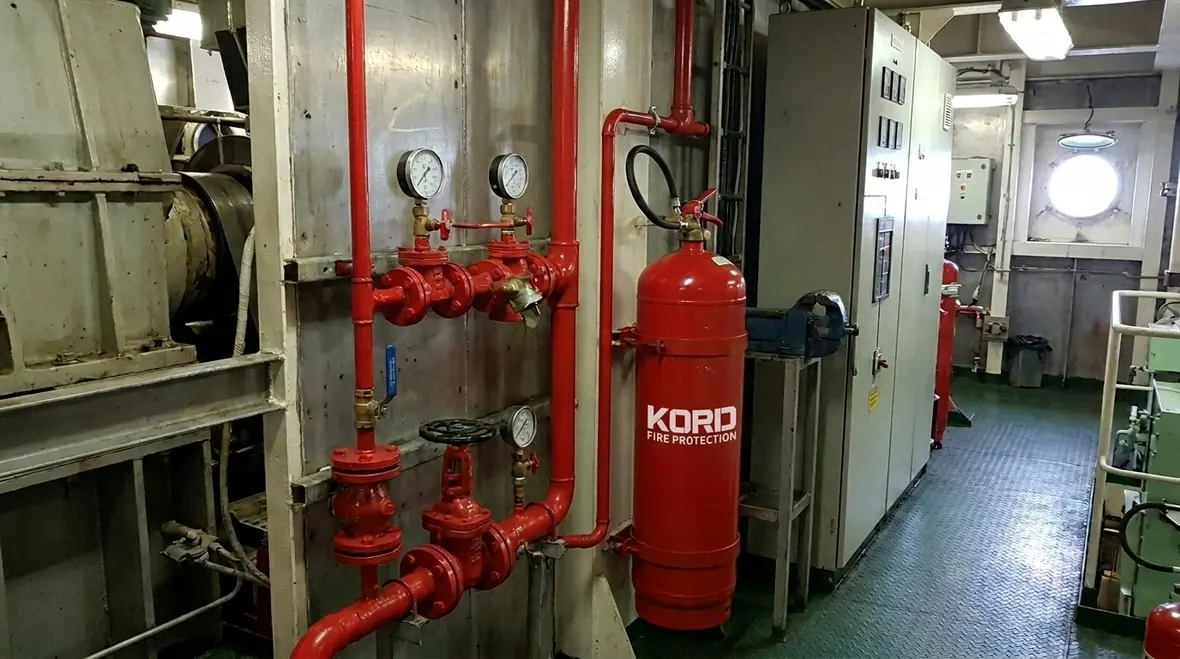
Marine Fire Suppression System by Kord Fire Protection
When a vessel carries people, cargo, and serious budgets, fire safety cannot wait for “later.” In that reality, a marine fire suppression system becomes more than a checkbox. It becomes the quiet guardian that can slow flames, protect escape routes, and help crews buy time while emergency response kicks in. Now, modern fire protection is not one-size-fits-all. Therefore, ship owners, yards, and operators need designs that match engine spaces, galleys, cargo areas, and evolving class rules. And that is where Kord Fire Protection can become a vital partner, because good installation is only half the story. The other half is inspection, training, and dependable support when the sea decides to test everyone’s patience.
Kord Fire Protection presents a full service approach to fire suppression, including clean agent, CO2, foam, dry chemical, vehicle suppression, room integrity testing, and water mist system services, all backed by inspection and support capabilities across its broader fire protection work. That breadth matters for marine projects because vessels rarely behave like ordinary buildings, and a suppression design that looks fine on paper can unravel quickly when ventilation shifts, access narrows, and vibration starts treating every component like it owes the ocean money. Kord’s full fire protection services and its dedicated marine fire suppression page fit naturally into that conversation, especially for owners who want one partner that can support design, installation, inspection readiness, and long term service. ([kordfire.com](https://kordfire.com/full-fire-protection-services/?utm_source=openai))

What fire suppression systems must protect on ships
Marine spaces behave differently from buildings. Heat spreads fast, ventilation can shift in seconds, and access for cleanup is often limited. As a result, a proper fire plan starts with the right hazard mapping. Crews typically focus on areas such as machinery spaces with high heat loads, electrical panels where arcing can ignite vapors, galleys where cooking oils love to turn into surprise fireworks, and cargo zones where transported liquids may create fast moving fires.
Next, engineers consider how the system will detect and respond. Detection should match the fire’s likely growth. For example, engine compartments may need fast sensing that reacts early, while accommodation areas may require protection that supports safe evacuation. However, ships also have human factors. So, designers must account for crew workflows, alarm sound levels, signage, and reset behavior after activation. If the system does not align with real operations, it will not perform like a team member. It will perform like a toaster that alarms someone’s cat at 2 a.m.
Hazard mapping has to match actual vessel use
That means the design team cannot stop at generic labels like “mechanical space” or “storage area.” They need to know what equipment is inside, how the crew moves through it, what fuels or lubricants are present, and whether the area can be isolated quickly during an emergency. Kord Fire Protection’s broader suppression offerings, including foam, dry chemical, clean agent, CO2, and water mist services, suggest the kind of menu a marine project may need to draw from when different hazards exist inside the same vessel. ([kordfire.com](https://kordfire.com/full-fire-protection-services/?utm_source=openai))
Choosing the right agent for a marine fire suppression system
Fire suppression is not just about “putting out.” It is about using an agent that works in a marine environment. Marine fire suppression systems commonly use clean agents, water mist, foam, and gaseous options depending on the compartment and fire class. Each choice changes the outcome for effectiveness, corrosion risk, residue, and post discharge cleanup.
For example, a gas-based approach can be ideal for enclosed spaces where residue control matters. Meanwhile, water mist can reduce heat and improve cooling while using less water than traditional sprinklers, which helps with stability and drainage concerns. Foam may suit certain liquid fuel scenarios, particularly in spaces where flammable liquids can pool. Nevertheless, the final selection depends on compartment volume, ventilation patterns, allowable pressure loss, and the ship’s operational profile.
Then comes the practical part: compatibility. Marine systems must integrate with ventilation shutdown logic, dampers, fire doors, and alarm panels. That is where Kord Fire Protection adds value as a partner, because proper coordination prevents the system from becoming a collection of parts that never talk to each other.
Why agent selection affects cleanup, downtime, and confidence
A bad agent match can leave crews dealing with unnecessary residue, extended repairs, or operational delays after an incident that was already rude enough. Kord’s service pages specifically list clean agent, CO2, foam, dry chemical, vehicle suppression, room integrity testing, and water mist system services, which makes them a practical fit for conversations where multiple suppression approaches need to be compared rather than forced into one favorite answer. ([kordfire.com](https://kordfire.com/full-fire-protection-services/?utm_source=openai))
How detection and control panels shape reliable response
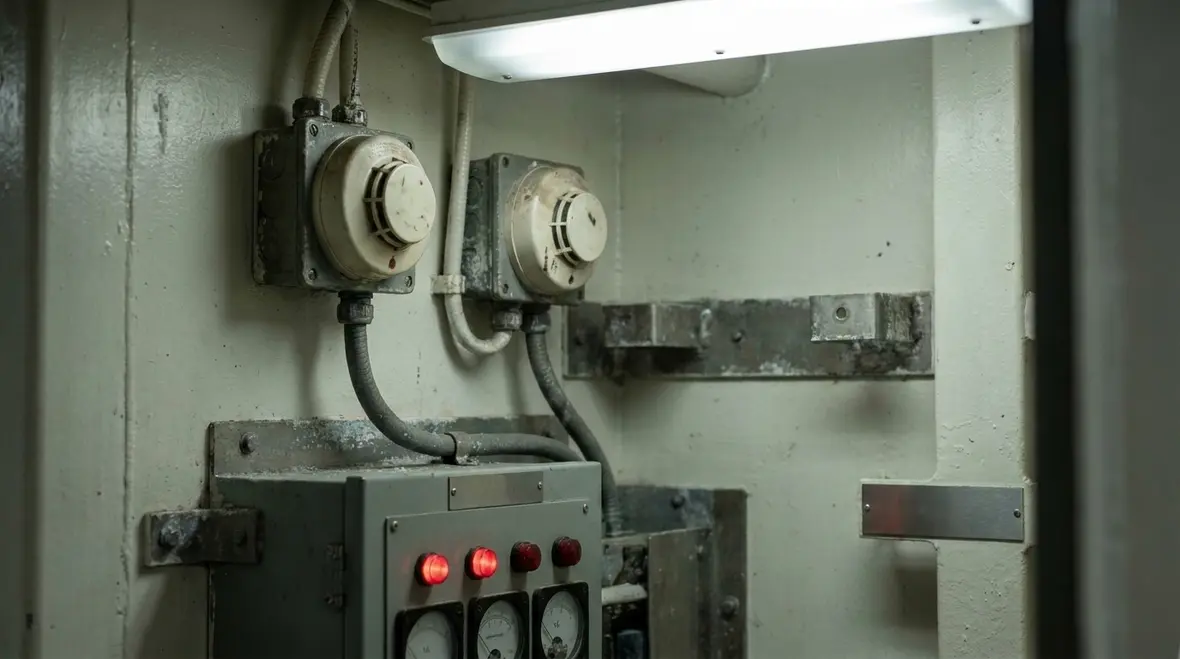
A strong suppression plan relies on more than the extinguishing agent. Detection and control drive the timing, sequence, and safety behavior. When smoke, heat, or flame detectors trigger, the control unit must confirm the fire condition, activate the right output, and avoid nuisance activations. In marine conditions, airflow changes can cause tricky readings. Therefore, the system needs proper zoning, correct detector placement, and good calibration.
Furthermore, maritime safety requires predictable actions. The system often must close ventilation openings, sound alarms, and provide status signals. If a control panel resets too quickly, crews may lose clarity. If it resets too slowly, it can delay operational recovery. In short, controls must support both emergency action and orderly return to service.
At the same time, technicians must design for maintainability. Panels should allow clear inspection access, and detector housings must resist salt spray and vibration effects. Kord Fire Protection can help here by guiding the full lifecycle, from design review to commissioning documentation, so the job does not end when the installers leave the dock.
That lifecycle mindset shows up in Kord content that emphasizes consultation, evaluation of needs, compliance alignment, and connected service rather than isolated hardware sales. Their fire alarm and full service pages support the idea that detection and suppression should behave like one coordinated system, not a group project where nobody read the same instructions. ([kordfire.com](https://kordfire.com/fire-alarm-service-systems/?utm_source=openai))

Designing for class rules, vessel stability, and real access
Shipboard fire suppression design sits at the intersection of safety, code compliance, and ship engineering. Even when a system performs well in theory, it must also respect physical constraints. Piping routing must fit around structure and equipment. Cables need safe separation from heat sources and moving machinery. Also, weight and space matter, especially on retrofits.
Engineered suppression requires correct nozzle placement, pressure calculations, and reliable discharge paths. If coverage does not meet the hazard definition, the system may delay fire knockdown. And if discharge affects visibility or causes slippery surfaces, crews can face new risks during evacuation.
Meanwhile, installation quality drives outcomes. Assemblies must seal properly to prevent leaks, and supports must withstand vibration. Therefore, shipyards should plan the work sequence and stage materials to avoid rushed connections. Kord Fire Protection can serve as a vital partner by coordinating installation checks, verification testing, and practical guidance for crew familiarization.
Retrofits demand patience and a plan
Retrofitting an older vessel is where nice ideas meet stubborn steel. Existing piping, electrical interfaces, crowded compartments, and service disruptions can all push a project off course if nobody accounts for them early. Kord Fire Protection’s company and services pages emphasize assessments, custom solutions, inspection readiness, and support across installation and maintenance, which are exactly the traits retrofits need when there is no room for guesswork. ([kordfire.com](https://kordfire.com/about-fire-protection/?utm_source=openai))

Installation, commissioning, and maintenance that crews can trust
After fabrication, the vessel still needs proof. Commissioning verifies that detection, alarms, and discharge behavior match the design intent. Technicians must test logic paths, confirm alarm routing, and validate that each compartment triggers correctly. They also check that valves operate in the right order and that pressure levels align with required discharge parameters.
Then maintenance takes the spotlight. A marine fire suppression system cannot wait for the annual paperwork cycle. Regular inspections should verify cleanliness, pressure readings, sensor health, and component integrity. In harsh conditions, corrosion and vibration can degrade performance over time. As a result, scheduled service protects both safety and uptime. It also protects wallets, because a surprise failure at sea usually costs more than a planned visit.
To keep people confident, training matters. Crews must understand what alarms mean, how to respond, and what actions follow discharge. Kord Fire Protection can help organizations build that knowledge through clear procedures and on site support, rather than leaving crews to guess like they just landed on a survival show.
Kord’s recent content about engine compartment fire suppression and its main services pages reinforce the same pattern: a suppression system is typically built around detection sensors, a control panel, suppressant storage, discharge capability, and a distribution network, while long term readiness depends on inspection support and coordinated service. That is not just marketing language. It is the boring, useful kind of consistency that keeps systems ready when the exciting part arrives uninvited. ([kordfire.com](https://kordfire.com/engine-compartment-fire-suppression-by-kord-fire-protection/?utm_source=openai))
Why Kord Fire Protection partners well with marine fire protection projects
In marine work, every delay and unclear handoff becomes expensive. Kord Fire Protection can become a vital partner by bringing a service mindset that supports the full job, not just the final connections. That means it helps stakeholders align design choices with real operational needs, then supports commissioning and ongoing inspection schedules so owners do not operate with blind spots.
Moreover, a partner should communicate in business terms and technical terms at the same time. Kord Fire Protection can help teams track inspection findings, plan service intervals, and document compliance steps clearly. And when crews need quick answers, they get them instead of waiting for someone to “circle back.” In maritime operations, that phrase should be banned, like a bad pop song in the engine room.
That partner role lines up with how Kord describes itself: a trusted fire protection company offering comprehensive services, consultation, and support across systems rather than treating each device like a separate kingdom. For readers who want more context around system coordination, Kord also has a related article on fire detection and suppression systems, along with newer content on engine compartment fire suppression that naturally supports the marine discussion. ([kordfire.com](https://kordfire.com/fire-detection-and-suppression-systems-global-use-explained/?utm_source=openai))
FAQ
Conclusion: protect the crew, protect the schedule
Fire safety on water demands more than equipment. It needs thoughtful design, careful installation, and maintenance that stays consistent while conditions change. A marine fire suppression system built for the right hazards helps prevent fast escalation and supports clear crew action. If a project needs dependable coordination from commissioning through ongoing service, Kord Fire Protection can become that vital partner.
Reach out to plan the next steps, confirm requirements, and keep the vessel ready for what the ocean throws at it. For broader support options, visit full fire protection services or go directly to marine fire suppression to discuss a service path that fits the vessel, the crew, and the schedule. ([kordfire.com](https://kordfire.com/full-fire-protection-services/?utm_source=openai))

Join Our Newsletter!
Get the latest fire safety tips delivered straight to your inbox From our Newsletter.



