Life Safety Code Fire Safety Guide for Facilities
What Should a Facility Do to Keep People Safe From Fires (Life Safety Code Lens)
What Should a Facility Do to Keep People Safe From Fires (Life Safety Code Lens)
What should a facility do to keep people safe from fires according to the life safety code? That question sits at the heart of every safe building, from hospitals and schools to warehouses and high rise offices. The Life Safety Code sets clear expectations. It guides how buildings are designed, maintained, and operated so people can exit quickly and survive a fire emergency. However, compliance is not just about checking boxes. It is about protecting lives with systems that work, staff who are trained, and plans that hold steady under pressure. As Kord Fire Protection technicians often explain, fire safety is not a dramatic movie scene. It is preparation done quietly and done well, long before smoke ever rises.
Therefore, this guide walks through how facilities can align with the Life Safety Code, reduce risk, and create an environment where safety is built into every wall, corridor, and procedure.

Understanding the Life Safety Code and Its Purpose
The Life Safety Code, developed by the National Fire Protection Association, focuses on protecting people, not property. While saving buildings matters, the primary goal is clear. People must be able to exit safely during a fire or other emergency.
So what should a facility do to keep people safe from fires according to the life safety code? First, it must understand that the code addresses construction, protection systems, and human behavior. It covers fire alarms, sprinklers, means of egress, emergency lighting, fire resistant materials, and occupancy limits. In addition, it sets standards for ongoing inspections and maintenance.
Kord Fire Protection technicians often tell facility managers that the code is like a playbook. However, unlike a sports playbook, this one does not reward creativity. It rewards consistency. If the code says an exit corridor must remain unobstructed, then that hallway cannot become a storage closet for old chairs and holiday decorations. Even if those decorations are impressive.
Moreover, the Life Safety Code adapts to different occupancy types. A hospital has different requirements than a retail store. Therefore, facilities must identify their occupancy classification and follow the rules specific to that environment. For more context on how different NFPA codes influence real world facilities, many managers also review resources like Kord Fire’s NFPA 30 flammable and combustible liquids guide to see how life safety and hazard specific standards work together.
How Should a Building Be Designed to Meet Life Safety Code Fire Requirements?
Fire safe building fundamentals
Design forms the foundation of fire safety. If the bones of a building fail, no amount of training can fully compensate.
When asking what should a facility do to keep people safe from fires according to the life safety code, design decisions come first. Facilities must ensure proper fire resistance ratings in walls, floors, and ceilings. Fire barriers and smoke partitions help contain fire and limit its spread. Consequently, they buy precious time for evacuation.
Exits, lighting, and stairwell protection
Additionally, exits must be clearly marked, accessible, and sufficient in number. The code specifies minimum exit widths and travel distances. If occupants must navigate a maze worthy of a fantasy film just to find daylight, something has gone wrong.
Emergency lighting also plays a critical role. During power failure, lighting must activate automatically and illuminate paths of egress. People should not need to rely on phone flashlights while panic sets in. Instead, lighting systems must operate reliably for a set duration, typically at least ninety minutes.
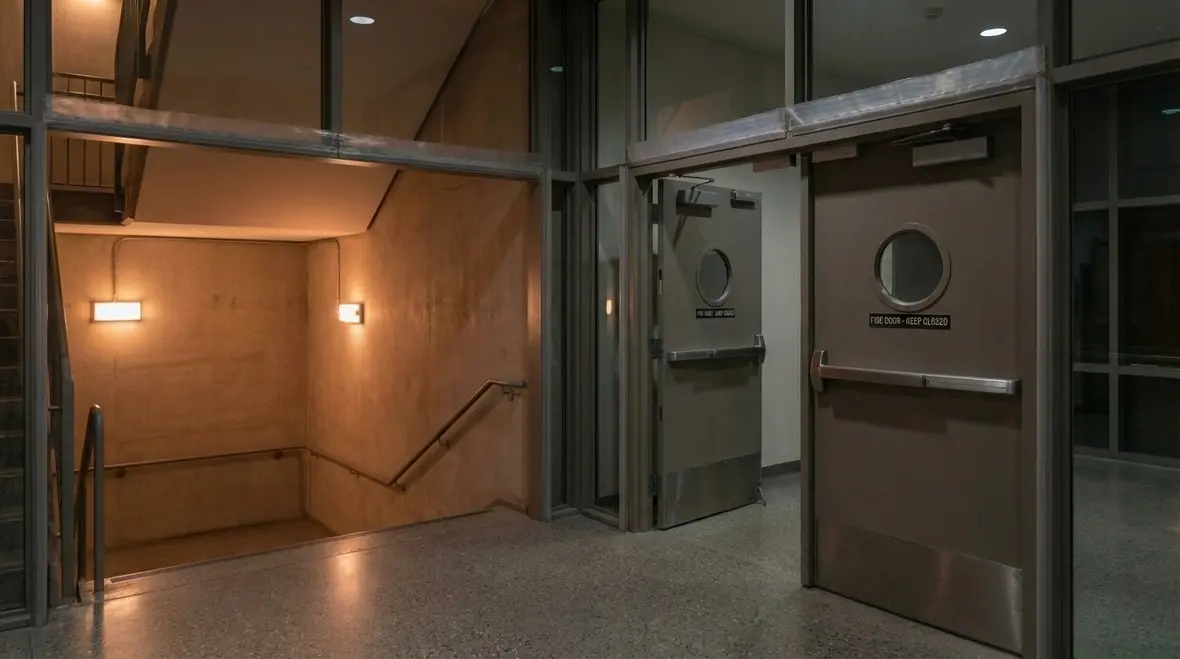
Furthermore, stairwells must be enclosed and protected. Doors in exit enclosures should be self closing and fire rated. Kord Fire Protection technicians frequently remind clients that a wedged open fire door defeats its purpose. A door propped open for convenience may look harmless, yet it can allow smoke to travel rapidly. In a fire, smoke often poses the greatest threat.
Fire Detection and Alarm Systems That Actually Work
Early warning that changes outcomes
A silent fire is a dangerous fire. Early detection changes outcomes.
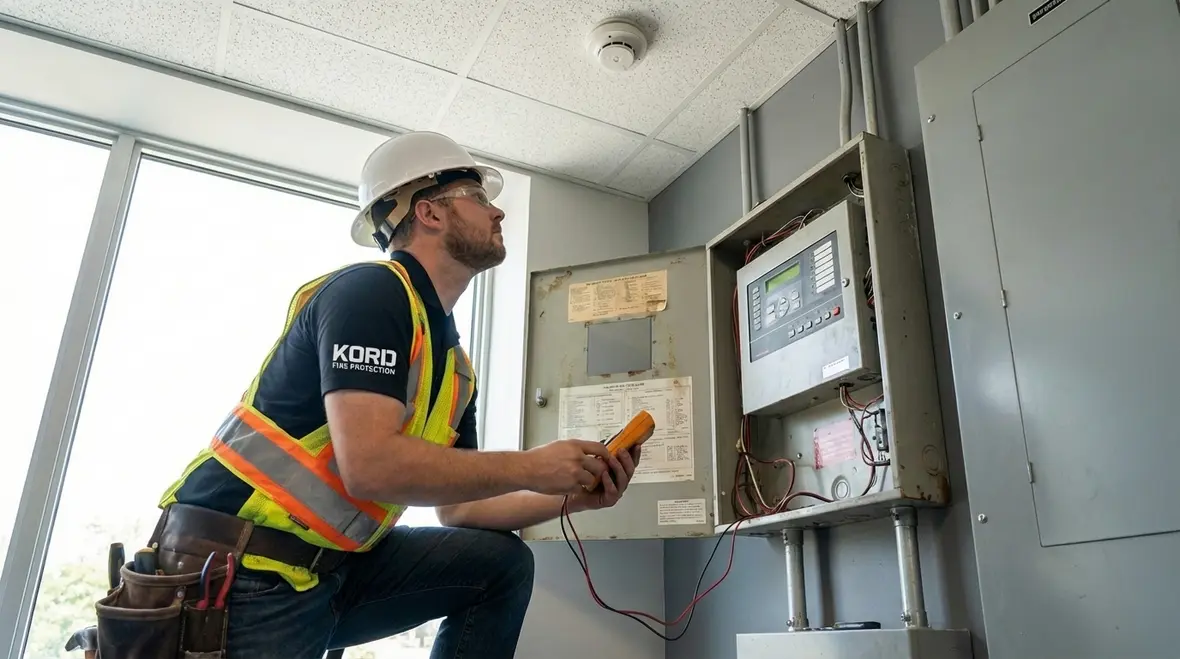
Therefore, facilities must install and maintain fire alarm systems in accordance with the Life Safety Code and related standards. Smoke detectors, heat detectors, and manual pull stations form the front line of alert. When activated, the system must notify occupants clearly and promptly.
Testing, monitoring, and mass notification
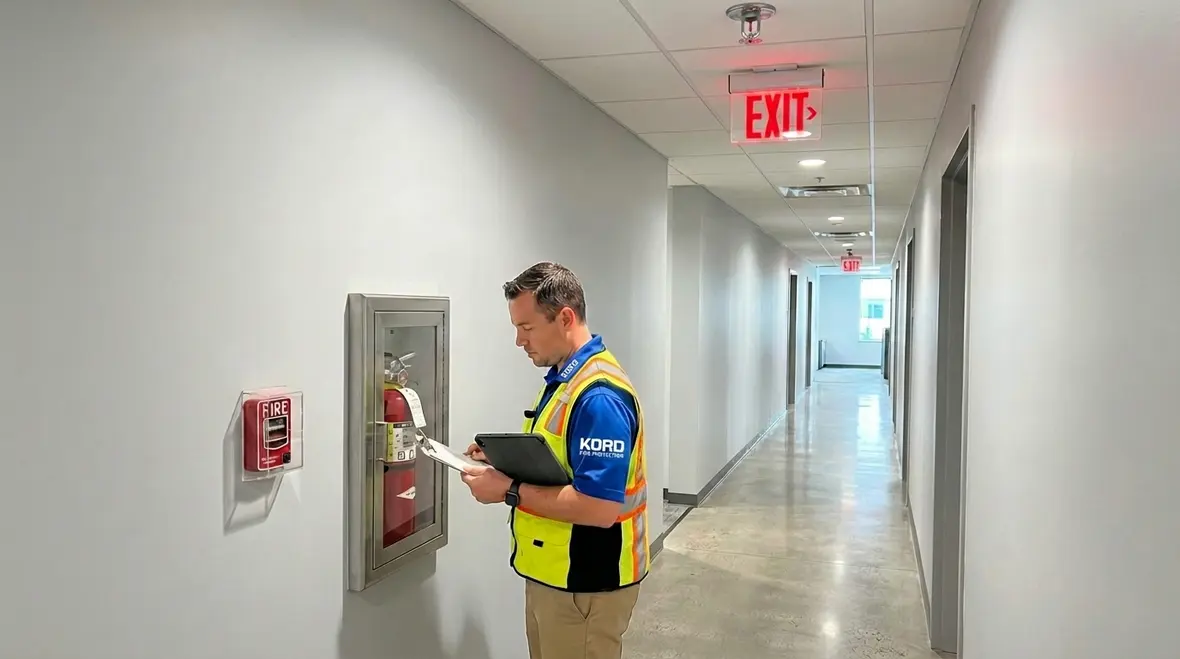
Kord Fire Protection technicians explain that testing is where many facilities fall short. Installing a system is one step. Inspecting, testing, and documenting its performance is another. Alarms must be tested at required intervals. Batteries must be replaced. Control panels must remain accessible and functional.
In addition, facilities should integrate mass notification systems when appropriate. Clear voice instructions can guide occupants more effectively than a simple horn. During emergencies, people respond better when they understand what to do. A calm, direct message often prevents chaos.
Moreover, monitoring connections to a central station ensure that emergency responders receive alerts even if building staff are overwhelmed. This layer of redundancy strengthens the entire safety network. When issues arise, Kord’s fire alarm monitoring service request form gives facilities a direct, code focused path to quick support.
Sprinkler Systems and Suppression Strategies
From detection to decisive response
If detection is the early warning, suppression is the swift response.
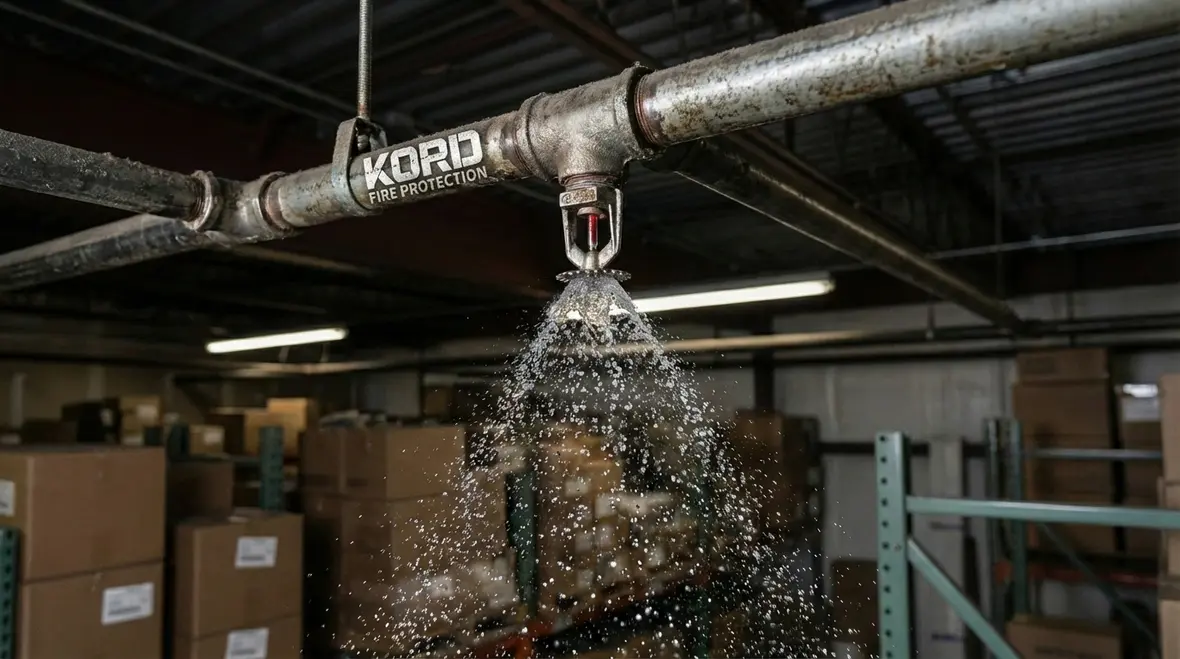
The Life Safety Code often requires automatic sprinkler systems in many occupancy types. These systems activate individually when heat reaches a specific point. Contrary to popular myth, every sprinkler head does not activate at once. Hollywood has misled many people on that point.
Keeping water based systems ready
So what should a facility do to keep people safe from fires according to the life safety code in terms of suppression? It must install approved sprinkler systems, maintain adequate water supply, and conduct regular inspections. Control valves must remain open and supervised. Fire department connections must stay accessible and visible.
Kord Fire Protection technicians emphasize routine inspection schedules. Quarterly, annual, and five year inspections ensure components function as intended. Corrosion, mechanical damage, or closed valves can compromise the system. Therefore, documentation matters. Accurate records prove compliance and reveal patterns before failures occur.
In special hazards areas such as commercial kitchens or data centers, additional suppression systems may be required. Clean agent systems or wet chemical systems provide targeted protection. Facilities should evaluate specific risks and install systems designed for those hazards. For owners managing older clean agent systems like Halon, Kord’s deep dive on Halon 1301 fire systems helps connect legacy equipment decisions to current life safety expectations.
Maintaining Clear and Safe Means of Egress
The path out is non negotiable
Even the best alarm and sprinkler systems cannot replace a clear path to safety.
The Life Safety Code places strong emphasis on means of egress. This includes corridors, doors, stairs, and exterior exit discharge areas. All must remain unobstructed and clearly marked.
Compliant vs. non compliant conditions
Compliant Egress Condition
Exit signs illuminated and visible
Corridors clear of storage
Doors that open easily in direction of travel
Emergency lighting tested regularly
Non Compliant Egress Condition
Burned out signs or blocked visibility
Equipment and boxes stored in hallways
Locked or hard to open exit doors
Dead batteries and untested fixtures
These contrasts highlight a simple truth. Small oversights can create major risks.
Additionally, facilities must ensure that exit doors are not locked in a way that prevents egress. While security matters, life safety takes priority. The code allows certain locking arrangements, yet they must release upon fire alarm activation or power failure.
Furthermore, exterior discharge areas must lead occupants to a safe location away from the building. An exit that opens into a fenced enclosure without a clear path forward does not meet the spirit or letter of the code.
Training Staff and Conducting Realistic Drills
Because buildings do not evacuate themselves
Buildings do not evacuate themselves. People do.
Therefore, ongoing training plays a vital role in answering what should a facility do to keep people safe from fires according to the life safety code. Staff must understand alarm signals, evacuation routes, and their specific responsibilities. In healthcare settings, for example, staff may follow defend in place strategies. In other occupancies, full evacuation may be required.
Kord Fire Protection technicians often participate in educational sessions. They explain system functions in plain language. When staff know how systems operate, they respond with more confidence and less panic.
Making drills meaningful
Moreover, facilities should conduct regular fire drills as required by occupancy type. Drills test both systems and human response. They reveal bottlenecks in stairwells, confusion about assembly areas, or communication gaps. Although drills may interrupt the workday, they provide valuable insight. A few minutes of inconvenience today can prevent tragedy tomorrow.
Documentation of drills also supports compliance. Records should include dates, times, participants, and observations. Over time, these records show improvement and demonstrate commitment to safety.
Inspection, Documentation, and Continuous Improvement
From one time project to ongoing program
Fire safety is not a one time project. It is an ongoing process.
Facilities must establish routine inspection programs for fire doors, extinguishers, alarms, sprinklers, and emergency lighting. The Life Safety Code outlines specific intervals. Missing these intervals can lead to citations and increased risk.
However, inspection alone is not enough. Facilities must correct deficiencies promptly. A noted issue that remains unresolved becomes a known hazard. Therefore, corrective action tracking systems help ensure accountability.
Kord Fire Protection technicians frequently assist with compliance audits. They review documentation, inspect systems, and provide clear recommendations. Their approach blends technical knowledge with practical guidance. Instead of overwhelming clients with jargon, they focus on actionable steps.
Keeping plans aligned with reality
Additionally, facilities should review emergency plans annually and after any significant building changes. Renovations, occupancy shifts, or system upgrades may affect compliance. Keeping plans current ensures alignment with real world conditions.
Ultimately, when leaders ask what should a facility do to keep people safe from fires according to the life safety code, the answer includes vigilance. Standards evolve. Best practices improve. Continuous learning keeps facilities ahead of risk.
Creating a Culture of Life Safety
From minimum compliance to everyday mindset
Compliance builds the framework. Culture brings it to life.
A facility that truly embraces life safety does more than meet minimum requirements. It encourages staff to report hazards. It keeps exits clear without being reminded. It treats fire drills as essential rather than optional.
Leadership sets the tone. When managers prioritize safety meetings and invest in system upgrades, employees notice. Consequently, safety becomes part of daily operations rather than a once a year checklist.
Kord Fire Protection technicians often observe that the safest facilities share one trait. They view fire protection as an investment, not an expense. While budgets matter, the cost of non compliance or injury far exceeds preventive measures.
So, what should a facility do to keep people safe from fires according to the life safety code? It should design wisely, maintain diligently, train consistently, and improve continuously. In other words, it should treat life safety as a living responsibility.
FAQ: Life Safety Code and Fire Protection
Conclusion: Partnering for Safer Facilities
Fire safety demands more than good intentions. It requires expertise, discipline, and steady follow through. Facilities that align with the Life Safety Code protect both people and reputation. Kord Fire Protection technicians stand ready to guide inspections, upgrades, and training with clarity and care. When safety becomes a shared mission, compliance follows naturally.
Connect with Kord today and take the next confident step toward a safer, code compliant facility. For a full service partner that can support sprinklers, alarms, suppression, and inspections under one roof, explore Kord’s core fire protection services and request a customized plan that aligns with your Life Safety Code obligations and your building’s unique risks.
Know Your Weapon Before You Fight the Flame
Kord Fire Protection is your go-to when it comes to all things fire protection. For over 20 years, we’ve been serving Southern California with the quality service and equipment to keep your home or business safe at all times. Our competitive prices reflect our unwavering commitment to protecting what matters most in the event of a fire emergency. Give us a call, send an email, or use that form!

Join Our Newsletter!
Get the latest fire safety tips delivered straight to your inbox From our Newsletter.