Halon 1301 Fire Systems: What Building Owners Must Know
What Building Owners Should Know About Existing Halon 1301 Systems (According to the Code-Whispering Experts at KORD Fire Protection)
Imagine this: You’re walking through your commercial property, sipping your coffee, managing emails, thinking about those ceiling tiles no one’s replaced since the Clinton administration… and then someone casually mentions your “old Halon 1301 fire suppression system.” Suddenly, your cool, composed vibe goes up in metaphorical smoke. “Wait,” you ask, “Do we still have that?”
Chances are, if your building was built before the late 1990s, you’ve got Halon 1301 buried behind walls or tucked into server rooms like forgotten VHS tapes. It was the gold standard of clean agent fire suppression systems—effective, residue-free, and once as beloved as Tom Hanks in every 90s movie. But today? It’s got some… let’s say, environmental baggage.
Fortunately, the team at KORD Fire Protection has been de-mystifying these systems for building owners daily. They’ll make the compliance maze feel less like an IRS audit and more like a light-hearted stroll through Home Depot with Bob Ross. Here’s everything modern building owners need to know about existing Halon 1301 systems—no jargon salad, just everything you need served with a side of clarity.
The Origins of Halon 1301: When It Was the Prom Queen of Fire Suppression
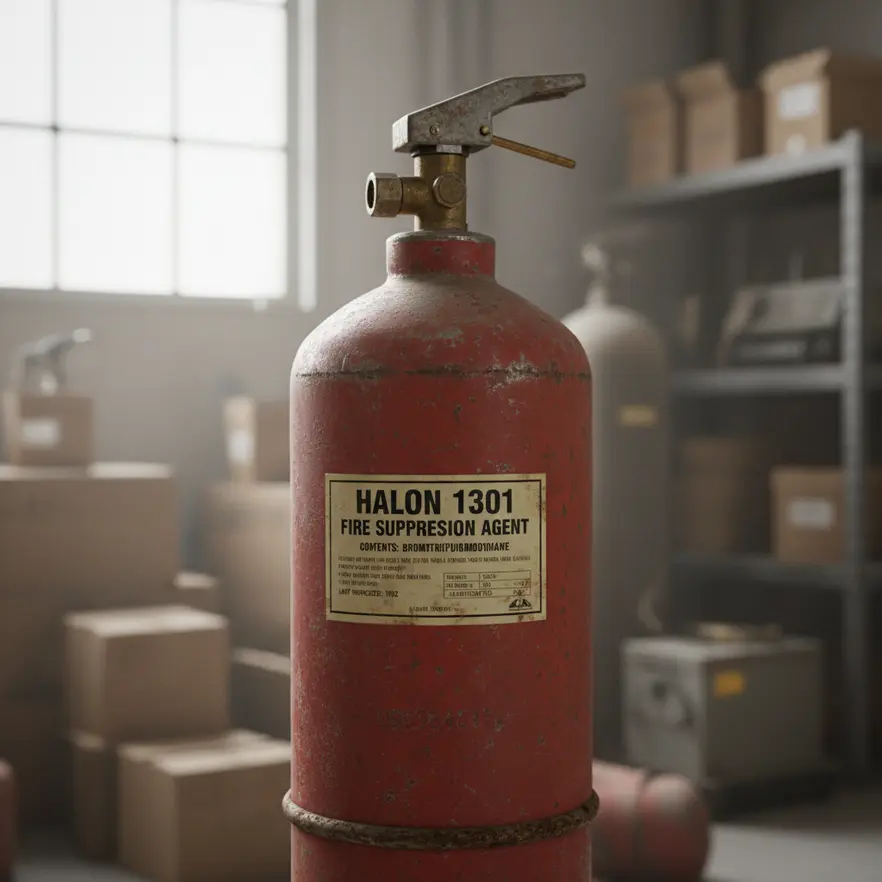
Let’s set the stage. Halon 1301, lovingly known in the fire protection world as bromotrifluoromethane (say that three times fast), was developed in the 1960s. Back then, it seemed like the chemical equivalent of sliced bread: clean, safe for electronics, leaves no mess, and extinguishes fires faster than you can say “smoke damage.” It quickly found a home in high-value environments like data centers, server rooms, telecommunications hubs, aircraft hangars, and even rare art galleries. In fact, Halon 1301 was the OG of total flooding systems.
However… this is the part where our tone gets a bit less jazz hands and more solemn documentary narrator. As effective as Halon 1301 was, it came with a dirty little secret: it was a potent ozone-depleting substance. So in 1994, under the Montreal Protocol, production was virtually banned in the United States. That said—Halon 1301 is still legally in use, you just can’t make more of it. And that’s where things get tricky.

Do You Still Have a Halon System? Here’s How To Tell Without Ripping Down a Wall
Before you start poking around with a flashlight and a screwdriver like you’re on an episode of “CSI: Server Room,” consider the obvious signs. Buildings over 25 years old equipped with legacy data rooms or sensitive process areas likely still use Halon 1301. The system can usually be identified by:
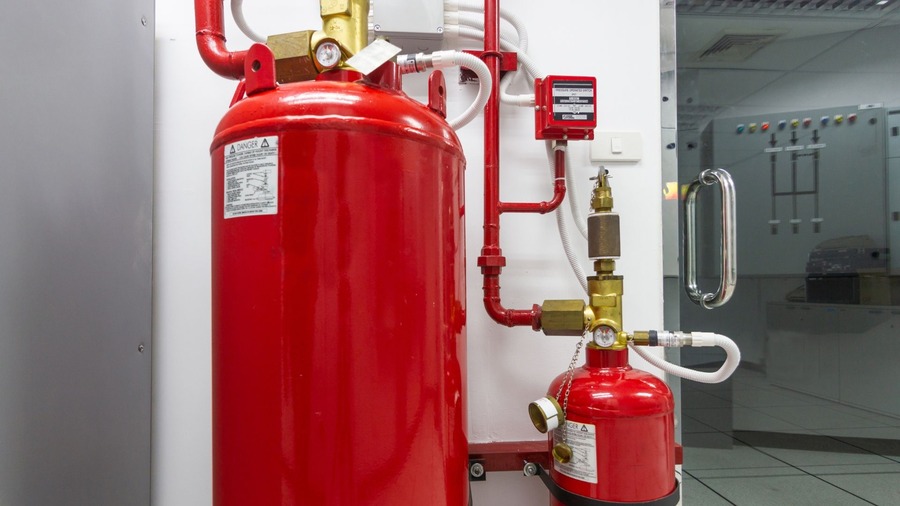
- A Halon agent storage cylinder (often red, sometimes gray) with clear labeling
- A mechanical or electrical control panel that says “Halon 1301”
- Notification devices like strobes, horns, or “PRE-DISCHARGE” lights
- Records or maintenance logs referencing legacy clean agent systems
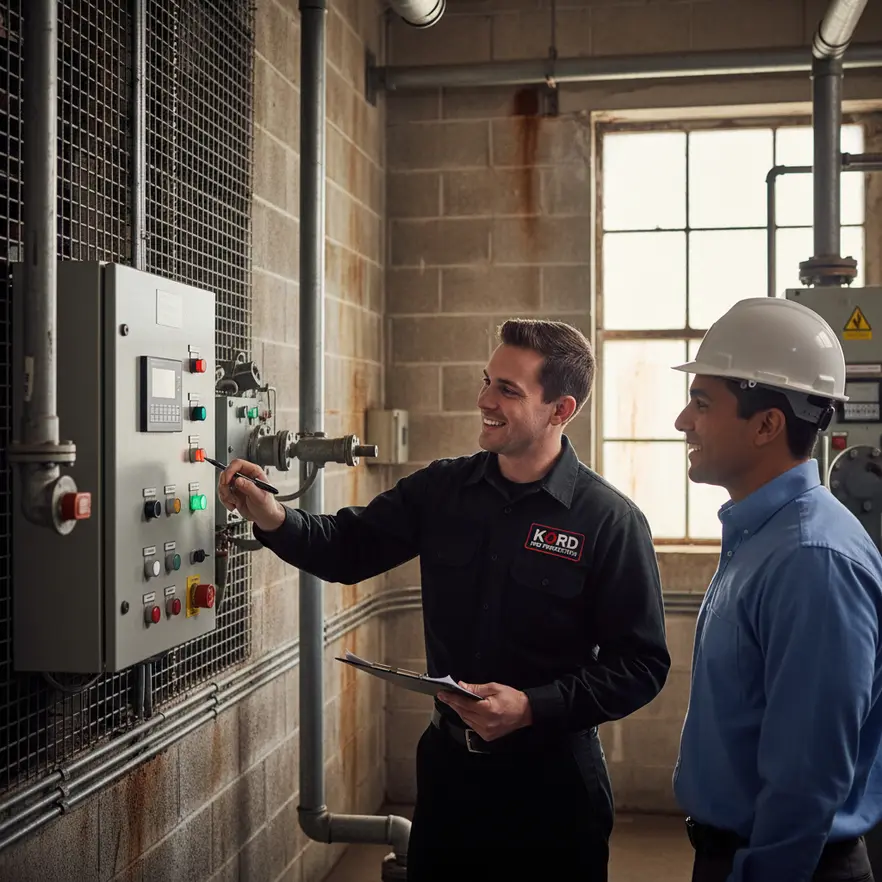
But here’s a tip: don’t play guessing games with fire suppression. Call in our certified KORD Fire Protection technicians who know Halon systems like Tolkien fans know Elvish. They won’t just tell you it’s Halon—they’ll explain how it’s piped, where it discharges, how the suppression timing is configured, and what code implications you’re currently tangoing with.
Why expert identification matters
Beyond just confirming “Yep, that’s Halon,” proper identification helps determine the age of components, whether detection and control equipment are still listed, and how your system stacks up against current codes and standards. That saves you from surprises during insurance reviews or inspections.
Yes, It’s Still Legal… For Now (But Not Without Caveats)
Building owners often confuse “banned” with “illegal.” Halon 1301 systems are not illegal to have, but they’re highly regulated. Think of it like owning a classic Mustang with terrible emissions—it’s cool, but you can’t just ignore modern traffic laws.
Here’s the checklist building owners should consider:
- Recharge Issues: There’s no new Halon being made, so if you discharge the tank, recharging means finding recycled Halon from a certified supplier.
- Parts Availability: Manufacturers may no longer support older Halon-specific components.
- Inspection & Testing: NFPA 2001 standards still apply, and that means annual inspections, hydrostatic testing every 12 years, and functional checkouts often require specialized training.
- Environmental Fines: Any accidental release without proper reporting could bring a fine hefty enough to cancel your holiday party forever.
In other words, the system may be grandfathered in, but don’t expect it to ride off into the sunset untouched.
Regulators are watching (even if you aren’t)
EPA expectations, local environmental rules, and insurance carriers all have opinions about Halon. Understanding these pressures helps you plan ahead instead of reacting after a discharge, leak, or inspection notice.
How KORD Fire Protection Technicians Break It Down (Without Breaking the Bank)
Let’s face it: Fire safety updates are less thrilling than gadget unboxings or watching puppies learning to walk. But that’s where our KORD Fire Protection team comes in like tech support that actually answers on the first ring.
When the technicians show up, they don’t just inspect your Halon system. They explain what’s happening behind the nozzle, why certain indicators matter, and whether your current setup meets evolving fire codes. They’ll even translate those thick service invoices into plain English—yes, even for property managers who’d rather chew drywall than sit through one more compliance seminar.
Building managers often say the most satisfying part about dealing with KORD isn’t the suppression system itself. It’s the “aha” moment when they actually understand how it works and what to do next.
Think of us like Gandalf—if Gandalf had a clipboard and carried a Halon pressure gauge.
From “mystery box” to manageable asset
Once you understand the age, condition, and risk profile of your Halon 1301 system, it becomes something you can plan around instead of something you nervously hope never activates.
Time to Keep or Replace? Navigating the Fork in the Fire-System Road
This is where business meets ethics, and performance meets practicality. Keeping an existing Halon 1301 system may seem appealing, especially if it’s reliable and passes annual inspections. But the writing’s on the wall—or rather, in the fine print of NFPA guidelines and EPA advisories.
Here’s a dual-column breakdown KORD often explains to customers weighing their options:
| Reasons to KEEP your Halon 1301 System | Reasons to REPLACE it |
|---|---|
| System still works flawlessly | Undischargeable Halon can’t be found |
| Serviced annually and documented | Non-compliance risk gets costlier year-to-year |
| Retrofitting = shutdowns you can’t afford now | Building uses now differ (open servers, new tenants) |
| Halon 1301 tanks recently hydro-tested | Policy changes push you toward green alternatives |
Ultimately, it boils down to risk vs. cost vs. environmental responsibility. Any change should be strategically timed—preferably not two days before a fire marshal visit or a high-profile inspection.
Create a phased game plan
KORD’s team can help you build a 3–5 year transition roadmap if a replacement makes sense, so you’re not blindsided by a single massive capital project.
Modern Clean Agent Alternatives Worth Exploring
If Halon 1301 is yesterday’s hero, who’s the new fire safety Avenger? There are cleaner, greener, arguably sexier options striding into the frame like an action star in slow-mo. The most prominent alternatives include:
- FM-200 (HFC-227ea): A fast-acting agent ideal for sensitive electronics. Bonus: widely available and code-compliant.
- Novec 1230: The sweetheart of modern systems—great performance with ultra-low GWP (Global Warming Potential). It even has a 3-day atmospheric life. That’s short enough to get a Spotify refund.
- Inert Gases: Like Argonite or Inergen, these work by reducing oxygen levels to suffocate the fire—not your wallet.
Why a “like-for-like” swap isn’t realistic
The tech is here. The pressure’s literal. But remember, conversions aren’t plug-and-play. That’s where having KORD’s techs assess volume, discharge curves, ventilation, and detection zones becomes crucial. No pressure—except the kind in the tank, of course.
Don’t Let Your Fire System Sleepwalk Into Obsolescence
Neglecting your Halon 1301 system is like letting your old Blackberry keep collecting dust in a drawer, waiting for one day it might be useful again. Let’s be real—it won’t. Technology, and regulations, have moved on, and if your fire suppression hasn’t had a thorough walkthrough in the past year, it’s time to wake it up and whisper, “We need to talk.”
KORD’s free system evaluation is painless, insightful, and delivered by professionals who don’t treat you like a walking invoice. They’ll walk you through your current compliance position and potential paths tailored for your budget, building class, and operational needs.
(And no, they don’t bite. Unless threatened with unscheduled elevator music.)
Building Owners Are Already Asking: Quick FAQ Time
- Can I still legally use Halon 1301?
Yes, but recharging and modifying the system have strict regulations. - Can I service a Halon system myself?
No, certified technicians must perform inspections and testing. - Is Halon 1301 dangerous to people?
At extinguishing levels, it’s generally safe but can displace oxygen if leaked in large quantities. - How much does it cost to replace Halon 1301?
Costs vary widely. Smaller systems might cost $5K–$15K. Large systems? Think $30K+ - Do I have to replace it now?
Not unless it’s required by code, you’re expanding, or you want to upgrade. But planning early saves headaches later.
Final Verdict: Have a Halon 1301 System? Call the Pros, Save the Drama
If fire suppression systems had a Tinder profile, Halon 1301 would be the confident, good-looking one with a complicated past. It’s functional and fantastic at preventing damage, but it comes with baggage. Knowing when to keep it, upgrade it, or swap it out completely starts with a phone call—not to your cousin’s HVAC guy, but to the trained minds at KORD Fire Protection.
Let them guide you with clarity, care, and only the occasional nerdy reference to Star Trek’s engineering deck.
Call today and schedule your no-obligation assessment, and let the experts help you future-proof your building—without losing sleep over fire suppression flashbacks.
Know Your Weapon Before You Fight the Flame
Kord Fire Protection is your go-to when it comes to all things fire protection. For over 20 years, we’ve been serving Southern California with the quality service and equipment to keep your home or business safe at all times. Our competitive prices reflect our unwavering commitment to protecting what matters most in the event of a fire emergency. Give us a call, send an email, or use that form!

Join Our Newsletter!
Get the latest fire safety tips delivered straight to your inbox From our Newsletter.