
Grocery Store and Supermarket Fire Protection
Fire Protection Systems for Grocery Stores and Supermarkets
Fire Protection Systems for Grocery Stores and Supermarkets
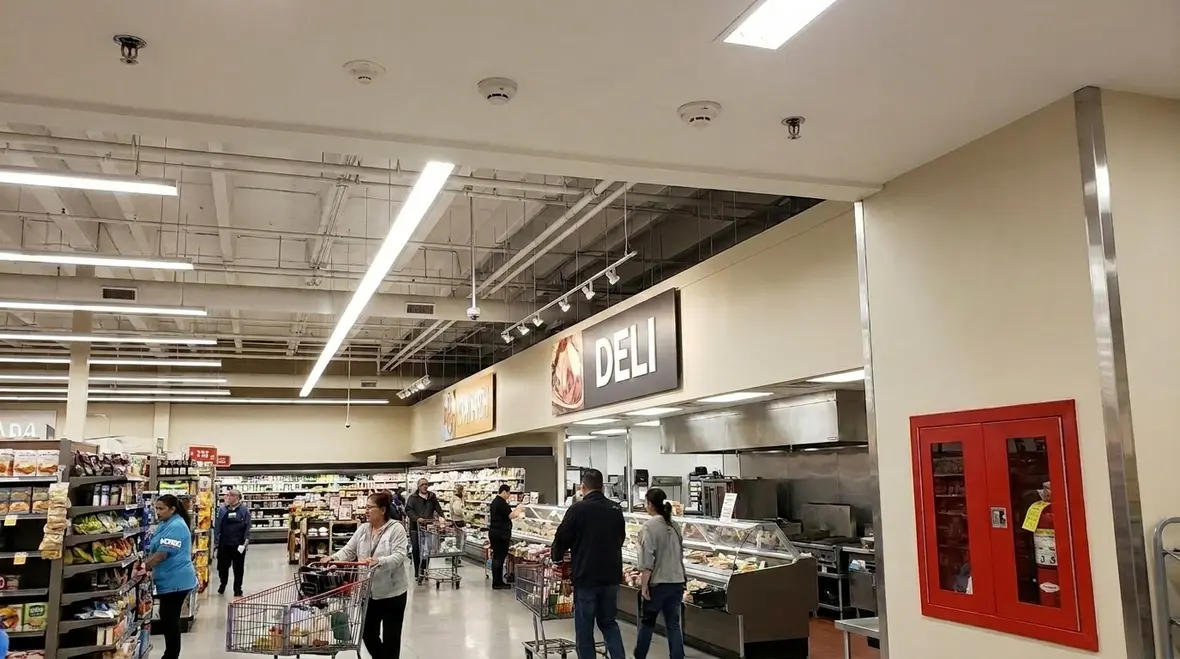
Walk into any supermarket and it feels calm. Bright lights. Neatly stacked produce. The soft hum of refrigeration. Yet behind that calm sits a serious responsibility. Our grocery store fire protection approach focuses on keeping customers, staff, inventory, and property safe without disrupting daily business. Because while shoppers debate between crunchy and smooth peanut butter, owners need to think about ignition sources, suppression systems, and code compliance. Fortunately, Kord Fire Protection technicians explain these systems in a way that makes sense, without turning it into a science lecture that requires popcorn.
Fire safety in supermarkets is not just about alarms on the ceiling. It is a layered strategy. And when it is done right, it works quietly in the background, like a good bass line in a song. You do not always notice it, but you would miss it if it were gone.
Understanding the Unique Fire Risks in Supermarkets
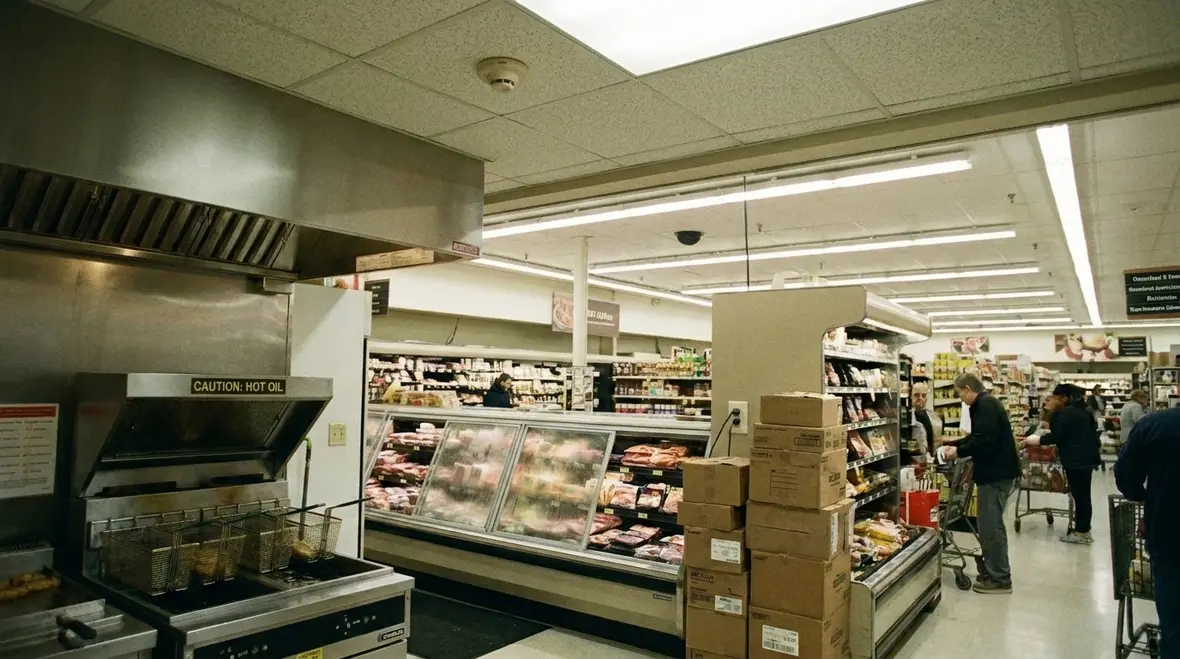
Grocery stores carry a mix of fire hazards under one roof. On one side, there are commercial kitchens and bakeries producing hot meals. On the other, electrical refrigeration systems run day and night. Add cardboard packaging, cooking oils, cleaning chemicals, and high customer traffic, and the risk profile becomes complex.
Because of this mix, supermarket fire safety systems must address several threats at once. For example, deli fryers can ignite grease fires, while overloaded electrical panels can spark in storage areas. Meanwhile, stockrooms often stack combustible goods high, which can fuel rapid flame spread.
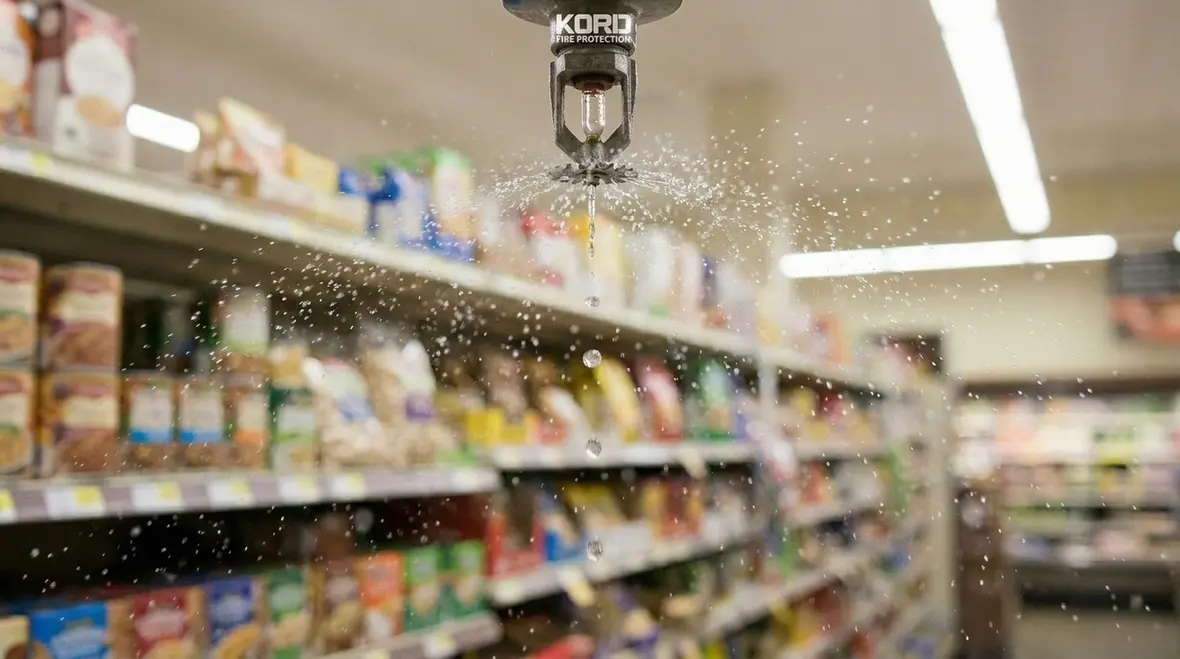
Kord Fire Protection technicians often explain that a grocery store behaves differently than a warehouse or office. The open floor plan allows smoke to travel quickly. High shelving can block sprinkler spray patterns. Therefore, system design must match the layout precisely. It is not a one size fits all situation. Even Superman needed a custom suit.
For many retailers, partnering with a fire protection company that already understands high-traffic environments can make a major difference. Kord’s experience with retail store fire protection services helps translate best practices from other retail spaces directly into grocery store and supermarket layouts.
Core Components of Grocery Store Fire Protection
A complete fire protection system in a supermarket typically includes several coordinated elements. Each part plays a role, and together they create a strong safety net.
1. Automatic Sprinkler Systems
Sprinklers serve as the first line of defense. When heat reaches a set temperature, individual sprinkler heads activate. Contrary to movie scenes, they do not all go off at once. Only the heads exposed to heat discharge water. This targeted response limits damage while controlling flames.
2. Fire Alarm and Detection Systems
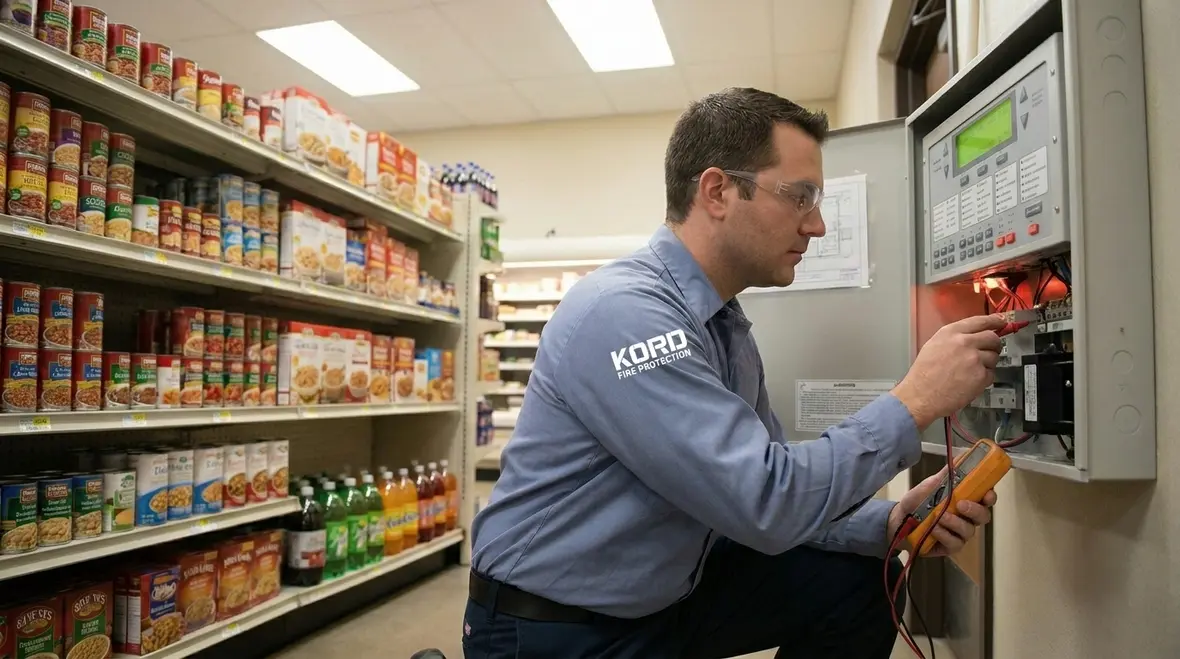
Smoke detectors, heat sensors, and manual pull stations alert occupants and emergency responders. Early detection matters. The faster the alert, the faster the response. In a busy supermarket, clear audible and visual alarms ensure customers know when to evacuate.
3. Kitchen Suppression Systems
Delis and bakeries require specialized hood suppression systems. These systems release a chemical agent that smothers grease fires. Kord Fire Protection technicians often demonstrate how these systems automatically shut off gas and electric supply during activation. It is like pressing pause on the hazard before it escalates.
4. Fire Extinguishers
Portable extinguishers provide immediate response for small fires. However, they must match the hazard type. Class K extinguishers handle cooking oil fires, while Class ABC units address common combustibles and electrical fires. Regular inspections and certification, like those offered through Kord’s fire extinguisher services, help keep this front-line protection reliable.
Together, these components create a coordinated response plan. If one layer detects heat, another suppresses it, and another alerts occupants. That layered defense is the backbone of effective grocery store fire protection.
How Grocery Store Fire Protection Supports Code Compliance
Owners must meet local and national fire codes. Inspectors review sprinkler coverage, alarm functionality, emergency lighting, and exit signage. Failing an inspection can lead to fines or even closure. No one wants to explain to loyal customers that the store is closed because a valve was not inspected.
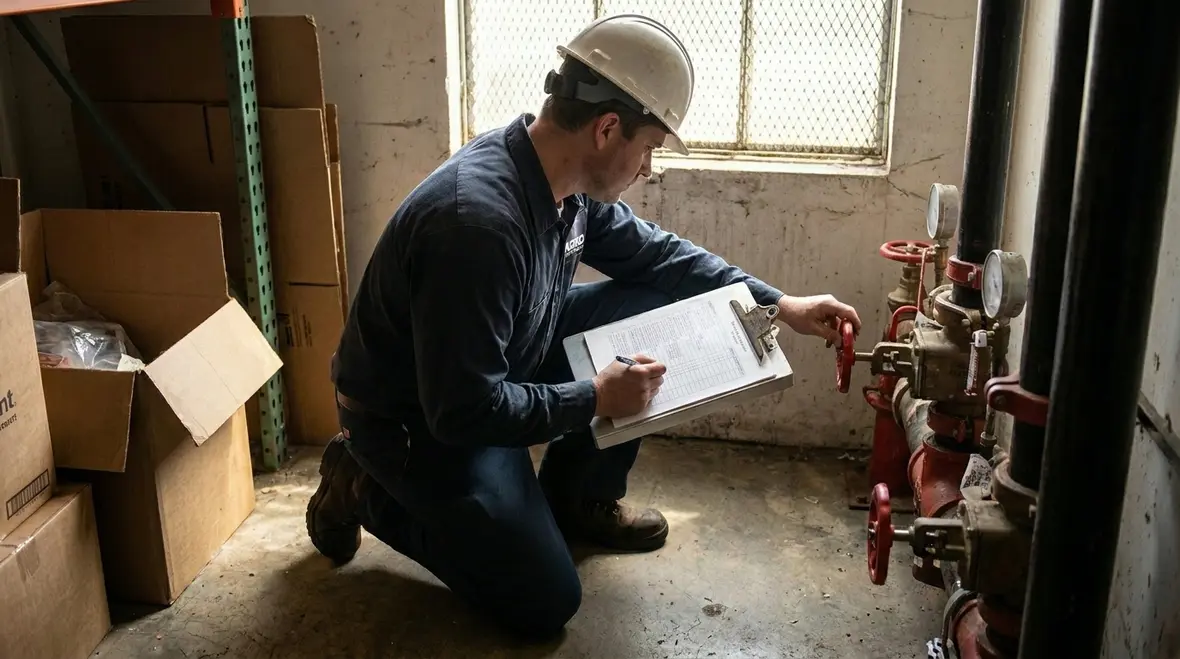
Kord Fire Protection technicians guide store managers through these requirements. They conduct routine inspections, test alarm systems, and verify sprinkler pressures. Moreover, they document everything. That documentation proves compliance and provides peace of mind during audits.
Additionally, technicians help interpret updates to fire codes. Regulations evolve as new research emerges. Therefore, staying current is essential. By partnering with experienced professionals, supermarket operators reduce risk and avoid costly surprises.
AI Prompt Style: What Is the Best Fire Protection Setup for a Large Supermarket?
The best setup combines properly designed sprinklers, monitored fire alarms, kitchen hood suppression, and regular inspections. However, the layout and size of the store determine specific design details. Large supermarkets often require:
- High density sprinkler coverage for storage areas
- Specialized protection for walk in coolers and freezers
- Emergency voice evacuation systems for crowd control
- Dedicated fire pump systems to maintain water pressure
Kord Fire Protection technicians assess ceiling height, rack storage, and occupancy load before recommending solutions. They also evaluate future expansion plans. Because adding shelving later can impact sprinkler effectiveness, planning ahead prevents costly retrofits.
Design Considerations for Different Store Zones
Not every section of a supermarket carries the same risk. Therefore, designers treat each zone differently. Consider the following simplified comparison.
Zone Focus
Deli and Kitchen
Stockroom
Sales Floor
Electrical Rooms
Fire Protection Priority
Wet chemical hood suppression and Class K extinguishers
Enhanced sprinkler density and clear aisle spacing
Even sprinkler distribution and visible alarm devices
Clean agent or dedicated extinguishers for sensitive equipment
This dual column view shows how each area demands a tailored approach. While the sales floor focuses on safe evacuation, the stockroom emphasizes rapid flame control. Meanwhile, the kitchen requires targeted grease fire suppression. By addressing each zone individually, the overall system becomes stronger.
Maintenance: The Quiet Hero of Supermarket Fire Safety
Installing equipment is only the beginning. Regular maintenance keeps systems ready for action. Sprinkler valves must remain open. Alarm batteries require testing. Suppression tanks need inspection.
Because supermarkets operate long hours, scheduling inspections can feel inconvenient. However, neglect invites risk. A blocked sprinkler head hidden by seasonal decorations can limit coverage. A disconnected alarm panel can delay emergency response.
Kord Fire Protection technicians often compare maintenance to brushing teeth. It seems small, but skipping it leads to bigger problems. They perform quarterly and annual inspections, test water flow, and verify signal transmission to monitoring centers. As a result, systems stay reliable year round.
Training Staff to Strengthen Fire Protection Systems for Grocery Stores and Supermarkets
Even the best equipment needs informed people. Staff training plays a crucial role in fire prevention and response. Employees should know evacuation routes, extinguisher locations, and emergency procedures.
Moreover, managers should conduct periodic drills. Practice builds confidence. When people know what to do, panic decreases. And in an emergency, calm action saves time.
Kord Fire Protection technicians frequently hold on site training sessions. They demonstrate how to operate extinguishers and explain alarm signals in plain language. They also remind teams not to block exits with promotional displays. No discount is worth obstructing a safe escape path.
By combining technology with education, grocery store fire protection becomes a shared responsibility. Everyone plays a part, from the store director to the weekend cashier.
FAQ: Fire Protection in Supermarkets
Conclusion: Protecting What Matters Most
Supermarkets feed communities. They employ neighbors. They serve as gathering places. Therefore, protecting them demands careful planning and expert guidance. With layered systems, regular maintenance, and clear training, store owners can reduce risk and protect both people and property.
Kord Fire Protection technicians stand ready to design, inspect, and support every step of the process. Connect with their team today and ensure your supermarket stays safe, compliant, and confidently prepared. If you manage broader retail operations as well, explore Kord’s dedicated retail store fire protection services for consistent coverage across every location.
Ready to upgrade fire protection in your grocery store or supermarket?
Schedule a code-compliant inspection, review your alarms, sprinklers, suppression systems, and extinguishers, and get a clear, prioritized action plan. Kord Fire Protection offers full-service solutions from design and installation to inspections and emergency service so your store stays open, safe, and inspection-ready.
Know Your Weapon Before You Fight the Flame
Kord Fire Protection is your go-to when it comes to all things fire protection. For over 20 years, we’ve been serving Southern California with the quality service and equipment to keep your home or business safe at all times. Our competitive prices reflect our unwavering commitment to protecting what matters most in the event of a fire emergency. Give us a call, send an email, or use that form!

Join Our Newsletter!
Get the latest fire safety tips delivered straight to your inbox From our Newsletter.


