LA County Carbon Monoxide Detector Inspection Guide
In Los Angeles County, safety is not a suggestion. It is a responsibility. That is why a properly installed and maintained carbon monoxide detector matters more than most people realize. This quiet device stands guard against an invisible gas that has no smell, no color, and no mercy. Kord Fire Protection technicians often explain it this way: you will never see carbon monoxide coming, but you can certainly prepare for it. And preparation, especially in Southern California, is not optional. It is the rule.
This guide walks through inspection requirements, local expectations, and the standards that shape them, including NFPA 72. While the topic may not sound thrilling, stay with it. After all, the best safety stories are the ones where nothing dramatic happens. That is the whole point.
Understanding Carbon Monoxide Detector Inspection Requirements in LA County
Los Angeles County enforces strict building and fire codes that require carbon monoxide detection in residential and many commercial properties. These rules stem from California state law and align with national standards like NFPA 72, which governs fire alarm and signaling systems. Local fire protection teams, including Kord Fire Protection, apply these standards in the field every day, especially through services like their CO Detection Systems Test.
So what does that mean in plain terms? First, property owners must install approved carbon monoxide alarms outside sleeping areas and on every level of a dwelling unit. In addition, combination smoke and CO units must meet listing requirements from recognized testing laboratories.
However, installation is only the beginning. Inspection and ongoing maintenance determine whether the device works when it matters. LA County fire inspectors check for proper placement, power supply, age of the unit, and functionality. If a unit is expired or improperly located, it fails inspection. Simple as that.
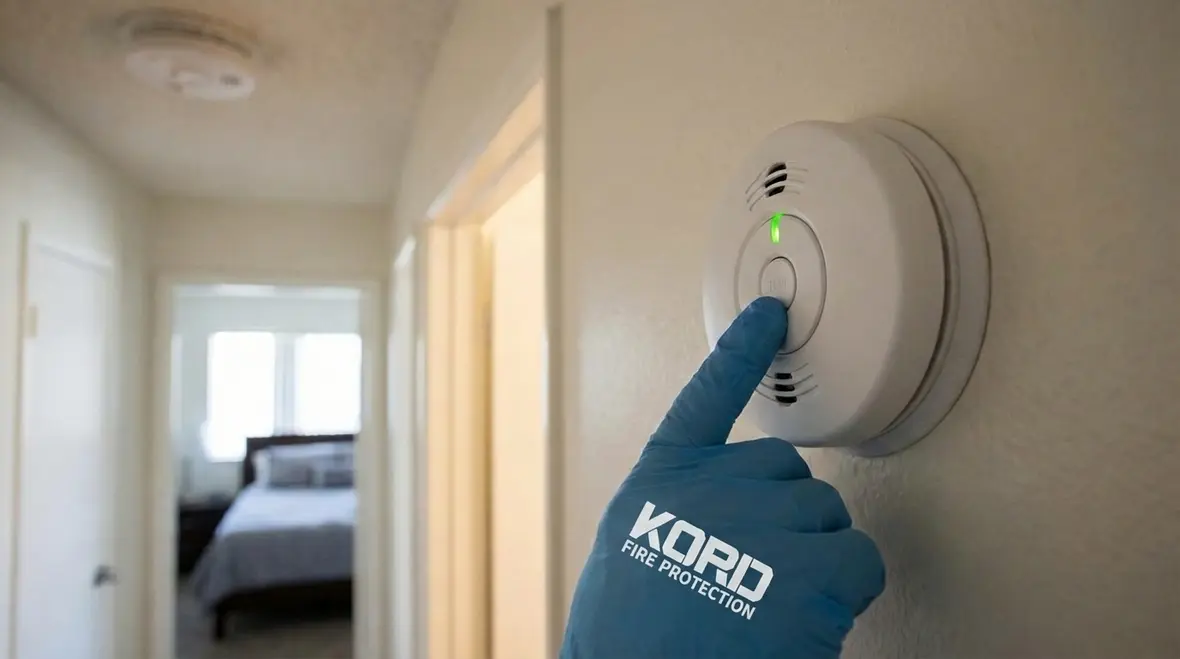
Kord Fire Protection technicians often note that many property owners assume a green light means everything is fine. Unfortunately, a blinking light does not guarantee compliance. Inspectors look deeper, and so should owners.
How NFPA 72 Shapes Local CO Alarm Rules
NFPA 72 provides the technical backbone for carbon monoxide alarm performance, testing, and maintenance. While California adopts its own codes, they frequently reference and align with NFPA standards. Therefore, understanding NFPA 72 helps clarify what LA County expects and why professional CO system testing, such as Kord Fire’s dedicated Regulation 4 Gas Detection Testing, is so important.
Key NFPA 72 Guidelines That Affect LA County Inspections
Location
Devices should be installed outside sleeping areas and within a certain distance of bedrooms. They must not sit too close to fuel burning appliances, which can cause nuisance alarms.
Power Supply
Units can be battery powered, hardwired, or connected to a monitored fire alarm system. However, they must have reliable backup power.
Testing
Functional testing should occur regularly. For system connected detectors, sensitivity and signal transmission must also be verified, often during broader CO detection system service visits.
Replacement
Most CO alarms have a service life of five to seven years. NFPA 72 requires replacement at the end of that listed life span.
Consequently, inspectors in LA County often reference these benchmarks during evaluations. While the code language can feel dense, the principle is straightforward. The device must detect danger early and communicate it clearly.
What LA County Inspectors Actually Look For
If someone were to ask, what happens during a carbon monoxide alarm inspection in Los Angeles County, the answer would be both simple and detailed.
Placement, Age, Testing, and Paperwork
First, inspectors confirm proper placement. For example, alarms should not be installed inside kitchens, boiler rooms, or bathrooms. They belong near sleeping areas and on each level of the home.
Next, inspectors check manufacturing dates. Many people do not realize their unit quietly expires. Unlike fine wine, these devices do not improve with age. If a detector passes its listed lifespan, it must be replaced.
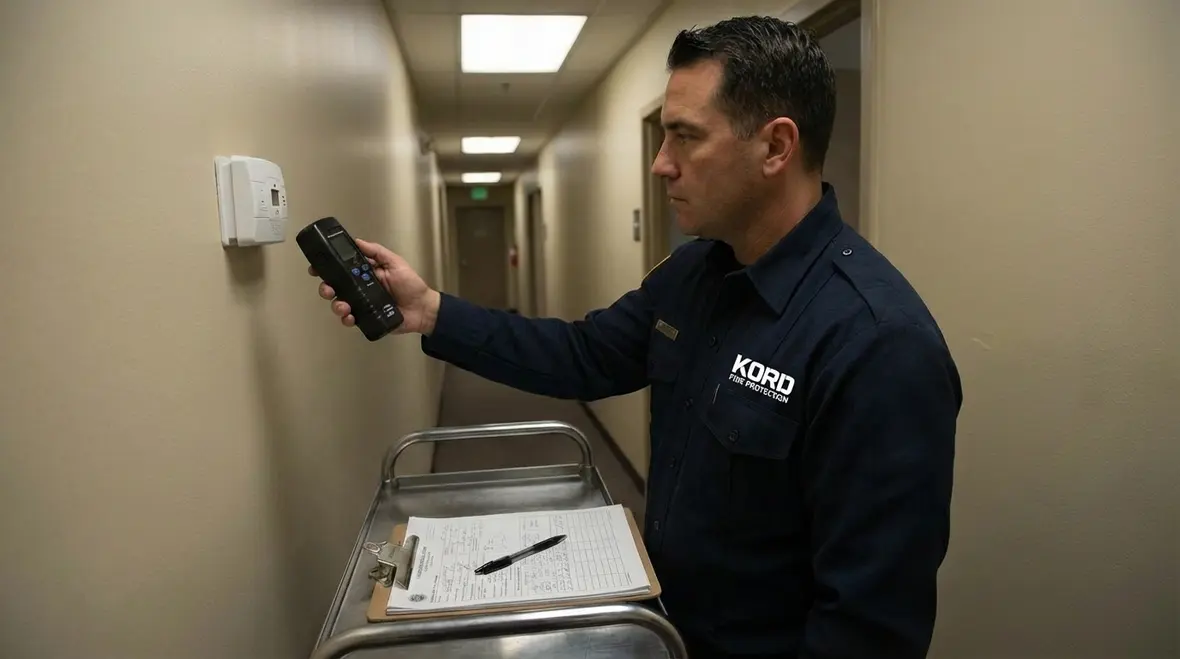
Then comes functional testing. Inspectors may use approved testing methods to ensure the alarm sounds properly. In commercial buildings with monitored systems, they verify that signals reach the control panel and supervising station.
Finally, they review documentation. Property managers and business owners should keep maintenance logs, especially for multi family housing and commercial properties. Documentation proves due diligence.
Kord Fire Protection technicians frequently remind clients that preparation makes inspections smooth. When systems are maintained throughout the year, inspection day feels routine rather than dramatic.
Common Compliance Mistakes Property Owners Make
Even responsible owners can overlook small details. However, small details matter.
Placement Problems, Ignored Alarms, and Renovation Blind Spots
One common mistake involves improper placement. Installing a carbon monoxide detector too close to a furnace may trigger nuisance alarms. As a result, some occupants remove the batteries. That quick fix creates a serious hazard.
Another issue involves ignoring end of life signals. Many modern alarms chirp when they reach expiration. Instead of replacing the unit, some residents silence the chirp and move on. That is like putting tape over a check engine light and hoping the car repairs itself.
Additionally, landlords sometimes fail to verify tenant tampering. While tenants must not disable safety devices, owners carry the ultimate responsibility for compliance in rental properties.
Moreover, renovations can create new risks. When walls move or fuel burning appliances are added, detection placement may need adjustment. Therefore, after remodeling, it is wise to reassess coverage.
Kord Fire Protection technicians often conduct site evaluations to identify these hidden gaps. Their approach blends code knowledge with practical experience, which helps owners avoid costly citations and aligns nicely with broader LA County fire safety services like those detailed on the Los Angeles County Fire Protection page.
Residential vs Commercial Inspection Expectations
Although the life safety goal remains the same, inspection requirements differ between residential and commercial properties.
How Expectations Change by Occupancy Type
Below is a simplified comparison:
Residential Properties
Installation outside sleeping areas
Battery or hardwired units permitted
Replacement at manufacturer end of life
Visual and functional checks during property sale or rental turnover
Commercial and Multi Family Buildings
Often integrated with fire alarm systems
Supervising station monitoring may be required
Documented annual testing
Compliance with broader NFPA 72 system standards
In commercial settings, inspectors expect more detailed records and system integration. For example, a system connected carbon monoxide detector must communicate trouble signals and alarms to the main control panel. Furthermore, testing often requires trained personnel with experience in CO detection and Regulation 4 requirements.
Because of this complexity, many business owners rely on licensed fire protection professionals. Kord Fire Protection technicians explain system reports in plain language, which helps managers understand both risk and responsibility.
How Often Should Carbon Monoxide Devices Be Tested?
This is the question that echoes across property management offices.
Manufacturer Guidelines, NFPA 72, and Local Practice
Manufacturers typically recommend monthly testing using the built in test button. In addition, batteries should be replaced at least once a year unless the unit uses a sealed long life battery.
For system connected devices, NFPA 72 outlines more structured inspection and testing intervals. Generally, functional testing occurs annually, although certain components may require semiannual checks depending on system design.
Importantly, testing should follow manufacturer guidelines. Spraying random chemicals into a sensor is not a clever shortcut. In fact, it can damage the device. Approved testing methods ensure accurate results without compromising the sensor.
Furthermore, documentation matters. Keeping a simple log of test dates, battery changes, and replacements supports compliance. During inspections, clear records demonstrate proactive maintenance.
Kord Fire Protection technicians often encourage clients to schedule recurring service visits. Regular professional inspections reduce the risk of missed deadlines and expired equipment, especially when combined with broader CO system services described in their CO Detection Systems Test offering.
The Role of Professional Technicians in LA County Compliance
Codes establish the framework. However, trained professionals bring that framework to life.
From Site Evaluation to Clear Reports
Kord Fire Protection technicians approach each property with a methodical process. First, they evaluate building layout and fuel burning appliance locations. Then, they confirm proper detector placement. After that, they test alarm functionality and verify power sources. Finally, they review device age and system integration.
Because they understand both California code and NFPA 72 requirements, they bridge the gap between technical standards and real world conditions. That expertise proves especially valuable in mixed use buildings, where residential and commercial requirements may overlap.
Moreover, technicians educate property owners. Instead of delivering cryptic compliance reports, they explain what needs correction and why. As a result, owners gain clarity rather than confusion.
And let us be honest. Few people wake up excited to read fire code updates. Having a knowledgeable professional interpret those rules saves time and prevents mistakes.
FAQ About Carbon Monoxide Detector Requirements in LA County
Secure Compliance and Peace of Mind
Carbon monoxide may be invisible, but responsibility is not. Property owners in Los Angeles County must install, inspect, and maintain compliant detection systems to meet code and protect lives. Fortunately, expert guidance makes the process manageable.
Kord Fire Protection technicians stand ready to evaluate systems, explain requirements, and ensure every alarm performs as intended. Whether you manage a single family home, a mixed use building, or a large commercial facility, partnering with a qualified fire protection company turns a confusing checklist into a clear, doable plan.
If you are unsure whether your property is fully compliant, now is the time to find out. Explore Kord Fire’s dedicated CO Detection Systems Test service or connect through their broader Los Angeles County Fire Protection offerings for comprehensive support.
Schedule a professional inspection today and turn quiet protection into confident compliance.
Know Your Weapon Before You Fight the Flame
Kord Fire Protection is your go-to when it comes to all things fire protection. For over 20 years, we’ve been serving Southern California with the quality service and equipment to keep your home or business safe at all times. Our competitive prices reflect our unwavering commitment to protecting what matters most in the event of a fire emergency. Give us a call, send an email, or use that form!

Join Our Newsletter!
Get the latest fire safety tips delivered straight to your inbox From our Newsletter.